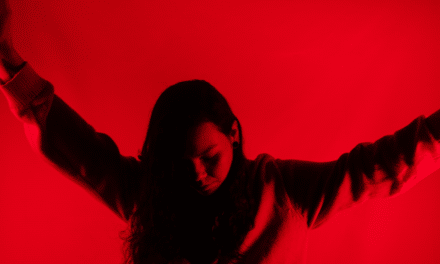
On “again & again.,” the Florida-born singer turns falsetto, intimacy, romantic vulnerability, and the warmth of classic soul into what he calls “contemporary nostalgia”—music that remembers the past without trying to live inside it.
There is a particular kind of longing that R&B has always understood better than almost any other genre.
Not attraction.
Not heartbreak.
Not even love exactly.
Yearning.
The willingness to admit that another person has disrupted your emotional equilibrium. That you want something you cannot control. That desire can make you hopeful, ridiculous, exposed, euphoric, and occasionally terrified.
For Cedric Brazle, none of that is embarrassing.
It is the point.
“I think yearning will always matter in R&B because R&B has always been about feeling something deeply enough that you have to sing about it.”
That conviction sits at the center of Cedric’s increasingly distinct musical identity.
The Florida-born vocalist describes his sound as “contemporary nostalgia,” a phrase that immediately suggests the warmth of classic R&B but becomes more interesting the longer he explains it.
This is not revivalism.
He is not trying to rebuild a record from 1996 or reproduce somebody else’s vocal run because nostalgia currently photographs well.
“I don’t want to sound like the past,” he says. “I want to sound like the future with a memory.”
His latest single, “again & again.”, released September 9, brings that philosophy into focus.
Warm keys surround a vocal performance capable of dropping into a grounded baritone before lifting into a delicate falsetto. The production is spacious and intimate, more interested in supporting the emotion than decorating it.
And beneath all of it is a surprisingly uncomplicated idea.
After disappointment, distance, and whatever else love has already taken from you, what happens when somebody makes you willing to choose it again?
The Future With a Memory
Cedric grew up surrounded by R&B, soul, gospel, rock, and other forms of music that continue to shape the way he hears songs.
Those influences are not references he wants to hide.
But neither are they templates.
“I’ve always wanted to make music that shines a light on the things that inspired me while still giving me room to push those sounds forward and make them my own.”
That is what “contemporary nostalgia” means to him.
The nostalgia belongs primarily to feeling.
Texture.
Musicianship.
Harmony.
Emotional directness.
The contemporary part comes from what he does with those ingredients now.
“It’s familiar, but not a recreation.”
This distinction becomes particularly useful in an era when nostalgia itself has become an industry.
Musical eras are continuously recycled through samples, aesthetics, fashion, visual treatments, production presets, and social-media microtrends.
Cedric is interested in something less literal.
“For me, nostalgia works when it reminds you of a feeling, not when it reminds you of a specific record.”
That may be the clearest mission statement for his music.
The objective is recognition without imitation.
He wants someone to experience a certain warmth and know instinctively where its emotional lineage comes from without immediately being able to identify whose song he is referencing.
“The goal is to take what made that music timeless and give it a new address.”
“Again & Again” Is a Promise
The title might initially suggest dysfunction.
Another cycle.
Another return to the same person.
Another mistake repeated despite knowing exactly how it usually ends.
Cedric means almost the opposite.
“For me, the repetition in ‘again & again.’ is actually a really positive thing.”
The song comes from the moment when someone makes love feel worth attempting again.
Not because the past disappears.
Because the present finally feels safe enough that the past stops determining the decision.
“There’s something powerful about meeting a person who makes you realize, ‘This is what I was waiting for.’”
The repetition is therefore commitment rather than entrapment.
“After everything I’ve been through, I would still choose you again and again.”
There is an important vulnerability inside that sentence.
Choosing somebody after heartbreak means accepting that being healed enough to love does not make you immune to being hurt again.
You simply decide the possibility is worth the risk.
For Cedric, that decision is connected to feeling seen.
To feeling safe enough to reopen something that experience taught you to protect.
“So the repetition isn’t about being stuck in a cycle. It’s a promise.”
No matter how many times the question comes:
You.
Again.
Making Space for the Voice
Producer Tracksion helped give that promise its physical environment.
Cedric describes “again & again.” as lyrically definitive, and the production needed to support that certainty without suffocating it.
“I wanted to create something cinematic and expansive while still being able to strip the world back and allow the emotion to breathe.”
Warm keys.
Falsetto.
Harmonies.
Space.
“The keys, falsetto, and harmonies aren’t meant to overpower what I’m saying; they’re meant to hold space for it.”
That idea—holding space—feels important to Cedric’s approach.
R&B vocalists capable of elaborate runs can easily end up in arrangements where everything appears designed to demonstrate ability.
Cedric is more interested in directing technique toward emotional function.
The production creates the room.
The voice decides what happens inside it.
His previous single, “mine.”, approached the balance differently.
There, Cedric wanted more movement.
More groove.
Something people could physically respond to while preserving sincerity.
“That balance is one of my favorite things about that particular record.”
The two songs therefore occupy related emotional territory without serving identical purposes.
One moves.
The other lingers.
Two Voices in One Body
Cedric’s vocal range makes those emotional distinctions even more pronounced.
His lower register carries weight.
His falsetto nearly does the opposite.
Rather than viewing that contrast simply as vocal technique, he increasingly treats each register like a different narrative instrument.
“My lower register and my falsetto definitely carry different parts of me emotionally.”
The baritone feels grounded.
Direct.
Certain.
“There’s a certain weight to it.”
Falsetto gives him access to another kind of emotional presence.
“It can feel more exposed, more intimate, sometimes even more fragile.”
During the recording of his new project, that difference sometimes became an explicit creative choice.
What does this lyric require?
Should the voice stand inside the statement?
Or surrender to it?
“Sometimes the lyric needs to feel like I’m standing firmly in what I’m saying, and sometimes it needs to feel like I’m almost falling into the feeling.”
The register becomes storytelling.
That concept turns range into something more interesting than athleticism.
A high note is not impressive because it is high.
It matters because the character singing it had to leave somewhere safer to reach it.
Let Men in R&B Want Something Again
That emotional openness places Cedric inside a larger conversation around contemporary R&B and masculinity.
There is a popular observation—part joke, part criticism—that the men in R&B simply do not yearn like they used to.
Cedric understands why the conversation resonates.
But for him, the issue goes beyond romantic nostalgia for an earlier period of the genre.
Yearning represents emotional permission.
“Love, desire, heartbreak, regret, hope—all of those things require a certain level of openness.”
And openness, he argues, should never be confused with weakness.
“I don’t think vulnerability makes a man any less masculine.”
Quite the opposite.
“There’s strength in being able to sit with your emotions and articulate them.”
That sentence gets surprisingly close to defining Cedric’s artistic purpose.
He is not interested in building a masculine persona around emotional invulnerability.
“I’ve never been interested in pretending I have it all figured out or acting like I’ve never wanted someone, missed someone, or been affected by love.”
Those admissions may sound obvious.
Within certain models of masculinity, they are not.
Emotional distance can become performance.
Indifference becomes power.
Wanting less supposedly means risking less.
Cedric rejects that equation.
“I want to make music that reminds people that romance can still be powerful, that yearning can still be cool, and that being emotionally open doesn’t mean you’re weak.”
And he believes audiences may be ready for it.
“There’s a new generation of artists and listeners ready to feel again.”
He wants to be one of the voices leading them there.
No Production to Hide Behind
The emphasis on voice is literal as much as emotional.
Cedric has already demonstrated his vocal ability through platforms like On The Radar and BTW, Can You Sing?—settings where polished studio architecture recedes and the singer becomes exposed.
For Cedric, that exposure is essential.
“At the end of the day, the voice has to be able to stand alone when everything else is taken away.”
Production matters.
Visuals matter.
World-building matters.
But they cannot become camouflage.
“When it’s just me and a microphone, there’s nowhere to hide.”
Then:
“And I love that.”
That confidence is connected to longevity.
Cedric does not only want listeners to recognize individual songs.
He wants the instrument itself to become recognizable.
“I’m building a career that I want to last, and longevity requires substance.”
The ambition is specific.
“Years from now, if you hear me sing one note, I want you to know exactly who it is.”
That is an old-school aspiration in the best sense.
Before aesthetic eras, rollout strategies, and artist branding, there is a voice.
One note.
Recognition.
“Mine.” Was the Discovery. “Again & Again.” Is the Choice.
Cedric sees “mine.” and “again & again.” as interconnected chapters.
“‘mine.’ is about finding something worth claiming.”
Then comes the harder part.
“‘again & again.’ is about finding the courage to choose it after you’ve been hurt.”
Together, they begin outlining the emotional world of the larger project currently taking shape.
Love appears throughout.
But so do memory and self-recovery.
“As you move deeper into the music, the love, memories, and experiences start connecting.”
The larger story, he says, becomes one about finding your way back to yourself.
That makes romance less of an endpoint than a mirror.
A relationship reveals where you are.
What you fear.
What you are capable of giving.
What you have stopped believing.
What you are willing to risk again.
“again & again.” occurs after some of those answers have already hurt.
Its optimism therefore feels less innocent than informed.
Building Community Instead of Accumulating Numbers
Cedric already has industry recognition.
He has been highlighted as a TIDAL Rising artist and BET Fresh Face, alongside support from R&B-focused and cultural outlets including UPROXX, VIBE, Rated R&B, and Miami New Times.
Recognition helps.
Numbers matter.
Cedric does not pretend otherwise.
“I want all of it.”
But forced to choose between scale and emotional impact, he knows where he lands.
“I’d choose impact over numbers.”
Statistics can demonstrate reach.
They cannot necessarily demonstrate meaning.
“The real goal is to build something that lasts beyond a statistic.”
Then Cedric distills the idea further:
“Community is what lasts forever.”
That distinction fits naturally with the music he wants to make.
If the objective were simply exposure, emotional specificity could almost become a liability.
Broadness travels easily.
But Cedric wants people to hear themselves inside his specificity.
“Ever since I could remember, I’ve always said that I want people to listen to my music and feel less alone.”
That is his definition of impact.
Maybe somebody hears “again & again.” and calls the person they love.
Maybe another song articulates something a listener has never been able to say aloud.
“If I could contribute that to the world, my mission is accomplished.”
He still wants the career to grow.
Stronger songs.
More people.
More opportunities.
But the ideal audience is not simply one that consumes Cedric’s work.
“I want to build an audience that feels like they grew with Cedric.”
Who Cedric Is When Nobody Is Watching
That sense of intimacy will become increasingly important as his next era unfolds.
Cedric wants listeners to discover what exists beneath the polished surface of the songs.
“This new era of music is really an introduction to the way I’ve experienced love, memory, and life.”
The deeper someone moves into the project, the more connections should reveal themselves.
But the artistic identity he ultimately hopes to establish is not especially complicated.
Vulnerable.
Romantic.
Complex.
Those words could sound modest in a culture obsessed with reinvention.
For Cedric, they are foundational.
He wants the artist the audience encounters to feel connected to the human being generating the songs.
“Ultimately, I want them to understand who Cedric is when nobody else is in the room.”
That may be where “contemporary nostalgia” becomes something bigger than sonic vocabulary.
Classic R&B did not endure simply because of drum machines, chord voicings, vocal stacks, or studio techniques.
It endured because listeners believed somebody was in the room feeling something.
Cedric wants to preserve that intimacy without pretending the room exists in another decade.
The address has changed.
The feeling has not.
In Conversation With Cedric Brazle
MUNDANE: You describe your sound as “contemporary nostalgia,” which feels like a perfect way to explain the balance between classic R&B warmth and a more current emotional perspective. What does that phrase mean to you beyond the sound itself?
CEDRIC BRAZLE: I was raised on R&B, soul, gospel, rock, and so many other genres, and I think those influences never really leave you.
I’ve always wanted to make music that shines a light on the things that inspired me while still giving me room to push those sounds forward and make them my own.
To me, “contemporary nostalgia” means creating music that’s rooted in the textures, emotions, and feeling that are reminiscent of music from the past, but presenting it through a more modern lens.
It’s familiar, but not a recreation.
I want people to hear elements that feel nostalgic while also hearing something fresh and distinctly mine.
MUNDANE: “again & again.” leans into warm keys, falsetto, and that late-night intimacy that feels almost timeless. What did you want the production to leave space for emotionally, especially compared with “mine.”?
CEDRIC BRAZLE: “again & again.” is a very definitive feeling lyrically, so production-wise, working with the producer Tracksion, I wanted to create something cinematic and expansive while still being able to strip the world back and allow the emotion to breathe.
The keys, falsetto, and harmonies aren’t meant to overpower what I’m saying; they’re meant to hold space for it.
With “mine.”, I really wanted to be more musical and create a groove that people could move to while still being sincere and honest.
That balance is one of my favorite things about that particular record.
MUNDANE: Your voice can move from a grounded baritone into a much lighter falsetto, and that contrast feels central to your identity as a singer. Do you think about those registers almost like different emotional characters when you’re recording?
CEDRIC BRAZLE: Yeah, I think that’s a really interesting way to look at it.
My lower register and my falsetto definitely carry different parts of me emotionally.
The lower register feels more grounded, more direct. There’s a certain weight to it.
But when I go into falsetto, I think it allows me to access a different kind of vulnerability.
It can feel more exposed, more intimate, sometimes even more fragile.
So when I was recording this new project, sometimes we would intentionally decide which emotional voice was needed to serve the music.
Sometimes the lyric needs to feel like I’m standing firmly in what I’m saying, and sometimes it needs to feel like I’m almost falling into the feeling.
The register becomes part of the storytelling.
MUNDANE: There’s been a lot of conversation around men in R&B becoming less openly vulnerable, romantic, or willing to really yearn. Why do you think yearning still matters in R&B, and what does emotional openness mean to you as a male artist right now?
CEDRIC BRAZLE: I think yearning will always matter in R&B because R&B has always been about feeling something deeply enough that you have to sing about it.
Love, desire, heartbreak, regret, hope—all of those things require a certain level of openness.
And I don’t think vulnerability makes a man any less masculine.
If anything, I think there’s strength in being able to sit with your emotions and articulate them.
I’ve never been interested in pretending I have it all figured out or acting like I’ve never wanted someone, missed someone, or been affected by love.
I think the most powerful artists make people feel seen, and you can’t really do that if you’re hiding behind the music.
I want to make music that reminds people that romance can still be powerful, that yearning can still be cool, and that being emotionally open doesn’t mean you’re weak.
I think there’s a new generation of artists and listeners ready to feel again, and I want to be one of the voices helping lead that conversation.
MUNDANE: “again & again.” seems rooted in repetition—the kind of attraction, memory, or emotional pattern you keep returning to even when you know better. What cycle were you interested in exploring with this song?
CEDRIC BRAZLE: For me, the repetition in “again & again.” is actually a really positive thing.
It’s about finally finding someone who makes you want to choose love again after you’ve spent so much time without it.
There’s something powerful about meeting a person who makes you realize, “This is what I was waiting for.”
The song is really me saying, “After everything I’ve been through, I would still choose you again and again.”
It’s about feeling seen, feeling safe enough to open back up, and realizing that the right person can make all of the waiting feel worth it.
So the repetition isn’t about being stuck in a cycle.
It’s a promise.
No matter how many times I’m given the choice, I’m choosing you again and again.
MUNDANE: You’ve already shown your vocal ability in spaces like On The Radar and BTW, Can You Sing?, where there’s nowhere to hide behind production. How important is proving the voice in a live or stripped-back setting to the way you want people to understand Cedric as an artist?
CEDRIC BRAZLE: It’s extremely important to me because, at the end of the day, the voice has to be able to stand alone when everything else is taken away.
Production can create a world, visuals can create a moment, but when it’s just me and a microphone, there’s nowhere to hide.
And I love that.
I want people to know that Cedric doesn’t need the production to convince you.
The production is there to elevate what’s already been gifted to me.
I’m building a career that I want to last, and longevity requires substance.
I don’t only want people to know my songs.
I want them to know my voice.
Years from now, if you hear me sing one note, I want you to know exactly who it is.
MUNDANE: “mine.” and “again & again.” feel connected, almost like they’re revealing different sides of the same emotional world. Is there a bigger story beginning to take shape through the music you’re releasing right now?
CEDRIC BRAZLE: “mine.” is about finding something worth claiming.
“again & again.” is about finding the courage to choose it after you’ve been hurt.
They’re different chapters of the same story, and together they begin to set the tone for the world I’ve been building.
As you move deeper into the music, the love, memories, and experiences start connecting, revealing a bigger story about what it means to find your way back to yourself.
MUNDANE: You’ve cited the warmth and depth of classic R&B while still wanting the music to feel current. When you’re writing or producing, how do you know when nostalgia is serving the song versus when it risks becoming imitation?
CEDRIC BRAZLE: For me, nostalgia works when it reminds you of a feeling, not when it reminds you of a specific record.
I love the warmth, musicianship, harmonies, and emotional honesty of classic R&B, but I’m not interested in recreating somebody else’s moment.
I’m trying to create my own.
If something sounds familiar, I want it to feel familiar emotionally, not predictable sonically.
The goal is to take what made that music timeless and give it a new address.
I think the difference between inspiration and imitation is intention.
I can study the greats, learn from what they did, and still make something that could only come from me.
I don’t want to sound like the past.
I want to sound like the future with a memory.
MUNDANE: You’ve already received early recognition from platforms like TIDAL and BET, along with support from R&B-focused outlets. At this stage, what kind of growth matters more to you: bigger numbers, stronger songs, or building an audience that really understands the emotional language of your music?
CEDRIC BRAZLE: I want all of it, but if I had to choose, I’d choose impact over numbers.
Numbers are important because they show you’re reaching people, but the real goal is to build something that lasts beyond a statistic.
Community is what lasts forever.
Ever since I could remember, I’ve always said that I want people to listen to my music and feel less alone.
If I could contribute that to the world, my mission is accomplished.
Of course, I want stronger songs. I want a bigger audience.
But most importantly, I want people who understand what I’m saying when I make music.
If someone hears “again & again.” and it makes them want to call the person they love, or hears something else and finally feels understood, that means something to me.
I’m not trying to build an audience that just listens to Cedric.
I want to build an audience that feels like they grew with Cedric.
MUNDANE: As you continue releasing music, what are you hoping people start to understand about Cedric Brazle that they may not have seen from you before?
CEDRIC BRAZLE: I want people to see the depth behind the music.
This new era of music is really an introduction to the way I’ve experienced love, memory, and life, and I think the further you go into it, the more you understand that there’s a lot more happening beneath the surface.
I also want people to see me as an artist who can be vulnerable, romantic, and complex.
Ultimately, I want them to understand who Cedric is when nobody else is in the room.
R&B Still Has Something to Confess
There is a reason Cedric Brazle keeps returning to the voice.
Not the brand.
Not the algorithm.
Not even the production.
The voice.
It is the instrument that cannot completely hide the person operating it.
A baritone can sound certain.
A falsetto can expose the uncertainty underneath.
A harmony can make one person sound like a room full of feeling.
And sometimes the most dramatic thing a singer can do is simply admit:
I want you.
I missed you.
You affected me.
I would choose you again.
For Cedric, those admissions are not remnants of an outdated model of R&B masculinity.
They are possibilities for whatever comes next.
His “contemporary nostalgia” works best when understood that way.
Not as an attempt to recreate an era when singers supposedly loved harder, dressed better, or sang more dramatically.
But as a recovery of emotional permission.
The freedom for a male vocalist to want without irony.
To romanticize without apologizing.
To admit vulnerability without treating it as a threat to masculinity.
To sing beautifully without making technique more important than feeling.
“again & again.” lives inside that space.
Its warmth may evoke memory, but its emotional argument faces forward.
Cedric does not want to rebuild the past.
He wants to understand what made it matter.
Then give that feeling another life.
A new address.
A new relationship.
A new generation of listeners.
And, if necessary, one more chance to yearn.