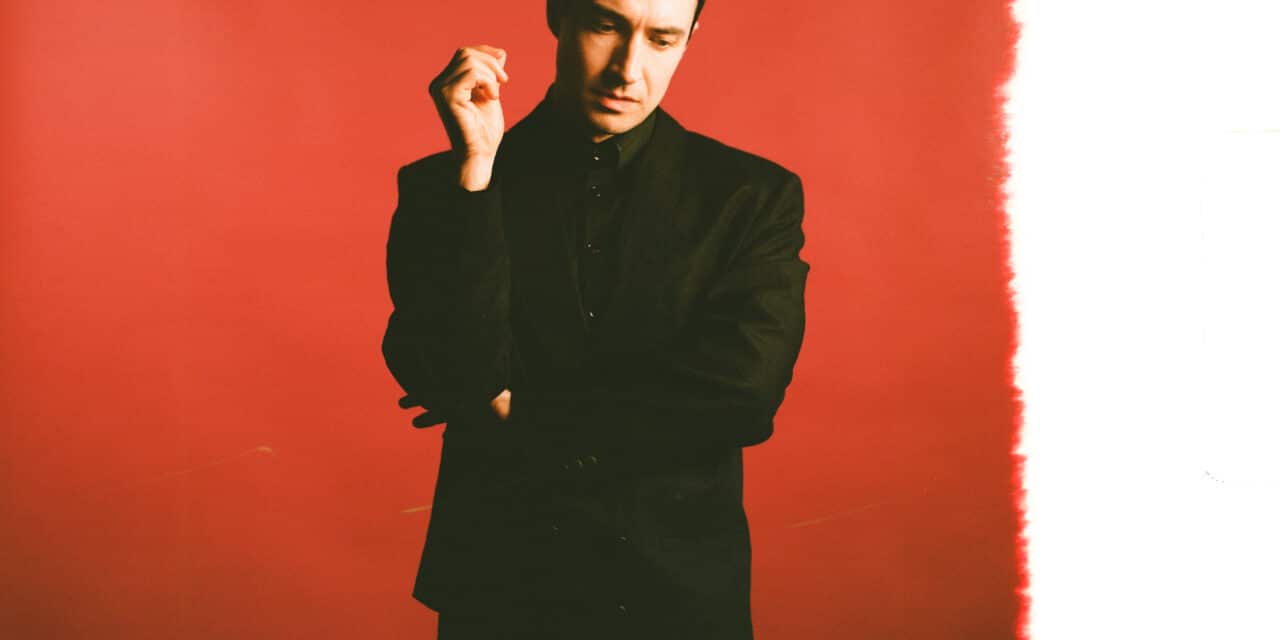
On his album Queen of Ashes, Irish avant-pop artist Christian Cohle transforms addiction, romantic disillusionment, spiritual exploration, and the mythology of desire into an intensely personal meditation on self-discovery. Written between London and Dublin, the record brings together cinematic instrumentation, unconventional pop arrangements, and the uncomfortable realization that the things we believe will complete us can sometimes take us further away from ourselves. In an exclusive conversation with MUNDANE, Cohle reflects on the seductive nature of fantasy, the influence of The Beach Boys’ Pet Sounds, and why learning to live in the present might be the most radical transformation of all.
There is a peculiar tragedy in spending your life chasing something you believe will finally make you happy, only to discover that happiness remains just as elusive once you reach it.
A relationship. A career. Recognition. Love. Success.
We construct elaborate fantasies around the things we want, imagining that acquiring them will somehow resolve the contradictions within ourselves.
But what happens when the dream becomes another form of imprisonment?
For Irish musician Christian Cohle, that question sits at the heart of Queen of Ashes, his October 2026 album and its title track, released September 25.
“Dreams are what you wanted. Ashes are what’s left.”
It’s a deceptively simple statement, but one that captures the philosophical tension running throughout the record.
Written in London with producer Michael Heffernan and recorded in Dublin, “Queen of Ashes” explores Cohle’s experiences with sex and love addiction, the disintegration of romantic fantasies, and the possibility of rediscovering himself beyond the things he once believed he needed.
Yet the song refuses to reduce those experiences to a straightforward narrative of suffering and redemption.
Instead, Cohle constructs a mythological universe where desire becomes a queen, ordinary London streets become sites of spiritual revelation, and destruction exists alongside the possibility of renewal.
The result is a deeply personal work that questions not only what we pursue, but why we believe those pursuits will make us whole.
The Queen as a Symbol of Desire
The character at the center of “Queen of Ashes” emerged almost accidentally.
During a rehearsal session in London, Cohle and Heffernan revisited an eccentric piano progression from an earlier demo.
As Cohle improvised melodies over the recording, the phrase “My, my Queen” appeared.
The piano’s unusual sense of grandeur suggested a royal figure, while memories of a past relationship gradually gave that figure emotional meaning.
“I started thinking about a previous love and relationship of mine from years ago, how she brought dreams and wonder into my life, but when that’s gone, what is left? Sometimes just ashes.”
Over time, the Queen became something larger than a former lover.
She evolved into a symbol of addiction, glamour, fantasy, memory, and desire itself.
For Cohle, these forces share an unsettling characteristic: they can promise fulfillment while gradually consuming the person pursuing them.
“She became a symbol for me of what addiction is: something that promises so much but can rob you of everything.”
The mythology also reflects the way memory transforms experience.
A relationship remembered years later may no longer exist entirely within reality. Instead, it becomes an idealized construction, shaped by longing, imagination, and everything that has happened since.
Cohle is interested in that transformation because it reveals how easily people become attached not to what something was, but to what they believe it represented.
The Queen is therefore both seductive and destructive.
She offers illumination while threatening to burn everything around her.
And within that contradiction lies the emotional foundation of the album.
Learning to Live Without the Fantasy
Although Queen of Ashes explores addiction and relationships, Cohle’s reflections extend into another deeply personal territory: his career as a musician.
Like many independent artists, he once imagined a particular version of professional success.
He expected to have management, potentially a record deal, and more opportunities to perform.
But his career hasn’t developed according to that imagined timeline.
Rather than treating those unrealized expectations exclusively as failures, he has begun questioning the assumptions behind them.
“Can I derive happiness simply from where I am? Can I enjoy what I already have?”
The questions represent a significant shift in perspective.
For years, Cohle found himself measuring his circumstances against a future he believed should already have arrived.
That mentality created what he describes as a constant sense of scarcity.
There was always something missing.
Always another achievement to pursue.
Always another imagined version of life that appeared more complete than the one he was actually living.
The same pattern can emerge in romantic relationships and addictive behavior.
Desire promises resolution, but satisfying one desire often creates room for another.
Eventually, the pursuit itself becomes a distraction from the present.
Cohle describes this experience as a self-made prison, a state of constantly looking backward or forward without fully inhabiting the moment.
Making Queen of Ashes helped him begin dismantling that structure.
“In a lot of ways, this record was a coming home for me. Coming home to myself.”
Songs such as “When The Party Left You” and “Oh It Must Be Nice” address his professional frustrations directly, allowing him to confront feelings he had previously struggled to articulate.
By acknowledging those disappointments, he began loosening their hold over his identity.
The album doesn’t suggest that ambition is inherently destructive.
Instead, it asks whether ambition becomes harmful when personal happiness depends entirely on its fulfillment.
Finding Shiva on an Ordinary London Street
One of the most compelling images in “Queen of Ashes” appears in the lyric:
“Spoke to Shiva on Northend Way.”
The reference brings the Hindu deity associated with destruction and transformation into an ordinary London setting.
For Cohle, that collision between mythology and everyday life is central to the record’s spiritual perspective.
During the album’s creation in 2025, he was moving through London, taking the Underground, working, and confronting difficult patterns in his personal life.
At the same time, he was carrying insights from his experiences training in yoga in India.
Those seemingly different worlds began to overlap.
“I also simply like the juxtaposition—combining the magical with the mundane.”
Cohle describes spirituality as something that exists within ordinary experience rather than exclusively in religious spaces or extraordinary events.
The divine, in his understanding, is not necessarily separate from everyday life.
It can be encountered while walking through a city, commuting to work, or confronting personal uncertainty.
“While I was making my way through the ordinary—swiping into the gate, making my way down those steep escalators that seem to go on forever down into the Underground—Shiva was by my side.”
The image captures the album’s distinctive approach to storytelling.
Mythology doesn’t provide an escape from reality.
It becomes a language through which reality can be understood more deeply.
And the Queen herself exists within that same symbolic framework, representing the simultaneous potential for creation, destruction, and transformation.

The Beauty of Contradiction
Musically, Queen of Ashes is as interested in contradiction as its lyrics.
Cohle draws inspiration from The Beach Boys’ Pet Sounds, particularly its unusual instrumentation and ability to combine playful musical textures with emotionally complex songwriting.
His fascination with the album developed after watching the Brian Wilson biopic Love & Mercy during the recording process.
The film encouraged him to revisit Pet Sounds and embrace a more experimental approach to arrangement.
“I started listening to it a lot. The album showed me, or rather inspired me, to be playful and to jump into the studio with weird ideas and just go with it.”
On “Queen of Ashes,” that philosophy manifests through sleigh bells, Buddhist bells, English horn, strings, and an eccentric piano progression.
The instrumentation creates an atmosphere that feels simultaneously whimsical and unsettling.
Contributions from Ren Pion on saxophone, Kate Ellis on cello, and Ryan McClelland on drums bring additional emotional dimensions to the recording.
For Cohle, collaboration allows a personal experience to become something larger than its original conception.
“I think magic really happens. It’s gorgeous when it works. It can deepen a track emotionally, add other avenues, add other colours.”
That willingness to embrace multiple perspectives also informs the album’s lyrical approach.
Cohle refuses to present himself exclusively as a victim or hero.
At different moments, he recognizes himself as both protagonist and antagonist.
He is equally reluctant to frame the record as a neat account of addiction recovery.
The album contains contradictions because his experiences contained contradictions.
And he believes those tensions are worth preserving rather than resolving.
Hope Without a Happy Ending
Despite its preoccupation with desire, destruction, and self-loss, “Queen of Ashes” contains an unexpectedly hopeful moment.
“Joy is on the horizon.”
The lyric appears not as a declaration of victory, but as an acknowledgment that change might be possible.
For Cohle, its inclusion wasn’t an attempt to construct a satisfying ending.
It simply reflected what he genuinely felt while writing.
“There was darkness, but there was also this feeling that something was shifting.”
He connects this approach to a philosophical idea associated with Nietzsche: that personal wholeness may involve learning to hold contradictory feelings and truths without demanding that one cancel out the other.
Pain and hope can coexist.
A person can recognize destructive patterns while beginning to change them.
And recovery doesn’t have to be complete for moments of genuine joy to emerge.
Looking back at the period when he wrote the album, Cohle now recognizes that his intuition about change was meaningful.
He imagines speaking to his earlier self and reassuring him that new experiences and possibilities were coming.
But he remains careful not to turn that realization into a universal lesson.
Queen of Ashes is not intended as a definitive statement about transformation.
It’s a document of one person’s experiences, with enough ambiguity for listeners to discover their own meanings.
In Conversation With Christian Cohle
MUNDANE: The phrase “Dreams are what you wanted. Ashes are what’s left” feels like the philosophical center of “Queen of Ashes.” What experiences brought you to that realization?
Christian Cohle: I think we all come into life with a certain set of expectations. Where do they come from? All over, from society, our close circle of friends, family, people we look up to, and so on. We build this infrastructure around ourselves of what we think will make us happy and content. That could be anything: a relationship, romance, a career, an idea of what you essentially ‘need’ in order to feel more whole. It’s such an easy trap to fall into.
From my own experience, so much of what I thought would bring me happiness and fill me up inside never really did. Or if it did, it was only momentary.
Life is what is happening to you, but it’s so easy to get wrapped up in dreams and fantasies about what you want your life to be or to what you thought it was, to the point where you’re not actually living. You’re in this zombified state of looking behind, looking ahead, anticipating, frozen in the past, wanting, desiring. It becomes like a self-made prison.
My own music career for example (if you can even call it that, as it still doesn’t pay my bills haha) has left me dealing with these thoughts a lot. I had a lot of expectations about where I’d be by now. I thought I’d have a music manager, maybe be signed to someone, and be playing more shows. But it hasn’t worked out that way for me.
Not to say that it won’t ever, but I was coming to a place in my life, and in my own thinking, where I was exploring this idea of: okay, can I derive happiness simply from where I am? Can I enjoy what I already have? If nothing changes, can I be comfortable with that?
Because if I keep expecting more I’ll just never be happy. I’ll always be living in a state of scarcity, always looking at what’s missing.
And I think that’s where the idea of the ashes comes in. The dream is always this thing you think will complete you, but when you finally get there, there’s often just another dream waiting behind it. So the question becomes: can you stop trying to build your life around what you think will make you happy, and ask yourself what is it you really need, with the grandiosity aside?
MUNDANE: The Queen represents many things simultaneously—desire, addiction, love, glamour, fantasy, memory, and even London itself. When did she begin to emerge as a character rather than simply an idea?
Christian Cohle: When in a rehearsal studio in London last year, Michael, my producer, just got me onto the mic and started improvising vocal ideas and lyrics over this really nice, bouncy piano progression I had written and recorded from a previous session. We dug it out amongst tonnes of demos and musical ideas, and “My, my Queen”—that little opening melody and lyric—just sort of happened there and then.
The piano line had a certain eccentricity and nobility to it that gave me this image of a Queen. Also, I was in the United Kingdom, so maybe that subconsciously played into it haha, I dunno, honestly. But then I started thinking about a previous love and relationship of mine from years ago, how she brought dreams and wonder into my life, but when that’s gone, what is left? Sometimes just ashes. That’s how that figure and idea sort of seeded into something real for me.
I think looking back on a memory after years and years can make it become almost mythological. It’s not exactly framed in total reality anymore, because it exists only in the mind and becomes more symbolic. The title became this massive playground for me creatively, and it was also in that moment that I discovered it spoke so much to my addiction and where I was struggling.
She became a symbol for me of what addiction is: something that promises so much but can rob you of everything. She is many things, but The Queen of Ashes is that burning element that can illuminate, elicit euphoria, yet also destroy and burn you.
MUNDANE: You’ve spoken openly about your experiences with sex and love addiction. How do you transform something so personal into art without either romanticizing it or allowing it to completely define the work?
Christian Cohle: I think art has to be personal. Find what is real to you and then move from there, that’s how I usually work. There’s a moral ambivalence to this record, I’m at times the protagonist and at times the antagonist, so I definitely don’t believe I am romanticizing anything.
Addiction is like one piece of furniture to this album, definitely a significant piece, but there is so much more to it than just that, so for it to be defined simply as that, I would see that as an oversimplification.
I also believe art is so much bigger than the individual so even if I write something from a particular experience that’s not to say that that’s what the work is purely about. There is this push to define art and honestly it bugs me out.
MUNDANE: There’s a fascinating collision between mythology and everyday London in the song, particularly with the image “Spoke to Shiva on Northend Way.” What interests you about placing gods and spiritual imagery inside such ordinary environments?
Christian Cohle: Because God, or whatever word you want to use, is found everywhere. I think it’s a Sufi idea, if I’m correct, but I love the idea that nothing exists independently of God. I know God is a very loaded and charged word. I’m using it not in the traditional sense here, but more in my understanding of a sort of divine nature that exists in all of us and in the world around us. A sort of higher intelligence that goes beyond intellect.
I also simply like the juxtaposition—combining the magical with the mundane. When writing these songs, the use of mythology and symbolism helped me get deeper down into the core of the song and what needed to be expressed.
We carry divinity around with us, and it’s sort of a frequency that can be tuned into at any time. I’m realizing that more than ever now. I was recording the album in London in 2025, moving around, getting the tube, clocking in and out, at times discouraged with where I was in terms of my addiction and habits, albeit I still felt that influence carrying forwards with me that I had gained during my time in India.
While I was making my way through the ordinary—swiping into the gate, making my way down those steep escalators that seem to go on forever down into the Underground—Shiva was by my side.
MUNDANE: “Queen of Ashes” deals heavily with self-loss—the idea of pursuing something you believe will complete you only to discover that you’ve moved further away from yourself. How did making this album affect your understanding of who you are without the things you once chased?
Christian Cohle: In a lot of ways, this record was a coming home for me. Coming home to myself. Trying to cut away the artifice, the distractions, the mirrors in my life that were sort of playing tricks on me. Making this record helped me see that I was responsible in so much that a lot of my struggles with past relationships, current, and difficulties with intimacy were due to me.
A friend in a support group I’m in broke down intimacy once in a real profound way, calling it ‘into-me-I-see’. I love that, cause this record forced me to look into myself, in a way I hadn’t before.
It also helped land my feet on the ground. I think I had spent so many years wanting my music career to be a certain way, having expectations, that often left me always feeling like a failure or being very aware of what I lacked. By openly speaking out how I felt about my career, which you can hear in the opening tracks When The Party Left You and in Oh It Must Be Nice, it took some of the power away from that gnawing feeling.
It brought about a new direction, and a new question: can I be content where I am?
MUNDANE: Amid all the darkness, the bridge offers the line “Joy is on the horizon.” Why was it important that hope exist within the song without turning the story into a neat redemption narrative?
Christian Cohle: Because I simply felt hope was on the horizon. It wasn’t manufactured or strategic. I don’t really care about “neatness” in my songwriting, in terms of narrative or otherwise. I think contradictions are powerful.
There’s a Nietzschean idea that resonates with me: that perhaps the more contradictions you’re capable of holding within yourself, the more whole you can become—being able to hold conflicting ideas, feelings and truths at once without needing to resolve them.
That really resonates with me. Even amidst the chaos of Queen of Ashes, I genuinely felt change coming. I sincerely did. There was darkness, but there was also this feeling that something was shifting, and I didn’t want to deny that just because it didn’t fit neatly into the story.
I can look at where my life is now and almost speak back to the Christian of 2025 and say, “You were right. Things are changing. You will take on new adventures. You will feel hope again.”
So “Joy is on the horizon” isn’t a redemption narrative. It’s just the truth of what I felt at the time. The darkness and the hope were both real.
MUNDANE: Pet Sounds influenced the record’s layered instrumentation, including unusual details like sleigh bells, Buddhist bells, and English horn. What did that album teach you about using beautiful or even playful sounds to carry emotionally complicated subject matter?
Christian Cohle: I watched the biopic Love & Mercy that year while making the record. Paul Dano plays Brian Wilson, and a lot of the film documents his time in the studio recording Pet Sounds. Honestly, I generally hate movies about artists and musicians. They’re mostly pure shite. They’re so overly romanticised and Hollywood-ised that I find them difficult to watch, but I actually really enjoyed this one.
Anyway, the film was my doorway into Pet Sounds, and I started listening to it a lot. The album showed me, or rather inspired me, to be playful and to jump into the studio with weird ideas and just go with it.
Queen of Ashes has always had this eerie but also playful tone to it, from the piano rhythm to the vocal melody. I felt that using sleigh bells, Buddhist bells, English horn and strings could add to that quirkiness.
The sleigh bells in God Only Knows, the horns—they give the song such a timeless and magical feel. I wanted to incorporate some of that and pay homage to such an incredible record in general.
I told Ren, my horn player, that I wanted to use The Beach Boys as a reference, and I think he references them really well in his horn lines.
MUNDANE: Ren Pion, Kate Ellis, and Ryan McClelland bring saxophone, cello, and drums into this very personal world. What happens emotionally to a song when other musicians begin interpreting experiences that originated entirely within you?
Christian Cohle: I think magic really happens. It’s gorgeous when it works. It can deepen a track emotionally, add other avenues, add other colours.
I’ve worked a bit already with Ren and Kate. They both play on my previous album, WETLANDS, and they’re such accomplished players and lovely people to deal with. Ryan was my drum teacher for a short time, as I wanted to learn how to play a bit, haha. He’s a great guy and he too was brilliant on this track.
I was fortunate to track the drums with Ryan in the studio myself, so that always helps in a way. We can both decide what works, what the vibe is, where we want it to go. There’s a real dialogue that happens.
Sometimes a musician’s interpretation may not always work either, and that’s okay too. That’s all part of the process. When it feels right, it feels right.
MUNDANE: Across “Levitate,” “Living With Lucy,” and now “Queen of Ashes,” there seems to be a recurring tension between euphoria and erosion, intimacy and disappearance, destruction and reinvention. Did you recognize those patterns while writing, or only once the album began taking shape?
Christian Cohle: I was definitely aware of some of those recurring tensions, yes. I felt there was a great deal of ambivalence happening—conflicting energies. I wanted the album to record that: moral ambivalence, sacred and secular, urban streets versus celestial or mythological ground, destruction and reinvention.
I could definitely recognise some of these opposing forces while I was writing, but not all of them. I think I had a much greater sense of those tensions as the album began to take shape. Some of them were very conscious, and others I only really recognised retrospectively, once I could see the record as a whole.
MUNDANE: Queen of Ashes brings together addiction recovery, London, mythology, spirituality, intimacy, and your experiences training in yoga in India. When listeners reach the end of the album, what question about transformation do you hope they’re left asking themselves?
Christian Cohle: I don’t really feel entitled to answer that. Whatever question arises from the album is going to be extremely personal to the listener. I wrote these songs for me, so I don’t want to prescribe what someone else should take from them.
But if Queen of Ashes sparks something like a realisation, a question, or even just a feeling of solace or understanding—that’s always a pure gift to me.
I’m always moved when people tell me that my music has helped them, or that they’ve connected deeply with it. That’s really all I could hope for.
I don’t feel this album is a neat thesis about transformation. It’s simply my experience, and a listener can find their own meaning within it. I’m still transforming, as we all are, day to day. At least, that’s the hope. I think we should continue to grow, continue to explore and continue to ask questions.
Finding Yourself Beyond What You Thought You Needed
What makes Queen of Ashes compelling is its refusal to offer a definitive answer to the questions it raises.
Cohle doesn’t claim to have overcome every destructive pattern or discovered a permanent state of happiness.
He is still questioning his ambitions, his relationships, and the expectations that have shaped his identity.
But the album suggests that transformation may begin with a different understanding of fulfillment.
Perhaps happiness isn’t always waiting at the end of another achievement.
Perhaps intimacy requires recognizing the parts of ourselves we would rather avoid.
And perhaps the dreams that once defined us can become obstacles when we mistake them for the entirety of life.
Cohle’s use of mythology gives these ordinary human struggles a larger imaginative scale, but the underlying questions remain intimate and recognizable.
What do we actually need?
How much of our suffering comes from the expectations we construct?
And who might we become if we stopped measuring ourselves exclusively against the lives we once imagined?
For Cohle, the process of making Queen of Ashes has been an opportunity to confront those questions without demanding immediate resolution.
Because sometimes transformation isn’t about finally obtaining everything we dreamed of. It’s about discovering that we might already possess more than we thought—and learning to live before the next dream takes over.
Artist: Christian Cohle
Single: “Queen of Ashes” — September 25, 2026
Album: Queen of Ashes — October 2026
Genre: Avant-Pop / Alternative / Art Pop
Collaborators: Michael Heffernan (production), Ren Pion (saxophone), Kate Ellis (cello), Ryan McClelland (drums)
Listen: “Queen of Ashes” on Spotify
Watch: “Queen of Ashes” Visualiser