With “WHIP IT,” the Eastside rapper turns pressure, grief, loyalty, and raw momentum into a sound that feels chaotic, calculated, and impossible to ignore.
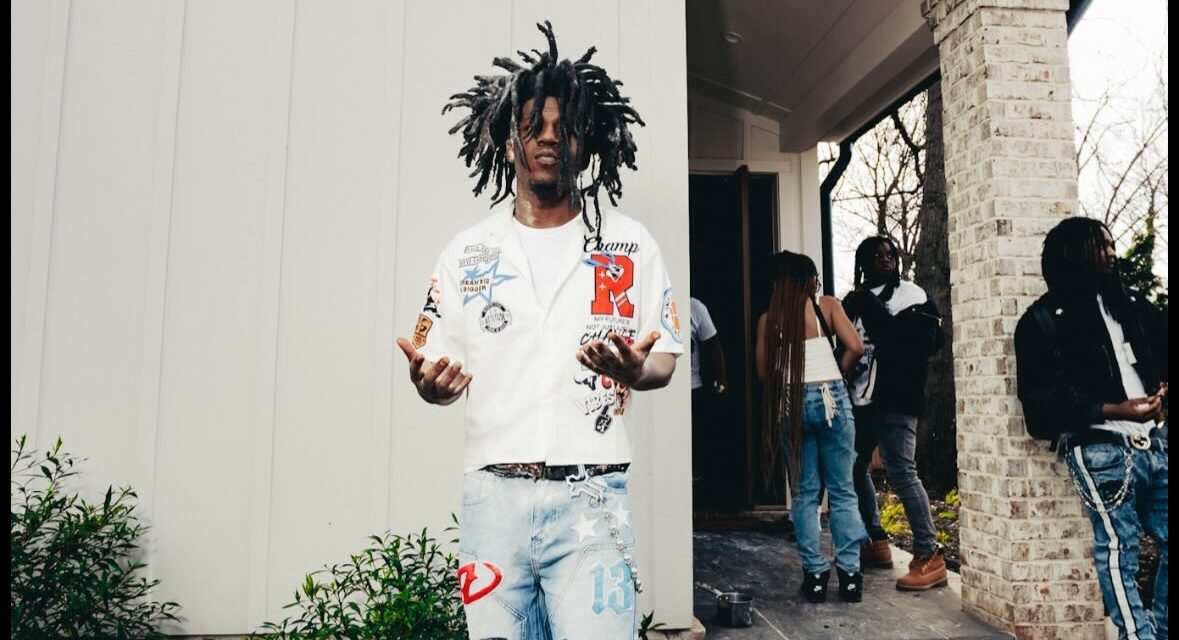
If you’re paying attention to the next wave rising out of Atlanta, Ealuhri is the kind of artist who doesn’t really ask for space—he takes it. Pronounced Ee-Ay-Luh-Ree, the Eastside native is moving with the kind of urgency that only comes from someone who has already lived through more than most artists do before their first breakout moment. And on “WHIP IT,” he sounds like he knows exactly how much is at stake.
The track, presented by Montreality DVD and featuring YTLILRIC and Yung Rokk, is the lead cut from his upcoming tape YWW, executive produced by Atlanta mainstay Popstar Benny. Built on cloudy synths, frenzied pacing, and bars that feel like they’re lunging forward in real time, “WHIP IT” captures the kind of raw, unstable energy that makes underground rap feel alive before the rest of the industry has even figured out what to call it.
That kind of intensity has become central to Ealuhri’s rise. Earlier tracks like “JODY JO” and “Nickelodeon Slime” pushed him into viral circulation, with “JODY JO” alone generating over 100,000 TikTok creates and more than 10 million streams across platforms. But numbers only tell part of the story. What gives Ealuhri’s music weight is the life behind it.
He became the sole provider for his family at 14, hustling as an Atlanta Waterboy, and after the death of his best friend LIL YO, he formed LILYOGANG in his honor. That loss seems to sit underneath everything—not always explicitly, but structurally. Loyalty, pressure, grief, ambition, and survival all feel wired into the music. Even when the sound is volatile, the intent never feels random.
That tension is what makes Ealuhri especially compelling right now. His music can sound chaotic, but there is a clear sense of self underneath it. He’s part of a generation shaped by the sonic aftershocks of artists like Playboi Carti and Ken Carson, but he speaks about that lineage less as something to join than something to push forward. He knows the era he’s walking out of. He’s more interested in defining the one that comes next.
For Mundane Magazine, Ealuhri talks about Atlanta’s culture machine, carrying responsibility from a young age, honoring LIL YO, building with LILYOGANG, and what “taking 2026” actually means.
Q&A with Ealuhri
Question: Atlanta has always been a city that doesn’t just follow culture—it creates it. What does it mean to you to come out of that lineage while also trying to reshape it?
Answer: Nah twin, these niggas be following. It’s very few creators, shit DOUBLEM… it’s a matter of time before the world see that 🪀
Question: Your music feels chaotic, almost volatile, but also deeply intentional. How much of that sound is instinct, and how much is a reflection of everything you’ve lived through?
Answer: I’m just a youngin’ from the block that gets paid to rap. Everything starts there.
Question: You’ve been carrying responsibility since you were 14. How did becoming a provider so young shape your mindset—not just as a person, but as an artist?
Answer: It made me cold to certain shit because I had to see the real world a lot earlier.
Question: Losing LIL YO seems like a defining turning point. When you make music now, do you feel like you’re continuing his vision, or building something entirely your own?
Answer: Both.
Question: The formation of LILYOGANG feels rooted in loyalty and memory. How does that collective energy influence the way you approach success and pressure?
Answer: Pressure makes diamonds, and I’ve been through far worse in my personal life.
Question: Your rise has been fast—viral moments, cosigns, millions of streams. What parts of this momentum feel real to you, and what parts still feel surreal?
Answer: Rocking shows and seeing our supporters rap our shit word for word. It’s always kind of an unreal feeling.
Question: Artists like Playboi Carti and Ken Carson have helped define the Opium-era sound. Where do you see yourself fitting into—or breaking away from—that movement?
Answer: They paved the way for that era, I’m trying to pave the way for ours.
Question: There’s a raw honesty in your story—shifting from survival in the streets to building something legitimate. How do you navigate telling that story without being defined by it?
Answer: I wake up every day trying to better myself. Yes, I went through a lot, but it made me who I am today. I’m grateful and appreciative, but I don’t let my past put limits on my future.
Question: “JODY JO” and “Nickelodeon Slime” tapped into something viral, but virality can be fleeting. What’s your vision for longevity beyond the moment?
Answer: I want more. I could’ve been did a lot of things, but I rather it take longer and make more sense than rushing to the promised land and having to come back.
Question: You’ve said 2026 is yours to take. When you look ahead, what does “taking it” actually mean—fame, freedom, legacy, or something else entirely?
Answer: EVERYTHING 🪀
What stands out most about Ealuhri is that his story doesn’t feel packaged for effect. It feels lived in. The pressure is real, the losses are real, and the ambition is real too. That combination can create artists who move recklessly—but in Ealuhri’s case, it seems to be creating someone sharper than that. Someone who understands that speed matters, but timing matters more.
That’s part of what makes “WHIP IT” such an effective introduction point. It hits with the force of a breakout record, but it also suggests something bigger coming into focus. This isn’t just another viral Atlanta rapper catching a moment online. This feels more like the beginning of an artist trying to build an era around his own rules, his own circle, and his own idea of what survival can become once it starts turning into vision.
Ealuhri isn’t talking like someone hoping for a lane.
He’s talking like someone already building one.