With songs spanning nearly fifty years, the cult jazz-rock songwriter returns not with a comeback, but with a body of work that feels uncannily in dialogue with the present.
There is something quietly radical about an artist who keeps writing even when nobody is watching.
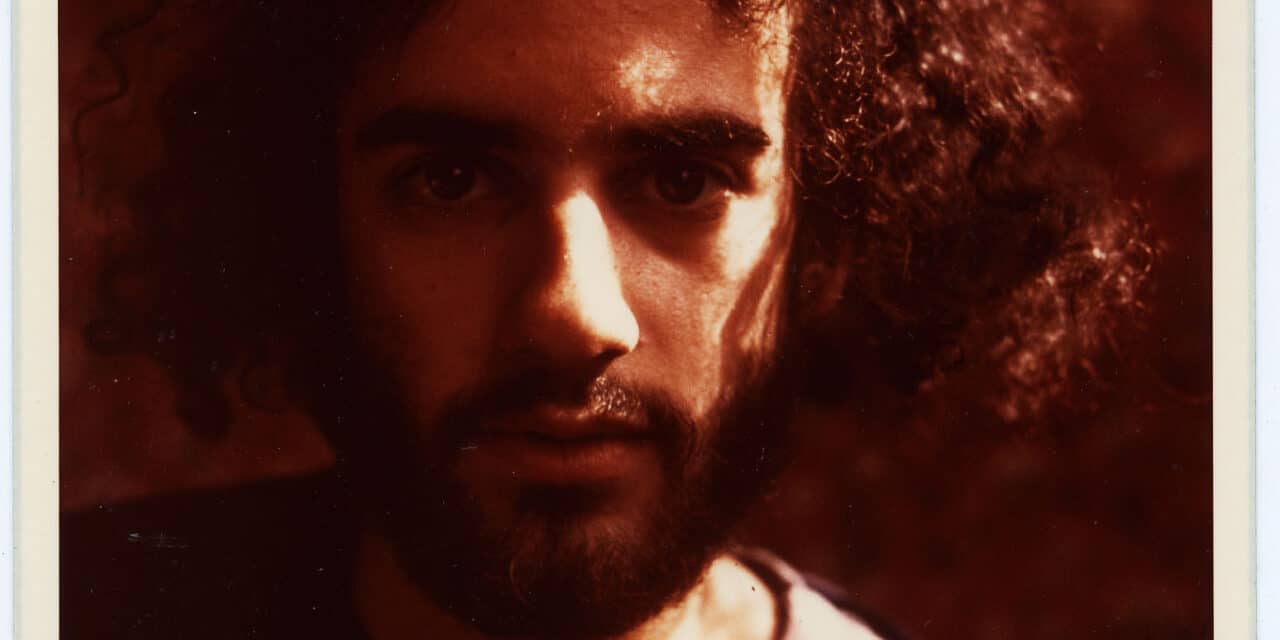
For decades, Gary Marks did exactly that. While the machinery of the music industry kept moving—tour cycles, visibility games, formula, pressure—Marks stepped away from the system without stepping away from the work. He continued writing songs about power, freedom, conscience, and the fragile state of the world, building an archive that now feels startlingly timely.
That archive becomes Crossroads, out April 18 via Lantern Heights Records, a new LP gathering work written between 1976 and 2021 into a single thematic body. Selected as an official Record Store Day UK/Europe release, the album is less a traditional return than a revelation: a chance to hear how one songwriter has spent decades tracing patterns most of us only recognize once they become unavoidable.
Its lead single, “I Guess It Never Stops,” carries the kind of devastating calm that makes its critique hit even harder. Environmental collapse, greed, power, social distortion—Marks doesn’t write about these things as abstract anxieties, but as recurring cycles of human behavior. That sensibility runs throughout Crossroads, an album shaped not by trend or topicality, but by a long view.
And that may be what makes it feel so current now. Marks was not trying to predict the future. He was writing about structures—political, psychological, moral—that keep repeating. In that sense, Crossroads is not nostalgic, even when it pulls from songs written in the 1970s. It is startlingly present.
Musically, the album bridges worlds. Earlier work leans toward folk-jazz, with collaborators such as John Scofield, Mark Isham, and Paul McCandless shaping its sonic language. Later material expands into classic rock textures, while still holding onto the improvisational spirit and emotional clarity that define Marks’ writing. The result is a record with range, but also with a strong internal line: every song is navigating some version of the same question.
How do we move through the inner and outer struggles of life without giving ourselves over to destruction, denial, or control?
For Mundane Magazine, Gary Marks reflects on why these songs are surfacing now, what it means to create outside the industry, why the album format still matters, and how complexity can deepen emotional truth rather than obscure it.
Question: Crossroads feels less like a comeback and more like a revelation. Why bring these decades of work into the light now, after so long outside the traditional system?
Answer: Lantern Heights wanted to release an album of songs I’d written that resonated with today’s political and cultural climate. I had 24 songs that fit that general concept. We chose 14 of the 24 because that’s all we could fit onto two sides of vinyl. The others will just have to wait. But it should be interesting to see what the reaction is after it’s released.
Question: You’ve spent much of your career refusing the machinery of the music industry—no touring, no chasing visibility. Was that a conscious rebellion, or simply the only way you could remain truthful in your work?
Answer: I personally didn’t like touring, singing the same songs over and over, and being told where to go and what to sing. I felt I could write more authentically without touring, and without the music business consciously or unconsciously shaping what I wrote about—or worse, telling me what I should or shouldn’t write.
In the end, I wanted to be proud of the songs I wrote 30 years later, even if no one heard them. That would be more fulfilling than potentially being successful in the business, but writing from a formula. There certainly are artists that could do both—Springsteen, Don Henley, Jackson Browne, Sting, Michael Jackson. Some artists feed off the pressure, the audience, the record company deadlines, or contractual demands. Some eventually get so big they can write their own rules. I love so much of their music. It’s timeless. It’s unique to them. They are the brilliant exceptions compared to what usually happens. I just didn’t see myself being able to do that, or wanting to try.
Question: The album spans nearly 50 years of songwriting, yet the themes—power, environmental collapse, conscience—feel eerily current. Do you see your work as prophetic, or is it more a reflection of patterns that never really change?
Answer: I never tried to forecast the future. I was just writing about the present back then, in a general way. So yes, I was consciously writing more about political patterns, and psychological patterns inside of us, that never change, or are hard to change.
But I think there are also changes going on right now in America that I never thought would happen after the Nixon era. What we all know is, no would-be dictator is going to allow true freedom to exist inside his or her own country. So if we really want the American dream to be more than just spoken or written ideals, we need to choose democracy over dictators. That’s the obvious part.
But this Supreme Court has now given the presidency itself the power of a king. This was never meant to be. Whatever you think of the outcome of the Trump presidency, it’s really not the point. The point is, all future presidents are going to have virtually limitless power—power to commit crimes, accept bribes, override Congress, defy the courts. That includes the next Democrat who becomes president too.
So, by focusing on the broader issues, my writing is more timeless than talking about a particular politician or party. I guess that’s why Lantern Heights thought Crossroads would be unique at this point in time, even though some of the songs are decades old.
Question: “I Guess It Never Stops” carries a quiet but devastating critique of humanity’s trajectory. When you write about these cycles of destruction, do you feel more hopeful or more resigned?
Answer: I think if we acknowledge the problems out in the open, then it’s possible someday positive change can come. So in that way, I’m hopeful. I’ve always been an optimist, because it’s a great way to stay sane and have a happier life. So I don’t go around thinking about these things hour by hour. But I do want to write about them and increase awareness, if possible, about the larger issues that need to be talked about. Because I also don’t think it’s going to serve anyone to stake their claim, and plant their victory flag on the beach, while ignoring the tidal wave forming out there.
Question: There’s something almost radical today about believing in the album as a complete body of work. What does the album format allow you to say that a single—or a moment—never could?
Answer: That’s such a great question, and such a great reason to love vinyl records. Because the band or writer can create a large, unified work that stands on its own as a singular piece of art. Crossroads is able to bridge decades of songs with a socio-political arc.
Some of the songs from the 1970s are more folk-jazz stylistically, with John Scofield playing guitar. Some of the later work is classic rock with guitarist Stef Burns taking amazing solos. Jazz virtuoso Paul McCandless takes solos over rock songs. So in that way there is great diversity. But the lyrics hold everything together because they are all about the inner and outer struggles we have to navigate our way through, here and now.
As far as the album format in general, I remember listening to The Beatles and trying to decipher their messages and their album covers. Then Sgt. Pepper was released. Then The Who followed that with their rock opera, Tommy. And, of course, Dylan’s Blonde on Blonde in its own way. These, and so many other albums back then, became classics not because of one song, but because they had some underlying sound and message that unified the whole. Online music changed this. And that’s fine too. But Crossroads tries to bring back this idea of a “thematic” album. Even the album cover tells the story. Hopefully, it will stand the test of time.
Question: You’ve collaborated with musicians like John Scofield and Mark Isham early in their careers. How did those creative exchanges shape the sonic language you developed?
Answer: I could never have thought up arrangements that equaled the level of brilliance they created by improvising ideas on the fly. So the most important sonic influence was trusting improvisation as part of the arranging of a song. Letting go of the idea of note-by-note control.
Of course, first, we had to come to an emotional agreement of what I was trying to say, lyrically and musically. But once we agreed on that, with players like Paul McCandless, Michael Cochrane, Art Lande, David Samuels, Scofield and Mark Isham, and later Stef Burns and Tony Saunders, my job was to evolve my sound with them, while keeping everything within the emotional framework of the story or message of the song.
Question: Eight full albums existed in parallel to the industry—unreleased, undistributed, almost hidden. What does it mean to create without an audience in mind?
Answer: I did have an audience in mind. I had my musical muses, and my family and friends, and musicians I respected, as well as some diehard fans. So I would write for myself in isolation. But then, if I played that song for them and it didn’t get the reaction I was hoping for, I’d throw it out, or make big changes. If it did get the reaction I was hoping for, I knew I’d written something worth recording.
Question: The title Crossroads suggests decision, tension, and possibility. Do you feel like this moment—both personally and culturally—is a point of no return?
Answer: It’s not a point of no return at all. It’s the exact opposite. A crossroads by definition is an intersection that requires choice. We either choose a way to move forward, or head in the wrong direction.
Do we act on environmental awareness and scientific facts, or just take what we need and let future generations deal with the fallout? Do we buy into the terrible things we say inside our own minds about other people until we are saying those things about ourselves? Or do we read the signs and fight back internally, and choose to create a more peaceful, happier reality? Each of these crossroads are intersections we come to often. Sometimes daily. The paths we choose define us.
Question: Your music often bridges jazz, rock, and something more philosophical. How do you approach complexity without losing emotional clarity?
Answer: That’s a cool question. I do think it’s important not to choose anything for purely intellectual reasons. It has to be a part of what you feel, and how you naturally hear music. I’ve never tried to be jazzy, or complex. But at one point I became very curious and excited by complicated chord formations and asymmetric meter.
I studied these things when I was learning piano from Michael Cochrane and then Art Lande. Each of them were amazing teachers because they taught me as a songwriter learning piano, not just as a pianist. So for instance, as part of my piano lessons, Art Lande would have me sit with a hand drum and play for 5 minutes in 5/4, then 7/4, and 11/4. Then I would improvise on piano, and suddenly these asymmetric meters would become part of what I heard, and how I played.
Or I would just press down on a bunch of random notes in a key and not try to name the chord. But if I liked the sound, I would learn it in all keys until it became part of my sound. If these kinds of rhythmic and harmonic complexities become a part of how you play, and how you hear, then words like jazz or rock become meaningless. It’s just your sound. And the emotional clarity isn’t lost, the complexity just gives you more ways to express what you feel.
Question: After five decades of writing, what still compels you to pick up the pen? Is it urgency, curiosity, or something closer to responsibility?
Answer: I don’t feel a responsibility to write. In fact, I think feeling a responsibility too often turns any kind of art into work, and formula. Writing, for me, has to come from improvisation, without deliberately starting out trying to capture anything. Once an idea captures my attention, I love following it and seeing where it leads. Sometimes it leads to a very pleasant dead end that I bow to and move on. Sometimes it becomes part of my next album.
What feels most striking about Gary Marks is not simply that he kept writing outside the spotlight. It is that he kept writing with the same seriousness of thought, the same musical curiosity, and the same refusal to flatten complexity into easy messaging. Crossroads is powerful because it does not feel like recovered material dusted off for relevance. It feels like proof that relevance was there all along.
In an era dominated by immediacy, singles, and attention economies, Marks returns with something slower and more demanding: a thematic album that asks to be heard as a whole, not skimmed for highlights. The politics are there, the environmental anxiety is there, the moral unease is there—but so is a deep faith in music as a structure for thinking and feeling at the same time.
That may be the quiet radicalism of Crossroads. Not that it predicts the present, but that it reminds us how long the signs have been visible, how often we arrive at the same intersections, and how much art can still do when it refuses formula.
Gary Marks never stopped writing.
He simply waited for the right moment to let the work speak again.