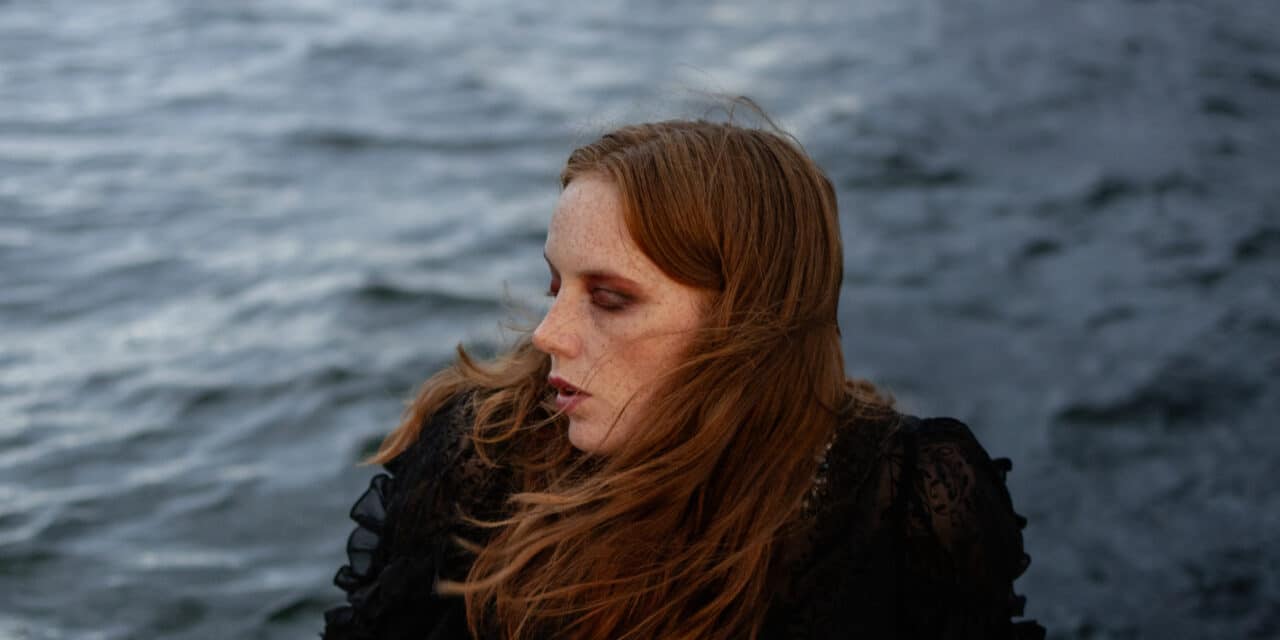
On her sophomore album More Water Than Anything, Swedish alt-pop artist GERD ventures into the forests and supernatural mythology of Värmland to explore loneliness, intimacy, and the fragile contradictions of being human. Blending operatic vocals with cinematic production, she creates a world where nature becomes a character, emotions take physical form, and the line between reality and imagination begins to disappear.
There’s something strangely comforting about realizing that, beneath all our emotional complexity, we’re mostly just water.
For Swedish singer-songwriter GERD, that realization became the unexpected inspiration behind her sophomore album, More Water Than Anything, a project that examines loneliness, human connection, and the desire to feel something undeniably real.
“The title actually came from watching a documentary about the human body,” she explains. “We have created this incredibly complicated emotional existence for ourselves, but physically we’re mostly just water.”
She laughs at the absurdity of it all.
“We’re basically cucumbers and it helps me feel less serious about everything.”
That combination of existential curiosity, humor, and emotional vulnerability runs throughout the record, which took shape on a secluded island in Värmland, surrounded by forests, water, and long nights.
Away from the constant distractions of city life, GERD found herself immersed in an environment where everyday routines became almost ritualistic.
Swimming, cooking, writing songs, and gathering around the piano replaced the pressures of ordinary life.
Occasionally, a moose would swim past.
“There are two times now I’ve seen a moose swim past!” she recalls. “Everything becomes very basic but also so magic.”
When the Forest Starts Talking Back
As the songs developed, GERD became increasingly fascinated by Swedish folklore, fairy tales, and the supernatural creatures that inhabit them.
But rather than treating mythology as an aesthetic reference, she began exploring its psychological possibilities.
“I think folklore allows feelings to have a body,” she explains.
For an artist interested in the complexities of human emotion, mythical beings offered a way to externalize fears and desires that might otherwise remain impossible to articulate.
A sound in the darkness could become a creature following you through the forest.
Or perhaps it was simply a manifestation of something already living inside your mind.
“Is the monster actually there? Is it something inside you? I don’t really think it matters.”
That ambiguity became part of the album’s emotional language.
Rather than separating imagination from reality, GERD allows them to coexist, creating an atmosphere where the supernatural feels less like an escape from human experience and more like an extension of it.
The surrounding landscape also challenged her understanding of humanity’s relationship with nature.
In cities, she suggests, we become accustomed to believing that the world exists to accommodate us.
But in the forest, exposed to rain, insects, darkness, and the indifference of the natural world, that illusion quickly disappears.
“You remember that you’re just another animal.”
Finding Power in Vulnerability
Trained in opera, GERD possesses a vocal range capable of enormous emotional and dramatic expression.
Yet More Water Than Anything also reflects her growing interest in restraint.
“When you’ve had classical training, you know you can make a lot of sound,” she says. “But I don’t think that means it’s always the most emotional choice or the best way to tell a story.”
That tension between grandeur and intimacy helps define her distinctive approach to alternative pop.
Her music occupies a cinematic space somewhere between the theatrical intensity of Florence + The Machine and the atmospheric experimentation of contemporary electronic pop.
But GERD is less interested in presenting herself as an untouchable protagonist than inviting listeners into the emotional world she creates.
“I don’t really want GERD to be this perfect person standing in the middle of everything,” she explains. “I want it to feel like we’re all wandering around in a world of melodramatic surrealism, high on emotions together.”
And despite the album’s origins in isolation, its ultimate message is about connection.
For GERD, being alone isn’t necessarily the same as feeling lonely.
Loneliness emerges when the desire for closeness exists alongside an inability to reach it.
Perhaps the most vulnerable thing we can do is admit that we need other people.
“Maybe it’s actually quite brave to say, ‘I don’t want to do this completely alone.’”
With More Water Than Anything, GERD transforms that admission into a world of mythical creatures, cinematic melodies, and deeply human emotions.
And in sharing those experiences, she hopes that the solitude from which the music emerged can become something communal.
“Someone hears it and says, ‘I felt that too.’ Then suddenly neither of you is quite as alone.”
In Conversation With GERD
More Water Than Anything revolves around loneliness, closeness and the very human desire to be held. When you began making the record, were you consciously trying to understand loneliness, or did you only recognize that theme once the songs started revealing themselves to you?
I don’t think I went into the album thinking, “I’m going to make an album about loneliness”. It was more something that evolved over time. I was writing all these songs about wanting clarity from and for myself, craving to understand my truths, wanting to feel something, anything, that was truly real. And eventually I realized they were all circling the same thing.
Much of the album took shape while you were surrounded by forests, water and long nights on a secluded island in Värmland. Did that isolation make you feel more alone, or did being removed from people actually make you feel more connected to yourself?
On the island there’s no pressure to be anything. You get up, you swim, you sit by the piano, you make food. There are two times now I’ve seen a moose swim past! Everything becomes very basic but also so magic.
And I think because everything around you gets quieter, you actually hear yourself more clearly. Which isn’t always comfortable.
We also brought writers and producers out there, and because you can’t really leave (there’s a boat ride to the island) then you’re living very close to the music. You cook together and drink wine and talk about strange things late at night and when it’s time to create no one asks ”what we’re doing today” cause we’re already in it.
The title More Water Than Anything feels simultaneously physical, emotional and almost mythological. What does “water” represent within the world of this album—and why did it become the element capable of holding all these songs together?
The title actually came from watching a documentary about the human body. I had this moment of thinking: we have created this incredibly complicated emotional existence for ourselves, but physically we’re mostly just water.
It’s so surreal, in the best way, we’re basically cucumbers and it helps me feel less serious about everything. I love the thought that underneath everything complicated about us, we’re something incredibly simple, water.
You became increasingly fascinated by Swedish folklore, supernatural beings and fairy tales while making the record. What could those mythical figures express about very contemporary emotions that writing purely autobiographically couldn’t?
I think folklore allows feelings to have a body.
If you’re afraid of something but you don’t really know what you’re afraid of, it’s quite useful to imagine there is actually something following you through the forest.
We talked a lot about that when we were on the island. You’re walking outside when it’s completely dark and you hear something moving and suddenly all those old stories make complete sense. Is the monster actually there? Is it something inside you? I don’t really think it matters.
You’ve described this environment where the forest, silence and the feeling of something moving at the edge of perception began affecting your inner world. Did you ever reach a point where the boundary between imagining the supernatural and genuinely feeling its presence became less important?
Yes. And I think that’s the fun part.
I’m not going to tell you that I definitely saw a forest creature in Värmland. But after you’ve been sitting by the water for hours and it gets completely dark and you start hearing things in the forest, you understand why those stories exist.
You don’t really need to decide whether something is real or imagined.
There’s an interesting contradiction in making an album about the need for human closeness in relative isolation. Do you think sometimes we have to experience absence very intensely before we understand what kind of intimacy we’re actually looking for?
You can convince yourself that you don’t need something when it is always available. And then when it’s taken away, suddenly your needs becomes very obvious.
Your background in opera gives you access to a kind of vocal scale and drama that isn’t always associated with contemporary alt-pop. Has part of developing GERD been learning when to unleash that power—and, perhaps more importantly, when to restrain it?
When you’ve had classical training, you know you can make a lot of sound. And I love doing that. It’s very physical and it feels amazing. But I don’t think that means it’s always the most emotional choice or the best way to tell a story. I’m still trying to find that balance.
Your music has often been described as cinematic, and this album seems to build an entire environment rather than simply a collection of songs. When you were creating it, did you imagine yourself as the narrator of this world, a character wandering through it, or perhaps one of the mythical creatures inhabiting it?
I think when I’m writing, I’m very much inside it. I’m not standing outside telling you what this world looks like, I’m living it, and hopefully you join in when the music connects with you.
Once we start doing the visuals and the live show, I can step outside it more and think about how to help somebody else enter the world of GERD.
I don’t really want GERD to be this perfect person standing in the middle of everything. I want it to feel like we’re all wandering around in a world of melodramatic surrealism, high on emotions together.
Swedish folklore often gives nature agency—the landscape isn’t simply scenery but something mysterious, alive and sometimes threatening. Has making More Water Than Anything changed the way you think about humanity’s relationship with nature, particularly our tendency to believe we’re separate from it?
I think being on the island makes it very difficult to believe you’re in charge of very much.
In a city you can create this illusion that everything exists for us. The lights come on, the trains arrive, you order food and somebody brings it to your door. And then you’re in the forest and it’s raining and you’re cold and there are insects everywhere and a bird is watching you as soaked as you are, you remember that you’re just another animal.
Maybe that’s part of why the folklore came in too. In those stories, nature isn’t there as decoration for humans. It has its own personality and power. You have to respect it.
If your fascination with folklore gave you a language for exploring loneliness, desire and the need to be held, what did completing More Water Than Anything ultimately teach you about the difference between being alone and actually feeling lonely?
Loneliness is different because it’s wanting connection and not knowing how to reach it.
Maybe it’s actually quite brave to say, ”I don’t want to do this completely alone”.
And then hopefully the nice thing about releasing music is that something you made in solitude stops belonging only to you. Someone hears it and says, “I felt that too.” Then suddenly neither of you is quite as alone. That’s what I try to achieve at the concerts, cause everyone in that room is there cause they connected with something in that world too.