From Monte Negro’s alt-rock intensity to solo freedom, Kinski returns as a sonic shapeshifter — plus an exclusive Q&A
Kinski Gallo has never been interested in staying still.
Formerly the frontman of the acclaimed bilingual rock band Monte Negro (Sony/Epic), Kinski first made waves blending gritty alt-rock with Latin rhythms and poetic storytelling — earning critical praise and building a reputation for magnetic, high-energy performances across the U.S., Europe, and Latin America. But where Monte Negro was a focused force, Kinski’s solo work is something else entirely: a full-spectrum creative release.
As a solo artist, he’s embraced total freedom and evolved into a genre-fluid, bilingual shapeshifter — moving effortlessly through Latin dance, indie, new wave, techno, alternative, and electronica, while staying anchored in emotional honesty. It’s not genre-hopping for shock value. It’s a worldview: music as instinct, as movement, as appetite.
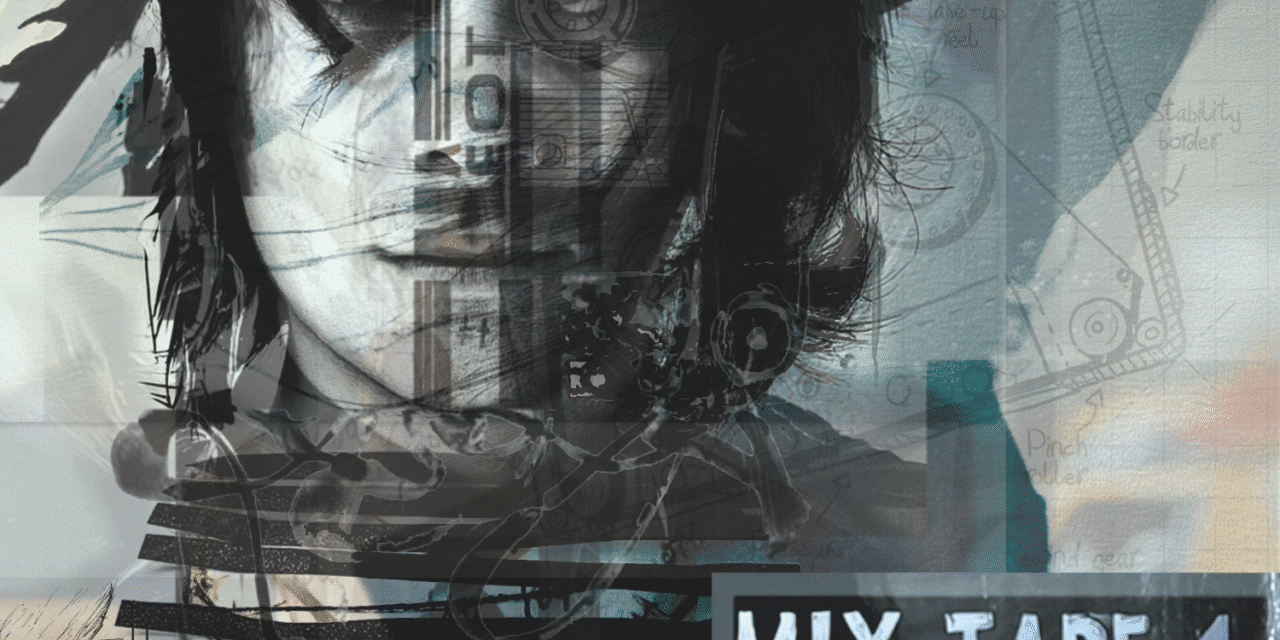
That philosophy is at the heart of Mix Tape 1, a project that feels like a collision of worlds — analog beginnings and digital futures, intimacy and club energy, memory and myth. Each track starts small — voice, piano, nylon guitar — and then expands in the studio into something textured, cinematic, and otherworldly. Kinski approaches songwriting like a filmmaker: building mood, capturing feeling, and inviting the listener into a dreamscape that’s born from intuition as much as craft.
In a landscape that rewards predictable branding, Kinski’s refusal to narrow himself down feels radical. Mix Tape 1 doesn’t ask permission to be eclectic — it insists that eclecticism is the point.
Because for Kinski, music is nourishment.
“I’m a sponge and I love music as food,” he says. “I can’t just do Mexican food. I love it but I also love Chinese food, Italian food, Japanese food, French food, etc.”
That’s Mix Tape 1 in one sentence: not a playlist of disconnected experiments, but a body of work driven by curiosity, travel, and the eternal pull of reinvention.
Q&A: Kinski Gallo on Mix Tape 1, bilingual storytelling, and creating in colors
“Mix Tape 1” feels like a collision of worlds — from analog beginnings to digital production. What was the first spark for this project, and how did you know it had to become its own cohesive body of work rather than a collection of singles?
Kinski Gallo:
“It’s a collision indeed, my journey in the past few years has taken a few turns, I’ve always done my songwriting depending on my mood and what I listen to. Since the Monte Negro days, I’ve written ‘eclectically’. I’m a sponge and I love music as food, I can’t just do Mexican food. I love it but I also love Chinese food, Italian food, Japanese food, French food, etc..
So my approach to music is very much the same, I love New Wave, rock, blues, techno and rather than limit myself I just go all in. This is the reason I’m releasing MIX TAPE 1. It showcases my true nature and my essence as an artist. It covers a wide range of my influences.”
Your music has always moved between genres — from alt-rock with Monte Negro to the electronic and Latin dance elements in your solo work. What did you want Mix Tape 1 to say about where you are now creatively?
Kinski Gallo:
“As mentioned earlier, I don’t get moved or stuck with one music genre. I listen to The Cure, Elvis, The Beatles, Pink Floyd, The Police, Cerati, Spinetta, Caifanes, Celia Cruz, Bjork, Techno, Deep trance, DJ Shadow, Massive Attack and so many more. Music is so profoundly rooted in me, it’s just second nature. I’m always writing, and when I listen to things, the inspire me, they affect me, they move me. So I’m just reacting to what music does to me, and I try to express any emotion through creation. Sometimes it’s indie. Sometimes it’s Cumbia and Techno. I do write most of my music with my nylon guitar so, I always approach song writing from a very raw and minimalist approach.”
You describe your songwriting kind of like filmmaking — building mood and capturing feeling. Which scene or emotion were you chasing most on Mix Tape 1?
Kinski Gallo:
“It’s a journey to me always with anything I release. To me, I create in colors, and if you paint you can create a mood with colors. Same with sounds, so I’m not always happy or sad, or mellow or angry, or you name it. I try to honor all moods and capture them and stay balanced by accepting what’s in the bag for me on that particular day.
The songs in Mix Tape 1 are essentially representing a circle. Simulacra is just an observation at what is ‘original.’ Is anything original? Hyper Dorada is a semi-biographical piece. Crypto Kids is just taking a piss at the status quo of what we’ve come to value, which is very sad, and on and on…”
Language plays a big role in your music. How did bilingual expression — switching between English and Spanish — shape the storytelling and emotional impact on this record?
Kinski Gallo:
“It always has. In fact I love languages. I wish I spoke more and could sing fluently in more. Spanish is my mother tongue and English my father tongue. I don’t plan on writing in one or the other. I’ve lived in LA most of my life, and LA is THE bilingual city of the USA, so I just exist in that universe, and I try to push and add French and Chinese or other languages. I love sounds and every language adds a new and exciting sound.”
What’s a memory — musical or personal — that you returned to again and again while creating this project?
Kinski Gallo:
“Not wishing to be young again but trusting my inner child, my intuition, my willingness to take risks and do what I love and not what others expect of me. This is something I have to keep reminding myself of. For that you just need to remember what moves you. Children have a very pure honesty that I always search for in my journey of creativity.”
There’s a balance between tradition and innovation in your sound. How do your Mexican heritage and your years performing across continents show up in Mix Tape 1’s sonic palette?
Kinski Gallo:
“I’ve always said that wealth is traveling, hence my chosen profession. I love to save up and go on a trip. I’ve been to a lot of countries. Innovation to me comes in the form of journey through sonic languages, particularly when one does not speak that language. I love Japan, I can get lost in a city and just refill my sonic longings. Same for all other cities where I don’t speak the language. Those experiences fulfill me as an artist and as a person.”
Can you talk about your process transitioning a song from its intimate origins — voice, piano, guitar — into the finished studio version on this album?
Kinski Gallo:
“Most of my songs begin as a cappella ideas or while jamming on my acoustic guitar. I always write things acoustically or with my friend/producer, Juan Covarrubias, who is a motherfucker at piano. I’m not even close, so breaking things down on a different instrument while writing does create a challenge and a fresh perspective.
But it all starts very simple, very stripe down, never big and bulky, So it’s like building, you can always go taller and bigger but can you stay grounded and elemental? That’s always at play whilst creating music, and it’s fun and challenging.”
Which track on Mix Tape 1 challenged you the most to make — and why?
Kinski Gallo:
“The most challenging is and has been RUTA DE SOL. That song took me several renditions to make and to get that nostalgia across, but I’ve proudly captured it, after a few hundred hours. That song took many writings, rewritings and beats, chord progressions and melody swapping.
Some songs do that to you. They are challenging and by the time you finish recording, you are so over them, you never want to hear them again, which is the case with SHOUT, a song I wrote 10 years ago, with messaging still relevant today.
RUTA was previously released in a Latin pop version, and with Mix Tape 1, the acoustic version is being released. It might be my most proud moment, because I was able to achieve what I heard in my head from the start. Some songs like Crypto Kids or Simulacra come very quickly and just form themselves in a snap of my fingers.”
Your journey took you from frontman in a signed rock band to full creative freedom as a solo artist. What’s one lesson from the Monte Negro era that you carried forward into this project?
Kinski Gallo:
“I’m very glad I was able to form myself as a live performer. Music has changed drastically and so has the way people consume it. I still believe music is a journey, a trip through the mysterious unknown, and when I write, I try to go deep and tap into that source.”
For someone who’s hearing your music for the first time with Mix Tape 1, what do you hope they feel or take away after the last track fades?
Kinski Gallo:
“My hope is that someone puts the music on and dances with joy and dances to forget all of the mundane issues, as I do. Not to hide problems but to take a small break from the world and tune into oneself. That is what I do with music.
I love getting lost in it and with it, and I find that feeling in old and new music alike, so there’s hope in the world.”
Final Word
Mix Tape 1 is the sound of an artist refusing to be reduced.
Kinski Gallo’s world is bilingual, borderless, and emotionally direct — where nylon-guitar intimacy can transform into techno pulse, where new wave melancholy can coexist with Latin movement, where each track honors a different mood without breaking the larger circle.
This isn’t a playlist of identities. It’s one identity, told in many languages — musical and literal.
And if you let it, it’ll pull you into that dreamscape: memory, myth, intuition… and whatever comes next.