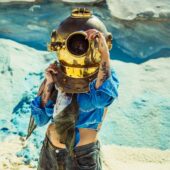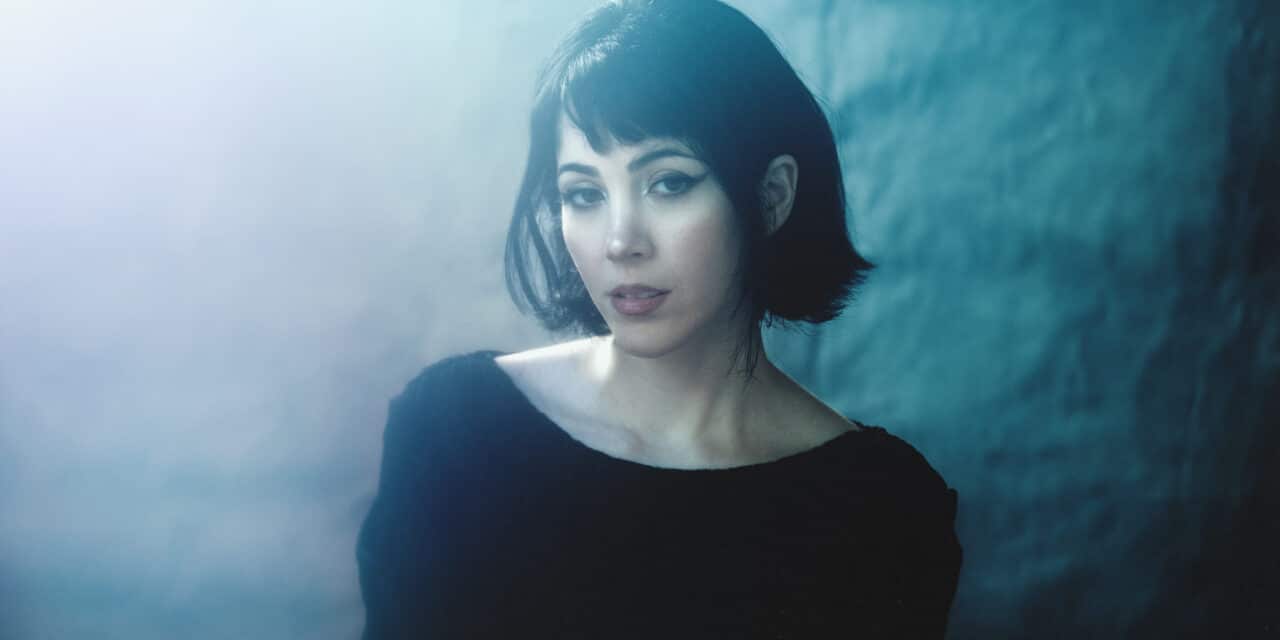
After years spent constructing meticulous, atmospheric worlds around her music, Luna Shadows is giving herself permission to make a mess.
The Los Angeles-based singer, songwriter, producer and multi-instrumentalist kicks off a new chapter with “gutspill,” a colorful collision of crunchy Midwest emo guitars, early-2000s pop-punk energy, dreamy electronic production and the intricately layered vocals that have long been central to her sound.
Co-written and co-produced with Chris Freeman of Hot Mulligan, “gutspill” doesn’t treat nostalgia as a destination so much as raw material. Shadows pulls from the alternative music that shaped her while filtering it through the ethereal production and confessional songwriting she has developed across a decade of releases.
At its center is the feeling of having an emotion become too big to contain: a crush you can’t confess, a thought you can’t suppress, feelings threatening to “fall out like confetti.” Instead of forcing them back inside, Shadows proposes another possibility—say it anyway, even if saying it means turning it into a song.
That philosophy extends to the accompanying music video, which Shadows directed, produced, production-designed and edited herself. Featuring Freeman on guitar, the visual marks her first traditional band-style performance video and embraces a deliberately playful early-2000s aesthetic.
For an artist accustomed to controlling virtually every detail of the Luna Shadows universe, however, “gutspill” isn’t really about abandoning control. It’s about expanding what that universe is allowed to contain: humor, impulsiveness, nostalgia, exaggeration, louder guitars and the occasional willingness to make a mess just for the plot.
“gutspill” feels like a deliberate release of control—emotionally messy, colorful and playful. After years of creating such carefully constructed worlds, what made you want to enter an era centered around letting things spill out?
I recently went to The Metropolitan Museum of Art in NYC, and one of my biggest takeaways of the day was how reactive all the artists were to one another. I read the placards under the paintings, and so many of them detailed how all the painters would see each other’s work and feel a cocktail of jealousy, competition, and inspiration. Their moods, colors, shapes, locations, and even brushstrokes affected one another—they were very directly influenced by their peers, and it seemed like their reactivity drove them to try things that they otherwise would’ve never done. Today, we have so much reverence for these works—we call them masterpieces. But in the era of their creation, it was really just a bunch of (often) dudes trying to one-up each other.
With my own art, I am reactive to other artists that I admire but also prior versions of myself. I absolutely love my last record bathwater, but after writing a record that was largely slow and serious, I felt a desire to rebalance and create something more bombastic, dramatic, and with a sense of humor as well. As far as other artists, I grew up listening to emo, pop-punk, etc., and it seemed like time to inject that into my own sound a little more directly. At the heart of those genres is confessional lyricism, which is already a signature part of my writing, so it felt natural and fun to explore.
You describe the song as that moment when your feelings are about to “fall out like confetti.” Have you historically been someone who turns emotions into songs because saying them directly feels more difficult?
I actually don’t have too much trouble saying what I mean. I’m fairly rehearsed at speaking my mind when the moment calls for it. But I do agree that my songs have always been the place where I get to say what I feel, in a very satisfying way. It’s sort of like delivering a perfect punchline.
Songwriting remains a very cathartic activity for me. There are times where sharing my feelings would not necessarily be constructive in real life, but a song is a safe place for me to store those emotions. I can lay out my words, make them rhyme, and build a world around them. It brings me a sense of confidence and satisfaction in the real world.
Working with Chris Freeman brings Midwest emo and early-2000s pop-punk into your atmospheric electronic world. What did collaborating with someone from Hot Mulligan unlock in your songwriting or production?
Working with Chris has been an absolute blast. The guitar parts he comes up with are so effortless and insane. In a time where so much production is done on a computer, it’s always so fun to be in the presence of someone who has real musical talent.
Watching him “noodle noodle tap tap” (a super technical term we use to describe his playing style) is always the best part of the day. Typically, our sessions would start with him improvising some crazy unique guitar part, and I would immediately feel like, “Damn, I better come up with a good song, because this bed of music needs to see the light of day.”
I really didn’t want to flop. So in a way, wanting to showcase his performances sort of lit a fire under me. Like, whatever I wrote over it had to be good, or else I’d be embarrassed and saddened by the possibility that people might never hear what he’d played. It’s unthinkable for me to imagine that the “gutspill” guitars could’ve ended up living on a hard drive somewhere if I didn’t deliver—phew! The noodles live.
Nostalgia is everywhere in contemporary pop culture, but “gutspill” seems interested in transforming those references rather than simply recreating them. How do you revisit the alternative music you grew up with without becoming trapped by nostalgia?
That was one of my main objectives with this song (and other upcoming songs). It’s easy to simply rip off the past, but I wanted to be additive rather than just derivative. That part of it was very intentional.
I’m not trying to reinvent the wheel; I’m very deliberately leaning into a sound. But at the same time, I am going to put my own spin on it. There were a few ways that I approached this, such as including more modern, layered vocal production and more electronic elements than you would typically find in 2000s pop-punk/alternative-sounding stuff.
Midwest emo in particular is a very male-dominated genre, so already just adding a female vocal shifts the paradigm a little. I specifically thought it would be cool to combine the instrumental qualities of that genre with softer melodies and more ethereal vocal production.
There’s a great philosophy in the idea of confessing your feelings “just for the plot.” Has embracing that kind of impulsiveness changed anything about the way you’re approaching this new chapter personally or creatively?
I don’t like to limit myself or put myself in a box, but I can be a really anxious person. I’m the type who will ruminate, rehearse interactions, worry about the future, etc. In general, I approach life in a careful and calculated fashion. But I am exploring being more impulsive, worrying less, and living a little more freely.
I’m historically not messy, and that’s made me want to be a little messy. I always joke that it’s difficult being a skater who is also a rule follower. Every now and then, I challenge myself to be the opposite of what I perceive myself to be. I need to feel like I can be a bit elastic, to remind myself that I can change and grow.
I think I approach art with a bit of a skater mentality—trying, refining, exploring, failing, getting back up, and ultimately developing your own style. It’s a lot of trial and error, but that’s all part of the fun.
The video is your first traditional band-style performance visual and a playful departure from some of your more serious imagery. Why did this song make you want to loosen the rules around the visual identity of Luna Shadows?
I don’t think that this imagery sits outside the rules of Luna Shadows because I make the rules! 🙂 The only rule I ever have is to be true to myself, and I’m doing that here.
I’d say some of my other visuals are even more nostalgic and colorful, like “The Nineties,” which I made with limited resources during the pandemic—wigs, iPhone, green screen, and remote collaborators.
But I would just say that this song called for it. It feels like a band song, and I’ve never done a band video, which I’ve always wanted to. So I called my friends and asked if they would be in my band for a day. Fortunately, they said yes!
I asked them with each take to get crazier and weirder and they delivered. The end of the video is just us playing each other’s instruments. I should leak the unedited takes somewhere; they are pretty funny!
You directed, produced, production-designed and edited the video yourself, while also being deeply involved in writing and producing your music. Does having that much creative control feel essential to understanding Luna Shadows as a project?
Absolutely! I have a hand in everything I do. My involvement started out of necessity. I didn’t know directors, producers, editors, etc., so I just had to figure it out myself. But over time, I’ve really embraced a lot of these roles, and I really enjoy it.
I also really love collaborating, but no one is ever going to care more than me. I can count on myself to put in the hours. I think my fans have come to appreciate this about the project too, as I share a lot of BTS so they can really see how involved I am, not just with the music but with every aspect.
You’ve been making music as Luna Shadows for roughly a decade, while also producing, engineering, writing for other artists and composing for video games. How has working behind the scenes on other people’s worlds changed the way you construct your own?
Totally—great question! In fact, part of the inspiration for “gutspill” was that I worked on a few records for other artists and projects over the past few years, writing a lot of songs that were rock-leaning and upbeat.
I wondered what was stopping me from delivering myself a similar record. I was feeling a little silly that I could lend that skill to others but, for some reason, I wasn’t bringing any of it to my own project. So “gutspill” is also me experimenting with that, channeling that fun back into my own music.
You started writing songs at eight, trained classically as a pianist and studied voice at LaGuardia before eventually building this bedroom-produced alternative-pop universe in Los Angeles. Which parts of that formal training have you had to unlearn in order to become the artist you are now?
I can be extremely, extremely self-critical. Growing up in the hyper-competitive environments you mentioned, it’s really easy to perpetually compare yourself to everyone and everything.
It’s not so much the formal training itself, but rather the environments around formal training that I’ve had to reflect on. In the classical realm specifically, there is so much pressure to be the best, to make zero mistakes, to seek perfection. But in alternative music, imperfection is often the centerpiece.
I’m grateful for my upbringing and training, but sometimes I need to lay off myself a bit and just have more fun, which is something I’ve been working on!
“gutspill” is being positioned as the beginning of a new era—brighter and more lighthearted, but still emotionally layered. What are you giving yourself permission to do in this chapter that Luna Shadows might not have done before?
I’m allowing myself to have a sense of humor and to be super dramatic. I’m typically self-conscious about taking up space, but the objective on some of my upcoming songs is to take up as much space as possible, like, “What is the most dramatic, ridiculous way to describe the way you’re feeling right now?”
Basically, allowing myself to be over the top.