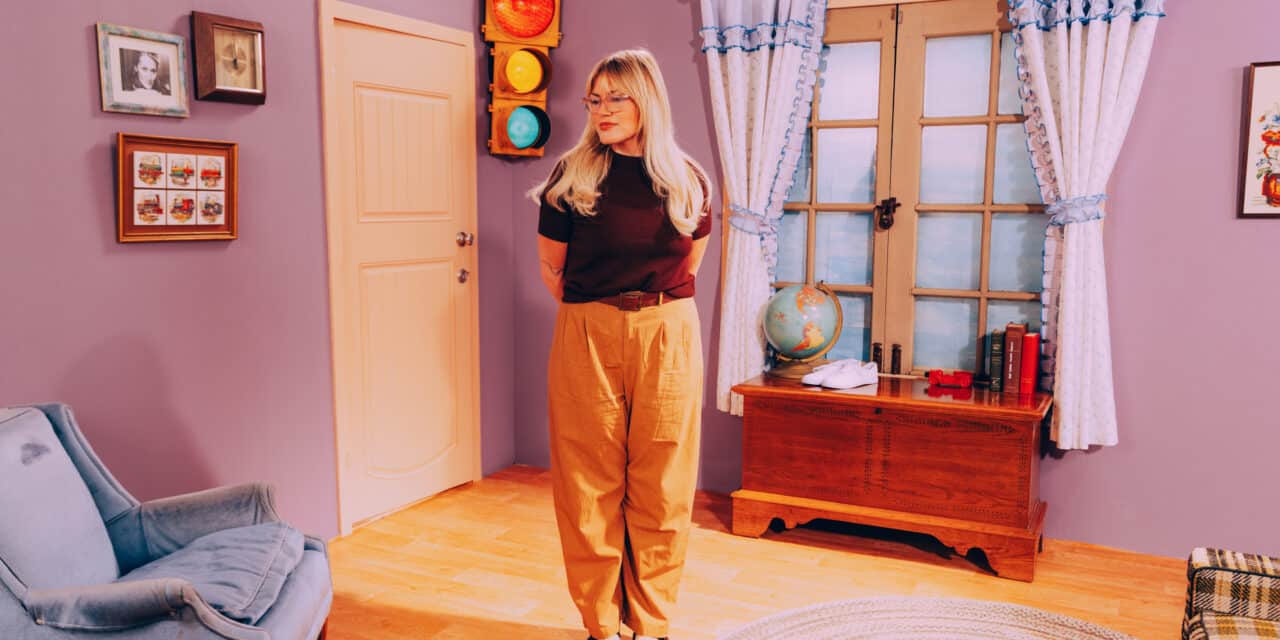
There is a strange expectation that comes with growing up: eventually, you’re supposed to know exactly who you are.
For Maddie Zahm, that expectation has become increasingly difficult to reconcile with reality. Her sophomore album, Everything All The Time, released September 25 via MNRK Nashville, explores what happens when we stop treating personal growth as a destination and start embracing the contradictions that make us human.
Across twelve tracks, Zahm moves between vulnerability, humor, nostalgia, and unapologetic pop-rock energy, creating a record that celebrates the freedom of feeling deeply without necessarily understanding everything.
“As someone with OCD, things are usually black and white for me,” she tells MUNDANE. “So it mattered to realize that not knowing exactly what genre I am, or exactly what kind of songs I make, doesn’t mean I can’t make a record.”
That realization became the album’s guiding philosophy: the less Zahm tried to define herself, the more possibilities emerged.
Finding Freedom in the Gray Areas
Known for deeply personal songs such as “Fat Funny Friend” and “You Might Not Like Her,” Zahm has built a career around articulating emotions that audiences often struggle to express themselves.
But Everything All The Time introduces a new kind of vulnerability: the willingness to experiment without knowing where the process will lead.
“A lot of guitars! A lot of gritty, live drums,” Zahm says of the album’s production. “I think I realized that in order to feel big emotions, sonically a lot of that came from live instruments.”
An unexpected inspiration was Mister Rogers’ Neighborhood, whose atmosphere of childhood wonder and emotional acceptance helped shape Zahm’s vision.
She wanted to create a musical world where listeners could explore difficult feelings without judgment.
That philosophy also reflects her changing relationship with perfectionism.
“I’m learning radical acceptance,” she explains. “Accepting I’m imperfect, that I’m someone who does make mistakes, actually helps me get out of my head a little bit.”
The same principle applies to her music: she no longer feels obligated to master every new sound or fit neatly into a particular genre.
“Meryl,” Queer Joy, and the Humor of Self-Discovery
One of the album’s most playful moments arrives with “Meryl,” an energetic pop-rock anthem exploring Zahm’s attraction to older women.
“Meryl is a song about loving older women,” she explains. “When I think back to my straight phase I never thought there was any type of indication that something gay was looming around the corner. But when I think about how I felt seeing Meryl Streep in The Devil Wears Prada, I now see I was very VERY wrong.”
For Zahm, humor has always been an essential songwriting tool.
“I started out more as a songwriter because I love the humor behind breakup songs,” she says. “I was 22 and not actually dating people but writing break up songs simply because I loved humor.”
While her songwriting has become increasingly personal, she hasn’t lost that instinct to find comedy in life’s contradictions.
On “Meryl,” queer self-discovery becomes something to celebrate rather than explain.
Finding a New Kind of Church
Elsewhere, “Hometown Letdown” confronts criticism Zahm encountered from the traditional religious community in which she grew up.
But rather than allowing those judgments to define her, she’s found a different kind of belonging through music.
“Having a community of my own outside of the church has been just overwhelming,” she explains.
“I feel like I get to have the feeling of church but with people who have been chill with me kissing girls, which has been awesome.”
The experience of performing the song has been particularly meaningful.
“Being able to sing ‘Hometown Letdown’ is the closest thing I’ve felt to church in a very long time.”
The track has also found a substantial online audience, generating more than 12.8 million TikTok views and another 3 million views through Instagram Reels, according to its release announcement.
What began as a response to rejection has become a celebration of finding acceptance elsewhere.

Learning to Love Without Holding On Forever
On “Told You So,” Zahm explores a different kind of emotional maturity.
The song celebrates friendship, sisterhood, and the idea that meaningful connections can transcend time and distance.
“The idea of celebrating that you were once able to love somebody, rather than mourning that you won’t always get to, is a way more beautiful way of looking at things,” she explains.
It’s a perspective that reflects the album’s larger themes: growth doesn’t always mean eliminating sadness or uncertainty. Sometimes it means learning to experience those feelings differently.
That understanding has become especially powerful onstage.
Following a sold-out UK and European tour, Zahm launched her North American tour in October, bringing songs that began as private experiences to audiences who now claim them as their own.
“Often, by the time a song comes out, I’ve already processed that thing,” she says. “So, I get to relive it through the people who are going through it right now.”
For Zahm, those performances transform personal memories into moments of collective understanding.
Becoming Yourself Is an Ongoing Process
With more than 345 million streams worldwide and an online community of approximately two million followers, Zahm has found success through vulnerability, humor, and a willingness to confront uncomfortable truths.
Yet Everything All The Time suggests that the most important evolution is happening internally.
When asked what question the album is trying to answer, Zahm returns to a deceptively simple idea:
“Am I allowed to try new sounds? Am I allowed to not know what kind of songs I want to do and explore what that means for me as an artist?”
Her answer remains a work in progress.
“Still living in the gray when I’m a black and white person.”
Perhaps that’s what makes Everything All The Time so compelling.
It doesn’t promise that self-discovery will eventually deliver certainty. Instead, it celebrates the freedom to change, make mistakes, experience conflicting emotions, and remain curious about who we might become.
For Maddie Zahm, growing up no longer means having all the answers.
It means finally being comfortable enough to ask new questions.
In Conversation With Maddie Zahm
MUNDANE: What did you have to unlearn about becoming a more complete version of yourself while making this record?
Maddie Zahm: As someone with OCD, things are usually black and white for me. So it mattered to realize that not knowing exactly what genre I am, or exactly what kind of songs I make, doesn’t mean I can’t make a record. Giving myself the freedom to explore every sonic land that I wanted to in the confines of a title like Everything All The Time allowed me to realize the broader I allowed myself to exist in, the better the piece of work became.
MUNDANE: How did you translate your intense emotions into the album’s production?
Maddie Zahm: A lot of guitars! A lot of gritty, live drums. I think I realized that in order to feel big emotions, sonically a lot of that came from live instruments.
MUNDANE: What did Mister Rogers’ Neighborhood give you as a child that you found yourself needing again as an adult?
Maddie Zahm: The thing I love about Mr. Rogers is he was the kind of person that connected us from the land that he created and I really wanted to be the person that was connecting the audience with my songs and with the meanings behind them. It was almost like I got to be a trip master, I think that is what it’s called? Without the drugs.
MUNDANE: Has reconnecting with curiosity helped you become less judgmental toward yourself?
Maddie Zahm: Yes! In general, I’m learning radical acceptance. There are a lot of times when I feel like I need to be a good person, or morally correct, or all these kinds of things, and I’m realizing that accepting I’m imperfect, that I’m someone who does make mistakes, actually helps me get out of my head a little bit. It’s the same with the album. Giving myself grace to try new sounds and new things, knowing I don’t have to be good at it at first… or ever. It’s a really fun place to be for an album.
MUNDANE: Was humor always part of how you processed relationships and sexuality?
Maddie Zahm: Yes, for sure. I think I started out more as a songwriter because I love the humor behind breakup songs. I was 22 and not actually dating people but writing break up songs simply because I loved humor. Then I started to realize that as unfunny as life started getting around 2024, I started writing about real shit. But break up songs and humor and all of that is definitely a way for me to process.
MUNDANE: How has building your own community changed the impact of judgments from your hometown?
Maddie Zahm: Oh my god, it’s changed a ton! Having a community of my own outside of the church has been just overwhelming. I feel like I get to have the feeling of church but with people who have been chill with me kissing girls, which has been awesome. Being able to sing “Hometown Letdown” is the closest thing I’ve felt to church in a very long time.
MUNDANE: Has your definition of a profound love story changed as you’ve gotten older?
Maddie Zahm: Yeah, “Told You So” is one of my favorite songs on the album. The idea of celebrating that you were once able to love somebody, rather than mourning that you won’t always get to, is a way more beautiful way of looking at things.
MUNDANE: How do you maintain boundaries with an audience that connects so deeply with your vulnerability?
Maddie Zahm: I’m still working on that. However, I will say, the people who really, really care about me, hence the people that listen to my music, honestly care about my well-being so much that I haven’t had to set a bunch of boundaries.
MUNDANE: Has hearing audiences sing your personal lyrics changed your relationship with those songs?
Maddie Zahm: The UK tour was incredible. It’s always so nice to see people singing my songs, because often, by the time a song comes out, I’ve already processed that thing. So, I get to relive it through the people who are going through it right now. It’s like watching people sing breakup songs that I’m not necessarily still mourning, and getting to watch them have that experience. It’s almost like I get to meet them there. It’s like reliving my music.
MUNDANE: What question about yourself is Everything All The Time trying to answer now?
Maddie Zahm: I think the question I would be answering right now is “am I allowed to try new sounds? Am I allowed to not know what kind of songs I want to do and explore what that means for me as an artist.” Still living in the gray when I’m a black and white person.
Everything All The Time is available now via MNRK Nashville.
Listen to the Album | Watch “Meryl” | Tour Dates & Tickets
Instagram | TikTok | Official Website
Photography: Carianne Older.