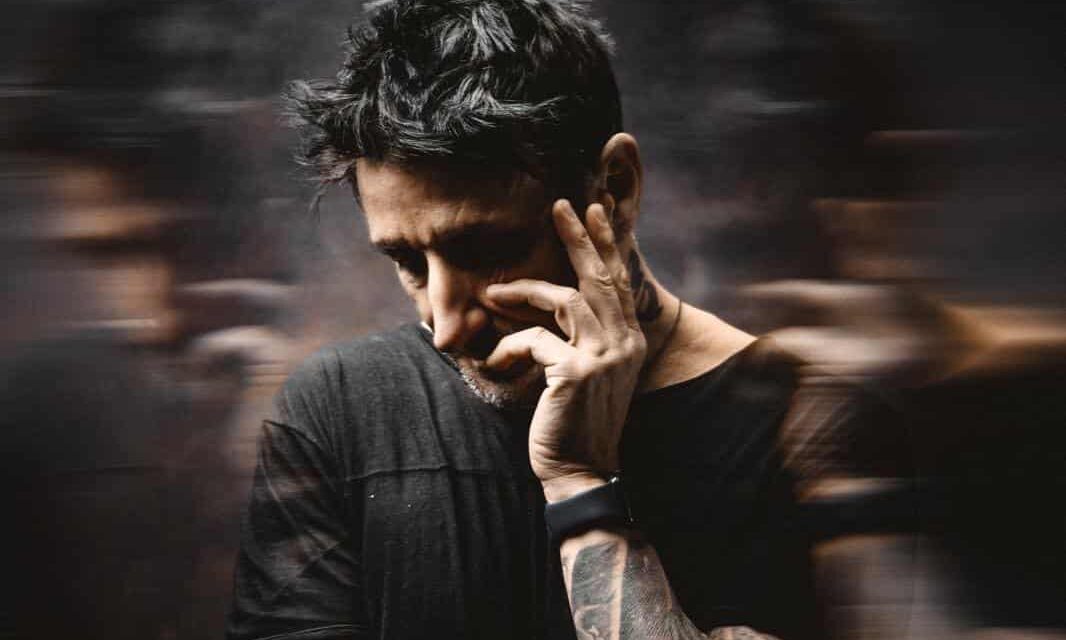
With his new album The Impatient Heart, the Belgian techno pioneer looks beyond the dancefloor to explore the humanity behind electronic music, the importance of silence, and the freedom that comes with no longer having anything to prove. More than three decades into his career, Bailey is still searching for the same thing that drew him to techno in the first place: a sound that gives him goosebumps.
There’s something beautifully contradictory about calling an album The Impatient Heart after spending more than thirty years making techno.
By now, Marco Bailey has experienced nearly every conceivable version of the electronic music industry. He’s watched underground movements become global phenomena, witnessed generations of producers redefine the genre, and performed everywhere from intimate clubs to massive international festivals.
He’s seen the culture evolve from record shops and vinyl crates to streaming platforms, viral videos, and social media-driven celebrity.
And yet, despite everything that has changed, Bailey remains remarkably uninterested in the idea of having arrived somewhere.
His new album, The Impatient Heart, released October 16 through his own label Materia, is perhaps the clearest expression of that philosophy.
Created over two years between relentless touring and extended studio sessions, the fourteen-track project moves between driving club rhythms, hypnotic atmospheres, cinematic textures, and moments of unexpected emotional vulnerability.
It’s an album designed to function both on a dancefloor and in the solitude of someone’s headphones.
But more importantly, it’s a record that asks a question rarely associated with artists who have spent decades mastering their craft: what happens when you stop trying to prove yourself and start listening more closely to what you actually feel?
For Bailey, the answer begins with a familiar sensation.
“I think I’m still searching for the same thing in a way: music that gives me goosebumps,” he explains. “That feeling never changed.”
It’s a deceptively simple statement from an artist whose career has been defined by constant movement.
The technology has evolved. The audiences have changed. The industry has transformed almost beyond recognition.
But the instinct remains.
And perhaps that’s precisely what makes The Impatient Heart such a revealing record.
Finding the Human Inside the Machine
Techno has always existed within a fascinating contradiction.
It’s a genre built through machines, yet its power is fundamentally physical and emotional.
Synthesizers, drum machines, sequencers, and software generate the sounds, but the music ultimately exists through the bodies that respond to it.
For Bailey, that relationship has never been particularly mysterious.
“Techno has always been human,” he says.
“Yes, we use machines, computers, synthesizers, but behind all of that there is a person with feelings, ideas and emotions.”
It’s a perspective that feels especially relevant in an era increasingly fascinated by technological perfection.
As music production tools become more sophisticated, the temptation to eliminate every irregularity grows stronger.
But Bailey isn’t convinced that precision necessarily creates something more compelling.
Sometimes, he argues, the opposite is true.
“I love tracks that are not too perfect. Sometimes a little imperfection gives a track its character.”
That philosophy runs through the conceptual language of The Impatient Heart.
Titles such as “Organic Pulse Theory,” “Deep Current,” “Fluid Drive,” and “Cellular Rhythm” suggest an intersection between technological systems and biological processes.
The language is almost anatomical.
Pulses, currents, cells, movement.
Rather than imagining electronic music as something separate from human experience, Bailey seems interested in the ways technology can amplify the body’s most instinctive responses.
And despite his decades of technical experience, he insists that rhythm begins somewhere far less intellectual.
“Definitely physical first!”
“When I hear a good groove, I feel it immediately. You don’t need to analyse everything. Your body tells you if something works.”
It’s an observation that cuts through much of the mythology surrounding electronic music production.
Before the arrangement, before the sound design, before the technical sophistication, there has to be a feeling.
If the body doesn’t respond, something essential is missing.
When the Dancefloor Isn’t Enough
For an artist so closely associated with club culture, the decision to create an album that isn’t exclusively concerned with dancefloor functionality represents an important creative distinction.
Bailey has spent thousands of hours behind the decks.
He understands the mechanics of building tension, sustaining energy, and creating the collective momentum that makes techno such a powerful communal experience.
But The Impatient Heart isn’t simply a collection of tracks designed to produce those reactions.
“I never wanted to make an album that simply collects club tracks,” he explains.
“I wanted every piece to tell part of a bigger story. This album reflects where I am today, not only as a producer and DJ, but as a person.”
That distinction allowed him to explore musical decisions that might not make immediate sense within a conventional DJ set.
Some tracks prioritize atmosphere over impact.
Others allow hypnotic repetition or subtle emotional development to become the central experience.
And not every composition needs to announce its arrival with an enormous drop.
“A track doesn’t always need a massive drop or a heavy kick to be powerful,” Bailey says.
It’s a statement that challenges the increasingly spectacle-driven expectations surrounding electronic music.
In a culture where the success of a performance can sometimes be reduced to its most dramatic fifteen-second moment, Bailey is defending a different kind of intensity.
One that unfolds gradually.
One that rewards attention.
One that doesn’t necessarily demand an immediate reaction.
The album’s more introspective titles, including “Solace,” “After The Fog,” and “Youth Distortion,” suggest an emotional landscape that extends beyond the club.
And while instrumental music doesn’t provide the direct narrative guidance of lyrics, Bailey sees that ambiguity as one of its greatest strengths.
“Music doesn’t need words to tell a story,” he explains.
“Sometimes a melody, a certain sound or even a simple rhythm can express something you can’t really explain.”
The result is a record that treats techno not merely as a functional language of movement, but as a vehicle for memory, reflection, and personal expression.
The Sound of Silence After the Club
Perhaps the most unexpected revelation in Bailey’s relationship with music is how much he’s come to appreciate its absence.
After decades spent navigating airports, hotels, festivals, and clubs, silence has acquired an entirely different meaning.
“Oh yes! Haha. After a weekend with several flights, airports, hotels and loud clubs, silence can be the best music.”
It’s a striking confession from someone whose professional life has been built around sound.
But it also reveals an important shift in perspective.
When Bailey was younger, he wanted to be surrounded by music constantly.
Discovery was relentless.
Every record, every club, every new production technique offered another possibility.
Today, he still values that curiosity, but he’s learned that creativity also requires space.
Sometimes that means spending time outside.
Sometimes it means listening to something completely unrelated to techno.
And sometimes it means doing absolutely nothing.
“Funny enough, that’s often when new ideas come,” he says. “You need some space in your head to be creative.”
The tension between movement and stillness becomes one of the album’s defining themes.
Bailey’s music remains driven by the physical energy that has always characterized his work, but there’s a greater willingness to allow quieter emotions into the picture.
It’s not a rejection of the dancefloor.
It’s an acknowledgment that life continues after the lights come on.
And that what happens in those quieter moments can be just as important as the intensity of the night before.
Thirty Years of Techno, and Nothing Left to Prove
Few artists have experienced as many transformations within electronic music as Marco Bailey.
When he began his career, techno culture was deeply connected to physical spaces and communities.
Record shops were places of discovery.
Learning to DJ required patience, technical skill, and a willingness to spend countless hours developing an ear.
Building a reputation often meant years of performing in underground venues before reaching larger audiences.
Today, the relationship between music, visibility, and success looks considerably different.
Digital production tools have made creating and releasing music more accessible than ever.
Social media has given emerging artists the ability to reach audiences that previous generations could scarcely have imagined.
Bailey welcomes many of those developments.
He speaks with genuine admiration for younger producers and the creative opportunities available to them.
But he also worries about what happens when visibility begins to matter more than musical knowledge.
“I sometimes feel that the focus has shifted too much towards social media, image, followers and hype,” he says.
“One viral video and suddenly someone is a headliner.”
His concern isn’t rooted in nostalgia for an inaccessible underground past.
It’s about preserving the cultural values that made techno meaningful in the first place.
The patience required to discover music.
The discipline involved in learning how to mix.
The importance of developing an individual sound rather than reproducing whatever happens to be popular.
And, above all, the relationship between the DJ and the people on the dancefloor.
“For me, techno was never about being a superstar,” Bailey explains.
“It was about the music and the people on the dancefloor.”
That distinction feels especially significant coming from an artist who has spent more than three decades working within an industry that increasingly rewards spectacle.
Bailey isn’t rejecting progress.
He’s questioning whether progress should always be measured by visibility.
Independence as a Creative Philosophy
That same resistance to external expectations helps explain Bailey’s continued commitment to Materia, the label through which he’s releasing The Impatient Heart.
For an artist with his experience, independence isn’t simply about controlling the business side of a release.
It’s about protecting the ability to make decisions that might not be commercially obvious.
“Freedom, 100%,” he says when asked what independence means to him.
Having worked with numerous labels throughout his career, Bailey understands both the opportunities and limitations that come with external partnerships.
But Materia allows him to approach music on his own terms.
“I don’t need someone telling me a track isn’t commercial enough or that I should follow a certain sound because it’s popular right now.”
That freedom becomes particularly important on an album as stylistically expansive as The Impatient Heart.
Rather than shaping every composition around the expectations of a specific market or audience, Bailey has allowed the music to develop according to its own internal logic.
The label also provides a platform for artists who share his commitment to the music itself.
It’s a model built less around chasing the next trend than around sustaining a creative identity over time.
And after thirty years in the industry, Bailey seems increasingly comfortable with the idea that not every artistic decision needs to be justified through commercial success.
Sometimes making something you genuinely believe in is enough.
The Heart That Refuses to Slow Down
The closing stretch of The Impatient Heart moves through “Youth Distortion,” the title track, and “Cellular Rhythm.”
It’s a sequence of titles that invites interpretation.
Youth, time, physicality, and the restless emotional energy that survives the passing of years.
But Bailey is careful not to impose a rigid narrative on the album.
He didn’t begin the project with a predetermined story or an ending he needed to reach.
Instead, he allowed the music to become a reflection of his present state of mind.
“I just wanted to create music that represents where I am today.”
That openness is central to the record’s appeal.
The fourteen tracks explore different moods and energies, but they remain connected by the same creative instinct.
The desire to discover something new.
The excitement of making a track that surprises its creator.
The physical satisfaction of finding the right groove.
And the enduring pleasure of standing behind the decks, sharing music with people who genuinely love it.
Bailey may have become more attentive to detail, more appreciative of silence, and less interested in the industry’s constant demand for reinvention.
But none of that has diminished his curiosity.
If anything, it has sharpened it.
“The day I stop being curious about music is the day I should probably stop making it,” he says.
It’s a philosophy that makes the title The Impatient Heart feel particularly appropriate.
Because after more than three decades, Bailey isn’t trying to recapture the excitement of his early career.
He’s discovering that it never really disappeared.
“My heart is probably still as impatient as it was 30 years ago,” he says.
“And I’m actually happy about that.”
In Conversation With Marco Bailey
1. Impatient Heart arrives more than three decades into your career, but it doesn’t feel interested in looking backward. What are you trying to discover through techno today that you perhaps weren’t searching for ten or twenty years ago?
I think I’m still searching for the same thing in a way: music that gives me goosebumps. That feeling never changed.
But after more than 30 years, you look at things differently. When I was younger, everything was about energy, discovering new sounds, playing records and travelling the world. Today I still love all of that, but I’m probably more interested in the details, the emotions and the little things that make a track special.
I don’t want to repeat what I did 20 years ago. What’s the point? I want to keep learning, experimenting and surprising myself. The day I stop being curious about music is the day I should probably stop making it.
2. “Organic Pulse Theory” is an interesting title because techno is often associated with machines, yet the word organic suggests something instinctive, imperfect and alive. How much are you interested in finding humanity inside electronic music?
For me techno has always been human. Yes, we use machines, computers, synthesizers, but behind all of that there is a person with feelings, ideas and emotions.
I love tracks that are not too perfect. Sometimes a little imperfection gives a track its character. Music shouldn’t sound like it was made by a machine without a soul.
When I’m in the studio, I follow my ears and my feelings. Sometimes something unexpected happens and that’s exactly the moment when the magic starts.
3. “Check Point” suggests a moment of stopping and assessing where you are. Did making this album become a kind of personal checkpoint for you as well—an opportunity to reconsider what you actually want from music at this stage of your life?
Maybe yes, in a way. When you’ve been doing this for so many years, you naturally start asking yourself certain questions.
I’ve experienced so much in this industry. Amazing moments, difficult moments, big clubs, small underground parties, incredible people and also plenty of bullshit, haha.
But one thing is clear to me: I still love techno as much as I did when I started. I don’t need to follow every trend or prove something to everyone anymore.
I just want to make music I believe in, play for people who really love it and enjoy the journey. That’s what matters to me.
4. There are titles throughout the record—“Deep Current,” “Cellular Rhythm,” “Pulse of Harmony,” “Fluid Drive”—that connect technology, movement and almost biological imagery. Do you think about rhythm as something intellectual, or does it begin for you as something fundamentally physical?
Definitely physical first!
When I hear a good groove, I feel it immediately. You don’t need to analyse everything. Your body tells you if something works.
I’ve spent thousands of hours behind the decks and on dancefloors, and that connection between rhythm and people is still fascinating to me.
Of course, when producing, you think about arrangements, sounds and frequencies. But if a track doesn’t make me move or feel something, something is missing.
5. After spending so much of your life in clubs, festivals, airports and studios, has your relationship with silence changed? Does stillness now play a different role in the way you create?
Oh yes! Haha. After a weekend with several flights, airports, hotels and loud clubs, silence can be the best music.
When you’re younger, you want to be surrounded by music all the time. Today I appreciate those quiet moments much more.
Sometimes I don’t listen to techno at all when I’m home. I need to clear my head, spend time outside or just do absolutely nothing.
And funny enough, that’s often when new ideas come. You need some space in your head to be creative.
6. Techno is often discussed in terms of functionality—whether something “works” on a dancefloor. With Impatient Heart, were there moments when you deliberately chose emotion or atmosphere over what might be the most effective decision for a DJ set?
Absolutely. An album is different from producing a club tool.
Of course, I’m a DJ, so the dancefloor will always be part of my DNA. But I don’t want every track to be made just to get a reaction from a crowd.
Sometimes I want to create a certain atmosphere or take the listener somewhere else. A track doesn’t always need a massive drop or a heavy kick to be powerful.
For me, good techno can be deep, hypnotic, emotional and still have incredible energy. That’s what I love about this music.
7. Tracks like “After The Fog,” “Solace” and “Youth Distortion” carry titles that suggest memories or emotional states rather than traditional club language. How autobiographical can an instrumental techno record actually become?
More than people might think.
Music doesn’t need words to tell a story. Sometimes a melody, a certain sound or even a simple rhythm can express something you can’t really explain.
Of course, my experiences influence what I create. We all go through different periods in life, good and bad, and somehow those feelings find their way into the studio.
But I also like that people can interpret the music in their own way. A track might mean something completely different to someone listening to it, and I think that’s beautiful.
8. You’ve witnessed several generations redefine what techno is supposed to sound and look like. What do younger producers understand about the genre that your generation perhaps didn’t and what do you think risks being lost as techno becomes increasingly visible and commercial?
First of all, I have a lot of respect for young producers. There is so much talent out there and they have access to technology we could only dream of when we started.
They can experiment, learn and release music much faster. That’s fantastic.
But I sometimes feel that the focus has shifted too much towards social media, image, followers and hype.
When I started, it was about spending hours in record shops, discovering music, learning how to mix and developing your own sound.
Today everything moves so fast. One viral video and suddenly someone is a headliner.
I’m not against progress, absolutely not. But I hope we don’t lose the musical knowledge, the respect for the culture and the art of DJing.
For me, techno was never about being a superstar. It was about the music and the people on the dancefloor. And I really hope that spirit stays alive.
9. Releasing Impatient Heart through Materia means the album exists within a platform you’ve built yourself. At this point in your career, is independence primarily about control, or is it about protecting the freedom to make decisions that might not make immediate commercial sense?
Freedom, 100%.
I’ve worked with many labels throughout my career and I’m grateful for those experiences. But having Materia gives me the possibility to release music exactly how I want.
I don’t need someone telling me a track isn’t commercial enough or that I should follow a certain sound because it’s popular right now.
Materia is about the music I believe in and artists who share that passion.
Of course, running your own label is a lot of work and not always easy. But having that independence is something I really value.
At this stage of my career, I prefer staying true to myself rather than chasing the next trend.
10. The final stretch moves through “Youth Distortion,” the title track and “Cellular Rhythm.” Without necessarily treating the album as a literal narrative, where do you feel you arrive emotionally by the end of Impatient Heart and is it somewhere different from where you expected to end up when you began making it?
I didn’t start this album with a big concept or a story that needed a certain ending.
I just wanted to create music that represents where I am today.
And maybe that’s exactly what Impatient Heart is about. After all these years, I still have that restless feeling inside me. I still want to discover new music, make new tracks, travel, meet people and stand behind the decks.
Maybe I’m a little older, haha, but that passion hasn’t disappeared.
I think the album reflects that quite well. Different moods, different energies, but all coming from the same place.
My heart is probably still as impatient as it was 30 years ago. And I’m actually happy about that.
The Impatient Heart — Tracklist
- Deep Current
- Organic Pulse Theory
- Fluid Drive
- Check Point
- Solace
- Vanta
- Dirty Lash
- After The Fog
- Night Transmission
- Different Code
- Pulse of Harmony
- Youth Distortion
- The Impatient Heart
- Cellular Rhythm
Marco Bailey’s The Impatient Heart was released October 16, 2026, via Materia, available digitally and on vinyl. The singles “Organic Pulse Theory” and “Check Point” preceded the album on October 2.