There’s a particular kind of anger that arrives only after confusion disappears.
For Miss the Heart, that moment is at the center of “Know Me Better,” an explosive collision of alternative rock and polished pop that takes the familiar language of betrayal and turns it into something much bigger than a breakup song. It’s about the moment you recognize a pattern you’ve seen before—and realize that this time, it no longer has the same power over you.
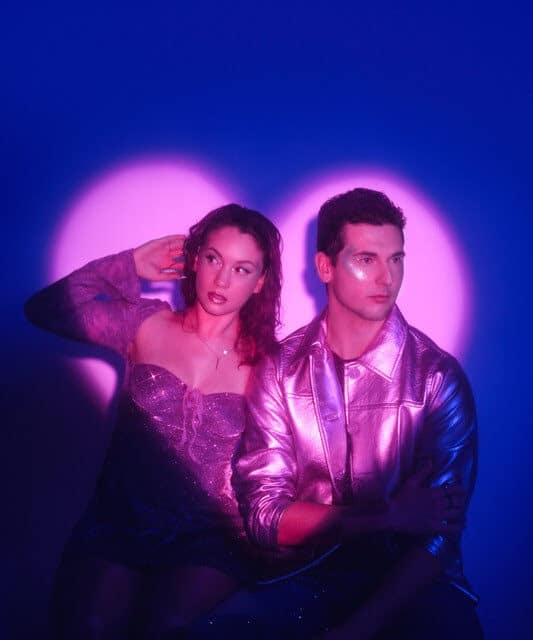
Fronted by vocalist Kiarra O’Connor alongside drummer and creative partner Michael Voytash, the Victoria, British Columbia duo make music designed for exactly that transformation. Vulnerability becomes volume. Hurt becomes a hook. Anger becomes something an entire room can scream together.
“I think that experience took some of the hurt out of the anger for me,” O’Connor says of encountering narcissistic personalities repeatedly over roughly a decade. “The anger became less about ‘Why did this happen to me?’ and more about ‘I know exactly what this is now, and you don’t have the same power over me anymore.’”
That distinction is essential to understanding “Know Me Better.” While its framing can initially resemble romantic fallout, O’Connor drew from experiences with narcissism across friendships, professional relationships, creative partnerships and other areas of her life. Some of those dynamics, she points out, can be significantly harder to escape than an ex because walking away isn’t always immediately possible.
The song therefore becomes less about revenge than recognition.
That recognition reaches its most cathartic point in the refrain: “I’m not your bitch / You should’ve known me better.” For O’Connor, writing something that confrontational wasn’t necessarily effortless. She is still unlearning expectations around how loudly or aggressively women are permitted to express themselves. Imagining an audience eventually shouting those words back helped transform the lyric from an intensely personal statement into a communal one.
It also points toward the larger world Miss the Heart are constructing with their forthcoming debut EP, due in early 2027. The project moves through different stages of conflict through the lens of feminine rage—a phrase O’Connor is interested in reclaiming from its increasingly aestheticized place in pop culture.
For her, feminine rage isn’t simply anger. It includes “the sadness, the mourning, the understanding, the acceptance, the realization, and ultimately the empowerment that comes from taking back the narrative.”
Sonically, Miss the Heart embody those contradictions. O’Connor gravitates toward grunge, alternative rock and heavier sounds, while Voytash brings a strong instinct for pop and melody. The result is music capable of moving between pristine hooks and moments of complete guitar-driven eruption—an unpredictability that mirrors the emotional process behind the songs themselves.
Working with producer and co-writer Ryan Worsley, the duo have learned to treat being only two people not as a limitation but as permission to make everything bigger. O’Connor and Voytash had already spent years developing a shared creative language before Miss the Heart emerged, and that trust allows intensely private experiences to be translated into songs built for collective release.
With “Know Me Better,” they’re no longer asking why somebody treated them badly.
They already know what they’re looking at.
Now they’re getting loud enough to make sure everyone else recognizes it too.
“Know Me Better” takes experiences with narcissistic partners, friends, coworkers, and collaborators and turns them into something almost celebratory in its defiance. When did the anger stop feeling destructive and start feeling empowering enough to become this song?
It’s super hard to pinpoint exactly when that shift happened, but I’ve found that when I’m finally ready to write about a difficult emotion, it usually means I’m ready to actually face it. If I’m struggling to write about something I’m going through, I’m probably not ready to process it yet.
With “Know Me Better,” I was able to look back on a collection of experiences with narcissistic people over the span of about ten years. When I think about my earlier experiences, I remember being shocked, confused, and feeling completely taken advantage of. I couldn’t understand how someone could treat another person that way.
But when you experience those dynamics a second, third, or fourth time, you start to recognize the patterns. You realize that some people really are just like that, and you become better at seeing the red flags before you’re completely caught up in it. I think that experience took some of the hurt out of the anger for me. The anger became less about “Why did this happen to me?” and more about “I know exactly what this is now, and you don’t have the same power over me anymore.”
That’s where the empowerment in the song comes from. It’s not celebrating the experience itself, it’s celebrating the fact that I can now recognize it, walk away from it, and ultimately laugh at it a little.
The track initially presents itself like a breakup anthem, but the story is much broader than romantic betrayal. Was it important for you to challenge the idea that some of our most damaging relationships are necessarily romantic ones?
It was extremely important to me, because there’s one particular person who heavily inspired this song, and they were not a romantic partner at all. They were the most recent narcissistic person I encountered, and they were extremely intertwined in my life. A lot of the hurt that ultimately became the empowerment behind this song came from that experience.
I knew framing it from an “ex” perspective would be the most immediately relatable, but narcissistic people can exist anywhere in your life, like a parent, boss, coworker, friend, or creative partner. And those relationships can be much harder to walk away from, and I sure as hell know how difficult it can be.
It’s fun to sing about a narcissistic ex, but it’s a lot less fun when that person is someone you have to keep interacting with. I wanted those people to feel seen too, because I’ve dealt with it myself. So while the song sounds like a breakup anthem, it’s really about breaking away from a harmful dynamic and realizing that person doesn’t get to have power over you anymore.
There’s a fantastic tension in your music between extremely polished pop hooks and moments where everything erupts into heavy guitars and chaos. Do those sonic extremes mirror the way you experience emotions yourselves?
Yes, absolutely. I think dealing with emotions in a healthy way often involves a lot of back and forth. One day you can feel completely empowered by a situation, and the next day the emotion can feel all-consuming like it’s all you can think about, and it feels catastrophic. There usually not a predictable pattern to it, and I think that emotional unpredictability naturally comes through in our music.
There’s also a really natural contrast between Michael and me as songwriters. I tend to gravitate toward heavier music like grunge and alternative-rock, while Michael listens to a lot more pop and melody-driven music. Bringing those influences together creates this tension between big, polished hooks and heavier, chaotic moments.
Your upcoming debut EP explores different stages of conflict through the lens of feminine rage. “Feminine rage” has become almost an aesthetic buzzword in pop culture lately—what does it actually mean to you beyond the trend?
To me, feminine rage is about dealing with the emotions that come with living in a throughline misogynistic world. Whether or not the people in your life are misogynistic, we live in a society that has historically been built around those systems and expectations. Feminine rage is the realization of that, and everything that comes with it.
It’s the anger, but it’s also the sadness, the mourning, the understanding, the acceptance, the realization, and ultimately the empowerment that comes from taking back the narrative. I also love that it’s inherently rebellious for women to express emotions that we’ve traditionally been told are too aggressive, too loud, or inappropriate.
“Feminine rage” has become a pop culture buzzword, but to me it’s much bigger than an aesthetic. It’s about giving women permission to experience the full spectrum of those emotions. It’s a “F you” to the idea that we’re supposed to make our anger and emotions palatable for everyone else.
Kiarra, you’ve described the cycle behind “Know Me Better” as being naive, getting taken advantage of, realizing what’s happening, and finally dealing with it. Do you think recognizing those patterns has changed the way you trust people now?
Absolutely. All of my experiences with people have shaped who I am today, but I don’t think they’ve made me inherently distrustful. I still try to approach people with a positive lens, but I take those first orange or red flags much more seriously now.
I used to give people the benefit of the doubt constantly. If someone wasn’t treating me well, I would justify it—maybe they’re having a bad day, maybe they’re going through something, maybe they’re a friend so I can overlook certain things. Now, I try to take people’s behaviour as evidence of who they are and how they’re likely to continue acting.
One of my favourite thoughts that I’ve adopted in recent years is: “Would the people I love most, my family, my friends, my partner, do that to someone else?” If the answer is no, then I probably have my answer. It’s helped me trust my own observations rather than constantly finding reasons to explain away someone else’s behaviour.
The lyric “I’m not your bitch / You should’ve known me better” feels designed to be screamed by an entire room. When you write something that personal, at what point do you start imagining it becoming communal rather than just your own confession?
Lyrics like this are actually some of the hardest for me to write, because I’m still unlearning a lot of the societal expectations I grew up with. I can still feel nervous about singing something aggressive or swearing in a song, especially when the emotion behind it feels so direct and unapologetic.
Sometimes imagining an entire room screaming that line back is actually what gives me the courage to say it in the first place. I start thinking about what that moment could feel like for someone in the audience who has experienced something similar, and suddenly it feels bigger than just my own confession. It becomes something we can all say together.
And now that the line is in the song, I’m so happy I pushed through that fear. Every time I sing it, it feels incredibly empowering, and super fun.
Working with Ryan Worsley seems to have allowed you to preserve the emotional core of your demos while making the sound significantly bigger. What did he recognize in Miss the Heart that helped you understand what this band could become?
I think one of the biggest things Ryan recognized was that being a duo is actually a strength, not a limitation. Michael and I came from a five-piece band, where we experienced the “too many cooks in the kitchen” saying waaaay too often. With Miss the Heart, having just the two of us gives us so much room to experiment and chase big ideas. It was never a question of, “Is this sound too big for a two-piece?” It was more like, “Hopefully your future guitarist can actually play this live!” Haha. Ryan really understood that and never treated being a duo as a boundary.
He also never put me in a box as a female vocalist. I’ve experienced people creating a smaller or less heavy sound around my vocals because I’m a woman, but I love heavy-hitting riffs and huge guitars too. Ryan understood that immediately.
Michael and I had already spent a lot of time developing our sound before working with him, and luckily he really understood what we were trying to create. I remember him saying something like, “Wow, you guys really have found a consistent sound already,” and that was such a validating moment. He helped us take what we had and make it bigger without losing what made it ours.
Miss the Heart is only two people at its core, yet the music is deliberately huge. How does being a duo affect the creative relationship between you, especially when you’re trying to translate intimate experiences into something this explosive?
I absolutely love our creative relationship. Michael and I both naturally gravitate toward music that feels deliberately huge, so it’s never difficult for us to imagine and write parts that match that scale. I feel incredibly lucky to have him as a creative partner. He’s expressive, has larger-than-life ideas, and is always willing to try something new.
We’ve also been making music together for about eight years, so at this point we’ve developed a pretty strong creative language. We’re usually on the same page about where we want to take a song, and when we’re not, we love exploring those differences. I sing, while Michael plays drums and keys and can play guitar and bass well enough for demos, so we also complement each other naturally.
There’s something especially valuable about having someone you trust on the other side of a vulnerable experience. Writing about something you’re actively experiencing can feel incredibly exposing, but Michael can take that experience and think about how to translate it into something that works emotionally, sonically, and for the listener. He’s one of my best friends, so having that kind of creative partnership is something I’m incredibly grateful for.
You describe the upcoming EP as moving through emotional stages of conflict, with “Know Me Better” representing the point where action finally replaces hesitation. What does the rest of that emotional journey look like, and how dark were you willing to let it get?
There are a lot of ups and downs throughout the EP, and it’s definitely not a perfectly linear journey. There are moments of pure denial, where you’re completely oblivious to what’s actually happening, and moments where you’re desperately trying to understand or rationalize it. There’s hurt, anger, confusion, and those periods where you start questioning your own perception.
I think we were willing to let it get pretty dark, because that’s part of being honest about the experience. You can’t really have the empowerment of “Know Me Better” without acknowledging the moments of vulnerability, denial, and uncertainty that came before it.
Your debut live performance arrives while you’re still introducing Miss the Heart to the world. When someone walks into that room knowing absolutely nothing about you, what do you want them to understand about this band by the time the last song ends?
By the time the last song ends, I want them to know that Miss the Heart is an absolute powerhouse, and hopefully their new favourite band. But beyond the music itself, I want them to feel like they’ve found a place where they can actually let their emotions come forward. We’re just people too, just doing what we love.
Our music can be loud, explosive, vulnerable, angry, fun, and everything in between, and I want our live shows to feel the same way. Whether you’re coming in feeling heartbroken, pissed off, empowered, or just looking for somewhere to scream for a while, I want you to feel like you belong there.