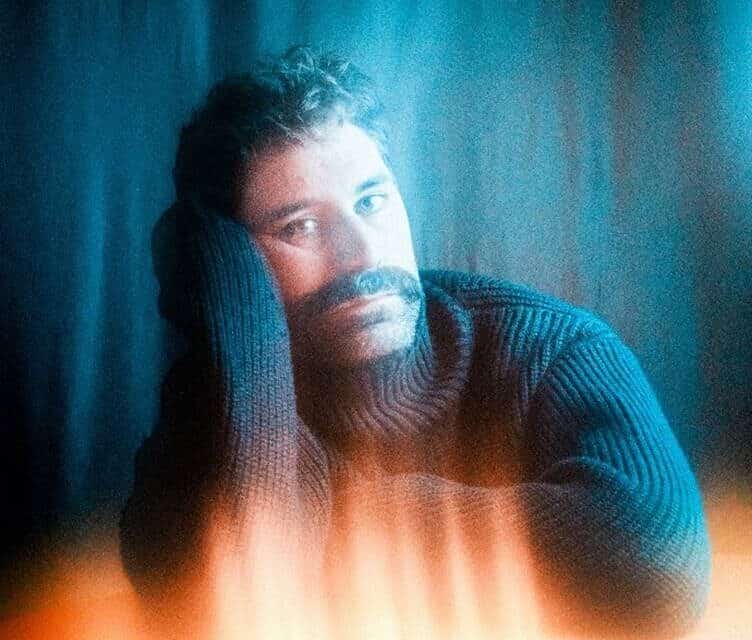
Growing older is supposed to come with answers. For NP York, the more interesting realization is that perhaps it doesn’t have to.
On his sophomore album, What’s Next?, the Danish artist looks backward at youth, friendship, heartbreak and earlier versions of himself without pretending that revisiting them will necessarily provide closure. Instead, the ten-track record exists inside the increasingly strange distance between the person you remember being and the person you suddenly realize you have become.
“I gave up on closure a long time ago,” York says. “Above all, I believe in the future.”
It’s a deceptively simple philosophy for a record born from a far more difficult period. Written following a severe depression and from York’s position as something of an outsider within Copenhagen’s music scenes, What’s Next? wrestles with aging, memory and the uncomfortable moment when the future stops feeling infinitely abstract. Friends move into different lives. Places once synonymous with identity become memories. Love becomes more complicated because you already understand what losing it feels like.
York, however, resists turning any of those realizations into a conventional crisis.
“I love dwelling in confusion,” he says. “I don’t need answers. Sometimes I just like to acknowledge reality for how bizarre it is, and I take it for what it is.”
That acceptance runs throughout What’s Next?. “One More Day” returns to late-teenage night drives and friendships, while “As Bold As A Heart” throws itself toward new love despite knowing the potential consequences. “Trier” considers perseverance and the uncomfortable act of waiting, while the album gradually moves from the exuberant yearning of songs like “LIE!” toward the more mature territory of “Let’s Talk” and “Better Place.”
Musically, that transition also represents a significant departure from York’s 2024 debut, Music for Fools. Where that album leaned into intimate singer-songwriter arrangements, What’s Next? allows itself to become louder, more immediate and significantly less restrained.
Working again with his musician friends The Fools, York recorded the album with producers Kaspar Kaae and Asger Techau, alongside bassist Torben, attempting to capture the songs as live as possible rather than constructing them around a predetermined sonic blueprint.
“I think I needed to stop caring about what people think of my music,” York says. “I’m definitely not afraid of the grand or expansive.”
Recorded in only three weeks, that looseness gives the album its nervous energy. Chiming guitars, restless rhythms and York’s baritone move between melancholy and moments of almost euphoric release, reflecting a record that remembers the past without wanting to become trapped inside it.
Because despite its nostalgia, What’s Next? isn’t really asking how to get youth back.
It is asking what remains useful once youth is gone.
And appropriately, York still doesn’t know exactly what comes next.
“I have no answer!” he admits. “It’s an ongoing question that is a source of constant anxiety and unrest, but at the same time, I think the title carries hope and faith in the future.”
Perhaps not knowing is the answer.
What’s Next? reflects on the strange distance between the people we were and who we are becoming in our mid-30s. What surprised you most about yourself while revisiting those past versions of your life during the writing process?
To be honest, not really anything. I observe who I am and was, and I accept it. In many ways, I’m the same person I was at 17, and yet not. I’m not the type to plan out my life path, but I adapt pretty well.
You balance chiming guitars with a very specific, melancholic indie-rock sound. When you were in the studio with Kaspar Kaae and Asger Techau, how did you decide on the sonic palette that would best capture the tension between nostalgia and optimism?
We recorded What’s Next? as live as possible. I brought the songs, and the talented musicians Asger, Kaspar, and Torben (on bass) went into the songs with open hearts. It was raw and live, and the songs were allowed to become whatever they became. It often depends on the lyrical universe, too.
We worked without too many references; instead, we just went with what felt right. Of course, each of us has our own musical background, and that shines through on the record: four people in a rehearsal room/studio.
The album features a shift from the intimate singer-songwriter feel of your 2024 debut Music for Fools to something with more “letting go” and “nerve.” Was that shift toward a more expansive sound something you felt necessary to tell the story of this record?
I think I needed to stop caring about what people think of my music, and I’m definitely not afraid of the grand or expansive. We recorded the album in three weeks, and it was just full pedal ahead, which you can really feel. That’s one of my favorite things about the record.
You mention that the album deals with the paradox of leaping into new love while knowing the cost of past heartbreak. Do you find that music acts as a way to resolve those paradoxes, or does it just help you sit with the confusion a bit longer?
I love dwelling in confusion. I don’t need answers. Sometimes I just like to acknowledge reality for how bizarre it is, and I take it for what it is.
You’ve described this record as being less interested in preserving the past than in understanding why we miss it. In that sense, is songwriting a tool for closure, or is it a way of keeping the past present in your work?
I think most of all it’s about keeping the past alive. Not places, but people and feelings that can fit into a present context. I gave up on closure a long time ago. Above all, I believe in the future.
Tracks like “Trier” touch on the experience of waiting for answers. Do you think that the act of creating music is an attempt to provide your own answers to life’s uncertainties?
Hmm, no, not for myself. But maybe for others, who knows? In general, I think we as human beings expect answers to too many things. I think it’s healthy to accept the state of things and then look at what you can change for the better for yourself and those closest to you.
Now that the album is out, how do you see the next chapter of your career, and does the title What’s Next? feel like a question you have an answer to, or one that you’re still asking yourself?
I have no answer! Haha. It’s an ongoing question that is a source of constant anxiety and unrest, but at the same time, I think the title carries hope and faith in the future. So, I suppose it’s whatever you make of it.