There is something strangely addictive about wanting someone who never quite gives us what we need.
The uncertainty becomes its own form of intimacy. Every small gesture of affection feels significant, every moment of distance creates another question, and the possibility of finally being wanted becomes almost more powerful than the relationship itself.
For New York City-based singer-songwriter Nadia Faye, that emotional contradiction sits at the center of her new single, “drift.”
Co-produced with musician Max Morgen, the track is a delicate exploration of longing, attachment, and the uncomfortable realization that sometimes we participate willingly in our own emotional suffering.
“When someone pulls away or withholds their affection, it seems like sometimes the natural instinct is to lean in closer.”
It’s a familiar experience, but Faye is interested in something more complicated than simply documenting unrequited affection.
She wants to understand why desire can become so consuming, even when we recognize that the thing we’re pursuing may never satisfy us.
Following her 2025 debut album Gardening, Faye’s latest release also represents a creative shift toward restraint, reconnecting with the acoustic songwriting that originally inspired her.
The result is a song that feels intimate without being fragile, emotionally charged without becoming overwhelming, and deeply personal without attempting to resolve every contradiction it introduces.
When Longing Becomes More Powerful Than Love
At its core, “drift” explores the experience of being emotionally consumed by someone’s inconsistent affection.
The song captures a relationship in which moments of closeness are interrupted by distance, creating a cycle of desire that becomes increasingly difficult to escape.
But Faye doesn’t frame herself exclusively as someone being hurt by another person’s behavior.
Instead, she recognizes her own participation in that emotional dynamic.
“I believe that we choose our own suffering sometimes, and drift is really about the unfulfilled longing that I want to experience.”
That admission gives the song an unexpected psychological dimension.
What if the person we desire isn’t always the real source of our longing?
What if uncertainty itself becomes familiar, even comforting, because it allows us to remain suspended between possibility and disappointment?
Faye suggests that the relationships we accept can reveal something about how we understand our own worth.
“I think the depth of love we accept from others is often really just a reflection of the love we feel for ourselves.”
Rather than presenting longing as inherently romantic, “drift” examines the way desire can become a self-perpetuating emotional experience.
There is the person we want.
There is the affection they offer.
And then there is everything we imagine that affection might eventually become.
Sometimes the imagined relationship becomes more powerful than the real one.
And sometimes we continue reaching precisely because the desire remains unresolved.
Rediscovering Her Voice Through Simplicity
Although “drift” represents a new chapter in Faye’s career, she describes its creation as a return to something familiar.
After experimenting with more expansive production, she found herself increasingly disconnected from the instinctive songwriting process that had originally shaped her music.
She began focusing on what she thought her songs should sound like rather than allowing them to emerge naturally.
Eventually, she returned to her guitar.
“I remember the moment I sat down and wrote with just me and my guitar after a long time, it was the truest I had felt in over a year.”
That moment became a turning point.
Rather than building the song around elaborate arrangements, Faye allowed the emotional foundation to dictate its musical structure.
Her vocals float over carefully plucked guitar lines, while consistent drums and bass create a subtle pulse beneath the arrangement.
The contrast mirrors the emotional experience at the center of the song.
The instrumentation continues moving forward, while the vocals seem suspended in uncertainty.
For Faye, this approach also reflects a changing understanding of emotional intensity.
She wrote Gardening while still in high school, when her songwriting often moved toward expansive, cathartic moments.
Her newer material is more restrained.
“I am very much a fan of work that doesn’t overextend itself or take up more space than it needs to.”
It’s an important distinction.
Emotional honesty doesn’t always require dramatic expression.
Sometimes the most revealing moments are the ones that remain unresolved.
Finding Creative Freedom Within Limitations
The recording process for “drift” was deliberately intimate.
Faye and Morgen produced the track in Morgen’s New York City apartment, working without the extensive equipment of a professional recording studio.
But Faye doesn’t view those limitations as disadvantages.
Instead, she believes constraints can encourage more distinctive creative decisions.
“I never properly learned to play the instrument, and every guitar line in this song somehow sounds the way it does because of the constraints of my own capability.”
That perspective reveals something essential about her approach to music.
Technical perfection isn’t necessarily the objective.
What matters is whether the sound communicates something authentic.
The same philosophy extends to her relationship with language.
Faye has maintained a notebook of words, phrases, and sensory details for years, collecting fragments that eventually become the foundations of her songs.
She is particularly interested in how physical environments can give emotional experiences a tangible form.
“I am first drawn to certain words and places when I write.”
Most of her songs begin as poems before evolving into musical compositions.
For Faye, songwriting offers an additional emotional dimension that language alone cannot always provide.
Melody, rhythm, and texture allow a feeling to become something listeners experience physically rather than simply understand intellectually.
That relationship between words and sound is especially evident on “drift,” where the restrained production leaves room for the emotional weight of each phrase.
Giving Desire a Visual World
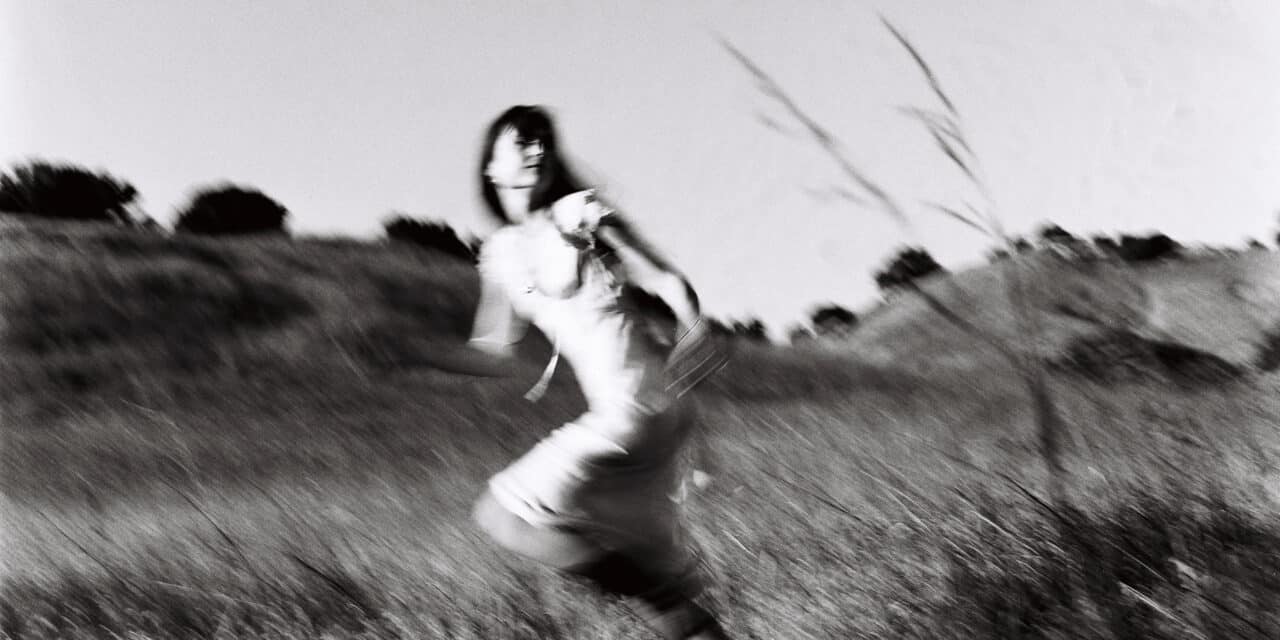
The accompanying music video extends the song’s emotional contradictions into a visual landscape.
Filmed over two days in Los Angeles, it juxtaposes expansive, light-filled imagery with darker moments of solitude.
The contrast reflects the tension between the beauty of desire and the isolation it can create.
For Faye, the experience also marked a change in her relationship with visual storytelling.
Previous video shoots had sometimes felt uncomfortable, particularly when she was younger and more self-critical.
This time, the process felt joyful and intuitive.
She credits the creative team around her with helping bring the song into a new dimension.
“I’m not a very visual person, but getting to bring the song to life in this way has been such a gift.”
The experience reflects a broader shift in her artistic confidence.
Rather than approaching every creative decision through self-criticism, she is becoming more comfortable allowing ideas to develop organically.
And that freedom extends beyond the music video.
After leaving NYU, where she found the structured academic environment creatively restrictive, Faye experienced a renewed period of songwriting.
She had struggled with the idea of having her musical instincts evaluated according to technical rules.
“I wasn’t very receptive to receiving grades or being told something that sounds good is technically incorrect.”
Stepping away allowed her to reconnect with the personal, exploratory nature of her creative process.
It’s a philosophy that now informs both her music and her understanding of herself.
In Conversation With Nadia Faye
MUNDANE: “drift” explores the experience of being emotionally consumed by someone whose affection is inconsistent. Why do you think uncertainty can sometimes create a stronger attachment than the security of knowing someone genuinely wants us?
Nadia Faye: I have definitely felt this in my life, I think we all have. When someone pulls away or withholds their affection, it seems like sometimes the natural instinct is to lean in closer.
MUNDANE: You’ve described “drift” as a return to the guitar and the acoustic songwriting that originally shaped your voice. What did you rediscover about yourself when you stripped away some of the production elements you had been experimenting with?
Nadia Faye: When I look back, I can see all the ways I had been unintentionally interfering with my natural and organic creative process, while hyper-focusing on what I thought my music should sound like. I remember the moment I sat down and wrote with just me and my guitar after a long time, it was the truest I had felt in over a year.
MUNDANE: There’s an interesting contradiction in the song between recognizing that someone isn’t giving you enough and continuing to desire them anyway. Do you think longing is always about the person we want, or can it become a way of avoiding something unresolved within ourselves?
Nadia Faye: I believe that we choose our own suffering sometimes, and drift is really about the unfulfilled longing that I want to experience. I think the depth of love we accept from others is often really just a reflection of the love we feel for ourselves.
MUNDANE: Your debut album, Gardening, embraced expansive arrangements and cathartic moments, while “drift” seems much more interested in restraint. Has your understanding of emotional intensity changed as a songwriter? Can leaving something unsaid sometimes communicate more than a dramatic release?
Nadia Faye: I wrote Gardening when I was still in high school, and since then, I’ve experienced a lot that’s changed the way I process and understand my own emotions. Gardening tends to linger longer in places, and I find that my newer stuff is slightly less dramatic. I am very much a fan of work that doesn’t overextend itself or take up more space than it needs to.
MUNDANE: You’ve described desire as something visceral, almost physically embedded in the body. When you’re writing, do emotions first come to you as words, melodies or physical sensations? And how do you translate something so instinctive into a structured piece of music?
Nadia Faye: I am first drawn to certain words and places when I write. Picturing a physical setting helps ground the emotions I am experiencing within the song, and I have this notebook of words that I add to almost every day. Both words and physical, sensory details carry a lot of emotional weight for me.
MUNDANE: You co-produced “drift” with Max Morgen in your New York City apartments, creating something intimate rather than relying on an elaborate studio environment. How does the physical space where you make music influence the honesty and vulnerability you’re willing to bring into it?
Nadia Faye: We produced the song in Max’s apartment, and I think there’s something really interesting about having to find ways to make things sound good without access to all the equipment of a professional studio. I feel the same about the way I play guitar. I never properly learned to play the instrument, and every guitar line in this song somehow sounds the way it does because of the constraints of my own capability. These kinds of constraints have always felt additive to me.
MUNDANE: The music video contrasts expansive, light-filled imagery with moments of isolation and darkness. You’ve also mentioned that, unlike previous video shoots, this experience felt unusually joyful and effortless. What changed in your relationship with visual storytelling, and did that creative freedom reveal a different side of the song to you?
Nadia Faye: I’ve been really interested in creating visual worlds that embody my songs and have been working with the most wonderful people who bring so much joy and inspiration to the process. I’m not a very visual person, but getting to bring the song to life in this way has been such a gift. Also, I think I just feel far less uncomfortable and self-critical being on camera than I did when I was younger.
MUNDANE: You have a strong connection to poetry and creative writing, and you’ve spent years collecting words and fragments of language. What can songwriting express that poetry alone cannot, and how do you decide when an idea belongs in a song rather than on a page?
Nadia Faye: Most of my songs are poems first and I find that they are often just a more condensed, polished and structured version of an idea I have already put into writing. Songs carry so much more energy than just the words, and there’s something about the experience of hearing a feeling expressed through music that truly cannot be compared to the experience of reading words on a page.
MUNDANE: You left NYU and subsequently experienced a period of renewed creativity. Did stepping away from a more structured academic path change the way you understood your identity as an artist, or your relationship with the expectations you had placed on yourself?
Nadia Faye: I started talking about my plans of dropping out my freshman year, studying music in a school setting always felt uninspiring to me. I found myself feeling really drained by the structured environment and I wasn’t as prolific as I wanted to be. I believe that so much of music can’t be taught, and I wasn’t very receptive to receiving grades or being told something that sounds good is technically incorrect.
MUNDANE: Much of your music seems concerned with the things we cannot fully possess: connection, certainty, permanence and even versions of ourselves that remain just out of reach. As you move into this new chapter after Gardening, are you becoming more comfortable with the idea that some desires may never be fulfilled, or is the act of continuing to reach for them what keeps you creating?
Nadia Faye: Yes! I think we are always reaching, at least I am, and that is the experience of living. Wanting and desire are sometimes so unbearable, but these emotions are also what makes us feel the most alive. I’m starting to realize that I am often much more interested in the depth of feeling than finding total peace or fulfillment.
Learning to Live With the Things We Cannot Have
Perhaps the most revealing aspect of “drift” is that Nadia Faye doesn’t seem particularly interested in escaping the contradictions she describes.
She recognizes the pain of wanting something unavailable.
She understands that emotional uncertainty can become destructive.
And she is increasingly aware of how desire can reflect the unresolved relationship we have with ourselves.
But she also recognizes that longing is part of what makes life emotionally rich.
Her music doesn’t attempt to eliminate that discomfort.
Instead, it gives it shape.
Through restrained instrumentation, intimate songwriting, and an increasingly confident creative approach, Faye transforms an experience of emotional uncertainty into something listeners can inhabit.
And in doing so, she raises a question that extends beyond romantic relationships.
What if fulfillment isn’t always the most interesting destination?
What if the act of wanting, searching, and remaining open to possibility is itself part of what makes us human?
For Faye, those questions remain unresolved.
But perhaps that is precisely the point.
Because sometimes the things we cannot fully possess are the ones that teach us the most about ourselves—and the longing we wish would disappear is also what reminds us that we’re alive.
Artist: Nadia Faye
Single: “drift”
Co-producer: Max Morgen
Previous album: Gardening (2025)
Based in: New York City
Listen: “drift”
Website: nadiafaye.com
Instagram: @nadiafaye_
Photo credit: Marley Chaney.