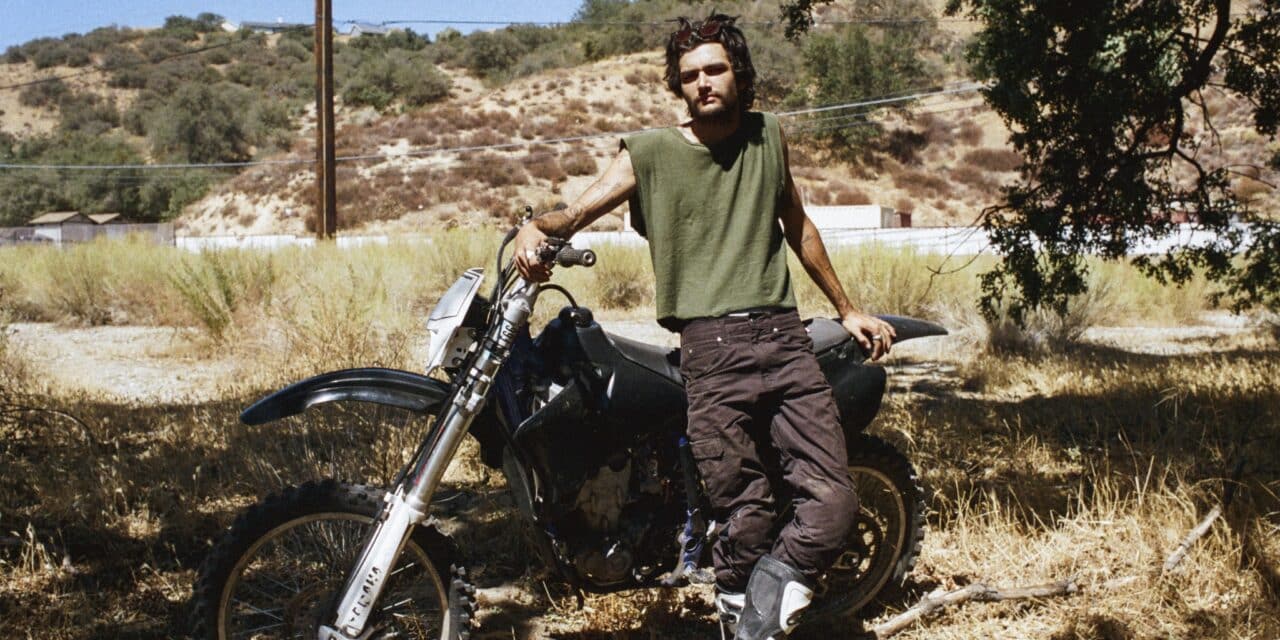
Shoop has spent the last five years behind the boards—building records for other people, translating their feelings into drums, melodies, and mix decisions. But with Never Better, the producer-turned-artist steps out from the booth and into the frame, not with a hard pivot, but a hard truth: the assembly-line approach to creativity can drain the magic out of music fast.
In this conversation, Shoop opens up about moving to New York two weeks before COVID, why Los Angeles initially felt like a creative wall, and how Never Better became a “joke” that turned into a serious lifeline. We talk the EP’s double meaning—never better as both peak and spiral—plus the subtle thread running underneath it all: masculinity, insecurity, and learning how to be emotionally fluent after a blue-collar upbringing that didn’t exactly reward vulnerability.
From hair-metal childhood soundtracks and early R&B CDs, to loving The Strokes loudly and borrowing aesthetics without turning life into costume, Shoop breaks down the philosophy behind the songs—and why collaboration, trust, and “trying to steal” are still at the core of everything he does.
MundaneMag: Our audience doesn’t really know you yet. Who are you—and what is Never Better?
Shoop: I’m Shoop. I’ve been a producer for other artists for about five years now. And this project, in one sentence, is basically about revitalizing the excitement of making music for me again. After working on songs for other people for a few years—especially after never doing it before—it’s fun, but your energy can start to dip depending on how excited or energetic the artists you’re working with are.
When I moved to Los Angeles, I hit a wall. It felt like everyone had the same goals and wanted to make a song in one day—like an assembly line. And if I wanted that, I would’ve just gone back to my old jobs.
So Never Better is kind of… a double-edged sword. It can mean “nothing’s ever going to be better than this,” or “it’s never going to get better.” A lot of the themes on the EP are there, but you kind of have to search for them. It’s supposed to feel surface-level—something you can just enjoy—but if you want to dive into the lyrical content, you can. I’m a producer at the end of the day, so the goal was: make songs I genuinely enjoy hearing.
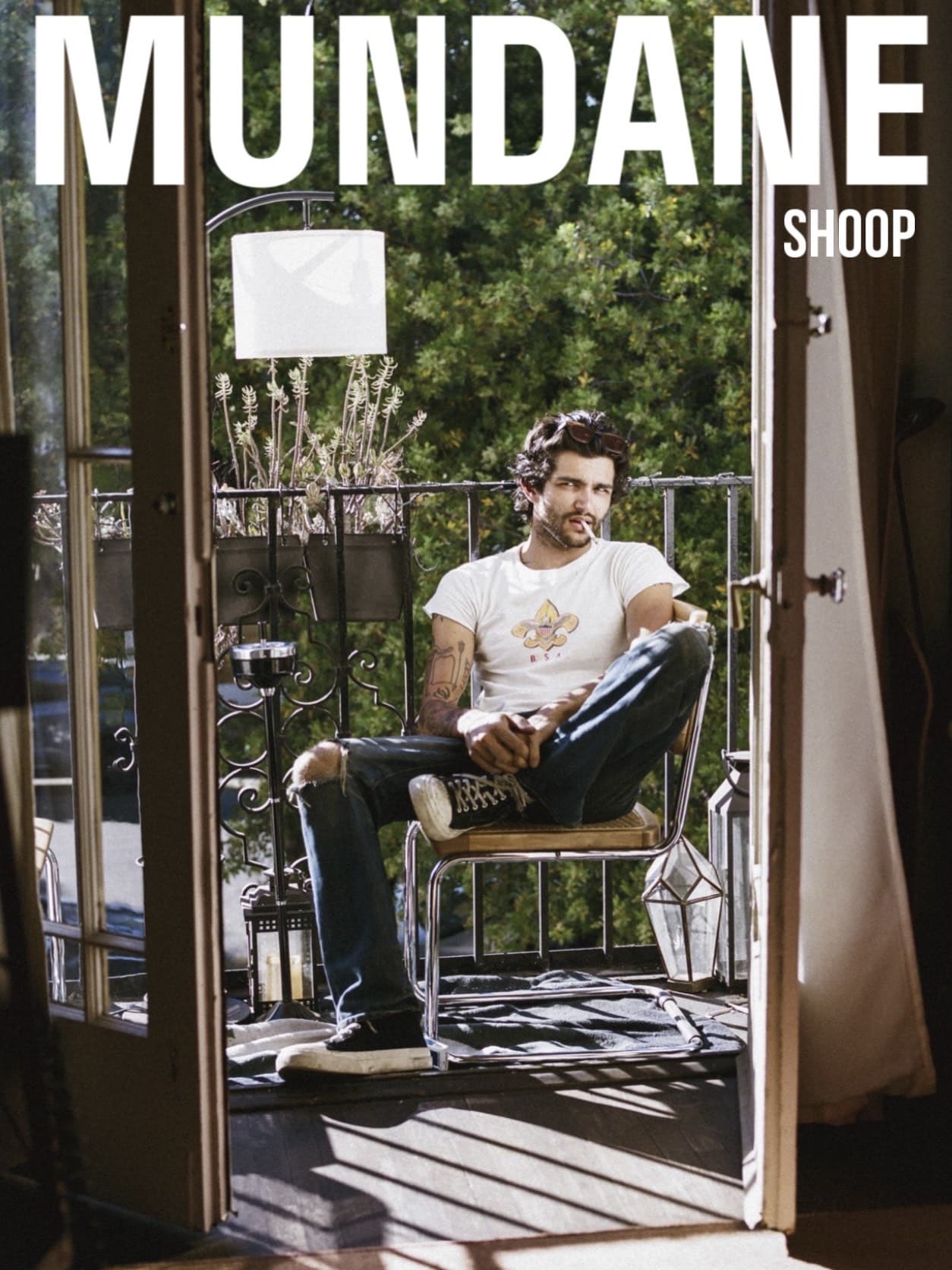
MundaneMag: I’m glad you pointed out that dual meaning, because it’s not where your mind goes instantly. So if we do dig—what are the themes you were actually chasing? Did they develop during the process, or were they a roadmap from the start?
Shoop: There are some classic themes—toxic relationships, bitterness after getting screwed over romantically. Stuff we’ve heard a thousand times, but it’s classic for a reason.
But the main theme that’s not as obvious is: being a really insecure man, growing up in a more blue-collar environment where you’re taught you’re not supposed to share emotions or talk about what you feel.
Without being corny, I wanted to finally touch those themes without sounding pretentious. It can be difficult growing up in a certain environment and then getting flung into this creative world—musicians, artists—where emotional openness is part of the culture. You have to learn how to handle yourself in that space. I started making music seriously around 25. A lot of these songs are an ode to figuring out maturity—what I can offer people—rather than just being a kid forever.
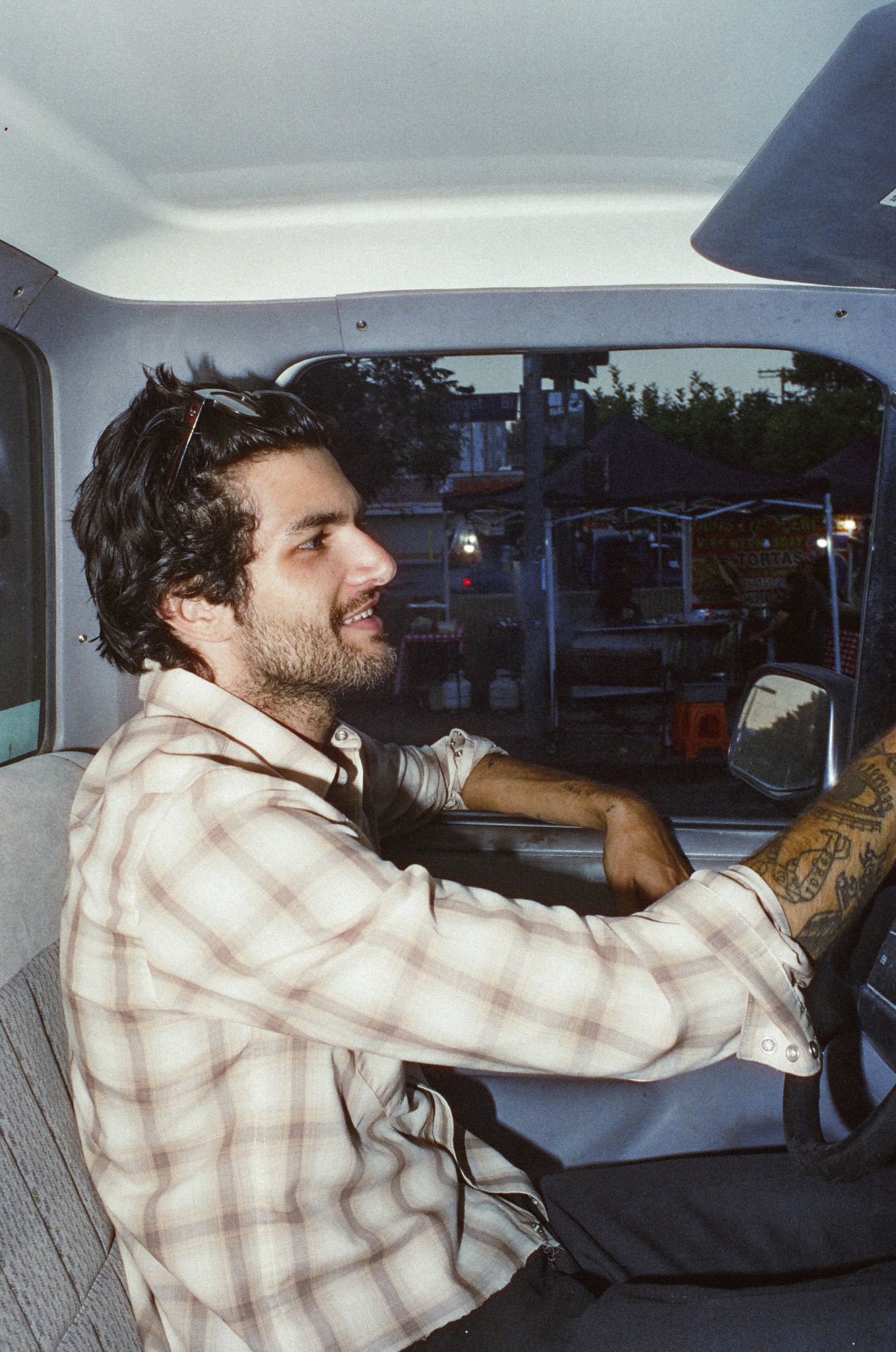
MundaneMag: Let’s go back to the beginning of that shift. New York was your first big leap out of your town, right? How did New York shape you—especially as an artist?
Shoop: I moved to New York March 1st, 2020—two weeks before COVID started. Insane timing.
I graduated college in 2017, had about three years working ridiculous jobs—retail, food service—just trying to get by. I was finally ready. I still had some contacts from an internship in 2016, so I went.
At first, everything was consumed by COVID, because New York is so intense—so constant—you can’t escape it. But by late 2021 into early 2022, things settled enough that I could focus again: How am I going to make this work in music?
New York gave me some of the best memories of my life. I have multiple New York tattoos—locations I lived. There’s no city like it: the diversity, the backgrounds, the jobs, the people. The food. It’s a cultural melting pot.
But it’s also hard. Carrying groceries up six flights sucks. Winter is brutal. Still, as a musician, it’s incredibly inspiring. But New York also makes it easy to give into distraction—drinking, partying, binging—fun until you do it for years and start thinking: Okay… what else? How do I build an actual adulthood here?
Eventually, I hit a wall with making music there—ran out of artists to work with, for lack of a better term. Then an opportunity brought me to L.A., and the timing aligned. I think about New York multiple times a week.
MundaneMag: That New York relationship is real—you love it, you hate it, you miss it. So how did L.A. change you? Is Never Better a product of mellowing out?
Shoop: It’s not like there was one catastrophic studio moment where I threw in the towel. It was more gradual—consecutive days of the same issue.
A big thing I ran into was artists who didn’t know what they wanted to write about or sound like. Exploration is important, so I’m not judging that. But my favorite artists—people I look up to—always had some autonomy. They knew at least one part: “I want to talk about this,” or “I want my shows to feel like this,” or “I want the aesthetic to look like this.”
When you move to a new city as a producer, you have to earn your way in. You work with everyone from the ground up. And on top of that, moving across the country is hard. I fell into distractions—relationships, materialism. It’s easy in L.A. I lost my frame of mind for a bit: what my goal was, and whether I was enjoying it.
It didn’t lead to a demise. It just pushed me toward a different outlet.
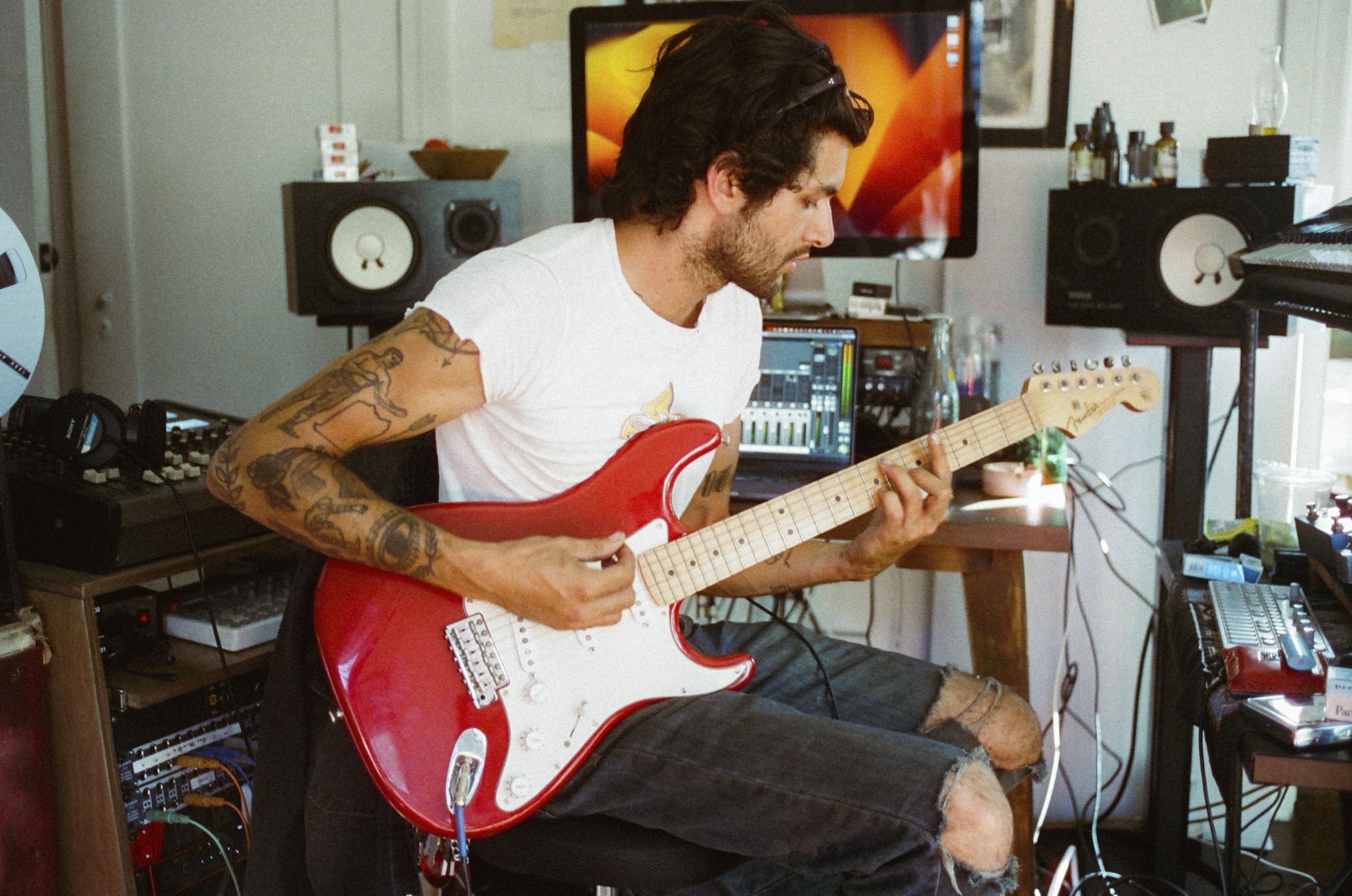
MundaneMag: There’s also a genre-collage feeling on the record—R&B, rock, pop, a bunch of textures. Where is that coming from? Did those influences arrive all at once, or over time?
Shoop: I grew up on Journey, Styx, Van Halen, AC/DC—debaucherous American dad rock. My father played it nonstop. I didn’t even realize there was an alternative to “Don’t Stop Believin’” eight times a day.
Then in middle school, I started discovering stuff through friends—CDs, like 2005/2006. My first CD was Chris Brown—not very “vogue” to say now, but it’s true. That was my early intro to R&B. I was also a huge Kylie Minogue fan. My taste went all over the place: Justin Timberlake, The Neptunes, Timbaland—legendary producers.
But for this project specifically, I didn’t sit down like, “This song will be this genre.” Never Better started 1000% as a joke. It was a humorous outlet—something that kept me from giving up and moving back to Pennsylvania to work at Sunglass Hut again.
Within my first six or seven months in L.A., I was like: I don’t like who I’m becoming. I don’t like the circles I’m in. I feel like I’m wasting time. Even the ballad on the project started as a joke. I was literally humming, “Man, but everything’s perfect,” thinking it was stupid.
Then you stop being self-aware and over-analytical for five seconds and you get earnest—and you realize a lot of great songs start like that. MGMT started as a joke.
MundaneMag: Okay—so if we pick one track as the bright light of the EP, is it “Little Peace”? And if so, why?
Shoop: Yeah. I love that song. I’ll be the first to say it’s a massive Strokes ripoff—but I love The Strokes, and I didn’t care.
If you’re going to copy somebody, at least make it good. I don’t think it’s a 12 out of 10, but I really enjoy it. I like referential artists. The 1975 do it all the time—sometimes they’re almost copyists—but if it’s good and not a carbon copy, it’s a win.
“Little Peace” happened the fastest. I was building the instrumental for fun—testing a pedal or guitar—and I started mumbling the chorus melody. I was joking, like, “That sounds like Julian Casablancas if he was bad.” Then I wrote the verse.
It’s just the most fun. High energy. And somehow it doesn’t feel as corny as it probably should.
MundaneMag: There’s that classic line: good artists borrow, great artists steal. And you’re basically living that.
Shoop: Exactly. And the funny thing is: when you try to copy someone, it always ends up sounding like you trying to copy them—not like them. But I think that’s how people build a sound: by trying to do something they’ve heard.
One of my favorite artists is Lou Reed. If I try to sound like him, it’ll never happen. But I’ll remember what I was referencing. I come from a pop background, so anything I do will have some pop sensibility. That’s unerasable. If I fight it, it comes off pretentious.
Trying to steal—pulling from older things I love—is how you end up making something interesting.
MundaneMag: You spent years “on the other side of the booth.” Now you’re in front of the camera, front of the mic. What’s the plan for your aesthetic—how you present yourself—now that people can finally see you?
Shoop: The biggest through-line is: I need to be able to live with myself while doing it.
Where I’m from, it’s taboo to express yourself. I can’t be Ziggy Stardust. I can’t do a huge character and then switch it off. I feel like I’d go insane.
So the goal is: I’ll try things—pink, makeup if I want—but it has to still feel like me. I’m sensitive to feeling like I’m putting on an act or wearing a costume.
In the last few years, I’ve gotten back to what I always liked aesthetically—blue-collar, “redneck” stuff. My whole family is like that. I spent years trying to be in the hypebeast world—Supreme, CDG—had fun, but now I’m back to what feels natural.
I want to evoke nostalgia—Americanism—without it being bigoted. And I like the contrast of looking like a douchey guy, but then you hear me talk and you’re like, “Wait, this guy’s just a nerd.” I love playing with that. My favorite “classic dude” archetypes are like James Dean, but I’m not mysterious like that. So I borrow the vibe a bit, then just let my personality be what it is: ridiculous.
MundaneMag: That actually completes the circle—the duality isn’t only in the title, it’s in you. So let me close by bringing you back to producer life. You’ve worked with artists like Role Model, Dijon, Syd—plus countless others. What did producing teach you? Why did it make you happy, even in the hard moments?
Shoop: For a while I didn’t know how to feel about it, because I always wanted to be the artist. I’ve been writing songs and singing for a decade. But where I’m from, being a producer or composer wasn’t a real job—it was laughable. Like, “Yeah right, I’ll see you at church running sound.”
I got lucky—shout out to my first two managers—who were like, “You can do this. You can be a producer, play instruments, write, mix.”
And the thing I grew to love is: it’s incredible when someone chooses you to help them finish their idea. It’s a trust thing. Someone gives you five or six hours, tells you about their life, relationships, family, money issues—whatever—and you help translate that into music. That’s still so cool to me.
Everyone works differently. Everyone plays differently. We only have so many notes, but people play the same chords in completely different ways. Collaborating like that is what I’ve wanted since I was 12. The fact I’ve done it for five years is ridiculous.
I have imposter syndrome badly. I’m always waiting for people to stop calling me. But I’m grateful it’s been real for this long.
MundaneMag: That’s the thing—your “seven notes” are yours. And now you’re finally letting them be front and center.
Shoop: Exactly.