Los Angeles-based singer-songwriter OSTON has spent years helping other artists find their voices. Now, with her debut album Isn’t That Sweet?, she’s finally putting her own at the center of the story. Across thirteen tracks that move between synth-powered pop, intimate confessions, sharp humor, and emotional catharsis, OSTON confronts the complicated relationships, insecurities, and personal transformations that shaped her twenties. Having written for artists including VIVIZ, NMIXX, ITZY, and JISOO, she brings her songwriting experience into a deeply autobiographical project about learning to establish boundaries, embrace contradictions, and reclaim creative independence. In conversation with MUNDANE, OSTON reflects on the relationships that nearly derailed her career, the liberating power of laughing at heartbreak, and why accepting every part of yourself might be the most important form of growth.
Sometimes finding your voice means learning to stop listening to everyone else’s.
For OSTON, the Los Angeles-based singer-songwriter whose debut album Isn’t That Sweet? has finally arrived, that realization took years of experimentation, difficult relationships, and a complicated journey toward creative independence.
The thirteen-track project is the culmination of a career that has already taken her from classical voice lessons and songwriting sessions in Chicago to collaborations with some of the most recognizable names in contemporary K-pop.
But despite her accomplishments as a songwriter, the process of defining herself as an artist proved considerably more challenging.
Early in her career, OSTON found herself surrounded by collaborators who insisted she didn’t know who she was.
Some believed they could figure it out for her.
Others attempted to shape her musical identity according to their own expectations.
And for a young artist trying to establish herself in an industry that demands a recognizable image almost immediately, those outside opinions became difficult to separate from her own instincts.
The experience ultimately informed a collection of songs that confront the emotional consequences of allowing other people too much influence over your life.
“I stopped trying to be who other people thought I should be and just wrote what was true and made a record that feels like me,” OSTON tells MUNDANE.
That decision sits at the heart of Isn’t That Sweet?, an album whose playful title disguises a remarkably complex emotional landscape.
Across thirteen songs, OSTON moves between heartbreak, humor, anger, euphoria, insecurity, and self-acceptance.
Sometimes those emotions appear separately.
Often, they arrive all at once.
And rather than attempting to organize them into a neat narrative of personal triumph, OSTON allows the contradictions to remain.
Because growing up, as she has discovered, rarely happens in a straight line.
The Album That Almost Never Happened
OSTON’s journey toward her debut album began long before she moved to Los Angeles.
As a child, she studied classical voice and developed a fascination with songwriting, drawing inspiration from artists such as Adele and Julia Michaels.
While attending college in Chicago, she worked at a recording studio, where she began collaborating with other musicians and developing her songwriting skills.
Those experiences eventually led to sessions with artists including UPSAHL and Bülow, opening doors to a professional songwriting career.
But her decision to move to Los Angeles in 2019 introduced a much more difficult chapter.
Arriving in the city with ambitions of building a career in music, OSTON found herself sleeping on an inflatable mattress on the living room floor of an apartment shared with someone she believed she could trust professionally.
What initially appeared to be an opportunity for collaboration gradually developed into an unhealthy relationship.
The experience left her navigating the complicated boundaries between friendship, professional dependence, and creative control.
Ironically, that difficult period also became the inspiration for some of her earliest successful independent releases.
Songs such as “Lie About You” and “Burton St.” explored the emotional consequences of codependency and unhealthy non-romantic relationships.
Their success demonstrated that OSTON’s most compelling material often emerged when she stopped trying to fit someone else’s expectations and began documenting her own experiences.
But understanding those patterns required more than writing about them.
It meant learning to recognize the difference between collaboration and dependence.
And eventually, it meant finding the courage to walk away.
“Those experiences taught me how important it is to know where my boundaries are and to actually hold them,” she explains.
The lessons would become essential to the music she created next.
Reclaiming the Right to Define Yourself
For emerging artists, identity can become an unexpectedly complicated concept.
The music industry frequently expects musicians to arrive with a fully formed aesthetic, a clear narrative, and a recognizable artistic personality.
Social media adds another layer of pressure, encouraging young creatives to present a consistent version of themselves even while they’re still figuring out who they are.
OSTON experienced that tension firsthand.
As she attempted to establish herself, she increasingly allowed other people’s opinions to influence her artistic decisions.
The result was a growing distance between the music she was creating and the person she wanted to become.
With Isn’t That Sweet?, she began reversing that process.
Rather than asking collaborators to help define her identity, she started treating her own experiences as the foundation of the music.
The shift wasn’t simply about gaining creative control.
It was about recognizing that uncertainty, contradiction, and personal change are themselves legitimate subjects for artistic expression.
“It’s hard to know who you are when you’re young, especially with social media,” she says.
“And it’s even harder when you’re trying to figure it out while the whole world is watching.”
That realization allowed OSTON to approach the album with greater freedom.
She no longer needed every song to reinforce a single emotional perspective.
Nor did she need to present herself as someone who had already figured everything out.
Instead, the record could reflect the complicated reality of becoming an adult.
Why Isn’t That Sweet? Had to Be a Full Album
Although OSTON has been releasing music for years, she resisted the idea of creating a full-length album until she felt she had something substantial to communicate.
Previous projects had allowed her to explore different aspects of her songwriting.
But this time, she wanted the music to function as a complete narrative.
An album, in her understanding, should take listeners somewhere.
It should offer a beginning, a progression, and an ending that feels emotionally meaningful.
During the writing process, she accumulated more material than she could reasonably include.
Eventually, she narrowed the collection to thirteen tracks.
The decision wasn’t simply about choosing her favorite songs.
It was about creating a sequence that captured the emotional complexity of the experiences she had been processing.
“I didn’t have enough to say yet to fill a whole record,” she explains of her earlier attempts.
“This time I had more songs than I could fit, and I cut it down to 13.”
The result is an album that moves between contrasting musical and emotional landscapes.
Songs built around bright synth-pop production sit alongside more intimate, acoustic-leaning moments.
Humor gives way to vulnerability.
Confidence dissolves into uncertainty.
And heartbreak occasionally becomes something worth laughing about.
That emotional instability isn’t a flaw in the record’s construction.
It’s the point.
“Sorta, Kinda”: When Heartbreak Becomes Comedy
One of the album’s clearest expressions of that philosophy arrives with “Sorta, kinda,” the project’s focus track.
The song explores the experience of being mistreated in a relationship or situationship, but approaches the subject with a playful sense of humor.
Rather than framing heartbreak exclusively as tragedy, OSTON allows herself to recognize its absurdity.
The track’s sarcastic tone also reflects the meaning behind the album’s title.
Isn’t That Sweet? becomes less a straightforward expression of affection than a knowing response to life’s more ridiculous disappointments.
“Through all the ups and downs of a relationship, or situationship, or whatever you want to call it, you can either cry about it or laugh about it,” OSTON explains.
“This song is me choosing to laugh.”
The accompanying music video extends that philosophy into the visual world.
Co-directed by OSTON and Penny Kapa, who also handled cinematography and editing, the video embraces a deliberately casual, playful aesthetic.
With a limited budget, the team rented a warehouse and built the production around the song’s irreverent energy.
Lighting was provided by Sloan Scroggin.
For OSTON, the experience represented another opportunity to exercise creative control.
Rather than relying on an elaborate production to communicate the song’s personality, the video reflects the humor and spontaneity already present in the music.
It’s an approach that feels consistent with the album’s broader message.
Authenticity doesn’t always require perfection.
Sometimes it simply requires the freedom to be a little ridiculous.
The Songwriter Behind the K-Pop Hits
While Isn’t That Sweet? represents OSTON’s most personal work to date, her songwriting career extends far beyond her own releases.
She has written for major K-pop artists including VIVIZ, NMIXX, ITZY, and JISOO, contributing to a musical world defined by intricate production, strong melodic identities, and highly collaborative creative processes.
Among her credits is VIVIZ’s “MANIAC,” a significant milestone in her work as a songwriter for other performers.
Writing for K-pop introduced OSTON to a different set of creative challenges.
Rather than drawing exclusively from her own experiences, she learned to develop material that could serve another artist’s voice, personality, and musical direction.
The process demanded flexibility and an ability to move between different creative perspectives.
But when she returned to writing for herself, the emotional requirements changed dramatically.
Instead of imagining someone else’s story, she had to revisit her own.
Old relationships.
Uncomfortable memories.
Text conversations.
Experiences she might otherwise have preferred to leave behind.
That made the people in the writing room especially important.
OSTON needed collaborators she trusted enough to discuss difficult personal experiences without feeling judged or pressured.
The distinction reveals an important part of her artistic evolution.
After years of allowing outside voices to influence her identity, she learned that healthy collaboration should create space for vulnerability rather than control it.
Finding the Space Between Pop and Confession
OSTON’s sound occupies an intriguing position within contemporary alternative pop.
Her music combines polished electronic production with the emotional intimacy of singer-songwriter storytelling.
It’s a balance that critics have increasingly recognized.
Stereogum described her approach as synth-powered pop positioned somewhere between Chvrches and Kacey Musgraves, while The Luna Collective praised the emotional complexity of her songwriting.
For OSTON, however, arriving at that sound was a gradual process.
She spent years working with different producers and songwriters, exploring various musical directions before recognizing that she didn’t need to choose between her influences.
The pop music she loved and the diary-like storytelling she admired could coexist.
“I could take the pop production I love so much and pair it with the diary-like storytelling I’ve always been drawn to as a writer,” she explains.
“That’s when it finally clicked and started to sound like me.”
That realization is central to the album’s musical identity.
Rather than treating acoustic intimacy and electronic production as opposing approaches, OSTON uses both to reflect the emotional range of her songwriting.
A bright arrangement can accompany a painful realization.
A catchy chorus can contain an uncomfortable truth.
And an upbeat song can become the vehicle for expressing something deeply personal.
The result is music that understands the difference between emotional honesty and musical solemnity.
Sometimes the most vulnerable things are easier to communicate when the music gives us permission to dance.
Grieving the Person You Used to Be
Throughout Isn’t That Sweet?, OSTON returns to the relationship between personal growth and regret.
Songs such as “White knuckling,” “Placebo effect,” “Unstuck,” and “I used to like that girl” contribute to an album-wide exploration of how people change over time.
For OSTON, growing older has involved confronting decisions she now understands differently.
Relationships she should have left sooner.
Boundaries she failed to establish.
Situations in which she allowed other people to determine her worth.
Looking back can be frustrating, particularly when the mistakes seem obvious in hindsight.
But the album also reflects a growing ability to approach her younger self with compassion.
“I do think life is a constant cycle of growing, changing and grieving the person you used to be,” she says.
That process involves recognizing the difference between accountability and self-punishment.
OSTON doesn’t deny the mistakes she made.
Nor does she attempt to rewrite her past into a story of effortless resilience.
Instead, she acknowledges that those experiences helped her develop the perspective she has today.
“You grieve who you were, you learn to give her some grace, and then you grow.”
It’s a sentiment that captures the emotional progression of the album.
The goal isn’t to erase previous versions of yourself.
It’s to understand them well enough to move forward.
“No Me Without You”: Learning to Accept Every Part of Yourself
The album’s closing track, “No me without you,” introduces one of its most intimate and revealing themes.
Initially conceived as a breakup song, the composition gradually evolved into a reflection on OSTON’s relationship with her own mental health.
Throughout the record, she explores the consequences of unhealthy relationships and the process of reclaiming personal identity.
But the final song turns that examination inward.
What happens when the parts of ourselves we struggle with are also part of the person we’ve become?
OSTON explains that the song addresses her experiences with depression and anxiety.
Even during difficult periods, when she wishes she could simply eliminate those feelings, she recognizes that her experiences have shaped her identity.
That recognition doesn’t mean abandoning the work of caring for her mental health.
Rather, it means approaching herself with greater acceptance.
“There’s no me without my depression and anxiety,” she explains.
“That doesn’t mean I’ve stopped working on them, and life is so much better when I’m taking care of myself.”
It’s an important distinction.
Acceptance isn’t resignation.
And personal growth doesn’t necessarily require rejecting every difficult aspect of one’s history.
After thirteen tracks exploring identity, relationships, regret, and self-discovery, the album arrives at a more complicated understanding of what it means to love yourself.
Not because every part of your life is easy.
But because those experiences belong to you.
Bringing the Songs Into the Real World
Following the album’s release, OSTON is taking her new music on the road as support for Maddie Zahm.
The November run includes performances in Denver, Salt Lake City, Boise, Seattle, Portland, San Francisco, and Los Angeles.
For OSTON, the opportunity represents a significant transition.
Songs that began as private reflections will now become shared experiences with audiences.
And as an opening artist, she faces the additional challenge of connecting with listeners who may be discovering her music for the first time.
But that unpredictability is part of the excitement.
OSTON describes the experience of winning over a new audience as particularly rewarding.
More importantly, she is eager to hear people singing her lyrics back to her.
For an album built around the struggle to define herself, that moment carries an emotional significance of its own.
The experiences she once felt isolated within are becoming stories that other people recognize in themselves.
And the songs that helped her understand her own life are beginning to take on new meanings for listeners.
In Conversation With OSTON
Isn’t That Sweet? is your debut album, but you’ve been writing and releasing music for years. Why did this particular collection finally feel like your first album?
It just felt like the right time. I’ve thought I was ready before, but I didn’t have enough to say yet to fill a whole record. This time I had more songs than I could fit, and I cut it down to 13. It felt like a complete story, something that takes you somewhere from start to finish, and that’s what an album is to me. After years of EPs, I was like OKAY it’s time, I’m ready.
You’ve described early collaborators as people who told you that you “didn’t know who you were” and thought they could find it for you. How did reclaiming control over your identity change the artist we hear on this record?
In every way, shape and form.
It’s hard to know who you are when you’re young, especially with social media, and it’s even harder when you’re trying to figure it out while the whole world is watching. There’s this pressure in the music industry to know exactly who you are from day one, and I was trying so hard to get there that I let everyone around me shape it.
This record is me finally deciding for myself. I stopped trying to be who other people thought I should be and just wrote what was true and made a record that feels like me.
The album moves between humor, vulnerability, euphoria, heartbreak and self-awareness. Was it important for you to make a record that allowed contradictory emotions to exist at the same time?
Absolutely! I feel all of those things on a daily basis, sometimes all at once. During the writing process I would be laughing about something one minute and crying about it the next. Making a record that only showed one side of that wouldn’t have felt honest. The only way this album could feel true to me and my life was to let all of it exist together.
Songs like “Lie About You” and “Burton St.” emerged from experiences with codependency and unhealthy non-romantic relationships. What have those experiences taught you about the boundaries between collaboration, friendship and dependence?
They’ve taught me soooo much. Mixing work and friendship can be really complicated. When it works, it can make the relationship even stronger, and that’s a beautiful thing. But it can also blur lines in ways that are hard to see while you’re in it. Those experiences taught me how important it is to know where my boundaries are and to actually hold them. I think that’s part of growing up in general, but writing those songs helped me understand it in a way I couldn’t before.
“Sorta, Kinda” is the focus track, and you also co-directed its video. What does that song represent within the larger story of the album, and how did you translate it visually?
‘Sorta, kinda’ is definitely the comic relief of the album. At its core, it’s about getting screwed over, but it’s told in a lighthearted way that really captures the sarcasm in the title, Isn’t That Sweet? Through all the ups and downs of a relationship, or situationship, or whatever you want to call it, you can either cry about it or laugh about it. This song is me choosing to laugh. It’s character building.
Co-directing the video was an awesome experience. We didn’t have a huge budget or anything so we just rented out a warehouse and went for it. I think the casual and goofy nature of the song really shines through!
You’ve written for artists including VIVIZ, NMIXX, ITZY and JISOO. How does writing for someone else differ from writing something so personal that you know immediately it belongs to OSTON?
I’ve soooo loved stepping into the K-pop writing world. It’s an entirely different beast writing for Kpop, pitch and other artists. You’re writing for someone else’s voice and story.
For this album, I had to shift my mindset entirely and be willing to revisit my own stuff (old relationships, situationships, text threads, all of it)… That’s why it was so important to have a room of writers and producers I felt totally comfortable with. I’m not great at opening up about that stuff with people I don’t know, at least not in a way that turns into a meaningful song. I needed people I trusted.
You grew up studying classical voice and listening to songwriters like Adele and Julia Michaels, but your own music now occupies this space between synth-pop, alternative music and singer-songwriter storytelling. How did you arrive at that sonic identity?
It took years of experimenting and finding the right team. I spent a long time ‘dating around’ in sessions, working with all kinds of writers and producers and learning how other people write. Eventually I realized I didn’t have to choose between the pop and the singer/songwriter worlds. I could take the pop production I love so much and pair it with the diary-like storytelling I’ve always been drawn to as a writer. That’s when it finally clicked and started to sound like me.
There’s a compelling progression in titles like “White Knuckling,” “Placebo Effect,” “Unstuck” and “I Used to Like That Girl.” How much of the album is about grieving previous versions of yourself versus learning to accept them?
I do think life is a constant cycle of growing, changing and grieving the person you used to be, so that’s always running underneath my songwriting. A lot of this record is me looking back at my younger self like, ‘Oh my god, dumbass, WHAT were you thinking???? Respect yourself more!’ But that’s how we learn. We make mistakes, and we grow from them. I made a lot of them. I let people walk all over me. Making this record as I headed into my late twenties, it was fun (and humbling) to look back on all of it. So I’d say it’s both. You grieve who you were, you learn to give her some grace, and then you grow.
You’re taking these songs on the road with Maddie Zahm this fall. After making such an introspective record, what changes when these deeply personal songs suddenly become shared experiences with a room full of people?
I’m actually in rehearsals right now, and I’m so excited to get on the road and see how these songs feel live!!!
It’s already been such a gift to see how people have embraced this record and made the songs their own. Getting to feel that in person is something I can’t wait for. There’s no better feeling than people singing your words back to you. And as an opener, you’re often playing to a room full of people who have no idea who you are. Capturing their attention and converting them into your own fans is riveting for sure.
The album ends with “No Me Without You.” After a record centered so heavily on discovering yourself, who—or what—is the “you” in that final statement, and why was that the right place to leave the listener?
It started as a breakup song, but it quickly turned into a song about my own mental health. Even at my worst, when I wish I could just get rid of the parts of me I struggle with most, I know that losing them would mean losing part of myself. There’s no me without my depression and anxiety. That doesn’t mean I’ve stopped working on them, and life is so much better when I’m taking care of myself. But I’ve learned to accept them as part of who I am. After a whole album about figuring out who I am, ending on that kind of acceptance felt right.
The Beautiful Mess of Becoming Yourself
With Isn’t That Sweet?, OSTON has created a debut album that feels less like an introduction and more like the culmination of a long conversation with herself.
Its thirteen tracks explore the complicated emotional territory between who we once were, who other people expected us to become, and who we eventually decide to be.
Along the way, she confronts unhealthy relationships, creative insecurity, the consequences of blurred boundaries, and the difficult process of learning to trust her own instincts.
But the album isn’t simply a collection of painful experiences.
There’s humor in its heartbreak.
There’s joy in its uncertainty.
And there’s a growing sense of freedom in the realization that personal identity doesn’t need to remain fixed.
OSTON’s journey from writing for other artists to creating a deeply autobiographical record reflects a broader transformation.
She has learned that collaboration doesn’t require surrendering creative control.
That vulnerability doesn’t have to be presented solemnly.
And that accepting yourself doesn’t mean pretending your past mistakes never happened.
Perhaps that’s what makes the album’s closing sentiment so powerful.
After spending years trying to become the artist other people imagined, OSTON has arrived at a more complicated but ultimately liberating understanding of herself.
She doesn’t need to eliminate every contradiction.
She doesn’t need to erase every difficult memory.
And she doesn’t need to become someone entirely different to deserve the freedom to create.
Because sometimes discovering who you are isn’t about finding a perfect version of yourself. It’s about learning to embrace the imperfect, contradictory, constantly evolving person you’ve been all along.
And for OSTON, that realization is only the beginning.
Isn’t That Sweet? — Tracklist
- I’m so happy I can’t stop crying
- Couldn’t it be me?
- True-ish
- Young & on drugs
- I want it, I want it
- White knuckling
- Sorta, kinda
- I think the drugs are working now
- Placebo effect
- Pancakes
- Unstuck
- I used to like that girl
- No me without you
Artist: OSTON
Album: Isn’t That Sweet?
Format: Debut full-length album
Tracks: 13
Based in: Los Angeles, California
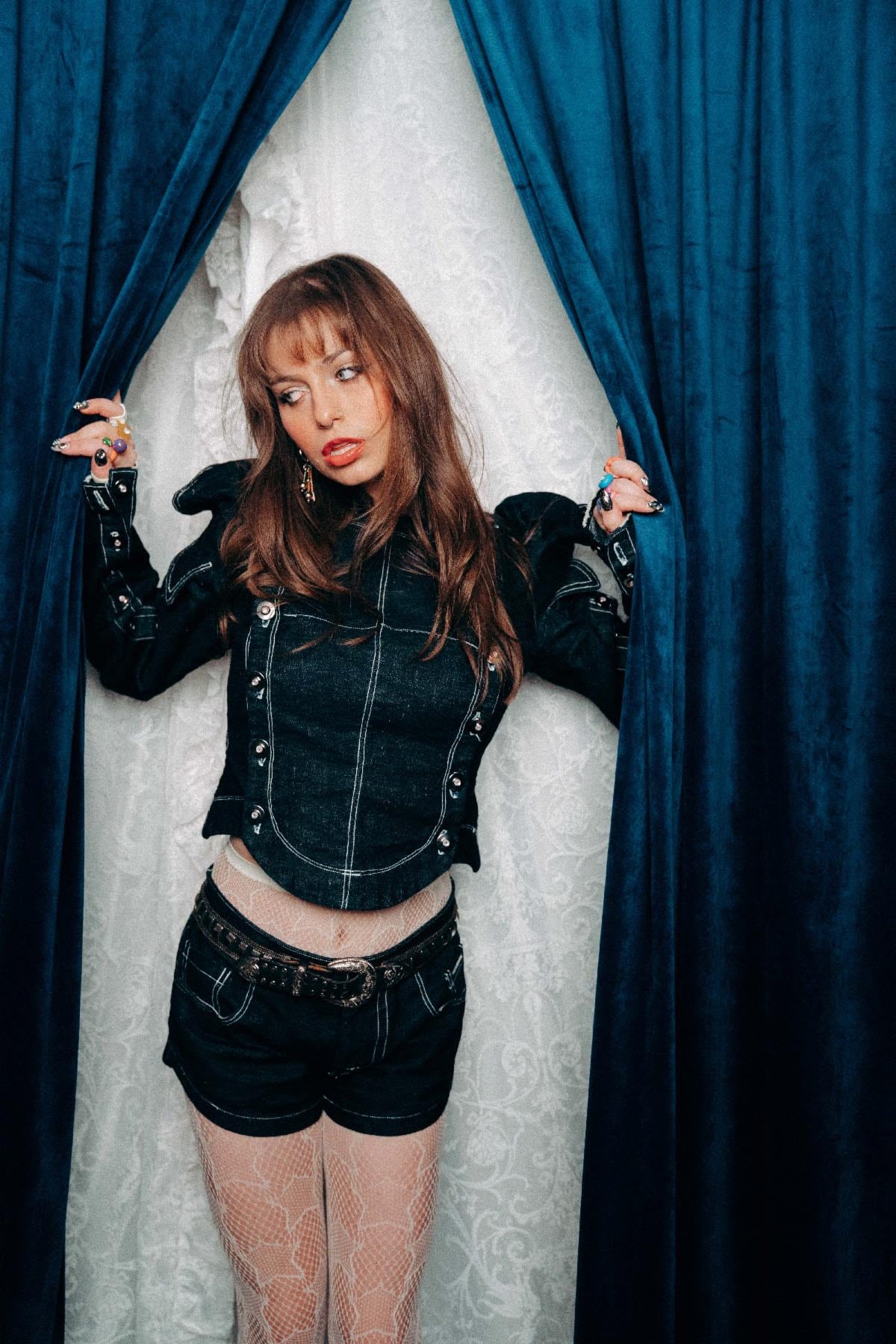
Photography: Kate Liddy
Watch “Sorta, kinda” — Official Music Video
Music video credits: Directed by OSTON and Penny Kapa; cinematography and editing by Penny Kapa; lighting by Sloan Scroggin.