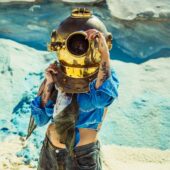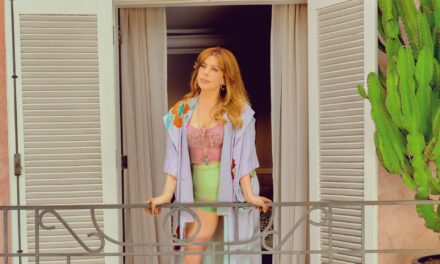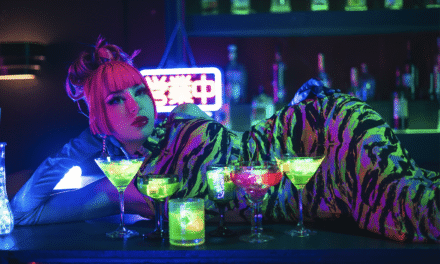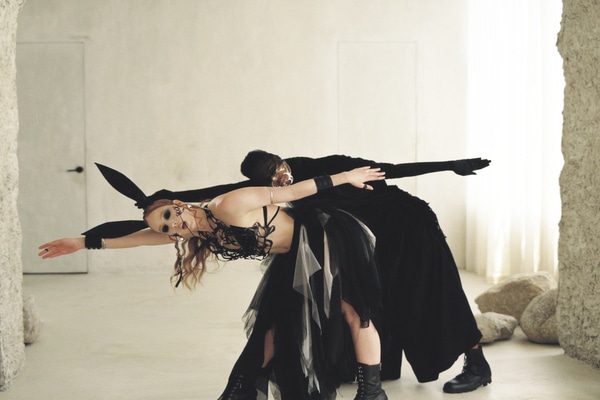
With her new single “notmyproblem,” Los Angeles-based alt-pop artist RXRXBBIT confronts complicity, guilt, and the psychological contradictions that keep us trapped in destructive relationships. Pairing dark, high-energy production with surreal imagery, she asks a difficult question: what happens when the person hurting you isn’t the only one keeping the cycle alive?
It’s easy to recognize when someone has hurt you. It’s considerably harder to acknowledge the ways you might have helped sustain the very situation causing that pain.
For Los Angeles-based artist, songwriter, and producer RXRXBBIT, that uncomfortable contradiction is the foundation of her latest single, “notmyproblem.”
Rather than following the familiar pop narrative of identifying a villain and reclaiming personal power, RXRXBBIT explores something psychologically messier: the possibility of being both a victim and an enabler.
“I wanted to explore what it means to be the mechanism through which someone engages in self-destructive behavior,” she explains. “You can be genuinely harmed by what someone is doing and still be participating in it.”
The title itself becomes an exercise in cognitive dissonance. What initially sounds like an act of emotional detachment gradually reveals itself as an attempt to escape responsibility.
Through dark, high-energy alt-pop, RXRXBBIT transforms guilt, denial, and self-deception into something simultaneously unsettling and addictive.
youtube.com/watch?si=G670JD4-LZPQ47aT&v=4GakZrFgdZ4&feature=youtu.be
When Denial Becomes a Survival Mechanism
Inspired by multiple romantic and platonic relationship dynamics, “notmyproblem” examines how people rationalize their participation in harmful cycles.
The narrator recognizes the damage, understands her contribution, and still searches for ways to convince herself that she bears no responsibility.
That internal conflict extends into the song’s surreal accompanying music video.
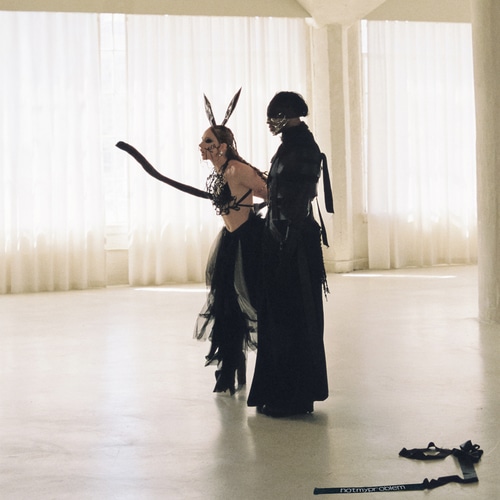
An androgynous, otherworldly Entity embodies the contradictory beliefs that allow the narrator to remain trapped, while a black ribbon symbolizes innocence, choice, and the consequences that accumulate over time.
Rather than explaining the song literally, the video turns its psychological tension into a visual experience, leaving viewers to confront their own interpretations.
“Listeners should interpret the relationship portrayed in this song in whatever way it may apply to them or how they relate to it,” RXRXBBIT says.
It’s an approach that reflects her broader artistic identity.
Entirely self-produced and deliberately resistant to genre boundaries, RXRXBBIT moves between alt-pop, electropop, dance-pop, and hyperpop, using energetic production to explore subjects that are rarely comfortable.
Her previous releases, including “SUNK COST,” “ifimOK,” and “USIN IT,” have tackled capitalism, girlhood, ambition, substance use, hypervigilance, and self-destructive behavior.
Since 2025, that distinctive combination has helped her accumulate more than 1.9 million Spotify streams from 781,000 listeners, alongside 38,000 saves and 57,000 playlist additions.
But what makes “notmyproblem” particularly compelling isn’t simply its dark subject matter.
It’s the refusal to offer an easy moral conclusion.
RXRXBBIT understands that recognizing someone else’s destructive behavior doesn’t automatically absolve us of our own choices. Nor does acknowledging our participation invalidate the harm we’ve experienced.
Both truths can exist simultaneously.
And sometimes the most uncomfortable question isn’t why someone continues hurting us, but why we continue participating in the same cycle.
With “notmyproblem,” RXRXBBIT doesn’t pretend to have an answer.
Instead, she turns the contradiction into an irresistible alt-pop confrontation with the stories we tell ourselves to avoid facing it.
In Conversation With RXRXBBIT
“notmyproblem” explores the uncomfortable possibility of being both the victim and the enabler in a destructive relationship. Why do you think we’re often so much better at recognizing the damage other people cause than acknowledging the ways we might be helping perpetuate it?
I think that the capacity for self-awareness and introspection is one of the most uncomfortable burdens that humans possess, and many facets of the human condition are born out of an attempt to cope with that capacity. Often the introspection one can do—which we can attach to the ‘superego’ for lack of a better categorization (not to imply that I particularly like Freud)—contradicts heavily with our innate animalistic desire for self-preservation and resource accumulation (the ‘id’, if we continue with that model).
Unless one works extensively to develop the skill of turning self-reflection into actionable change—something that I don’t think comes easily or naturally to us—recognizing a negative experience or result as entirely the responsibility of the other party allows us to much more quickly make choices and take action in what feels like our own best interest.
Acknowledging that our behaviors played a part in whatever the situation was can quickly turn to a sense of great fear and hopelessness if we are not equipped to begin analyzing and making consistent effort to change ourselves. Severing the external relationship in question also feels like a greater, faster, more satisfying, and immediate solution than the slow and mundane work of recognizing our own patterns and working in small ways to change them. This is not to say that one shouldn’t often do both depending on the context of the situation, but it helps explain why it is so much easier to do the former than the latter.
There’s an interesting contradiction between the title “notmyproblem” and the song itself, which seems to suggest the exact opposite. Are you interested in the lies we tell other people, or the ones we tell ourselves to make our decisions easier to live with?
I think most frequently I am more interested in the lies we tell ourselves, because the motivation for those lies can be more complex, and as a result the analysis of them more fruitful. Lies that we tell others can frequently be motivated by pretty basic self-explanatory desires, but I find that the lies we tell ourselves are often motivated by a subconscious desire to avoid confronting our most harmful traits and behaviors. Though, I would be remiss not to acknowledge that the two are frequently coupled and have to be analyzed together.
Your music frequently explores psychological contradictions rather than offering clear moral conclusions. Do you think contemporary culture has become too obsessed with identifying heroes and villains, particularly when it comes to relationships and personal accountability?
Honestly, I don’t think that the lack of nuance is something we can blame on contemporary culture. There are definitely facets of contemporary culture that have exaggerated it—particularly how short-form social media content rewards ‘hot takes’ over nuanced discussion, as does the political climate (at least in the United States, I’m not well-informed enough to make that argument on a global scale).
However, I would argue that the desire to identify heroes and villains comes down to our more basic nature, than it does to a shift in culture. This is a behavior that should really be analyzed through the lens of biological anthropology—and I can happily admit would be better analyzed and explained by someone educated in the field.
My basic understanding, though, is that evolution prioritizes traits that favor reproduction and continuation of the species (particularly the genetic line of the individual), and that for humans the establishment of groups that support each other’s survival (from family groups to broader tribes) worked in support of this goal.
I think as a natural result of that, we developed a desire to identify and defend our group (to the benefit of our genetic line’s continued survival) and this same desire resulted in a tendency to quickly identify groups we deem ‘others’ as the ‘villain’ archetype.
It is important to mention here that the continued survival of our genetic line does not limit our self-selected groups to only blood-relatives, nor does it mean every human has an innate desire to reproduce.
As globalization and instant communication launched the individual into possessing an awareness of more people than we are really equipped to comprehend on a psychological personal level, our understanding of what we qualify as the ‘other’ had to become broader, but also faster in its categorization.
When dealing with this, rejecting nuance to instead quickly identify ‘good’ and ‘bad’ from groups to individuals is more psychologically comfortable than sitting with a breadth of knowledge and awareness that we are arguably not capable of comprehending.
The music video introduces an otherworldly Entity that embodies conflicting beliefs, alongside a black ribbon representing innocence, choice and consequence. What drew you toward surrealism as a way of expressing psychological experiences that might be difficult to communicate through conventional storytelling?
As is the case with most creative pursuits of mine, I never really sat down and planned on making a specifically surrealist video knowing exactly why and how that would best suit the themes of the song.
I think the surrealism came out in the process of figuring out how to best express the themes of the song, while already actively working on various parts of the video. In the case of the entity, the design and behaviors developed in the course of realizing that I wanted to avoid it being interpreted as the other person in question, and how easily a second person in the video could be interpreted as that rather than allowing the viewer to focus on the more important themes.
There’s something almost paradoxical about transforming guilt, self-deception and emotional turmoil into music that feels energetic and addictive. Does making these experiences danceable help you gain control over them, or is the contrast itself part of what makes the music unsettling?
This is a great question, and something I actually hadn’t thought much in depth about prior to reading this.
I would say that these experiences often feel energetic and addictive as they happen, and portraying them as slow, ominous, sad, and without any positive emotional feedback, would miss out on a large factor of what causes us to continue re-engaging in the behaviors.
I also wouldn’t say that high-energy or danceable music feels more like a sense of control for me than slower or calmer songs. If anything there may be a conversation worth exploring about whether slower/calmer songs evoke more of that sense of control.
As is the case for most of my music though, the production style and energy-level of the song wasn’t something I planned out prior to doing it—it was what naturally developed around the concept while creating it.
You’ve explored everything from capitalism and ambition to girlhood, substance use and hypervigilance. Do you see these as separate subjects, or are they all connected by a larger fascination with the pressures that shape our behavior and sense of identity?
I think both things can be true at once. They are certainly separate subjects with their own unique factors, but at the same time everything seems to go back to the basic human condition and the relationship between it and how our society is structured and behaves as a result of it.
I think one of the more philosophical concepts I find myself quite interested in is how much humans both as individuals and as groups have control over our behaviors as a result of our capacity for self-awareness and self-perception.
I question whether these abilities can truly allow us to override our more basic desires, or if they leave us burdened with the ability to understand ourselves but never truly fully control ourselves.
You produce your music entirely yourself and move between alt-pop, electropop, dance music and hyperpop. How much of that independence comes from wanting complete creative freedom, and how much comes from needing to preserve the emotional specificity of what you’re trying to communicate?
I definitely enjoy and prefer to have creative freedom, especially as a lot of my musical roots are in classic rock and blues. Transitioning to the more modern styles of music became more comfortable for me as I was able to identify the elements I resonated with rather than trying to specifically emulate a particular genre.
I also think that if I forced certain concepts into a particular genre from the start, it would hinder the writing process and the ability to let the song’s production strongly reflect its overall meaning.
At the end of the day, though, I think that a majority of it is that I love to make music and I want to allow myself to have fun and excitement in the creative process rather than focusing on what will be most on-brand and marketable.
Early on, a little after my first song release, I had someone much more successful in music (who I of course intensely admired) tell me that I had to pick a genre, and that I had to write and produce in the most mass-appealing way possible if I wanted any shot at success.
I am still not sure if I have a shot at success, but regardless of if I do, I do not regret that I decided not to listen to that person, because I love making music without the limitation of constantly thinking about marketing during the creative process.
Funnily enough, I actually do really enjoy marketing, but I think it stays enjoyable because marketing plans and concepts come to me based on the song rather than the creative process of making the song being restricted because of it.
Songs like “SUNK COST” and “notmyproblem” seem interested in the psychological mechanisms that keep people invested in situations they know are damaging. What fascinates you about the moment when someone becomes fully aware of a destructive pattern but still cannot—or will not—walk away?
I think the most interesting answer to this question would come from addressing it on a personal level.
One of the most interesting elements about these destructive patterns in my own life, and what leads me to be so drawn to exploring them, is that many times I’ve had them benefit me more than they harm me.
It can feel almost like the awareness of the pattern allows you to calculate whether the negative consequences outweigh the reward. Realistically though, you can never accurately predict the extent of either the consequences or the reward so it is closer to a form of gambling than the analytical decision making that it would be more comforting to continue thinking of it as.
Particularly in the case of “SUNK COST”, my reliance on a well-known logical fallacy in my decision making has seemed so far to result in an overall better quality of life despite the harms it has caused.
It is difficult, though, because really there is no way to know if I eventually will find the expected much larger negative result of engaging in this fallacy as if it is not one.
Your music is gaining momentum independently, in an industry where artists are constantly encouraged to optimize themselves for algorithms, playlists and audience expectations. How do you reconcile the desire to grow with an artistic identity that seems fundamentally interested in questioning systems, expectations and conformity?
Wow, hey, at least buy me dinner first.
Truthfully I think this is a constant difficulty for me. I’ve definitely caught myself in the past making social media content that I don’t particularly like or resonate with, solely because it is what everyone else is doing or because I feel obligated to post more frequently even when I don’t want to make content.
I have also let myself wonder if I should fill out my catalogue with some songs that are intended to be more catchy, more easily marketable, more simple, or better for social media.
I do think that would be okay to do, and something I could still be interested in, so long as I make those songs from a perspective of legitimately enjoying the production process and musical elements of the songs rather than focusing on how I hope they might perform in a specific context.
I really don’t think a person can claim to know how they would respond to something, especially when that thing is baited with all they’ve ever wanted, until it happens.
I’m not seeking a label deal, and there are many reasons that I think I don’t want one, but I still question myself of how I might respond if I were offered one and it seemed to be a much more likely path to success.
I think the only thing I can do is try with every decision to stay true to the things I want to create and the morals and ethics I try to operate by on a personal level, and hope that it is enough to resonate with an audience on the selling point of authenticity—which I guess already contradicts itself because authenticity as a selling point could be quickly pointed out as inauthentic.
Don’t get me started here.
“notmyproblem” doesn’t seem particularly interested in offering listeners forgiveness, redemption or a neat resolution. Do you believe art has any responsibility to help people make sense of their contradictions, or is there something more valuable about leaving them uncomfortable enough to keep asking questions?
If I had forgiveness, redemption, or a neat resolution to offer, I would give it. I do think it would be more irresponsible to offer the person consuming your art an answer that you don’t really have, just to make them more satisfied with it as a product.
I also can’t pretend to know the individual listening, or the situation they might be applying it to, so I’d rather they ask and answer those questions more specifically on their own than potentially applying an answer that comes from me that may not actually be relevant to their situation.
I at the end of the day don’t know any better than anyone else, and I think it would be misguided and egotistical to pretend I do just to provide a sense of comfort to myself and others.
I would be much more excited to discuss these concepts with a listener, and hear their interpretations or how they may disagree with me, than I would be to tell them what to think.
Listen to “notmyproblem” and watch the official music video.