
The Oslo-based alternative pop artist is entering his most personal era yet. Blending Prince-inspired experimentation, theatrical pop, and electronic intensity, his new album TEA SHOP TEA ROOM transforms the uncomfortable process of self-discovery into a celebration of queer love, creative freedom, and the courage to become someone new.
There’s a particular moment in the process of discovering yourself when the things you’ve spent years avoiding become impossible to ignore.
Sometimes it happens through heartbreak. Sometimes through ambition. And sometimes, perhaps most uncomfortably, through the experience of loving someone enough to recognize the parts of yourself that need to change.
For Oslo-based alternative pop artist sebastian axe, that confrontation became the foundation of his new album, TEA SHOP TEA ROOM.
A collision of alternative pop, electronic textures, retro influences, and theatrical ambition, the project represents a significant shift in how axe approaches songwriting. For the first time, he’s writing openly about his experiences from a queer perspective, abandoning the emotional distance of his earlier work in favor of something more vulnerable and revealing.
But this isn’t simply an album about coming out or finding love.
It’s about the uncomfortable realization that becoming yourself sometimes requires acknowledging the parts of your personality you’d rather leave unexplored.
“This album is about letting go of the person you think you should be and becoming the person you’ve been avoiding all along,” axe explains.
That idea extends beyond the lyrics.
It informs the production, the visual identity, and even the imaginary world that gives the album its name.
In an exclusive conversation with MUNDANE, axe discusses the creative evolution behind TEA SHOP TEA ROOM, the artists who shaped his imagination, and why his most important song arrived after the album was supposedly finished.
The Album That Wasn’t Supposed to Be About Love
Ironically, TEA SHOP TEA ROOM began with a very different intention.
After releasing an earlier album under his birth name, axe found himself increasingly frustrated with the limitations of his songwriting.
He had spent years writing about love and relationships, and he wanted to challenge himself to explore something else.
The project’s original working title was appropriately straightforward: Try Not to Write Any More Love Songs.
But life had other plans.
As axe entered a relationship, he began confronting aspects of his own behavior and identity that hadn’t previously surfaced in his music.
“I entered a relationship and I discovered a lot of things about myself,” he tells MUNDANE.
For him, the experience was both rewarding and difficult.
Relationships, he suggests, can reveal personal truths that remain invisible when we’re only responsible for ourselves.
Living with another person, sharing a life, and learning how our behavior affects someone we love can force us to recognize patterns we’ve spent years ignoring.
“I’m very grateful that it happened because I feel like the things that I sing about discovering about myself are things that definitely need to be fixed,” he explains.
Rather than avoiding those revelations, axe began writing his way through them.
The resulting songs explore queer identity, family dynamics, ambition, imagination, and the emotional challenges of sustaining a relationship.
Where his earlier material had focused primarily on romantic feelings, this album demanded something more personal.
“All of these songs, I feel like I had to write them, or I had to accept who I am to write them.”
It’s a distinction that gives TEA SHOP TEA ROOM its emotional urgency.
The record isn’t simply documenting the experience of being in love.
It’s examining what love reveals about the person experiencing it.
Welcome to the Tea Room
The album’s unusual title emerged from a seemingly insignificant moment in Oslo.
Around three years ago, axe was walking with friends when they passed a café called Tea Shop Tea Room.
The name caught their attention, and they began singing it.
One friend jokingly suggested that axe should build an entire album around the phrase.
He took the idea seriously.
A recording of that friend repeating the name eventually became a recurring sample throughout the project, transforming a spontaneous moment into the foundation of the album’s conceptual identity.
What began as an ordinary café name developed into an imaginary space.
A place where uncomfortable truths could be confronted.
Where personal contradictions could exist without requiring immediate resolution.
And where the artist could explore the tension between the person he was and the person he wanted to become.
The concept also reflects axe’s broader interest in treating an album as something more expansive than a collection of individual tracks.
For him, music is inseparable from world-building.
Sound, visuals, performance, and personal narrative all contribute to a larger artistic identity.
And with TEA SHOP TEA ROOM, he’s attempting to make that identity more recognizable than ever.
“uber eats” and the Moment Everything Changed
Although much of the album had been completed more than a year earlier, its most important song arrived much later.
The synth-driven electropop single “uber eats” combines infectious melodies, falsetto vocals, and an exuberant electronic arrangement with a deeply personal declaration of independence.
Lyrically, it celebrates the freedom to love openly without allowing other people’s expectations to determine the legitimacy of a relationship.
For axe, the song represents a turning point.
“That’s definitely the most important song for me,” he says.
He describes spending years carefully navigating the reactions of people who didn’t necessarily approve of his queer relationship.
That caution extended into his music.
He had become accustomed to adjusting his behavior, holding back, and avoiding situations that might make others uncomfortable.
Eventually, he reached a point where those compromises no longer felt acceptable.
“I wrote that song when I decided that I’m just gonna do what I do. I’m not gonna care anymore.”
He searches for the right word to describe the feeling before settling on one that captures the emotional significance of the moment.
“Rebellion.”
Then he refines the thought.
“A revolution within me.”
It’s a powerful description of a song that, on the surface, sounds celebratory rather than confrontational.
But perhaps that’s precisely the point.
For someone who has spent years monitoring how freely they can express affection, joy itself can become an act of defiance.
The track arrived during the winter, after the rest of the album had already been completed.
And axe was determined that it would be included.
“I refused to release the album without having that song on.”
In many ways, “uber eats” transforms the record’s emotional trajectory.
If much of TEA SHOP TEA ROOM documents the discomfort of self-discovery, this song captures the moment when that discomfort gives way to freedom.


Prince, Bowie, and the Art of Refusing to Repeat Yourself
Although axe is based in Oslo, his musical imagination is shaped less by geography than by the artists who taught him what pop music could become.
He cites Prince, David Bowie, LCD Soundsystem, and St. Vincent among his influences, drawing inspiration from musicians who consistently challenged expectations surrounding genre, performance, and artistic identity.
But one Norwegian artist occupies a particularly important place in his creative philosophy: Susanne Sundfør.
During our conversation, a shared admiration for Sundfør’s Ten Love Songs opens a discussion about the importance of artistic reinvention.
For axe, the album represents something particularly inspiring.
Not necessarily because he wants to reproduce its sound, but because of the freedom it demonstrates.
Sundfør’s willingness to move between alternative experimentation and sophisticated pop songwriting is precisely the kind of creative independence he hopes to cultivate.
“She’s never afraid to experiment,” he explains.
He points to Ten Love Songs as an example of an artist making a pop album without sacrificing individuality.
“I always want to do something new.”
It’s an ambition that also explains the eclectic nature of TEA SHOP TEA ROOM.
Rather than treating rock, electronica, and pop as separate territories, axe approaches them as elements of a larger creative vocabulary.
His interest lies in what happens when those sounds collide.
And increasingly, he’s interested in what happens when his own voice becomes the thread connecting them.
Much of his music begins through self-production before being developed and finished alongside his regular collaborator Adrian.
That process allows axe to experiment with arrangements, vocal performances, and electronic textures before refining the final recordings.
The result is music that aims to be simultaneously immediate and unpredictable.

Making Alternative Pop in a Country That Wants Something Else
Being an English-language alternative pop artist in Norway presents its own challenges.
Although Oslo has a thriving community of experimental musicians, axe describes a national music landscape increasingly dominated by Norwegian-language pop, acoustic folk, and country-influenced songwriting.
The shift, he explains, became especially noticeable after the pandemic.
For an artist working in the tradition of theatrical, internationally oriented alternative pop, that creates an interesting contradiction.
There is an audience for his music.
But it isn’t necessarily the audience dominating the country’s mainstream charts.
“We definitely have a scene for alternative pop music,” he says. “A lot of people like it, and we can fill these small venues and have a very good time.”
At the same time, axe is actively seeking opportunities beyond Norway.
Germany and the United Kingdom are particularly important markets for his ambitions.
He previously lived in London and hopes to establish a stronger presence there.
That international outlook reflects his artistic influences as much as his professional aspirations.
For axe, the possibilities of alternative pop aren’t confined to any single national scene.
And the challenge is less about adapting his sound to what happens to be popular locally than finding the audiences who already connect with the kind of music he wants to make.
The Visual Art of Disappearing
One of the most intriguing aspects of TEA SHOP TEA ROOM is the relationship between its themes of self-discovery and its visual presentation.
At first glance, an album about radical honesty might seem to demand complete visual transparency.
But axe takes almost the opposite approach.
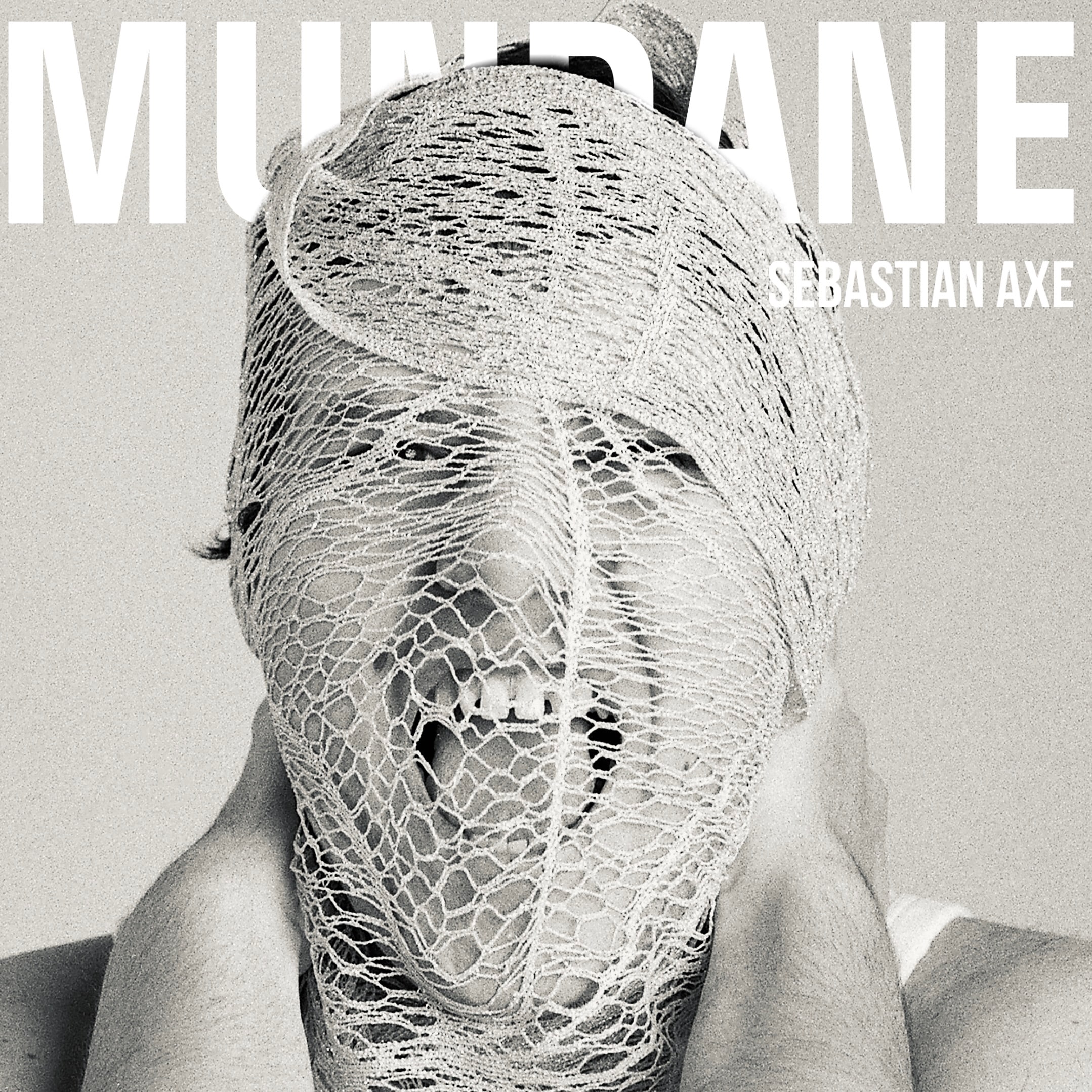
Throughout the project’s imagery, he experiments with disguise, concealment, and a carefully controlled black-and-white aesthetic.
The choice is deliberate.
“With this album, it’s been very much about kind of hiding yourself or not being able to recognize yourself because you’re in this period of discovering so much stuff that is very painful,” he explains.
The visual language reflects the uncertainty of that transformation.
Rather than presenting a fully realized identity, the imagery captures an artist in the middle of becoming someone new.
His approach also draws from one of his most important artistic influences: Lady Gaga.
In particular, axe cites The Fame Monster as a reference point for its ability to combine striking visual concepts with a coherent, immediately recognizable identity.
He admires the possibility of creating something that feels both simple and unmistakably individual.
And Gaga’s influence extends well beyond album artwork.
Her maximalist performances, theatrical instincts, and messages of self-expression helped shape axe’s earliest understanding of what it meant to be a pop artist.
“Lady Gaga’s Born This Way has inspired me [in] how I want to perform and be on stage,” he says.
For him, she represents an artist whose music, visuals, and public identity exist as parts of the same creative vision.
It’s a philosophy he’s increasingly applying to his own work.
Even when the imagery suggests concealment, the ultimate ambition is recognition.
He wants audiences to know immediately when they’re encountering the world of sebastian axe.
In Conversation With sebastian axe
MUNDANE: You’re based in Oslo, but your sound draws heavily from international alternative pop, electronic music, and rock. How does the Norwegian music scene influence your work, and where do you see yourself fitting into it?
sebastian axe: I’m based in Oslo. I want to be a London artist eventually. I used to live in London as well.
I don’t really take inspiration from Norway at all. I listen to a lot of music, and that’s where I get all my inspiration. A lot of old music. I’m very inspired by Prince, David Bowie, those types of artists.
I feel like the only inspiration I get is from other musicians. I see how they perform, how they write, their singing styles. I love to experiment with the vocals as well.
We definitely have a scene for alternative pop music. A lot of people like it, and we can fill these small venues and have a very good time. But it’s not very popular here. Most of what’s on the charts is Norwegian-language music.
So I’m actively seeking opportunities to play in Germany and the UK, mostly. But I feel like I’m starting to build an audience here as well, which is really cool. And I do love the environment of alternative artists that we have here.
MUNDANE: You’ve mentioned Susanne Sundfør as an artist you admire. What is it about her approach to music that inspires you?
sebastian axe: I produce a lot of my own stuff as well before I finish it with someone else. I have my main partner, Adrian, who mixes and finishes all my stuff with me.
I don’t necessarily take inspiration from Susanne when it comes to the soundscape, but more from the fact that she’s always doing something new.
She’s never afraid to experiment.
She used to be this super-alternative artist, and when she made Ten Love Songs, that was her version of a pop album, which is still one of the most unique pop albums that we have.
It’s insanely good. You can hear that this is an artist.
And I guess that’s why I’m inspired by her, because I want people to think that about my music whenever I put out a new album.
I always want to do something new.
MUNDANE: TEA SHOP TEA ROOM is a particularly unusual album title. Where did the concept originate, and how did it develop into the world of the record?
sebastian axe: I came up with the title with my friends while walking past a café called Tea Shop Tea Room here in Oslo.
We started singing it, and there’s a sample that goes through the whole album. That’s a video of my friend saying it because he said I should do an album out of this.
So that’s the day I decided. It was around three years ago.
I had just released an album, and the reason I started making this one was because I was incredibly tired of writing love songs.
My original working title in my Notes app was Try Not to Write Any More Love Songs.
That’s why I feel like this album is very much about self-discovery.
I entered a relationship, and I discovered a lot of things about myself. That’s why I wrote a lot of the songs. Family stuff, imagination, a lot of Prince inspiration.
And also, for the first time, I wanted to write about being queer and the challenges that come with that, and also kind of defeating those challenges.
It’s very, very personal on another level because I’ve only written love songs before that I felt were my most personal. But this is actually my story.
MUNDANE: You mentioned that entering a relationship helped you discover aspects of yourself you hadn’t fully understood before. Was that process liberating, frightening, or a combination of both?
sebastian axe: I’m very grateful that it happened because I feel like the things that I sing about discovering about myself are things that definitely need to be fixed.
And this is something I have to do to keep the person I love.
I’m super happy that I discovered those things, but it’s been very hard.
You have a lot of things that you don’t know about yourself until you see how you are with other people, when you have to live with them and share a life with them.
I feel like denial is a very common thing in those situations.
But all of these songs, I feel like I had to write them, or I had to accept who I am to write them.
I had to accept that this is a thing, and this is what I need to do.
I want to keep sharing a life with you, so I’m going to try and be the best I can and work on it.
That’s what a lot of the songs are about.
MUNDANE: Is there one song on the album that feels particularly important to you, either because of its meaning or because of what it represents in your personal journey?
sebastian axe: Definitely the song I just released, which is called “uber eats.”
That’s the most important song for me because it’s about being in a queer relationship and having a lot of challenges around you, a lot of people who don’t necessarily agree with that, and deciding not to care anymore.
I wrote that song when I decided that I’m just going to do what I do. I’m not going to care anymore.
I feel like I’ve been walking on eggshells around people, and also with my music.
So that song is kind of like a rebellion. A revolution within me.
I also wrote that song a lot later. The album was finished over a year ago, and I wrote this song in the winter.
I refused to release the album without having that song on it.
So that is absolutely the most special to me.
MUNDANE: Your visual identity is particularly striking, from the artwork to the way you present yourself. What inspires the aesthetic behind this album?
sebastian axe: With this album, it’s been very much about hiding yourself, or not being able to recognize yourself, because you’re in this period of discovering so much stuff that is very painful.
That’s why I’m very disguised on the album cover as well.
Other than that, I do black. Black and white is the theme for all of this.
My favorite visual work musically is Lady Gaga’s The Fame Monster and stuff, and just being able to have it super simple but also super unique.
I guess the main thing with the visuals is for people to recognize that this is sebastian axe.
MUNDANE: Was there a particular artist or musical experience that made you realize you wanted to become a performer?
sebastian axe: Definitely Lady Gaga.
Even though it might be a cliché, Born This Way has inspired me in how I want to perform and be on stage.
Just maximalist, just super…
The thing that started it for me is definitely Lady Gaga. Always.
The music, the visuals, everything.
And, of course, the way she is and her message to people.
MUNDANE: Now that TEA SHOP TEA ROOM is out, what comes next? How do you imagine the next chapter of your career?
sebastian axe: I’m having my release show in London, and I just had my sold-out release show here in Oslo a couple of days ago.
The plan now is that I’m trying to hold on to this TEA SHOP TEA ROOM era for as long as I can.
I really want as many people as possible to hear it.
I also have a new album basically already, but I’m going to hold that and tour this album first in 2027.
We’re going colorful, we’re going weirder, and we’re going to London.
Becoming the Person You’ve Been Avoiding
Perhaps the most interesting contradiction at the center of TEA SHOP TEA ROOM is that it began as an attempt to stop writing love songs.
Instead, axe created an album that examines love more deeply than anything he’d previously released.
But rather than approaching romance as an idealized experience, he explores its ability to expose our insecurities, challenge our assumptions, and demand uncomfortable forms of personal accountability.
That process also extends to his relationship with queer identity.
For years, he describes navigating other people’s expectations carefully, both in his personal life and through his music.
With “uber eats,” that caution finally gives way to something else.
A refusal to keep negotiating the legitimacy of his own happiness.
The result is an album that moves between vulnerability and defiance, introspection and maximalist pop ambition.
And while its visual identity may be built around disguise, the emotional intention is precisely the opposite.
To become more visible.
To become more honest.
To become more himself.
The most revealing moment in our conversation, however, arrives when axe begins discussing what comes next.
He already has another album in development, but he’s determined to give TEA SHOP TEA ROOM the time and attention it deserves.
The next era, he promises, will be more colorful, stranger, and increasingly connected to London.
It’s an exciting prospect for an artist who draws inspiration from musicians who never allowed themselves to become creatively predictable.
And perhaps that’s the clearest indication of what TEA SHOP TEA ROOM has accomplished.
Rather than arriving at a definitive version of himself, sebastian axe seems to have discovered the freedom to keep changing.
“We’re going colorful, we’re going weirder, and we’re going to London.”
TEA SHOP TEA ROOM is out now.
Explore the project: Official website | Instagram | TikTok