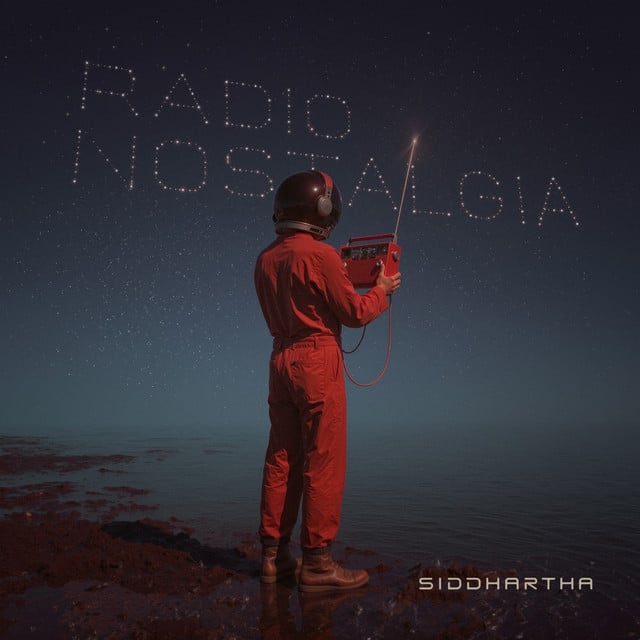
The Mexican alternative artist turns his new ten-track album into an invisible frequency where Latin roots, electronic textures, indie rock and deeply personal memories coexist across time
There is something inherently mysterious about radio.
A song is already traveling through the air before you hear it. You do not create the signal by turning the dial—you simply arrive at the right frequency and suddenly something that was invisible becomes present.
That idea sits at the center of Siddhartha’s new album, Radio Nostalgia.
Across ten songs, the Mexican singer, songwriter and producer imagines music almost as something discovered rather than constructed: melodies and memories moving invisibly between people, waiting for someone to tune in.
“I liked thinking that the songs are signals traveling out there and that, suddenly, if you find the right frequency, you can tune into them,” he explains. “Rather than feeling like I was inventing something from scratch, at times I felt like I was tuning into something that was already there.”
It is an appropriately fluid metaphor for an album that seems determined to collapse distinctions between eras, cultures and emotional states.
On Radio Nostalgia, Mexican, Latin American and broader Hispanic musical references emerge alongside synthesizers, guitars, electronic production and the indie-rock language Siddhartha has refined throughout his career. But the album does not approach those traditions as a deliberate exercise in fusion.
They appear more like memories themselves: sounds absorbed from family, home, parties, radio and childhood that eventually resurfaced inside the music.
“I grew up listening to a huge variety of music,” Siddhartha says. “There are sounds you carry with you from childhood because they were in your home, in your family, on the radio, at parties, or simply in the place where you grew up.”
That instinctive relationship with influence is crucial to understanding the record.
Radio Nostalgia is nostalgic, certainly, but it is not particularly interested in reenacting the past.
Instead, Siddhartha examines what happens when memories are revisited by someone who has changed since they were created.
“When you return to a memory after many years, that memory is probably still the same, but you are now a different person,” he says. “And so what it means to you also changes.”
The distinction allows the album to occupy an unusual emotional space: sentimental without becoming trapped in sentimentality, retro without functioning as revivalism, personal without demanding that listeners inherit Siddhartha’s exact interpretation of the songs.
Instead, he offers signals.
The audience decides what they become.
Among the record’s emotional centerpieces is “Pedacito de Mi Corazón,” a song born from the arrival of Siddhartha’s son and the disorienting beauty of having another person unexpectedly redirect the course of your life.
Rather than framing the song simply as a parent addressing a child, Siddhartha imagined two people somehow traveling toward one another before either knew the other existed.
“I like to think that, in some way, we were both looking for each other without knowing it,” he says.
It is another version of the album’s central idea.
Signals moving through space.
People becoming frequencies.
Memories changing depending on who receives them.
Mundane spoke with Siddhartha about Radio Nostalgia, resisting trend cycles, bringing Mexican and Latin musical memory into his existing sonic universe, songwriting through the subconscious, becoming a father, collaboration, and why looking backward does not have to mean wanting to return.
Radio Nostalgia feels like both a journey through memory and a step into the future. What first inspired the idea of treating songs as signals waiting to be discovered rather than simply written?
I think that idea emerged when I started to understand what connected all the songs.
Many times, when I’m making an album, I don’t have a clear idea from the beginning of what the concept will be. Instead, the songs start to appear, and little by little I discover the thread that connects them.
Something like that happened with Radio Nostalgia. There were songs that came from very different places and moments, but they were all connected to the idea of being linked through a universal frequency, one in which we are connected to the memories and emotions that define us as a species.
Coincidentally, the image of the radio was already present in the videos, and I didn’t see it until the very end.
I liked thinking that the songs are signals traveling out there and that, suddenly, if you find the right frequency, you can tune into them.
So, rather than feeling like I was inventing something from scratch, at times I felt like I was tuning into something that was already there.
I think that’s really where Radio Nostalgia was born.
Throughout the album, you weave together Mexican, Latin American and Hispanic musical traditions with electronic and indie-rock influences. How important was it for this record to honor your roots while continuing to push your sound forward?
It was important, although I wouldn’t say we set out with the intention of making an album that represented our roots. Rather, it was something that started happening naturally.
I grew up listening to a huge variety of music. Obviously, there is a background rooted more closely in rock, alternative music, and later electronic music, but at the same time, there are sounds you carry with you from childhood because they were in your home, in your family, on the radio, at parties, or simply in the place where you grew up.
Over time, I’ve become increasingly interested in allowing those influences in without feeling like I have to change genres to do it.
On this album, there are elements that may evoke bolero, Mexican music, certain Latin American or Spanish rhythms, but they coexist with synthesizers, guitars, and elements that have always been part of my music.
I think the fun and interesting part was allowing all of that to coexist within my universe, my language, and my way of making music.
In an era driven by fast-moving trends, Radio Nostalgia embraces timelessness instead. Was making an album that exists outside of the current musical landscape a conscious creative decision?
Yes, although I think that has been something I’ve been searching for, for quite some time.
I’ve never been particularly good at chasing what’s happening musically at a specific moment. Obviously, I listen to new music and there are things that inevitably influence you, but when I make an album, I try not to think too much about what’s working or what is supposed to sound contemporary.
I’m more interested in asking myself whether a song still moves me after I’ve listened to it a hundred times in the studio.
With Radio Nostalgia, there was also an opportunity to play with different eras. There are sounds that could belong to past decades and others that feel much more current.
In a way, the concept itself allowed for that: a radio where you can change stations and find something you don’t know exactly what era it comes from.
If, years from now, someone listens to the album and can’t immediately identify what year it was made, I think that would be something I’d like—for it to sound from the past and the present at the same time.
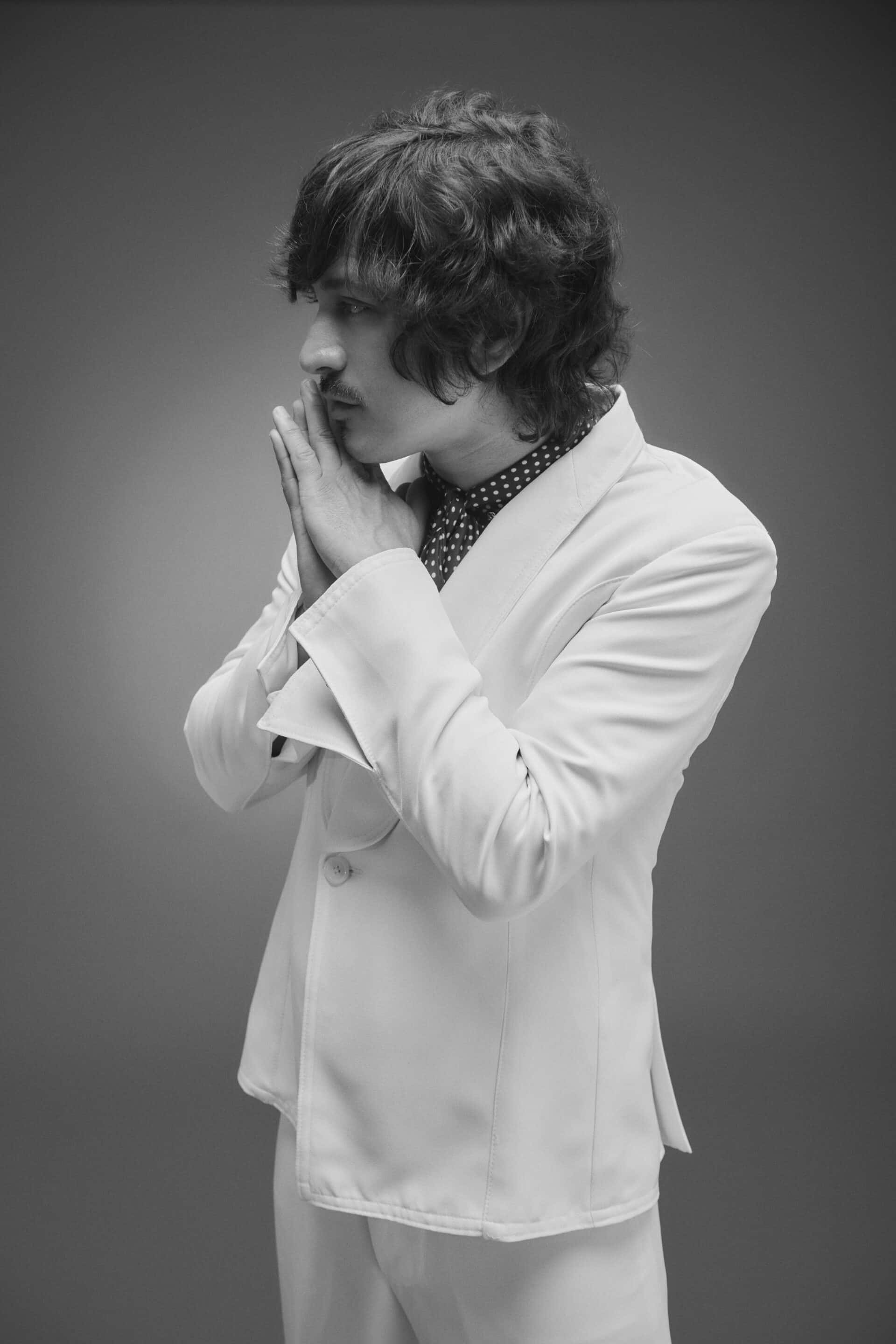
The concept of an invisible radio where memories, emotions and shared stories coexist is incredibly cinematic. If listeners were tuning into Radio Nostalgia for the first time, what emotional frequency do you hope they find?
I think a mix of nostalgia and hope.
Nostalgia is usually associated with something sad, with missing something that is no longer there, but I don’t always experience it that way.
Sometimes remembering can also be a very warm place.
You can remember someone, a period of your life, or a place and feel sadness because it’s over, while at the same time feeling deeply grateful that it existed.
I think the album lives in that space quite a bit.
There is love, absence, moments of euphoria, goodbyes, encounters—and ultimately, I’d like each person to find their own frequency within all of that.
For a song to remind them of something they may have tucked away and, for a few minutes, allow them to return to that place while also turning to look toward their future.
The concept of time is something I’ve always been passionate about.
You reunited with longtime collaborators Didi Gutman, Alejandro “Orko” Pérez and Rul Velázquez for this album. What does that creative trust allow you to do now that might have been harder earlier in your career?
I have different musical relationships with Didi, Orko, and Rul, but with all three there is a great deal of trust.
And I think trust in the studio is very important because it allows you to show an idea when it’s still completely bare, or even try something that seems like a bad idea without being afraid of making a mistake.
Didi has a harmonic and musical sensibility that ultimately takes the songs to places I probably wouldn’t have found on my own.
Orko has a lot to do with the construction, aesthetics, sound design, fine details, and production of this universe, making sure each song has its own personality.
And Rul, in addition to being someone I’ve worked with for many years, understands my musical language very well. He reads me and anticipates things he knows I’m looking for.
He also has a way of contributing through guitar and production while always remaining objective and protecting the essence of the song.
At this point, I feel that rather than coming in with a specific instruction for each person, we put the song in the middle and discover together what it needs.
For me, this was a very complete team, and we ended up forming a kind of band, where each person contributed the pieces needed to build the final work.
“Pedacito de Mi Corazón” stands at the emotional center of the record, celebrating the people who become our guides through life. What made that song the perfect introduction to this new chapter?
It’s one of the most personal songs on the album because it has a very specific connection to me.
It was born from the arrival of my son and from the way one person can enter your life and, without intending to, completely change the direction in which you were heading.
There’s something I really love about the song: I didn’t want to tell only the story of a father finding his son.
I like to think that, in some way, we were both looking for each other without knowing it, and that at some point our paths were meant to cross.
That’s also why we wanted to tell the story that way visually: two characters coming from different places, following a kind of signal until they finally meet.
And I think it connects deeply with Radio Nostalgia because the album is precisely about those people and moments that leave signals within us and ultimately change our story.
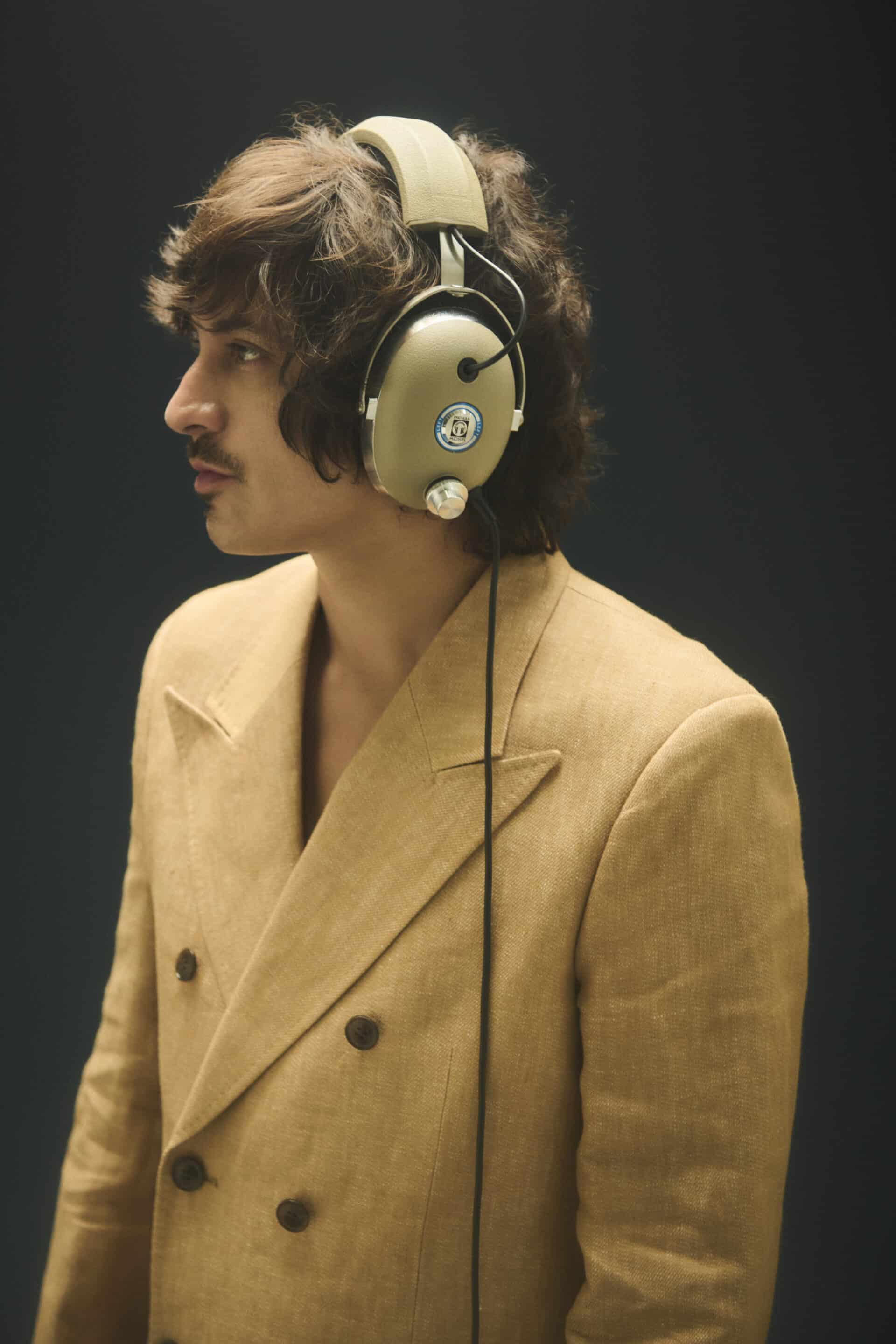
Your songwriting has always balanced introspection with accessibility. How do you translate deeply personal experiences into songs that feel universal enough for listeners to make their own?
I think it has to do with the way I write.
It’s been a long time since I’ve written lyrics in the traditional sense of sitting down with a piece of paper and a pen; I’ve removed almost all the rational thinking from my process.
I essentially start singing whatever comes out of me in that moment and let the subconscious speak.
I suppose that’s why the lyrics come from an honest place, where many of us can feel the same thing, each from our own circumstances.
Now I place more value on holding onto the spontaneous emotion than on the details of what actually happened.
Because if I tell exactly who was there, where it happened, what day it was, and what happened, I’ll probably end up telling only my story.
But if I simply allow the emotion behind it to come out as it was, it can become a story in which anyone can find themselves.
Although, honestly, it’s not something I think about while I’m writing; it would feel inauthentic to be thinking about what other people are going to think or feel.
There’s also a part that happens afterward and no longer belongs to me.
A song may have been born thinking about a specific person or moment in my life, and later someone tells me they used it to say goodbye to someone, to fall in love, or to get through a completely different moment.
That has always felt like part of the magic of music to me.
A song is born very personal, but once it’s released, it exists on its own.
Across your career, you’ve continually evolved while maintaining a distinct artistic identity. How do you know when it’s time to explore new sonic territory without losing the essence of what makes a Siddhartha record?
I don’t know if I do, honestly.
I think I actually try not to know too much.
Every album begins with the intention of finding something I haven’t done before, because repeating the formula from the previous album would not only bore me, it would also defeat the entire artistic purpose.
But I don’t deliberately try to escape who I am either.
I think that after all these years, certain things inevitably emerge: the way I write, the way I create melodies, the way I construct lyrics, certain chords or certain atmospheres.
Even if you change the instruments or explore different rhythms, there is a kind of DNA that remains.
So I try to trust that.
I’d rather go a little farther and then figure out how to make that new sound part of my universe, instead of starting by thinking about what rules I have to follow to continue sounding like myself.
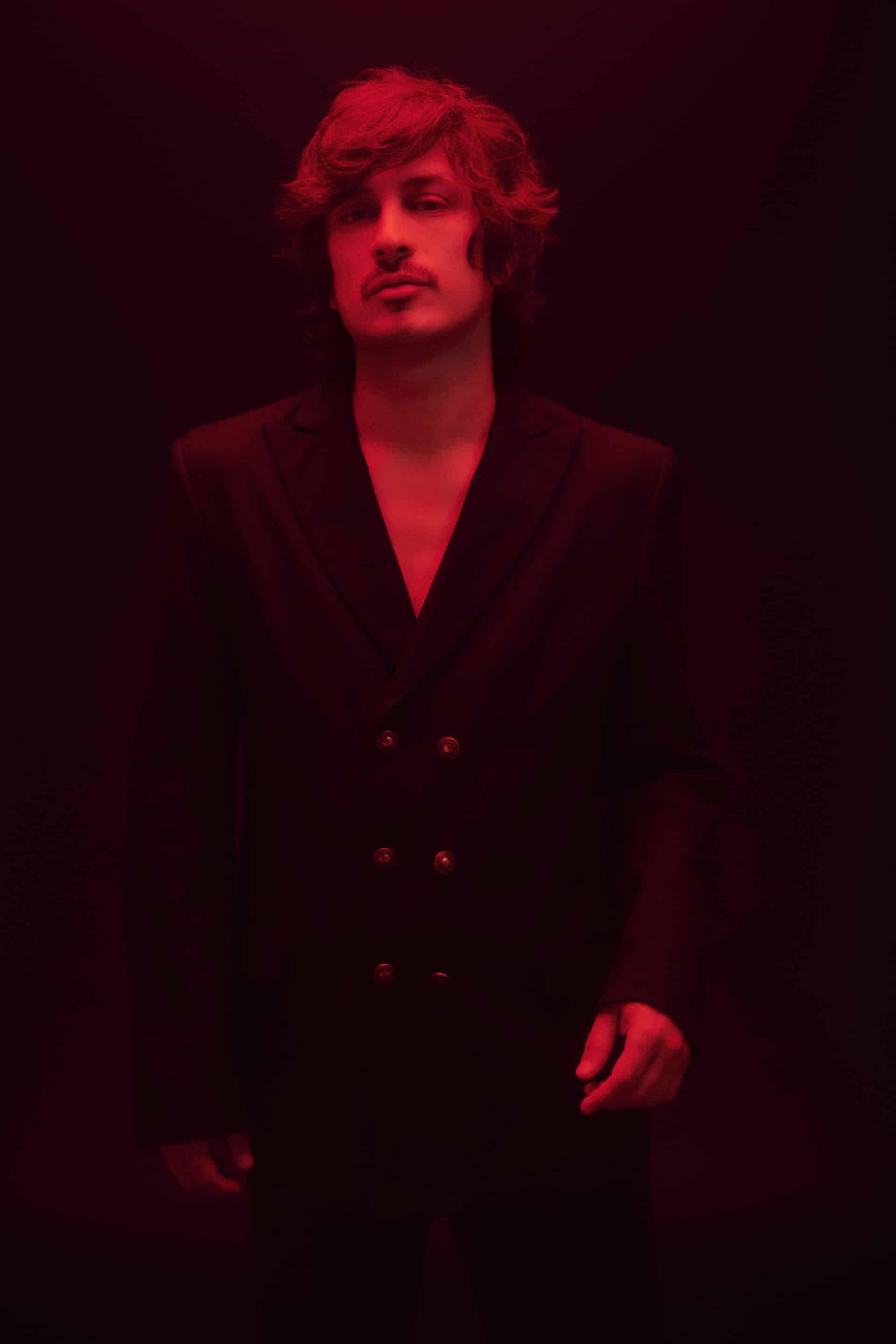
Nostalgia often carries both comfort and melancholy. Through this album, were you trying to revisit the past, make peace with it, or simply understand it from a different perspective?
I think, rather, to observe it from the place where I am now.
I don’t feel like it’s an album that wants to live in the past.
In fact, to me, nostalgia only exists because you are looking at something from the present.
When you return to a memory after many years, that memory is probably still the same, but you are now a different person. And so what it means to you also changes.
I think many of these songs have that quality.
They are a way of returning to certain places, people, or emotions, but not necessarily to reclaim them.
Rather, it’s about recognizing that they were there, that they left something behind, and that in some way they are part of the person you are now.
For me, there is something valuable about being able to look back without needing to go back.
Looking at Radio Nostalgia as a whole, what do you hope listeners discover—not just about your music, but about themselves—as they move through these ten songs?
I never like telling someone too much about what they should feel when listening to an album, because I think that’s precisely what’s interesting about music: it ultimately finds a different meaning in each person.
And perhaps that is ultimately what Radio Nostalgia is: a signal that comes from me, but only fully takes on meaning when it finds its frequency in someone else.
For an album so concerned with nostalgia, Siddhartha spends remarkably little time trying to preserve anything exactly as it was.
That might be the most interesting thing about Radio Nostalgia.
Memory here is not an archive.
It is an active force.
A childhood rhythm can reappear inside an electronic production decades later. A relationship can become a song and then, once released, become somebody else’s breakup, wedding, goodbye or private memory. A child can arrive and retroactively make parts of your own journey feel as though they had been pointing somewhere all along.
Even Siddhartha’s relationship with his own musical identity seems governed by the same principle.
The past is present, but it is not in charge.
Instead of protecting a recognizable formula, he trusts that his artistic DNA will survive experimentation. Instead of deliberately constructing a “Latin” record, he allows sounds carried since childhood to enter the room naturally. Instead of describing nostalgia as a desire to return, he treats it as evidence of how profoundly the present changes our interpretation of what came before.
And perhaps that is why the radio metaphor feels so effective.
Every listener receives the same transmission.
Nobody hears exactly the same song.
A frequency passes through one life and becomes associated with love. Through another, grief. Through another, a city, a childhood, a person they have not thought about for ten years.
Siddhartha sends the signal.
After that, he seems perfectly comfortable losing control of it.
Because ultimately, as he puts it, Radio Nostalgia only becomes complete when it finds somebody on the other side willing to tune in.
Radio Nostalgia is out now via Sony Music.