Nashville-based rock trio The Pariahs are making their introduction with something more substantial than a debut single. Drawing inspiration from Bruce Springsteen, Death Cab For Cutie, Sam Fender, and the rock music of the 2000s, the newly formed band channels collective frustration into a message of solidarity with “The Party.” Built around organic instrumentation, politically conscious songwriting, and an unapologetically human creative philosophy, the project brings together three experienced musicians looking to create something greater than the sum of their individual endeavors. In conversation with MUNDANE, The Pariahs discuss their formation, the importance of questioning authority, their collaborative chemistry, and why bringing people together remains at the heart of everything they create.
There is something particularly compelling about a rock band emerging at a moment when collective frustration seems increasingly difficult to articulate.
Between political polarization, institutional distrust, and the overwhelming amount of information competing for our attention, the simple act of coming together around a shared conviction can feel increasingly radical.
For The Pariahs, that sentiment became the foundation of an entirely new musical project.
Their debut single, “The Party,” confronts the relationship between power, deception, and individual responsibility while refusing to surrender entirely to cynicism.
Instead, the Nashville-based trio is interested in what happens when frustration becomes collective awareness, when people begin questioning the narratives presented to them, and when music becomes a vehicle for meaningful human connection.
The band emerged organically from the existing creative relationships between three musicians whose individual projects span rock, indie pop, retro soul, songwriting, and visual production.
Rather than abandoning those identities, The Pariahs have created a space where they can explore ideas that might not naturally belong within their other endeavors.
“We really just wanted to start a band that writes songs with something deeper to say, and to touch on topics that wouldn’t be appropriate for our other respective projects,” the band tells MUNDANE.
With “The Party,” that ambition has found its first expression.
A Nashville Supergroup With Something to Say
The Pariahs didn’t begin with an elaborate business plan, a carefully constructed aesthetic, or even a predetermined intention to form a band.
They began with a song.
The lyrics for “The Party” were initially written during a day at work before being brought to Lane, whose instinctive melodic contribution transformed the composition.
Reading through the lyrics in an apartment, Lane began singing what would eventually become the melody of the song’s choruses.
Jonathan was subsequently brought into the process to develop the arrangement and bring the composition into the studio.
Somewhere between those initial ideas and the recording sessions, the three realized they were building something that deserved an identity of its own.
Among themselves, they affectionately describe The Pariahs as a supergroup, acknowledging the considerable creative experience each member brings to the project.
Their professional relationships already extend across numerous musical endeavors.
Jonathan’s solo work inhabits the world of retro soul, while his rock band, Lombardy, represents another dimension of his musical identity.
Lane maintains his own solo project and is also part of the indie-pop duo Brothrly.
Their collaborations have included songwriting, artist management, creative direction, video production, and live performances, including their appearance together as the house band for Jukebox Jam 3.
The Pariahs represent the convergence of those experiences.
Having already established a strong collaborative foundation, the musicians can dedicate their energy to developing ideas rather than figuring out how to work together.
Their biggest challenge, it seems, is keeping up with their own creative output.
“It seems like every other day one of us is firing a voice memo into the group chat with a masterpiece of an idea.”
That enthusiasm is particularly important for a project whose ambitions extend beyond simply making another collection of rock songs.
“The Party”: Questioning Power Without Losing Faith in People
At the center of “The Party” lies a straightforward but increasingly urgent question: what happens when people stop accepting the narratives presented to them by those in positions of power?
The Pariahs approach the subject through a broader examination of institutional dishonesty, political disillusionment, and the responsibility individuals have to remain attentive to the world around them.
“The core theme is simple and universal: for decades, those in power have lied to us time and time again, and it’s up to us to pay attention and speak up about it,” the band explains.
The song’s message is not simply an expression of anger.
It is also an argument for independent thinking.
In an environment where information is constantly filtered through competing political, economic, and cultural interests, determining what deserves our trust can become an exhausting exercise.
The Pariahs are interested in the importance of remaining engaged despite that exhaustion.
Their lyrics invoke the familiar Orwellian idea of being asked to reject the evidence of one’s own eyes and ears, positioning the search for truth as an essential form of personal responsibility.
But perhaps the most important distinction within the band’s philosophy is its emphasis on solidarity.
Rather than allowing political frustration to become another source of division, The Pariahs want their music to encourage people to recognize shared concerns.
“The Party” acknowledges the chaos of contemporary life while searching for something constructive within it.
As the band explains, its ultimate message is about “people coming together and calling out injustice together, the right way.”
That emphasis gives the project a purpose beyond protest alone.
The objective isn’t simply to identify what is wrong with the world.
It’s to remind listeners that confronting those problems doesn’t necessarily have to be an isolated experience.
Between Bruce Springsteen, Death Cab For Cutie, and Sam Fender
Musically, The Pariahs draw from a tradition of rock songwriting in which personal observation and broader social commentary frequently intersect.
All three members share an appreciation for the rock music of the 2000s, a period whose alternative and indie-rock movements continue to inform their creative instincts.
They also identify Sam Fender as a particularly important contemporary influence.
Fender’s ability to connect intimate storytelling with larger questions surrounding class, community, identity, and social circumstances provides a relevant point of reference for the band’s ambitions.
When asked to describe their sound to someone encountering them for the first time, The Pariahs offer an intriguing combination: Bruce Springsteen meets Death Cab For Cutie.
The comparison suggests a meeting point between two distinct songwriting traditions.
Springsteen’s work has long explored the relationship between individual aspirations and the social structures that shape them, while Death Cab For Cutie has become associated with introspective lyricism, emotional ambiguity, and alternative-rock arrangements.
The Pariahs are interested in occupying the territory between those approaches.
Their music can address the world outside while remaining attentive to the emotional experiences of the people living within it.
For the trio, the choice to embrace rock instrumentation was closely connected to the subjects they wanted to explore.
The genre offered a natural framework for songs built around conviction, human relationships, and the tension between individual experience and collective identity.
Keeping the Recording Process Human
The Pariahs recorded “The Party” at East Iris Studios in Nashville, with support from Pat Kraus and Kelly King.
Despite having access to an established recording environment, the band deliberately avoided overcomplicating the production.
Their approach centered on capturing the musicians playing together rather than constructing the song through increasingly elaborate studio techniques.
The rhythm section was recorded live alongside scratch vocals, establishing the foundation of the track through collective performance.
Additional elements were subsequently completed at Lane’s home studio, including saxophone contributions from Cam Gallagher.
“Honestly, we didn’t do anything fancy in the studio and I think that was important for this sound,” the band explains.
“The song speaks for itself, there was no need to overcomplicate things.”
That philosophy extends beyond a preference for traditional recording methods.
It reflects the larger creative identity The Pariahs are developing.
For a band interested in human connection, the experience of musicians sharing a room, responding to one another, and collectively shaping a performance carries particular significance.
The recording process becomes an extension of the message.
Rather than treating every imperfection as something that needs to be eliminated, the band prioritizes the interaction between the people creating the music.
In an increasingly digital creative landscape, that commitment to organic collaboration feels especially relevant.
Analog Photography and the Importance of Being Human
The Pariahs’ visual identity is guided by a similarly direct philosophy.
When asked to describe the aesthetic surrounding their debut release, the band offers a single word: HUMAN.
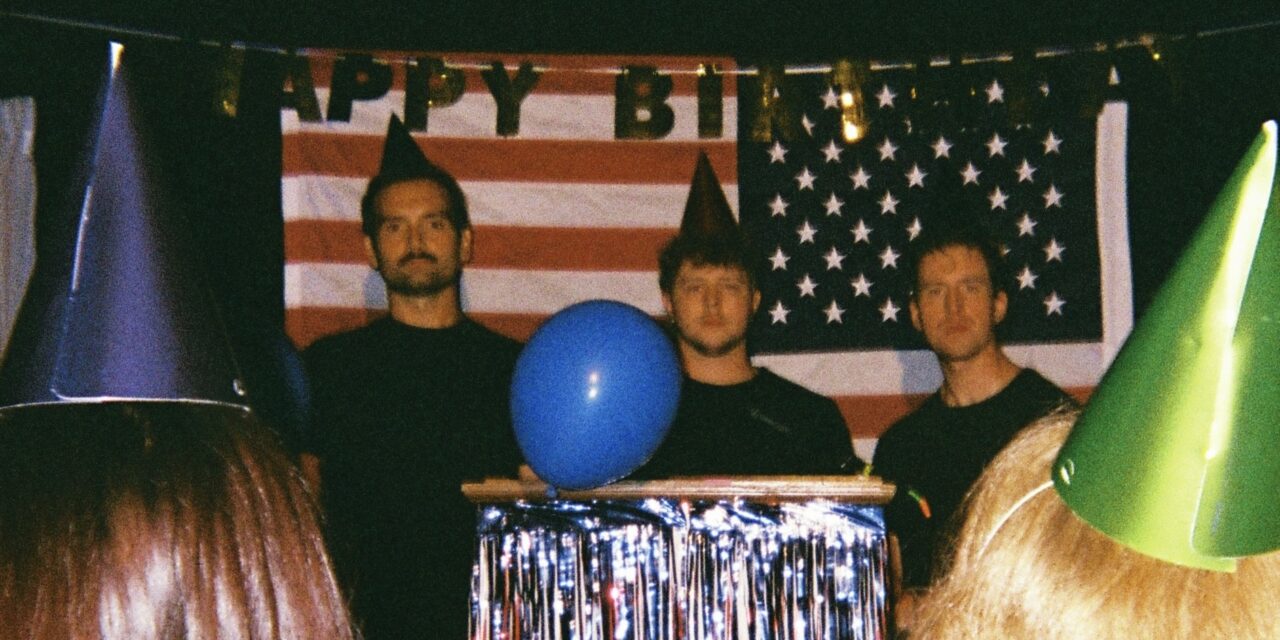
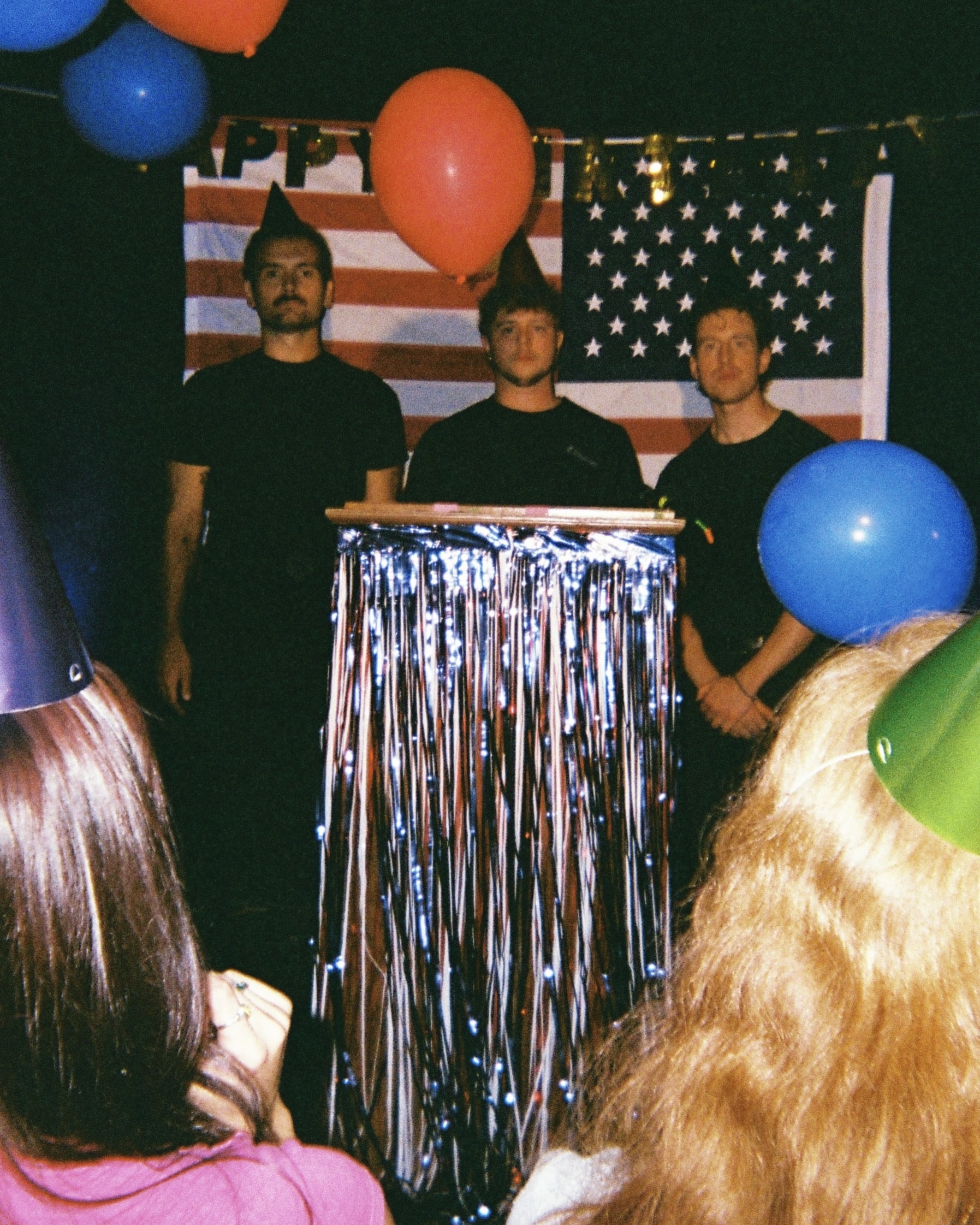
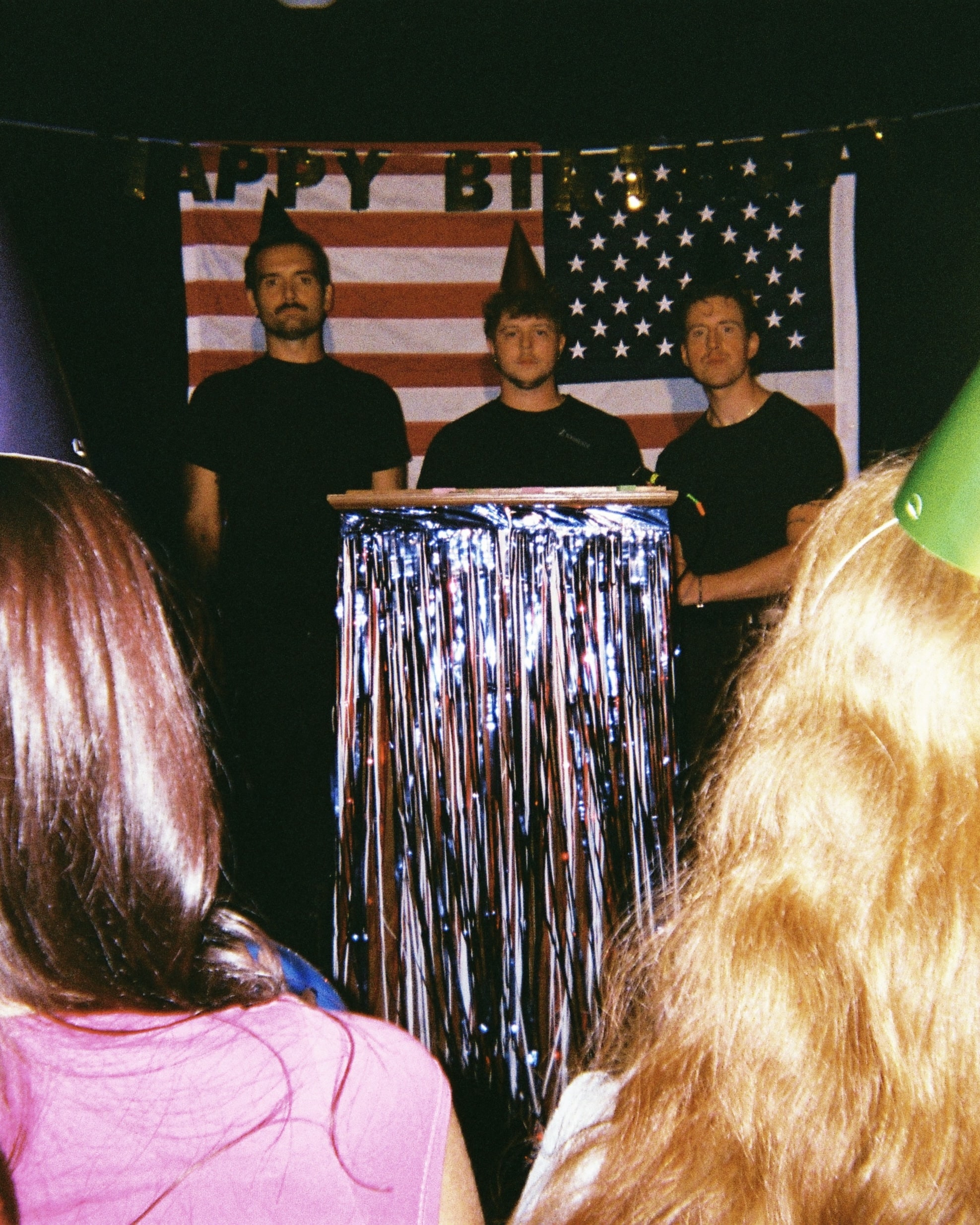
The cover artwork for “The Party,” alongside the band’s initial promotional photographs, was captured using a Fuji disposable film camera.
The photographs were taken immediately after the group wrapped production on the accompanying music video.
The choice of film reflects their interest in documenting moments rather than constructing an excessively polished visual identity.
Analog photography introduces an element of unpredictability.
There is less opportunity to immediately review, manipulate, or perfect every image.
Instead, the photograph becomes a record of a particular moment, shaped by the people, environment, and circumstances surrounding it.
For The Pariahs, that quality aligns with their broader artistic mission.
“Everything we do is about the human experience and connection, so capturing that on film only amplifies that.”
The visual language surrounding “The Party” therefore becomes more than an aesthetic preference.
It reinforces the band’s desire to create something tangible, collaborative, and emotionally recognizable.
Bobo the Fascist Clown: Political Commentary Through Absurdity
The accompanying music video for “The Party” introduces another dimension of The Pariahs’ creative identity.
Rather than approaching the song’s political themes exclusively through solemn imagery, the production incorporates satire and absurdity.
Among its characters is Bobo The Fascist Clown, portrayed by Seth, the bassist of Lombardy.
The character’s name alone suggests an interest in exposing the theatrical and grotesque qualities that can accompany authoritarian politics.
Satire has historically provided artists with a means of confronting power by stripping it of its carefully constructed seriousness.
By introducing the imagery of a clown into a song concerned with political dishonesty and injustice, The Pariahs appear interested in exploring that tradition.
The video also represents an important creative milestone for the band’s director, who describes it as the first production of this scale they have directed.
The project was developed with assistance from Jeremy Fowler and his UMG creative team.
Fowler served as director of photography, provided access to his studio, and contributed resources for post-production.
Despite the ambitious nature of the project, principal filming was completed in just four hours.
The experience became one of the most rewarding moments in the band’s formation.
“The day of shooting was both absolutely exhausting and one of the most fulfilling days of my life.”
The video further demonstrates how The Pariahs intend to operate as a multidisciplinary creative collective, bringing together songwriting, performance, photography, filmmaking, and social commentary.
Beyond Political Music: Building Something Around Connection
Although “The Party” establishes The Pariahs as a band willing to confront political and social issues, they are careful not to define their entire future through protest music.
Their ambitions are broader.
Some of their forthcoming songs will communicate their intentions more subtly, exploring different dimensions of the human experience without necessarily addressing injustice directly.
What connects those compositions is the belief that music should have something meaningful to communicate.
That doesn’t require every song to deliver an explicit political statement.
Sometimes connection emerges through vulnerability.
Sometimes it comes through shared frustration, personal reflection, humor, or the recognition of an experience we previously believed belonged exclusively to us.
For The Pariahs, the underlying intention matters more than the specific subject.
Their goal is to create music that encourages listeners to feel connected not only to the band but also to one another.
With additional releases expected in 2027, “The Party” serves as the opening statement of a project whose creative possibilities are still unfolding.
In Conversation With The Pariahs
What was the catalyst for starting The Pariahs, and how did your previous musical projects shape the direction you wanted to take with this new band?
Lane, Jonathan and I are all in multiple other creative projects. Amongst ourselves we consider this band to be a super group, as vain as that sounds, since we all have so much experience working and creating in this industry independently. We really just wanted to start a band that writes songs with something deeper to say, and to touch on topics that wouldn’t be appropriate for our other respective projects.
“The Party” serves as the debut single for the project. What made this specific track the right choice to introduce your sound to the world?
It is the song that essentially started this band. I started writing the lyrics one day while I was at work, and then I asked Lane to help me finish it. He came up with the stunning melody that you hear in the choruses now. He just started singing it when he read the lyrics in my apartment and totally brought the song to life. We then asked Jonathan to help flesh it out in the studio and record it.
Along the way the three of us decided to make this a band. We thought that with how chaotic our world is, “The Party” touches on that chaos and addresses it, but the ultimate message is people coming together and calling out injustice together, the right way.
How did you, Lane, and Jonathan approach building the band’s sonic identity, and what influences came together to define the signature Pariahs sound?
The three of us all love the rock music of the 2000s. That style just felt right for the lyrics we’ve been writing and the mission statement of the band. We love Sam Fender, he was a big inspiration for us sonically. Of the music we have recorded so far, I’d describe us to a new listener as a mix between Bruce Springsteen and Death Cab For Cutie.
Having worked together previously, how has your collaborative dynamic evolved now that you are building a new project from the ground up?
It’s honestly so cool how intertwined our projects are and yet they still are each so unique. For Jonathan’s solo project, which is in the retro soul world, I’m his manager and creative partner. Lane co-wrote “Dream Girl” off Jonathan’s most recent EP and has a fantastic solo project of his own. He also co-launched a sick indie pop duo called Brothrly. Jonathan also has his rock band, Lombardy, that I occasionally shoot videos for. The three of us were all onstage together for Jukebox Jam 3 last month as the house band for the night. We all genuinely love working together.
As far as our dynamic evolving, I’d say it has only gotten stronger and more streamlined from an execution standpoint. We’re honestly writing too many good songs to keep up with. It seems like every other day one of us is firing a voice memo into the group chat with a masterpiece of an idea.
Lyrically and conceptually, what story or core theme are you exploring through “The Party”?
The core theme is simple and universal: for decades, those in power have lied to us time and time again, and it’s up to us to pay attention and speak up about it. That’s what “The Party” is. Even though they want you to reject the evidence of your eyes and ears, we have to find the truth for ourselves.
Could you walk us through the recording and production process for “The Party”? Were there any specific studio experiments or techniques that shaped the final mix?
We’re fortunate enough to record at East Iris Studios here in Nashville. Pat Kraus and Kelly King have been extremely good to us and we have the privilege of recording at the best studio in town (per the Nashville Scene).
Honestly, we didn’t do anything fancy in the studio and I think that was important for this sound. The song speaks for itself, there was no need to overcomplicate things. We tracked our rhythm section live with scratch vocals and put on the finishing touches and saxophone licks, courtesy of the fantastic Cam Gallagher, at Lane’s home studio.
How does the visual aesthetic and imagery surrounding the release connect with the musical themes of the new record?
The prevailing word to describe the aesthetic is HUMAN. We shot the cover art for “The Party” and our first batch of promo photos with a Fuji disposable film camera. We took those photos right after we wrapped filming our music video, which we’ve been teasing on social media for a release later this month. Everything we do is about the human experience and connection, so capturing that on film only amplifies that.
What were some of the most rewarding moments or notable challenges you faced while getting this project off the ground?
For me it was shooting our music video. It was the first video of this scale that I’ve directed and it was a bit of a daunting task. However, I had fantastic help with Jeremy Fowler and his UMG creative team. Jeremy was DP, let us film in his studio, and even lent his team for post-production work.
The day of shooting was both absolutely exhausting and one of the most fulfilling days of my life. We wrapped after just 4 hours of shooting and all the extras and cast were incredible. Especially Seth, who took a break from playing bass for Lombardy to don clown makeup for his role as Bobo The Fascist Clown. The whole thing came together just how we envisioned, and we can’t wait to release it for you all.
With the debut single now out, what can fans expect in terms of upcoming live shows, future releases, or broader plans for the band?
Unfortunately I’m going to have to be vague on this one. But what I can say is to expect more music in the new year.
Ultimately, what key feeling or message do you hope listeners take away when experiencing The Pariahs for the first time?
We want people to feel like they’ve connected with us and the rest of humanity with the messages in our music. Some of them are more subtle than others. “The Party” has an obvious vibe and meaning, but others not so much. Of course all of our songs won’t always be about injustice, but each one will always have an intention and underlying message with the ultimate goal of bringing people together.
Finding Solidarity in an Increasingly Fragmented World
There is a long tradition of rock music functioning as a meeting place for people who feel disconnected from the institutions, expectations, and narratives that govern their everyday lives.
At its most meaningful, that music doesn’t simply articulate dissatisfaction.
It transforms an individual experience into something collective.
With “The Party,” The Pariahs are positioning themselves within that tradition while developing a creative identity informed by their own generation’s anxieties and contradictions.
Their emphasis on live instrumentation, analog photography, independent thinking, and collaborative creativity reflects a desire to preserve something fundamentally human within an increasingly fragmented cultural landscape.
Even their name invites an interesting interpretation.
A pariah is someone who has been excluded, rejected, or pushed outside the boundaries of an established community.
Yet the band’s mission is built around the opposite impulse: bringing people together.
That tension offers a compelling foundation for a project interested in questioning authority without losing faith in the people around them.
The Pariahs aren’t claiming to have all the answers.
Instead, they are encouraging listeners to remain curious, attentive, and willing to question the world they inhabit.
And while their debut single confronts the darker realities of contemporary society, its underlying message is ultimately hopeful.
In a world increasingly defined by division, perhaps one of the most meaningful things a rock band can do is remind us how much we still have in common.
“The Party” is only the beginning.