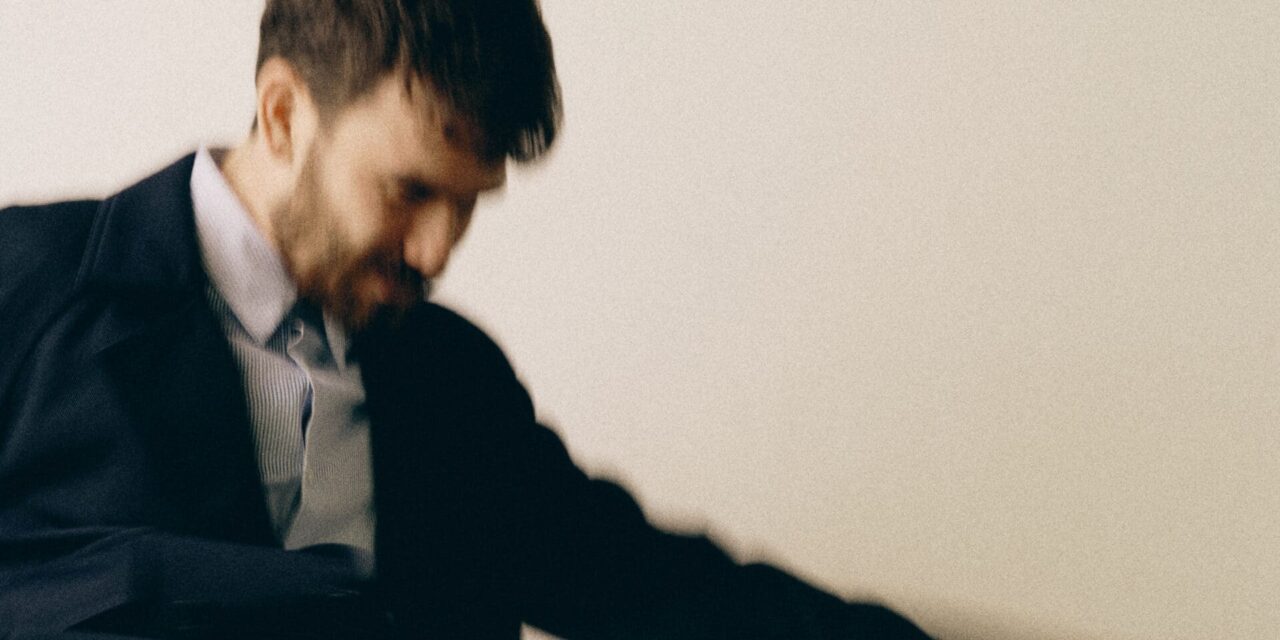
Electronic composer and producer Daskal steps into a defining moment with the release of his full-length album OD, out now via Life and Death, the influential label founded by DJ Tennis.
Across ten tracks, OD moves fluidly between club energy and compositional depth, blending pulsing rhythms with cinematic textures and ambient emotional weight. The record marks a deliberate shift for Daskal—one that reconnects his background in contemporary dance and composition with the physicality of the dancefloor.
Co-produced with Dori Sadovnik of Red Axes, the album emerges as a hybrid work shaped equally by choreography, spatial awareness, and electronic experimentation. Recorded with vintage hardware—including analog synthesizers and a rare 1980s RFZ console in a Tel Aviv jazz studio—OD explores rhythm, repetition, and movement without losing the restraint of Daskal’s compositional roots.
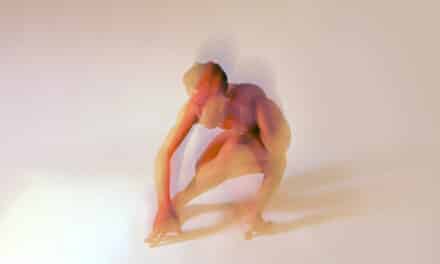
The project’s lead single “Changes” arrives with a striking visual directed by filmmaker Tamir Faingold and featuring dancers from the Batsheva Dance Company. Rather than relying on narrative storytelling, the video translates the emotional energy of nightlife into pure movement.
Tracks like “1992” collide arpeggiated piano motifs with dense basslines and techno-leaning percussion, while the title track juxtaposes orchestral strings with playful synth hits and dynamic rhythmic structures. Throughout the album, Daskal navigates a unique space—somewhere between concert halls, black-box theaters, and late-night clubs.
We spoke with the producer about composing through choreography, analog imperfection, and why OD had to exist between worlds.
OD feels like a collision of disciplines — club culture, contemporary dance, and composition. At what point did you realize the project needed to exist between worlds rather than inside just one?
To be honest, I didn’t have a fixed plan for the album’s world. I just knew I wanted to step outside the ambient space I’m used to and create something new for myself.
I wanted rhythm and drum machines while still keeping my electronic color. I wasn’t aiming for club functionality—I was aiming for music that genuinely moves me.
You come from a deep background in contemporary dance, working with institutions like the Los Angeles Dance Project and Royal Danish Ballet. How has choreography shaped the way you think about rhythm, space, and tension in music?
Choreography has deeply shaped my musicality. My older brother is a brilliant dancer, and as a child I attended many of his performances.
I remember hearing repetitive ambient electronic music during those shows and feeling transported into another frequency—a timeless, emotional, almost utopian space.
That experience influenced the way I build music. I let it breathe, stretch time, and shape tension according to feeling rather than formula.
The visual for “Changes” uses dance as its primary language rather than narrative. Do you see movement as a more honest form of storytelling than words or lyrics?
I wouldn’t describe it as “honest.” It’s more about abstraction fused with emotion—expressing a deep color or emotional state that can’t really be reduced to words.
This is your debut release on Life and Death, a label known for its strong artistic identity. What made it the right home for a project as hybrid and conceptual as OD?
When I read their description—“soulful dance music with a post-punk heart”—I immediately felt aligned.
They have a strong and distinctive identity. I think it’s a brave move for them to release this album because it moves through more contemporary and unconventional spaces. I follow their work closely, so I’m proud and grateful to share this chapter with them.
The album was written in an intense 12-day period. Did that compressed timeline create clarity, chaos, or something closer to instinct?
Those twelve days were intense and incredibly inspiring.
It felt like diving into a storm of sound and sharing a creative high with Dori Sadovnik. I worked very instinctively, and Dori helped distill the flood of ideas into something focused.
You mentioned this is the first time you started composing from rhythm rather than harmony or texture. How did that shift redefine your creative process?
It created a kind of reduction—though in a good way.
It gave me limits and a starting point. A specific color I could explore and develop. Less randomness, clearer structure.
As a performing artist, these compositions have been a game changer because I’ve started performing them in clubs and festivals for dancing crowds.
Working with Red Axes adds another layer to a project that feels very personal. What did collaboration bring to the process?
Revealing your creative process is very intimate. It means exposing fragile ideas, failed attempts, and self-doubt.
You’re opening your inner world to someone else. There’s something magical in that vulnerability.
The use of vintage hardware like the Minimoog, Juno-106, and Buchla gives the album a tactile quality. What does analog imperfection allow you to express?
Right now, this is how I know how to express myself—through touch.
Feeling the knobs, the keys, the physicality of sound. That’s my language at the moment. But I’m also eager to deepen my relationship with plug-ins and reach the same level of expressiveness there.
The album was mixed through a rare 1982 RFZ console in Tel Aviv. How important are physical environments in shaping the emotional outcome of your work?
Environment definitely shapes the vibe of a piece—but not necessarily its essence.
The core emotion stays the same. A broken heart is a broken heart whether you’re in the desert, a city, or Antarctica.
OD blurs the line between performance, installation, and record. When people experience this project, what do you hope they feel in their body—not just understand intellectually?
I want them to feel whatever they feel.
I hope they experience, together with others in the room, a journey through inspiring and refreshing emotions. Something that gives them space to breathe.
And of course, I hope they dance and enjoy themselves.
Music as Movement
With OD, Daskal offers more than a dance record. The album operates as a dialogue between disciplines—where choreography informs rhythm, analog hardware shapes emotional texture, and electronic music becomes something tactile and spatial.
It’s a project that refuses easy categorization, existing somewhere between club culture and contemporary performance.
And perhaps that’s exactly the point.
For Daskal, music isn’t simply meant to be heard.
It’s meant to move.