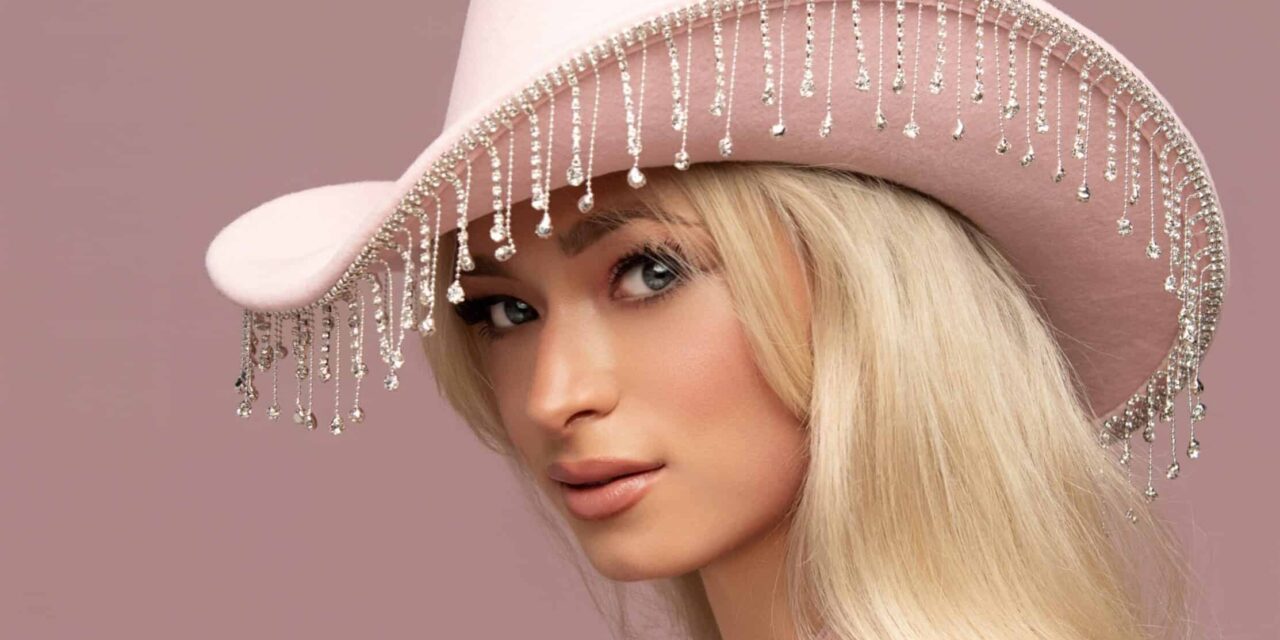
With pink rhinestones, country-pop sparkle, and a clear-eyed sense of self-worth, the UK artist turns situationship fallout into something playful, empowering, and unmistakably her own.
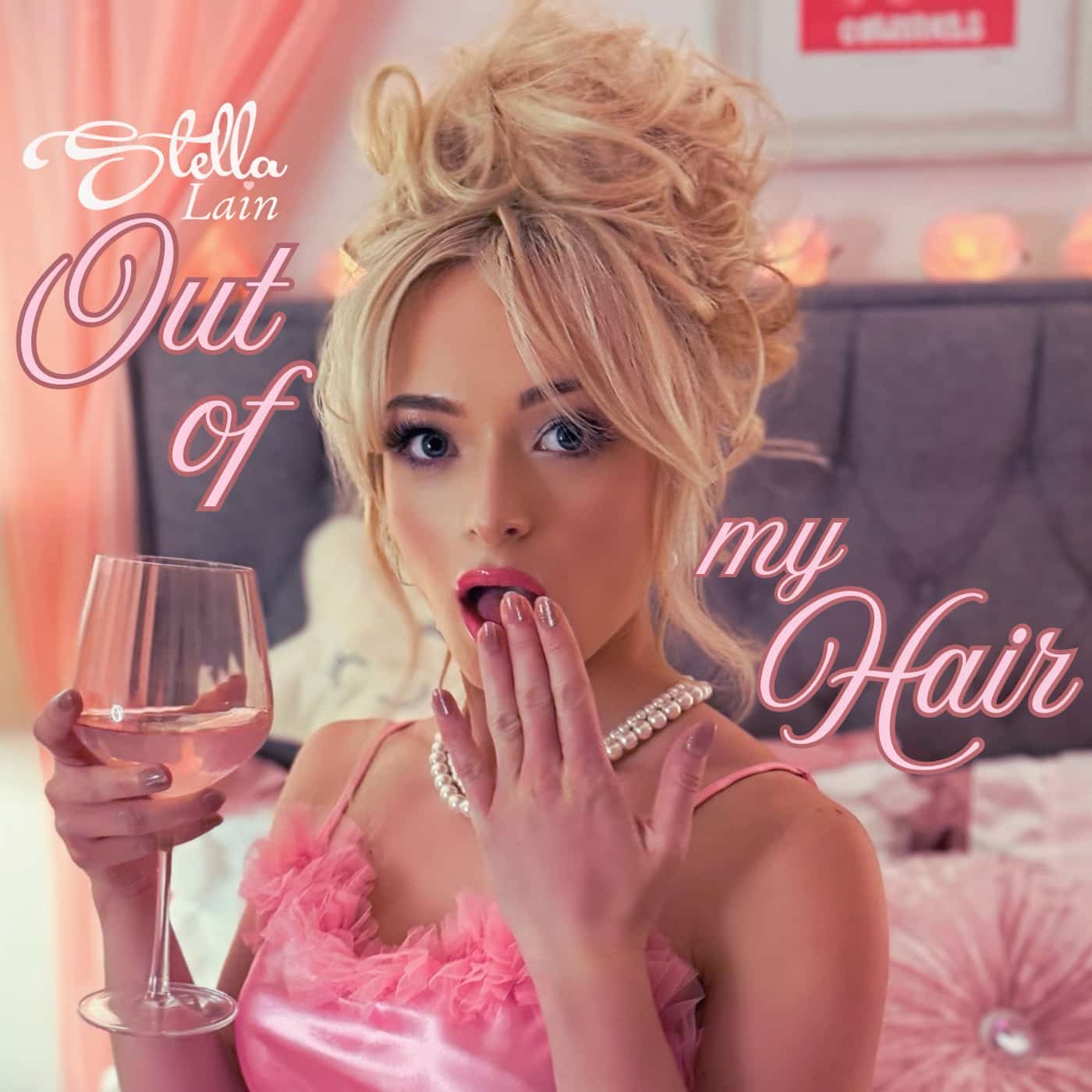
There is a particular kind of heartbreak that doesn’t arrive as devastation so much as slow recognition. It’s the moment you finally name what has been happening all along: the mixed signals, the half-attention, the emotional limbo dressed up as possibility. On “Out of My Hair,” Stella Lain turns that realization into bright, singable pop-country release—less tear-stained ballad than hairbrush-at-a-sleepover anthem.
Born from the heart of the UK but deeply rooted in country storytelling, Stella’s music lives in the space between emotional honesty and playful self-reclamation. “Out of My Hair” is upbeat, fun, and full of motion, but beneath the gloss is something more exact: a song about the kind of relationship dynamic that keeps you just invested enough to stay, even when nothing real is growing there.
For Stella, the track is part of a larger emotional journey. It is not just about leaving someone behind, but about understanding the feeling clearly enough to release it. If “Out of My Hair” is the moment of cutting ties, then newer song “Moving On” feels like the chapter after—the moment when distance turns into confidence, and clarity starts to feel good.
That emotional architecture makes sense for an artist like Stella Lain, whose work is rooted in storytelling first. A self-described pink-loving, rhinestone-wearing Country-Barbie singer-songwriter, Stella has built an identity that is both highly stylized and emotionally sincere. Her songs balance mainstream pop melody with banjo-laced country warmth, while her lyrics often draw from real life, self-expression, kindness, and personal growth.
Her debut EP, Stella, introduced exactly that world: a mix of fun, heartfelt, and sharply observed songs that function as both introduction and invitation. Tracks like “Country Girl” embraced her identity head-on, while songs such as “The Problem” reframed old wounds through a more mature lens, proving that even upbeat country-pop can hold emotional complexity.
What makes Stella’s project especially compelling is that her aesthetic does not feel like costume. The pink, the sparkle, the “Country Barbie” label—they all come from a real process of reclaiming selfhood after a period where she lost it trying to fit into someone else’s mold. That backstory gives her music more weight than it might initially seem to carry. The brightness is earned.
And maybe that’s why her songs feel so easy to connect with. Beneath the shimmer is a very clear mission: to make people feel better, stronger, and more themselves.
For Mundane Magazine, Stella Lain opens up about writing from emotion, rediscovering her identity, being a UK country artist, the healing force of self-love, and why kindness remains one of the strongest things a person can choose.
Interview with Stella Lain
Question: “Out of My Hair” feels like a very specific emotional turning point. What does that song represent for you?
Answer: “Out of My Hair,” which came out in January, is all about that moment of realization where you say, this isn’t good for me. This toxic relationship, situationship, whatever it is, is not good for me. He is not treating me right, he is not taking me seriously, and I’ve had enough.
Question: And how does “Moving On” connect to that?
Answer: “Moving On” is kind of that moment maybe a month later, or a few weeks later, when you actually go, this was the best decision. I may kind of miss him, but I miss the idea of what he was. He was never good for me. He might come running back, he might be texting, but you’ve just got to say no. Moving on looks great on me, and it feels great for me. He should have known better.
Question: Your debut EP Stella felt like an introduction to your world. How do you see that project now?
Answer: My debut EP Stella came out in October last year, and it was kind of just an introduction to me as an artist. There are some fun songs on there, including “Country Girl,” which is all about me as a person—it even mentions me loving pink and rhinestones. You’ve also got my debut single “Sunkissed,” which is a summer song about falling in love in the summer.
One of my personal favorites is “The Problem,” which is about dealing with mean people and bullies, and how your perspective changes as you grow up. You realize that if someone is spending so much energy trying to put you down, maybe you’re doing something right. If people want to hate you for no reason, the problem is them and not you.
Question: You grew up around a lot of different music. Why did country become the genre that felt most like home to you?
Answer: I grew up listening to so many different genres. My parents have a very vast taste in music, and I’m very lucky to have that. But country music was the genre I connected with the most because it’s rooted in storytelling. You feel like you can relate to the stories. So I kind of just fell in love with it from then.
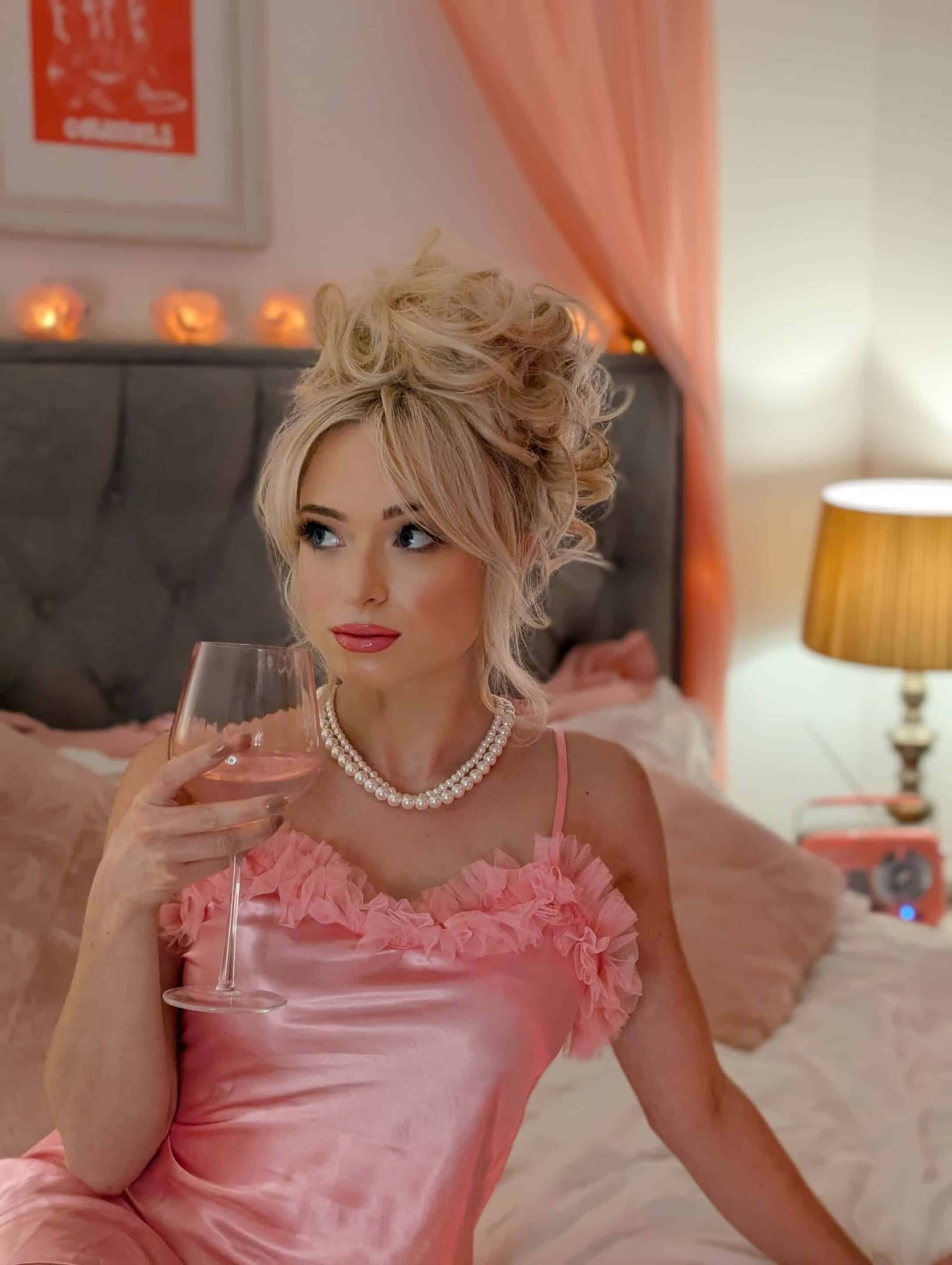
Question: You often describe yourself as a “Country Barbie.” Did that identity always come naturally, or did you have to find your way back to it?
Answer: I have always been a pink-loving Country Barbie, but there was a time, probably in college, where I had a bit of an identity crisis. I kind of forgot who I was. I wanted to fit into this bubble and fit in with everyone else. I felt like me expressing myself and wearing what I wanted was immature and not what people wanted from me.
So in order to please others, I wore things I didn’t want to wear, acted in ways I didn’t want to act, and kind of wrote songs in secret instead of expressing myself to the world. I’m so glad I managed to find myself again, be myself again, fill my wardrobe with beautiful bright colors, and just be who I am. I learned the importance of being true to yourself and also being kind to yourself. To me, kindness is one of the strongest powers anyone can have.
Question: Your sound has been described as “country music with a touch of pink.” How do you define it in your own words?
Answer: I’m often described as the Country Barbie, and I think I have music that fits that. My music is country music with a touch of pink. It’s also been described as dream-pop country, which is very fun. It’s contemporary country music, so it fills in what I love about mainstream pop with my love of country music and my love of banjo—because believe me when I say, you will hear a banjo in every single one of my songs somehow.
Even from the moment I write the song, in my head I’m already picking out what instruments I want, what I want the backing vocals to do. It all starts from storytelling and self-expression.
Question: You’ve talked openly about struggling to express yourself when you were younger. Was music always the place where that could happen more honestly?
Answer: Back at school, people weren’t always kind to me, and I struggled to express myself and say what I wanted to say. So music was always there for me. Music was my way of expressing myself and saying the things I couldn’t say out loud. It ultimately all comes from that.
Question: “Country Girl” feels especially personal in the way it pushes back against stereotypes. What inspired that song?
Answer: “Country Girl” goes into depth about what it’s like to be a country artist from the UK and also being fitted into a mold of a stereotype. I wrote it after overhearing someone at a festival say, “It’s not real country music if they’re not from America.” I was like, I’m going to prove you wrong.
Then I had another interaction where someone asked what kind of music I make, and when I said country, they looked me up and down and said, “You’re too Barbie to be a country artist.” I just kind of laughed because I was like—Dolly. And I thought, right, I’m going to fully embrace who I am. I’m going to be the Country Barbie that I am.
Question: You haven’t performed in America yet, but what does that possibility mean to you?
Answer: I haven’t performed in America yet, but if I could reach America and perform there, that would be a dream. I do have people from America following me on socials and leaving lovely comments, and I know some people there have listened to my music too, which means so much.
I think the most amazing thing about country music is that it is for everyone, and everyone can enjoy it. Back when I was at school, people used to make fun of me for liking country music and said I listened to granddad music. But it’s the best music, in my opinion. It’s the one that connects with me the most. It suits me the most.
Question: What do you think country music can do emotionally that other genres sometimes can’t?
Answer: In country, you can write about a subject and tell a full story—with the who, what, where, when, and the feelings. I think that’s kind of the magic of it. I think that’s the magic of music altogether, really. Every piece of music has its own message, feeling, and meaning behind it. Music is the best way to connect with people and with yourself.
Question: People often ask artists how they write songs, but it’s not always easy to explain. What does songwriting feel like for you?
Answer: I honestly never really know how to answer that question, because for me songwriting has always been my way of expressing myself. It feels like journaling. There isn’t one structure. I don’t always start with chords or always start with lyrics. It can be either way.
Sometimes inspiration hits and I think, I need to write about this subject. Sometimes I’ve got one line and I know it belongs in a song. Other times I’ll find a chord progression and then I feel the music and the words flow on top of it. It’s hard to explain, but it feels like second nature to tell stories through music. Obviously you go back and tweak things sometimes, but the emotion you’re feeling in the moment can create the most magical piece of music.
Question: Is it true that some of your songs have literally come to you in dreams?
Answer: Yes! One of the songs I’m working on right now came from a dream. I woke up at like 3 a.m., half asleep, and recorded myself humming it into my voice notes. Then I forgot about it. The next day I listened back and it was actually really good—it turned into a song.
Though to be fair, sometimes in my dream I think I’ve written the best song ever, then I listen in the morning and it sounds like a five-year-old wrote it. So it definitely goes both ways.
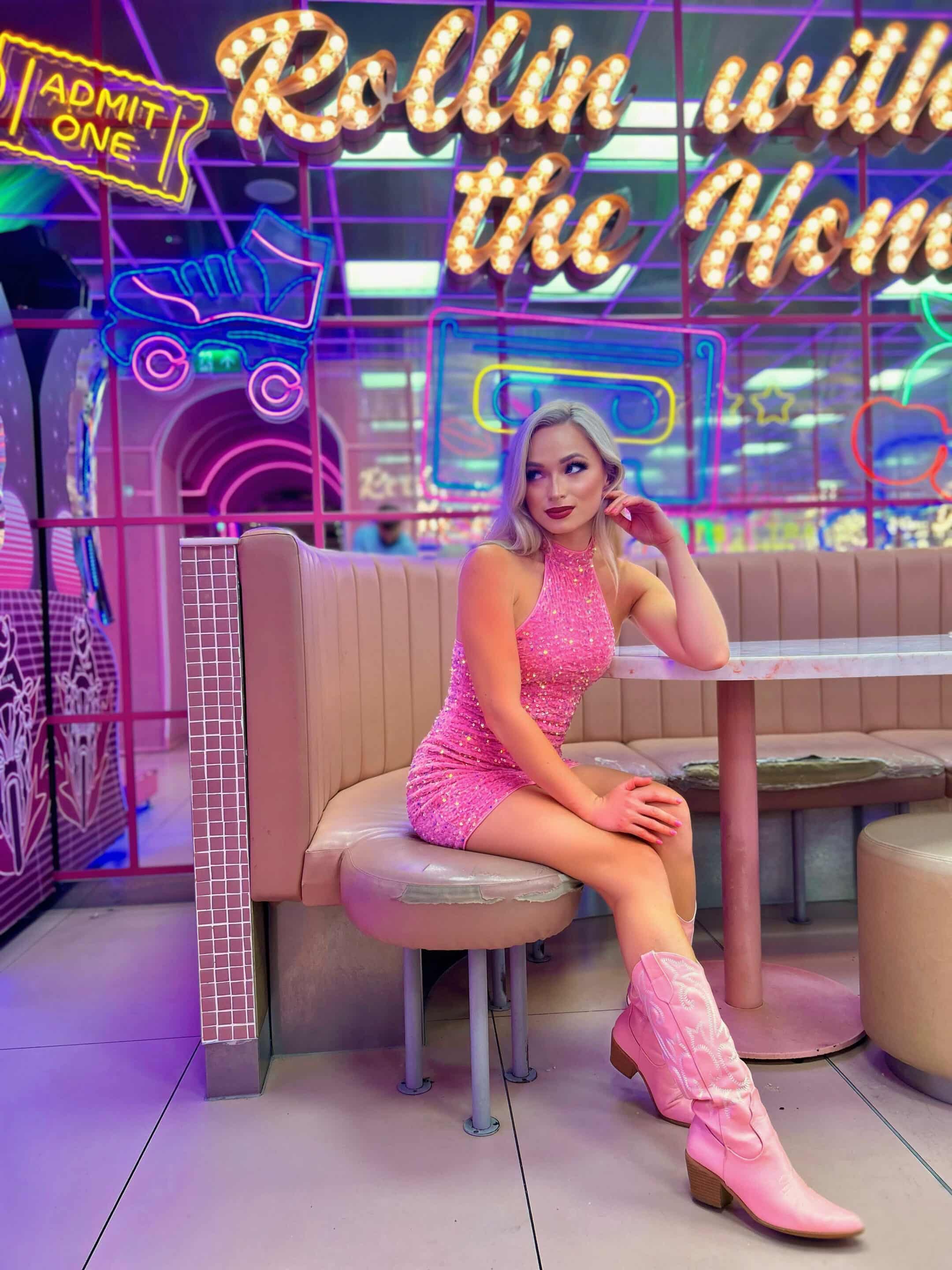
Question: Performance has clearly been part of you for a long time. When did being on stage start to feel natural?
Answer: I’ve been performing since I was two years old, so I guess my parents taking me to dance classes really ignited that fire in me. I loved being up on stage from the beginning. I love performing. I love that buzz of interacting with an audience, being in the spotlight, being on stage.
Music itself came a bit more from me internally. I think idols like Taylor Swift and Miley Cyrus really inspired me when I was younger. I loved Hannah Montana. I taught myself how to play guitar and how to write songs. I would literally study Taylor Swift’s song structures and break down how she wrote them. I loved it.
I remember the first time I performed one of my own songs for my parents. I didn’t tell them it was mine. I just played it. And they both said, “I’ve never heard that Taylor Swift song before.” And I said, “I wrote it.” They were shocked.
My dad has always been my number one fan. He ran me to gigs, open mics, karaoke nights, just anywhere I could sing. My parents have been a huge part of why I’ve kept going.
Question: A lot of your music centers self-love, confidence, and kindness. Why are those themes so important to you?
Answer: I do feel like self-confidence is very important for everyone, and so is self-love. I want my music to make people feel happy, want to dance, want to sing along. I want it to give them that confidence boost—whether it’s before a night out or as part of their morning routine.
And I think the most important kind of love is self-love, of course. If I can make people feel better, feel good, that’s amazing. It’s like cheering up a friend, but through music.
I also love to spread the message of kindness. I value kindness a lot, and I feel like if you can choose to be anything, you should choose to be kind. That’s a really important message I want in my songs—self-confidence, kindness, self-love, and being true to yourself. I had that moment where I lost who I was trying to please others, but the most important person to please is yourself.
Question: Is there one song by another artist that has really stayed with you through difficult times?
Answer: Yes—Taylor Swift’s “Tied Together With a Smile.” It got me through a lot in school, high school, and college when I didn’t feel like myself anymore. It’s all about losing yourself and not seeing yourself the way other people see you. When people are making mean remarks about you, especially as a young girl, you start to believe them.
That song is just so beautifully written. I always go back to it.
What makes Stella Lain’s music work is not just that it is catchy or bright—though it is both. It is that the brightness has perspective behind it. Her songs don’t deny hurt; they reorganize it. They let heartbreak become confidence, bullying become clarity, and self-doubt become style worn on purpose.
That emotional directness, paired with her playful, pink-saturated world, gives her music a kind of warmth that feels immediately inviting. The “Country Barbie” framing might catch your attention first, but it is the sincerity underneath it that holds it. Stella isn’t performing some artificial version of empowerment. She’s writing from the experience of having lost herself before and learning, piece by piece, how to come back.
And that may be the larger appeal of “Out of My Hair.” It doesn’t just soundtrack the end of something messy. It captures the exact emotional pivot where confusion gives way to self-recognition. Where the chorus isn’t just about getting someone out of your head—but about getting yourself back.
In Stella Lain’s glitter-pink world, that return feels not only possible. It feels worth singing along to.