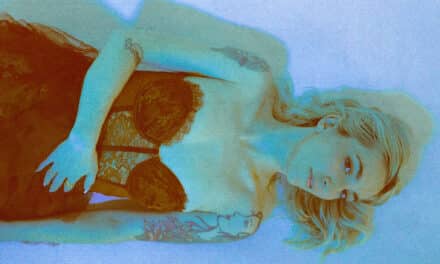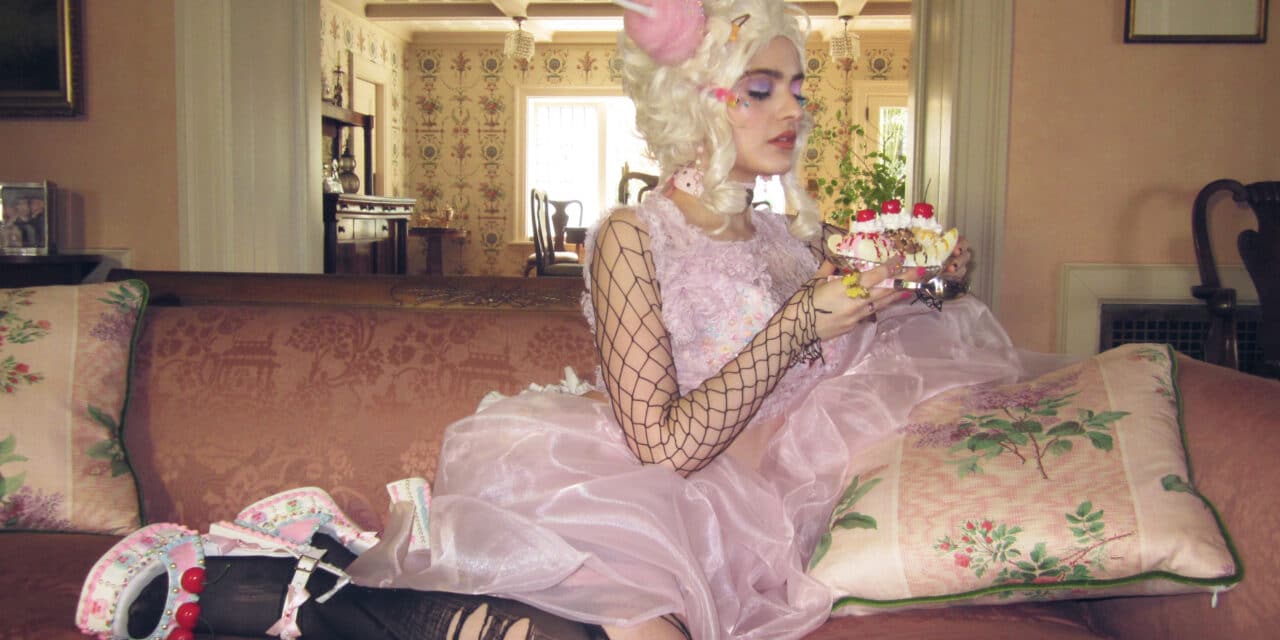
New York alt-pop artist Kiki Kramer turns obsession into mythology on “dionysus,” a darkly playful new single that filters parasocial desire through Greek tragedy, cult psychology, and downtown noir aesthetics. Inspired by The Bacchae and steeped in the tension between glamour and destruction, the track dissects fandom, envy, and modern female performance with razor-sharp wit and a deliberately theatrical edge.
With references to Dionysian frenzy, Manson girls, and digital-age celebrity worship, “dionysus” feels both timeless and painfully contemporary — a song about projection, self-awareness, and the strange emotional economy of modern obsession.
We spoke with Kiki about fandom as cult behavior, New York nightlife, femininity as aesthetic contradiction, and why pop music deserves to collide with literature, mythology, and internet culture all at once.
Q: “dionysus” reframes a parasocial crush through Greek tragedy, cult psychology, and pop culture. At what point did you realize modern fandom can feel mythological in its intensity?
Kiki Kramer:
Fandoms are, in a way, cults. At the very least, cult-like. Anything where a group of people devoutly follows an individual. Bacchae, or Maenads, are followers of Dionysus — aka his fans.
Q: You draw parallels between The Bacchae and celebrity obsession. Do you think today’s digital culture has simply updated ancient power dynamics?
Kiki Kramer:
Absolutely. It depends on the celebrity and the longevity of their status, but we’ve definitely mythologized certain figures throughout history and popular culture. Michael Jackson. Shakespeare. Anybody with a biopic.
Q: The song critiques groupie culture, envy, and patriarchal fixation, but there’s also humor woven through it. Why does wit feel important when unpacking darker truths?
Kiki Kramer:
Necessary. I don’t like when art is entirely dramatic or entirely comedic. It’s not realistic. That’s not life. It’s mixed. My music should be too.
Q: New York nightlife feels deeply embedded in your aesthetic — late-night glamour, danger, fantasy, noir. What does the city unlock creatively after dark?
Kiki Kramer:
I think I’ve always been inspired by the club. Before I had ever even set foot in one. Just through television, movies, and music videos.
I’ve always been fascinated by young adulthood and late adolescence — the drama of it, the partying, the emotional intensity. In reality nightlife gets tedious pretty quickly, but it’s still endlessly inspiring to write about.
At this point I’m almost inspired by how over it I am.

Q: Your music transforms heartbreak and vulnerability into sharp storytelling instead of victimhood. Was that perspective something you had to grow into?
Kiki Kramer:
I think I learned self-awareness through behaving in certain ways and then facing the social consequences. Trial and error.
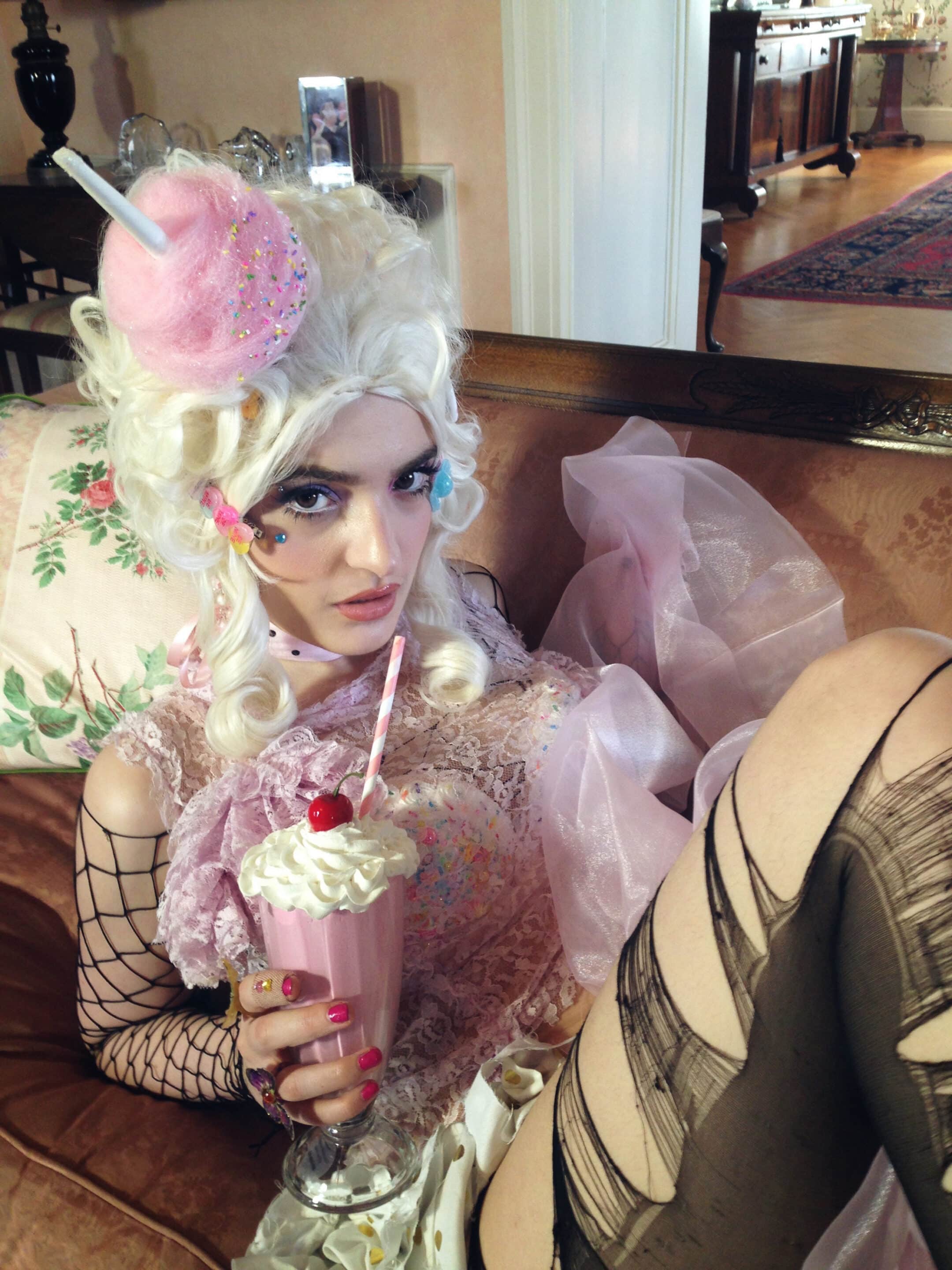
Q: There’s a fascinating contrast in your world between kawaii sweetness and something sinister underneath. Does that duality reflect how modern femininity feels to you?
Kiki Kramer:
No. I’m drawn to contrasts because that’s what I find aesthetically pleasing.
Sure, there are interesting subtextual layers to it, but honestly I also just curate my life this way because it’s what I naturally like. My apartment, my wardrobe, everything.
At night I cuddle with a painted clown-faced babydoll and an eight-eyed spider bunny stuffed animal that contains my mom’s ashes. It’s just me.
Q: Parasocial desire can feel embarrassing, addictive, funny, and painful all at once. What interested you most about exposing your own experience with it?
Kiki Kramer:
There’s no intimacy in a parasocial crush. You can never actually know or understand that person.
So ultimately it becomes completely self-involved — a projection. To me it’s just an extreme example of what a lot of modern love has become.
Q: You reference internet culture while also pulling from mythology and literature. Do you think pop music should collide with “high” and “low” culture more often?
Kiki Kramer:
Yes. Please.
I’m so sick of people dismissing pop music as dumb. Pop is arguably the most powerful genre of music — maybe the most powerful art form period. Nothing else has ever reached this many people before.
Q: As attention around your work grows, how do you protect the weirdness and specificity of Kiki Kramer?
Kiki Kramer:
I’m honestly not worried about that. I’m way too stubborn to let anything interfere with my vision.
If anything, I’m learning to become more open to feedback and collaboration.
Q: If “dionysus” is a preview of the forthcoming EP, what kind of emotional chaos are listeners stepping into next?
Kiki Kramer:
The production across the EP is cohesive, but emotionally and rhythmically it’s all over the place.
There are songs for the pregame, songs for the club, and songs for crying in your Uber on the way home.
As for clarity, I don’t think we fully arrive there by the end of this project. That’s probably going to take multiple releases. But there are moments of self-awareness throughout the EP where I’m really reckoning with my own male-centeredness, and encouraging other women to do the same.
There’s already so much music about why men suck. I’m more interested in asking why we’re so obsessed with men who suck in the first place.