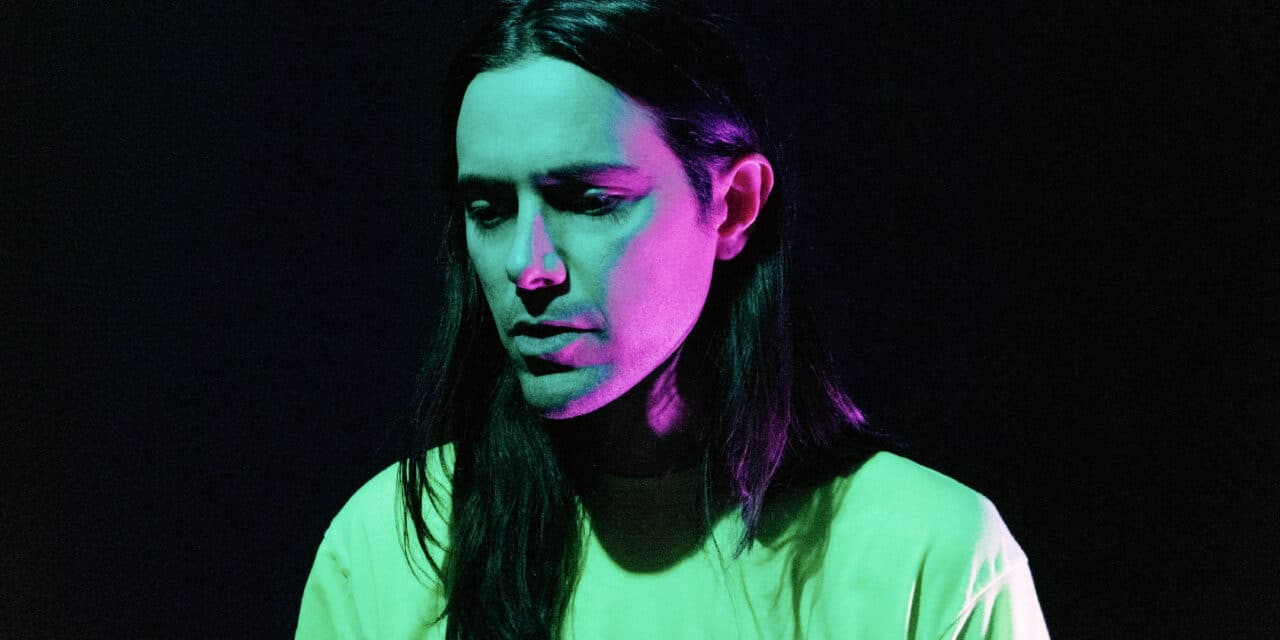
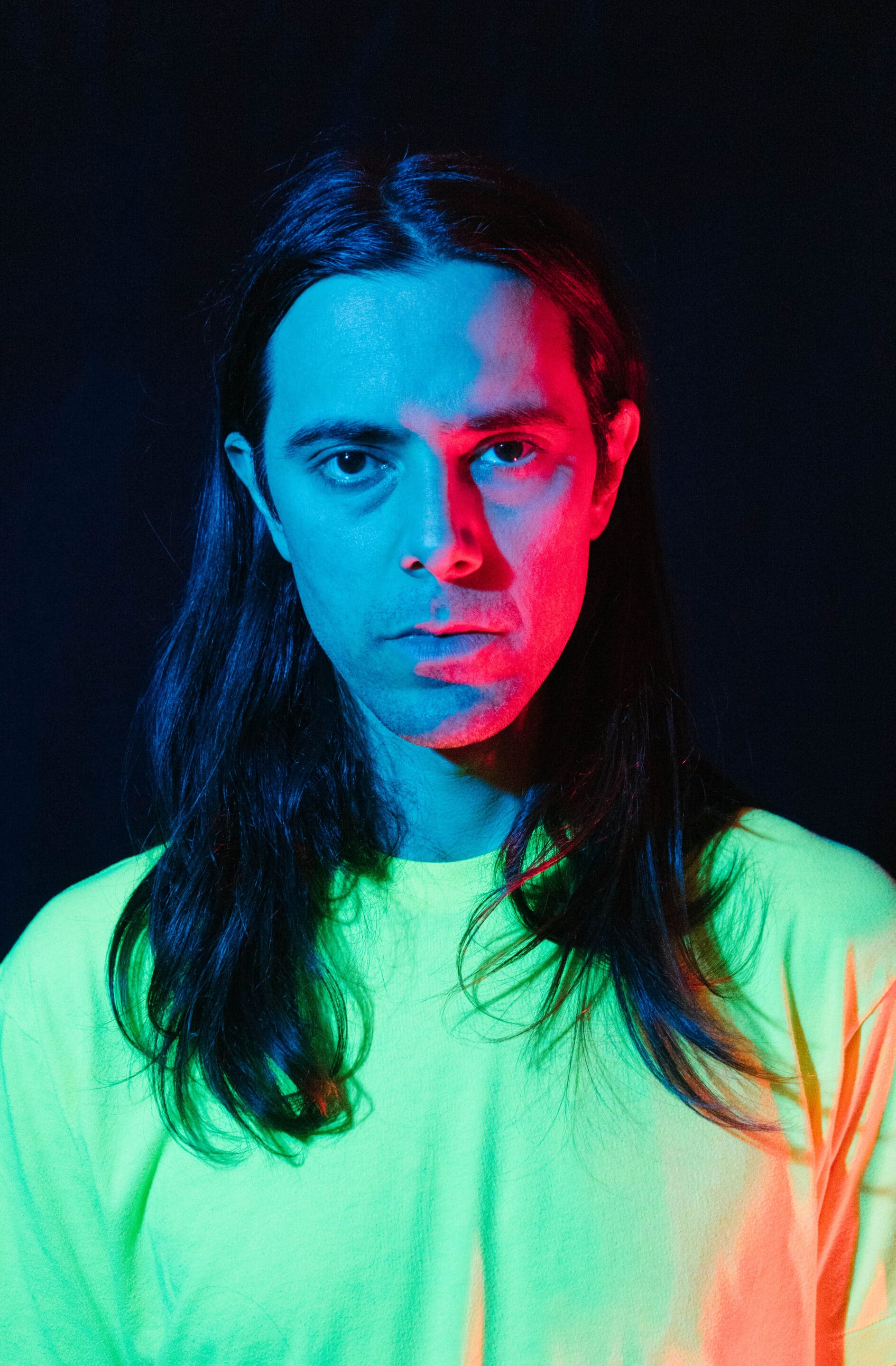
Led by multidisciplinary artist Peter LaBier, Psychobuildings have always occupied a unique lane—where movement meets melancholy, art-pop meets raw instinct, and personal reflection meets physical release.
With singles like “Outside” and “The Beach,” Tears, Vol 1 feels like both a private journal and a wider cultural snapshot. We spoke with Peter LaBier about how the album came together, relearning movement after injury, collaborating across cities, and why he remains skeptical of the word “hope.”
Tears, Vol 1 feels like a document of accumulation—grief, distance, reconnection. At what point did you realize these experiences weren’t just fragments, but part of a larger narrative?
I was playing guitar very regularly and responding to things that would occur spontaneously—words that would come to me intuitively. I spent a long time just letting the songs form without forcing them, playing them over and over until all the chords and all the words came into place.
I didn’t have a preconceived idea about making songs about these feelings or even making an album at all. It happened over time. I probably didn’t realize there was an album until more than a few of these songs were fully written.
The album began during isolation but seems to evolve into something communal, with contributions from both New York and LA. How did that shift—from solitude to collaboration—shape the emotional arc of the record?
I’m not sure if it changed anything fundamentally. Everyone I knew had been going through similar but different experiences. I think all of their contributions reflected that.
Maybe some people, both in New York and LA, brought in more warmth to the project in terms of melody, whether it be on an additional synthesizer or guitar part. At least that’s how it feels to me—that they added a collective, communal depth to my introspective, personal vision.
“The Beach” exists as both a past artifact and a present reconstruction. What did it feel like to revisit a version of yourself from 2009 and bring it into 2026?
It was interesting—we all change over time—so in some ways it felt like a collaboration with someone else, because I’m not the same person now as I was then.
My thinking has changed, my technical abilities, even my voice isn’t the same. That being said, it almost felt like the songwriting and recording process came out of a bizarre time loop. Or like I’d given my future self clues from the past, pieces of a puzzle that only made sense to me later on.
There’s something uncanny about the song’s themes—police brutality, disease, unrest—resurfacing with even more relevance. Do you see the track as coincidence, or something closer to intuition embedded in your earlier work?
I don’t know. I think these themes are all very timeless in America.
CREDIT-Caroline-Mathis
Your work spans music, painting, drawing, and performance. When you approach an album like this, do you think in sound first, or in images and movement?
I don’t tend to think in terms of anything a priori. Mostly I make a mess and then I begin to organize it into a finished work over time.
This is pretty consistent for me across mediums. Occasionally ideas come to me fully formed, but I tend to think of myself as this empty-headed person, without ideas.
I generally have an abundance of energy—that’s where my ideas seem to form—in the act of working. I prefer to find something while making rather than to know too much about what it is at the start.
Perhaps it’s just a game I’m playing with myself, but I want to discover something new whenever I make something. I always want to grow and I want the experience to change me.
Not to sound esoteric, but the whole process is somewhat mysterious to me. I understand how to make something, but I don’t fully understand why things form the way they do.
Dance and physicality seem central to your identity as a frontperson. After your injury and rehabilitation, did your relationship to movement—and by extension, performance—change?
Yes, it did.
There was actually a very long period in which it seemed like I would never be able to dance again, which was very depressing for me. I kept struggling against it, but it kind of broke me at a certain point and I had to accept it.
It might sound silly, but I think these ways we view ourselves in terms of identities are very charged psychologically, so letting go of being some kind of “dancer person” took a while.
My recovery also took a very long time. I’m really only fully back to everything now, and this is almost two years later with an unrelenting dedication to physical therapy.
I had to learn to trust my body again. On a very basic level I had to relearn physically how to do a lot of things—even just walking. It was quite humbling.
I’m grateful in a sense because it reminded me of why I even wanted to do any of this stuff in the first place when it comes to performing and incorporating movement.
The injury, rehabilitation, and return to dance forced me to reconsider everything—to reimagine what kind of performance I might want to do, what kind of performer I might want to be, and what made the most sense in the world I’m in right now with the body I have.
It was very grounding for me and exciting in the end.
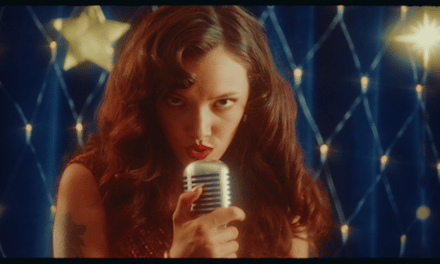
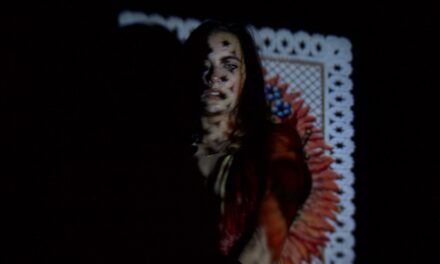
The video for “The Beach” plays with multiple personas—yourself, a hyper-stylized figure, and something almost monstrous. What do those characters represent within the context of the song?
You’d have to ask the director Leigha Mason about that. I had some loose ideas going in, but it’s really her vision.
The only part I can really respond to is that the “dog cop” character was kind of based on some of the lyrics. That character in particular melded lyrics from the song together into some kind of bad trip image.
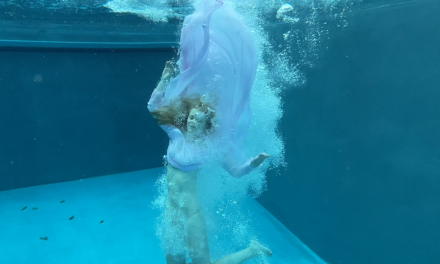
There’s a tension throughout the project between decay and beauty—grainy visuals, aquatic textures, emotional rawness. How intentional is that aesthetic duality?
If you’re speaking of the video, again I would have to defer to Leigha Mason. The look and feel of the filmmaking was a product of her creative vision.
You’ve described the album as a reflection of political turmoil and personal loss, but also of growth and new connections. Where does hope live within Tears, Vol 1?
That’s tough. Maybe that’s beyond the scope of the album.
I kind of recoil from that word a little bit. It’s a bit wishy-washy to me. Hope makes me think of something like blind faith, which I think can be dangerous.
Whereas faith isn’t necessarily as tricky to me, because you could have faith in a very grounded way. You believe in yourself because you’ve seen yourself come through under pressure or through difficult situations.
Some people have faith in humanity in general, but again it’s grounded in something they’ve directly experienced.
I honestly don’t really like the idea of hope.
After six years between full-length releases, what does this return represent for you—not just as Psychobuildings, but as an artist navigating time, change, and memory?
This album took so long to finish. I actually started writing it very close to the time of the previous release.
As a result, it’s like a living memorial to the person I was then and the world at the start of the pandemic.
I don’t want to sound overwrought, but I do think the pandemic fundamentally changed us. It kind of level-set the entire country in a way, gave everyone more uncertainty, fear. It stripped a lot of joy and freedom from the world.
I don’t think it has fully returned. It probably never will. It’s like a loss of innocence. People seem less trusting now, less open.
The album was born in that climate. The songs are a reflection or an ode to all of that loss and longing and fear and death and trauma that occurred, that continues to occur.
This album represents submission and acceptance.
Final Word
With Tears, Vol 1, Psychobuildings don’t offer easy resolution. Instead, Peter LaBier delivers something more honest: a record about living through fracture, carrying memory, and learning how to move again—physically, emotionally, artistically.