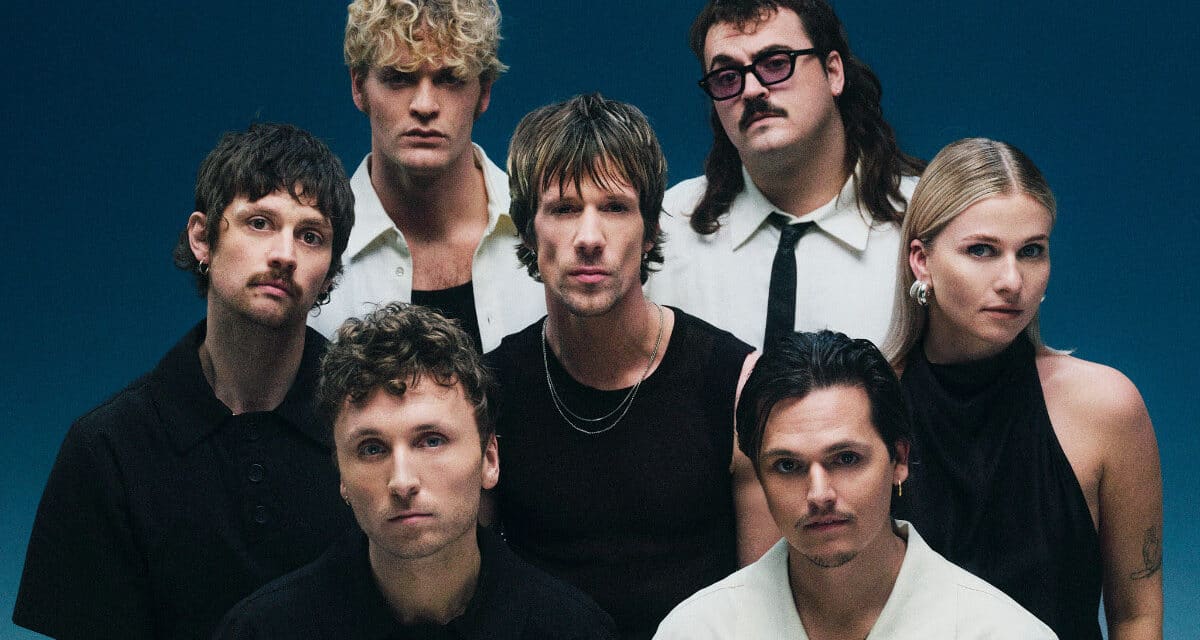
Dutch seven-piece Son Mieux have returned with their most ambitious project yet: 24 Hours, the band’s highly anticipated third studio album.
Structured as the story of an entire day—from dusk to dawn—the record explores connection, uncertainty, vulnerability, and renewal through a cinematic blend of alternative pop, indie rock, and emotionally charged songwriting.
Following a landmark period that included two sold-out nights at Ziggo Dome, major festival appearances across Europe, and a rapidly expanding fanbase, 24 Hours finds Son Mieux at a moment of artistic clarity and personal reflection.
We spoke with frontman Camiel Meiresonne about the emotional cycles behind the album, mental health, scaling up without losing intimacy, and why catharsis was the feeling they chased most.
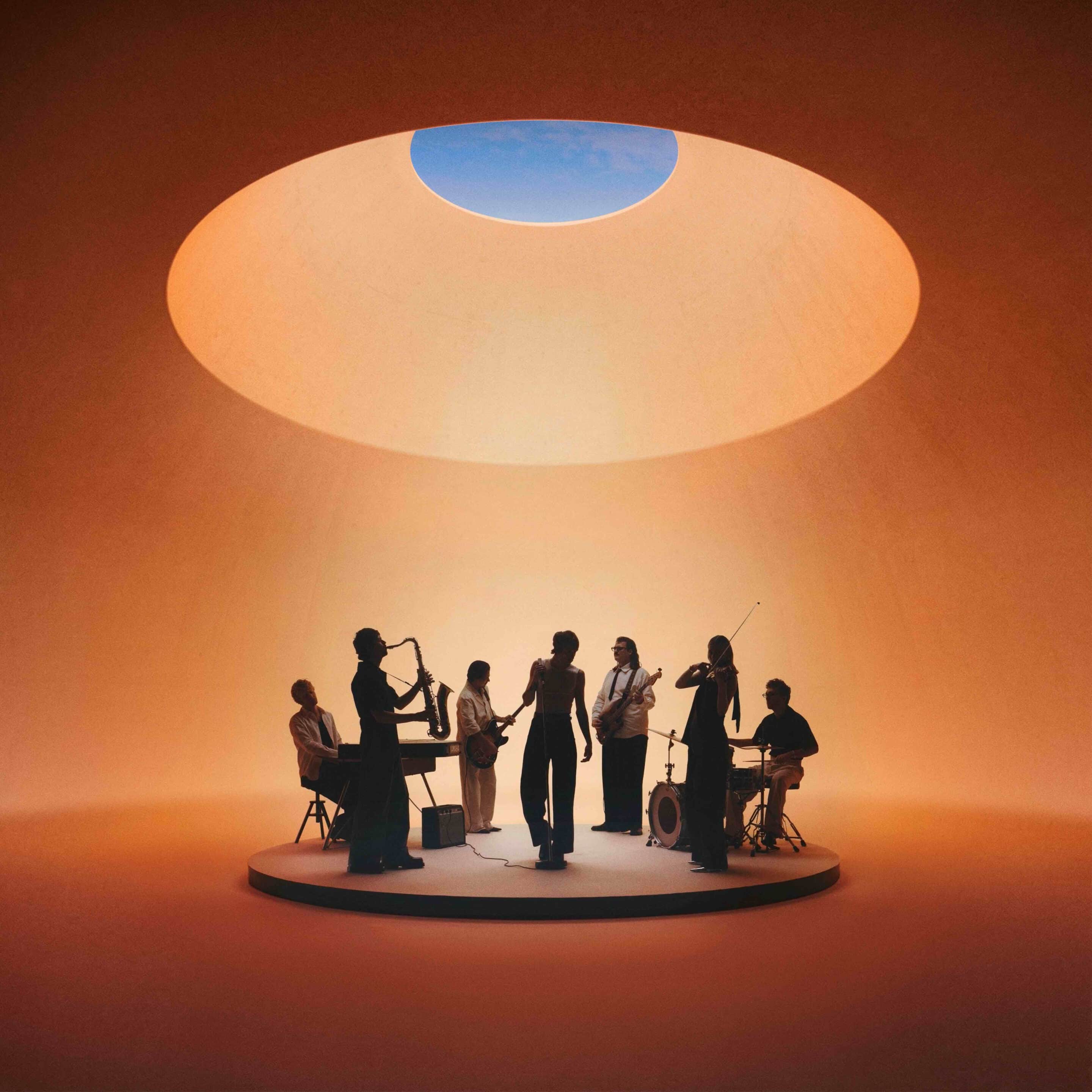
24 Hours is structured as the story of an entire day, moving from dusk to dawn. At what point did you realize that time itself could become the narrative framework for the album?
I think the idea behind 24 Hours became clear while we were writing. A lot of the songs already had this natural push and pull in them, between light and dark, hope and pain.
There were real ups and downs in that period, both in our personal lives and within the band. Looking back, the past five years almost feel like a cycle in itself. You go through these moments where everything feels really connected and in flow, and then suddenly things get uncertain. You build something up, it breaks down a bit, and then you find your way back to each other.
That idea also ties back to the concept of a day itself. Every 24 hours starts with a certain sense of possibility, but it doesn’t always happen the way you expect. Still, it keeps repeating. And I think that repetition is what makes it meaningful. Because every new day is basically another chance to reset and try again.
Your previous record, The Mustard Seed, marked a major moment for the band. How did the success of that album shape the mindset going into this new chapter?
With The Mustard Seed, we wanted to go as big as possible. The name of that album literally means a small seed that grows into something big.
At the time, our mindset was very much about drive and showing the energy we had, really earning our place on stage.
With 24 Hours, it feels like we’re looking at the result of that journey. It’s been five years since The Mustard Seed, and a lot has happened. We played bigger and bigger stages, but with that also came moments of disconnection, exhaustion, and reflection on why we started doing this in the first place.
So 24 Hours became a reflection of that movement between extremes. It’s not just about the highs, but also the quieter, darker parts in between.
The concept of a full day suggests cycles: light and darkness, uncertainty and renewal. What emotional moments in your own lives inspired that arc?
For us, the idea of a full day really mirrors what the last few years have felt like.
There have been some amazing highs, like traveling the world and sharing our music, but there’s also been a darker, more difficult side to it.
Last year, the constant touring started to take a toll on my mental health. It felt like I was sleep-walking through life, and it came to the point that we had to postpone our club tour last autumn.
This was one of the hardest decisions I’ve had to make. But I think it marked a turning point: choosing rest and stepping back.
That’s where the sense of renewal comes in. Returning to the stage after this break felt incredible, and really re-established our connection to why we do this in the first place.
Son Mieux has always balanced classic rock influences with a modern pop sensibility. How did you push that sonic identity further with 24 Hours?
The majority of the songs were recorded like classic rock songs used to be, with all instruments played at the same time rather than built up through overdubs.
That approach was important to us, because we wanted the collective energy we experience during live shows to be present on the record as well.
Working with vintage gear is also a lot of fun. It brings a certain imperfect quality to the sound, and that imperfection adds realism to a track and stops it from becoming too sterile or overly polished.
The songwriting drifts between very pop and a bit more classic rock. For example, “Feels Pt. 2” is very modern pop, while “24 Hours” is more classic rock. It’s nice to have found a balance where the two can coexist.
The album is described as embracing vulnerability and contradiction. Was there a particular song that felt like the emotional center of the record?
The idea of the album is that it plays like a cycle, so there isn’t one specific track that serves as the emotional center.
It’s more about moving through time, with all its highs and lows, rather than one fixed point holding everything together.
That said, the song that probably marked a turning point creatively is “Tonight.” The theme of the song naturally fits within the 24 Hours concept, but it wasn’t until we released it and started playing it live that we really felt what it could do.
It opened something up for us. It made us realize we could lean more into vulnerability, and that shaped the direction of the rest of the album.
Your live shows have grown enormously, selling out major venues like the Ziggo Dome and playing festivals across Europe. How does performing on that scale influence the way you write and produce songs?
It’s honestly still a bit surreal to us.
We’ve noticed that over time, when you’re trying to reach the people all the way at the back of the room, you naturally start to perform with bigger gestures.
Our live shows have definitely grown and expanded. But the songwriting and production itself hasn’t changed that dramatically.
We’ve always tried to create in a way that can land just as easily in a small room as it can in a place like the Ziggo Dome. The core of it stays personal, and that’s what we try to protect, even when the scale becomes much bigger.
Songs like “Tonight” and “It’s Only Love” hint at both intimacy and cinematic scale. When you’re building a track, how do you decide when to stay personal and when to expand the sound?
That contrast is exactly the fine line we like to balance on.
I want the song to speak to you personally, almost like it’s meant just for you, but at the same time it should feel like something you want to share with other people.
When I’m writing new music, I usually start very close in: just the core emotion, the lyric, a simple chord idea.
From there, it’s really about listening to what the feeling is asking. Sometimes that means staying small, other times it naturally starts to open up.
For me, cinematic scale should always come from the same emotional core. It’s just the feeling growing outward, without losing what made it real in the first place.
Your music often feels both introspective and communal—something you can reflect on alone but also sing with thousands of people. How do you strike that balance?
I think writing helps us feel less alone by sharing these introspective thoughts with our audience.
When we put something out that feels very personal at first, it often becomes lighter once it’s no longer just ours. It turns into something shared, and eventually belongs to the listener.
Hearing from people that these feelings resonate, or help them feel less alone too, really reinforces that.
Even if a song starts introspective, we’ll often build it in a way that allows space for people to step into it together, especially live. That’s where the balance happens naturally.
Opening for artists like Nile Rodgers exposed you to audiences beyond your core fanbase. What did those experiences reveal about the universality of your music?
Opening for Nile Rodgers was absolutely one of our forever highlights.
The setlist he and the band played felt almost like an iconic karaoke night. Every living person on earth could sing along to the songs he’s written for Chic and so many other artists.
What that experience made us realize is that even though our music might come from a different world or genre, there’s something in it that still connects.
It showed us that universality isn’t about sounding the same—it’s about energy and emotion.
If 24 Hours represents a complete cycle, from dusk to dawn, what do you hope listeners feel when the final track fades out?
Catharsis is a word that comes to mind.
With 24 Hours being built as a full cycle, from dusk to dawn, I don’t want it to feel like a final full stop, but more like a release.
After the last track, I hope people feel like something has been processed, understood, or let go of, even if they can’t fully put it into words.
And ideally, we’d love for people to feel like they want to listen to it again.
Final Word
With 24 Hours, Son Mieux transform five years of growth, strain, triumph, and reflection into a record about cycles we all recognize: losing connection, finding it again, and waking up ready to try once more.