Welcome to the latest episode of our ongoing Speakeasy series in partnership with Verdict Music.
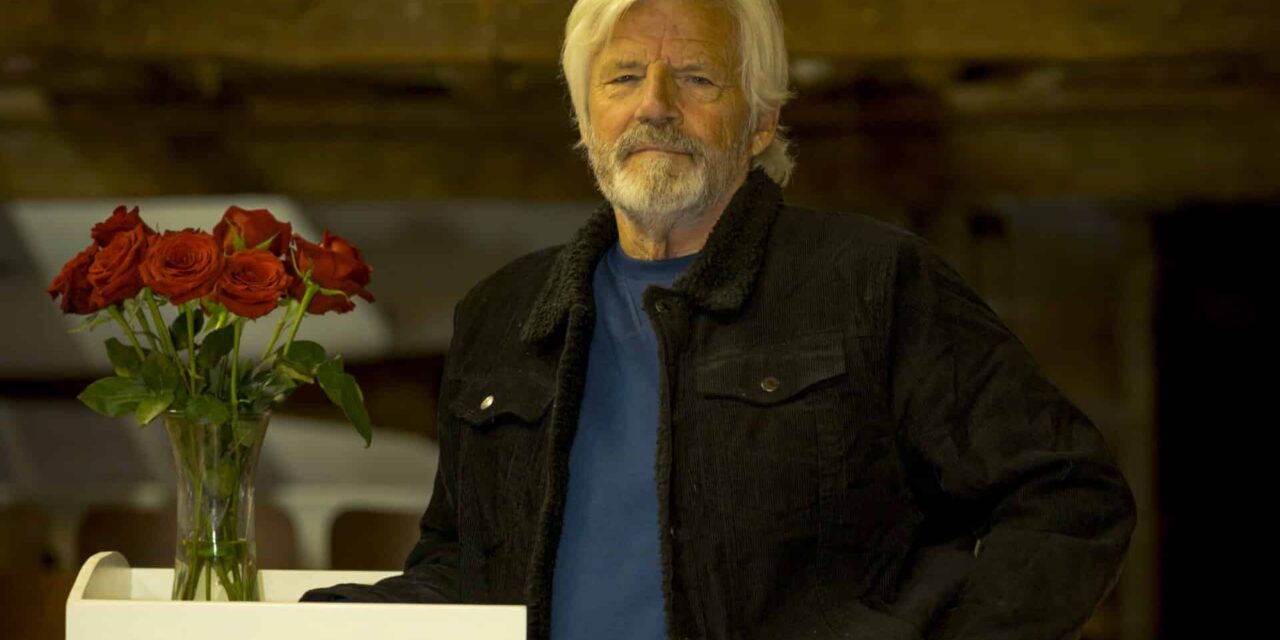
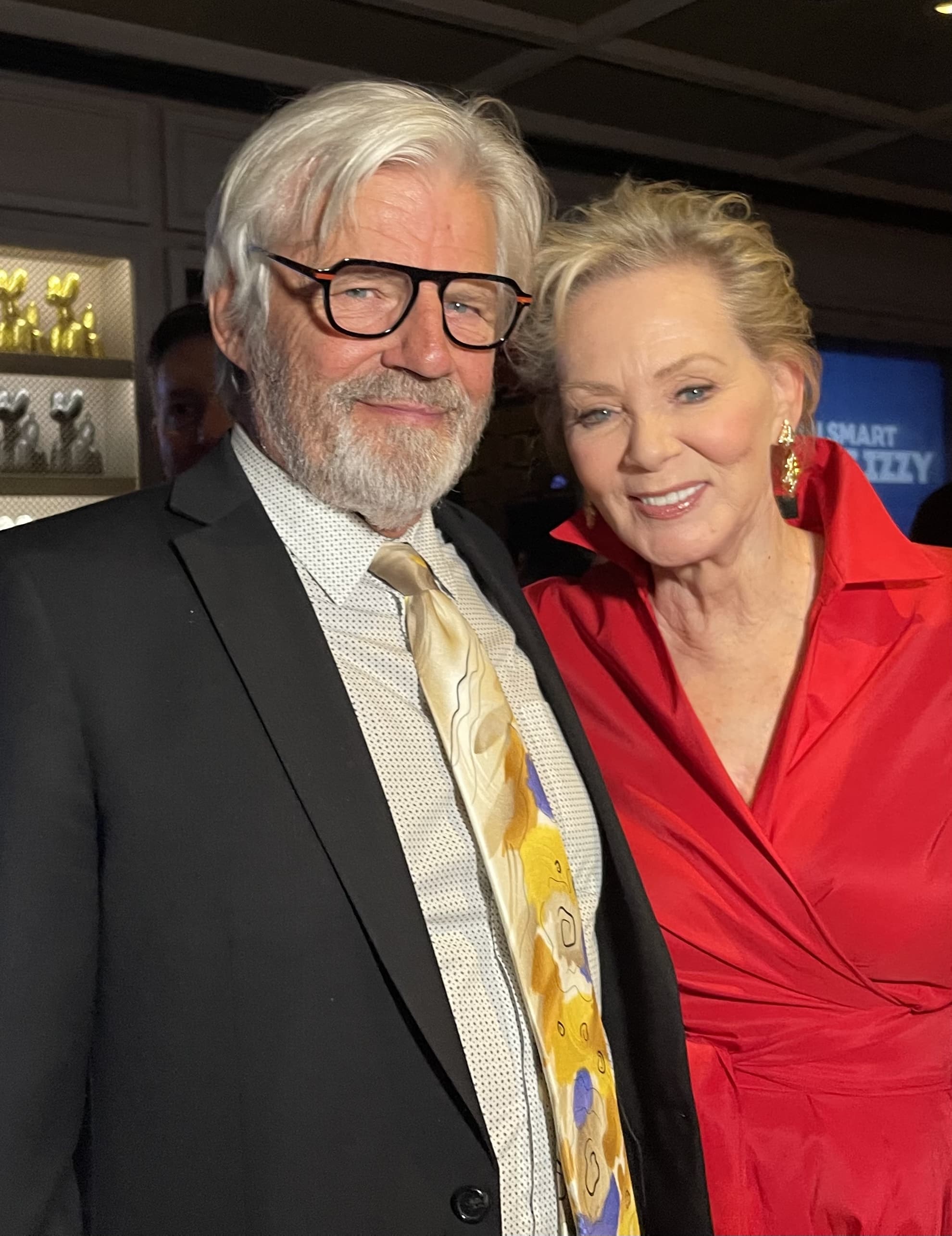
Ernest Thompson has spent his life moving between forms: novels, plays, films, songs, performance, and the kind of restless storytelling that refuses to sit still. Best known as the Oscar-winning writer of On Golden Pond, Thompson is not interested in treating that achievement as a final destination. To him, it was the beginning.
These days, he lives on a farm in New Hampshire, where manual labor, solitude, nature, and what he calls “a constant hurricane” of creativity fuel his work. His latest novel, Out Clause, arrives as a sprawling, philosophical page-turner about disappearance, reinvention, and the dangerous fantasy of starting over.
At the heart of the book is a fictional organization called Out Clause, which offers people the chance to leave their lives behind completely. New identity. New location. New future. The catch? They must agree to live a better life. If they fail, their body is returned to where they first disappeared.
“It’s ultimately an invitation for readers to contemplate what it even means to live a better life,” Thompson says.
Below, Thompson talks with Mundane about creative discipline, writing across forms, winning an Oscar, working with Verdict Music, and why living in nature keeps him sane.
What is going on with you right now? You have a lot happening.
Right now, I’m days away from my new novel coming out. It arrives on May 5th. It’s called Out Clause, and I’m really psyched about it. I’ve been working on it for about a dozen years in and around other projects.
I also have a one-man show I’ve been touring called Archie Parish’s Parting Words. I’m working on three other plays simultaneously, trying to put together a sequel to my movie On Golden Pond, and I have a short film we shot last year making the rounds at festivals.
How do you keep so many projects alive at once?
I like a level of insanity. I have a constant hurricane going on in my head of creativity, which I’ve experienced all my life and welcome.
I have great confidence in the unconscious. A lot of the great work gets done when people aren’t focused on it. While we’re having this conversation, somewhere in the back room of my brain I’m probably thinking about a new story, the book I’m proofing, the plays, the movie.
They feed one another. I’m a loner by nature, but I have a group in my head.
What is Out Clause about?
When you hear about somebody disappearing—falling off a cruise ship, getting lost in an avalanche, disappearing in the desert—500,000 people in America go missing every year, and about 1,300 are never seen again. So I started thinking: where are they?
I invented this company called Out Clause. If you don’t like your life, if you’re burned out, unhappy, in a bad marriage, or you’ve screwed up in business, if you can find your way to Out Clause, they’ll get you a new life.
You have to cut all ties with your current life. New name, new identity, new location. The caveat is you have to agree to live a better life. And if you don’t—if you mess it up—your body will be found where it went missing.
So it becomes a philosophical question: what does it mean to live better?
You write novels, plays, screenplays, songs. How do you switch between those forms?
A song has to be maybe three or four minutes. I like the discipline of that. How do I fit all those thoughts, images, rhymes, verses, choruses, and bridges into four minutes?
A play needs to be about 65 pages long. With an intermission, that’s a two-hour evening in the theater. The only information an audience gets is from what the characters say to each other, so it’s completely dialogue-centric.
A screenplay usually needs to be 90 to 110 pages. Again, I like being asked to fit into a certain shape.
A novel, on the other hand, only has one requirement: people keep turning the pages. For me, it’s like going on vacation. There’s no regimentation. I can get into the interior thoughts of characters, use description, poetic language, and take as much time as I need.
But it all comes down to storytelling.
Who taught you to write?
I was an inveterate reader as a child. We didn’t have all the distractions your generation has. In the summer, my mother didn’t allow us to have a radio, telephone, or television. So where does that leave a little boy? His imagination.
When I was seven, I found a little box at the dump and started cutting up index cards and writing stories. I wrote my first lyric when I was eleven because I loved that I could make things rhyme.
In college, I had an English professor during the revolution years who said, “You don’t want to know what we have to teach. What do you want to learn?” I decided to read every play ever written by Eugene O’Neill. Then Arthur Miller, Tennessee Williams, and Edward Albee. What an education I got without realizing it.
I never took a writing class. Talent can’t really be taught. Either people have it or they don’t.
What is it like to win an Oscar?
It’s not all bad.
Everybody in the film business dreams of winning an Oscar. That’s the pinnacle. Some people win lots of them, some people never win one, some people never get close.
I was 28 when I wrote On Golden Pond, 30 when we made the movie, and 32 when I won the Oscar. I didn’t think in a million years it was going to succeed as a play or a movie. So many miracles came together to make that happen.
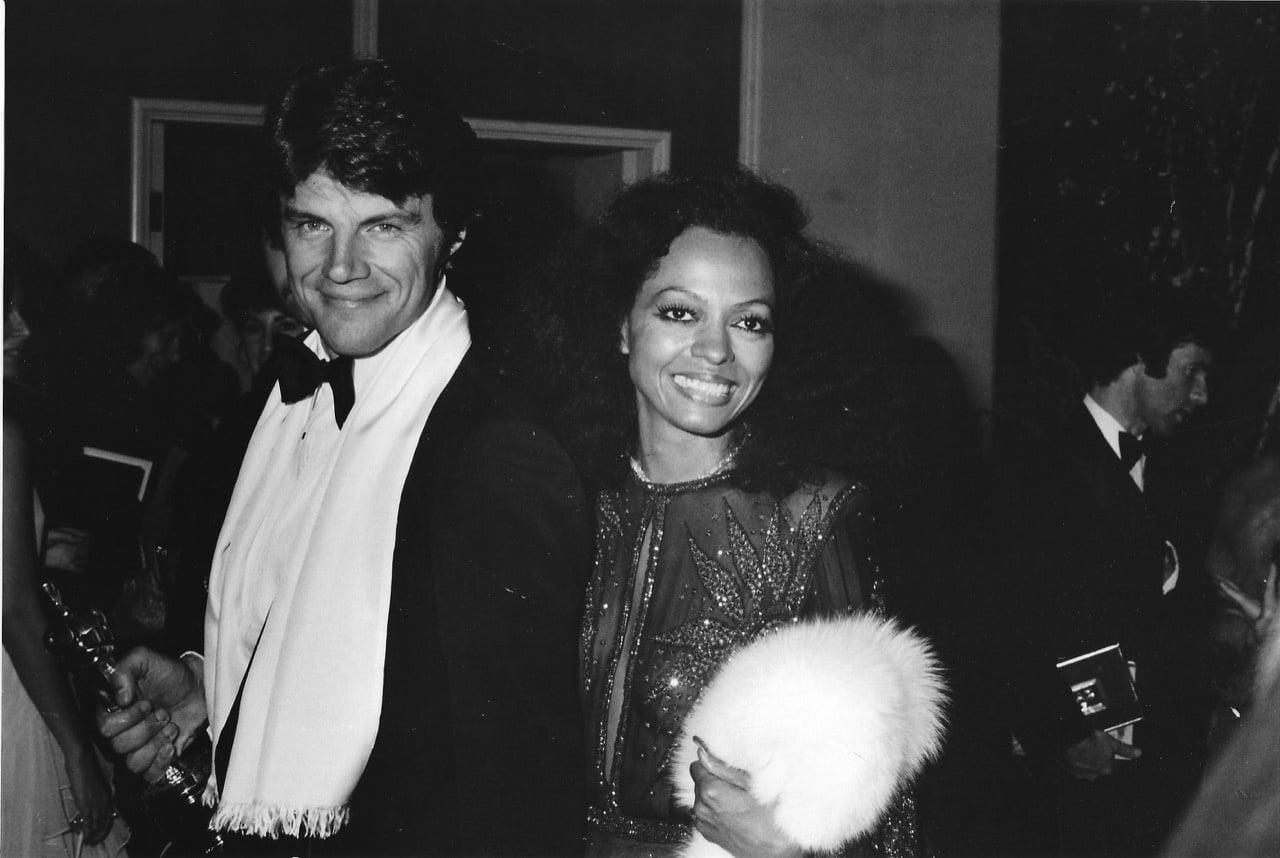
My date to the Oscars that night was Diana Ross. We got out of the limo and it was pandemonium because she was at the height of her stardom. She did me such a favor because she took all the pressure off me.
I didn’t take it as seriously then as I do now. I was just a kid gliding through life thinking, “Now what am I going to do?” But as I’ve gotten older, I have more reverence for it.
There are times when I don’t think I’m as brilliant as I obviously am, and I’ll go down to my library and see the Oscar on the mantle and think, “Yeah, maybe I’m okay here.”
Do you consider On Golden Pond your most important work?
No, not at all. I consider it the first thing I did.
Since then, I’ve been part of a dozen other movies, two of which I got fired from, six of which I directed. The odds of getting that kind of success again are slim, but I don’t put that pressure on myself. I love doing whatever is important to me.
Now we’re working on a sequel to On Golden Pond, which I’ve been thinking about for about 40 years. I’m also taking the play back to Broadway next season, and I’m playing the old man because, as you may have noticed, I’m old enough now.
How did you connect with Verdict Music?
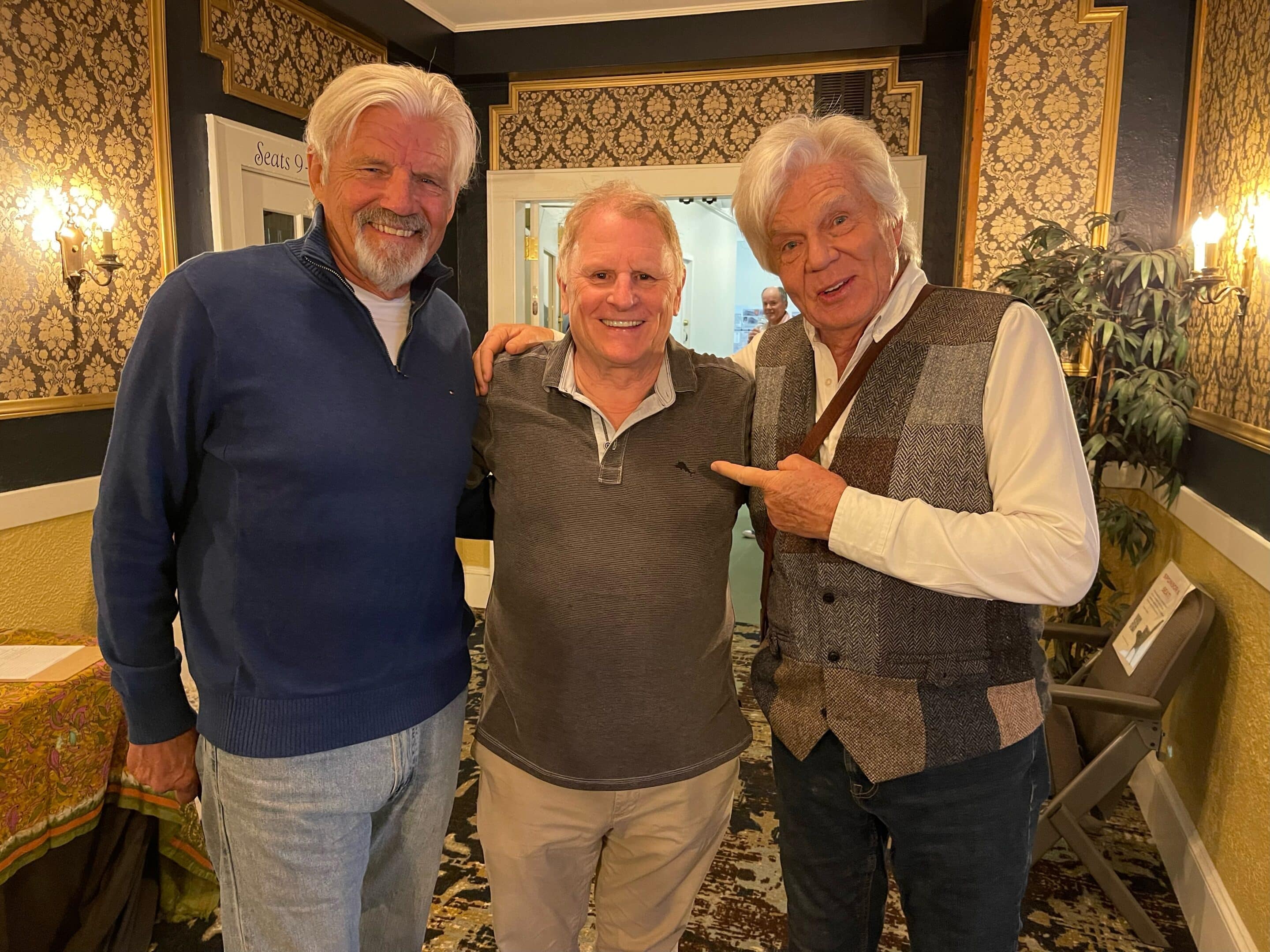
It’s all because of Bruce Marshall. Another buddy of mine, Justin Jaymes, heard Bruce on a local radio station talking about signing with Verdict. Justin got in touch with them, and then mentioned that he writes songs with me.
At first, they said, “We don’t need him. We don’t know who he is.” Then they found out I’d done some stuff.
I wasn’t sure what I was getting into with Verdict. I told Bruce, “This is either going to be the greatest gift you’ve ever given me, or it’s all going to be your fault.” But it’s turned out to be fantastic.
I love Steve and Viv. I love their enthusiasm. They’re a small company, but they have big ideas and big dreams.
You live on a farm in New Hampshire. How does that environment feed your creativity?
Bruce Marshall and I have similar lifestyles, but he grew into that. I moved back to it because this is how I lived as a child.
Not long after winning the Oscar and making a couple of big movies, I came back to New Hampshire. I didn’t fit in Hollywood. That’s not my personality or energy. There’s a lot of phoniness and wasted time, and I’m not good at wasting time.
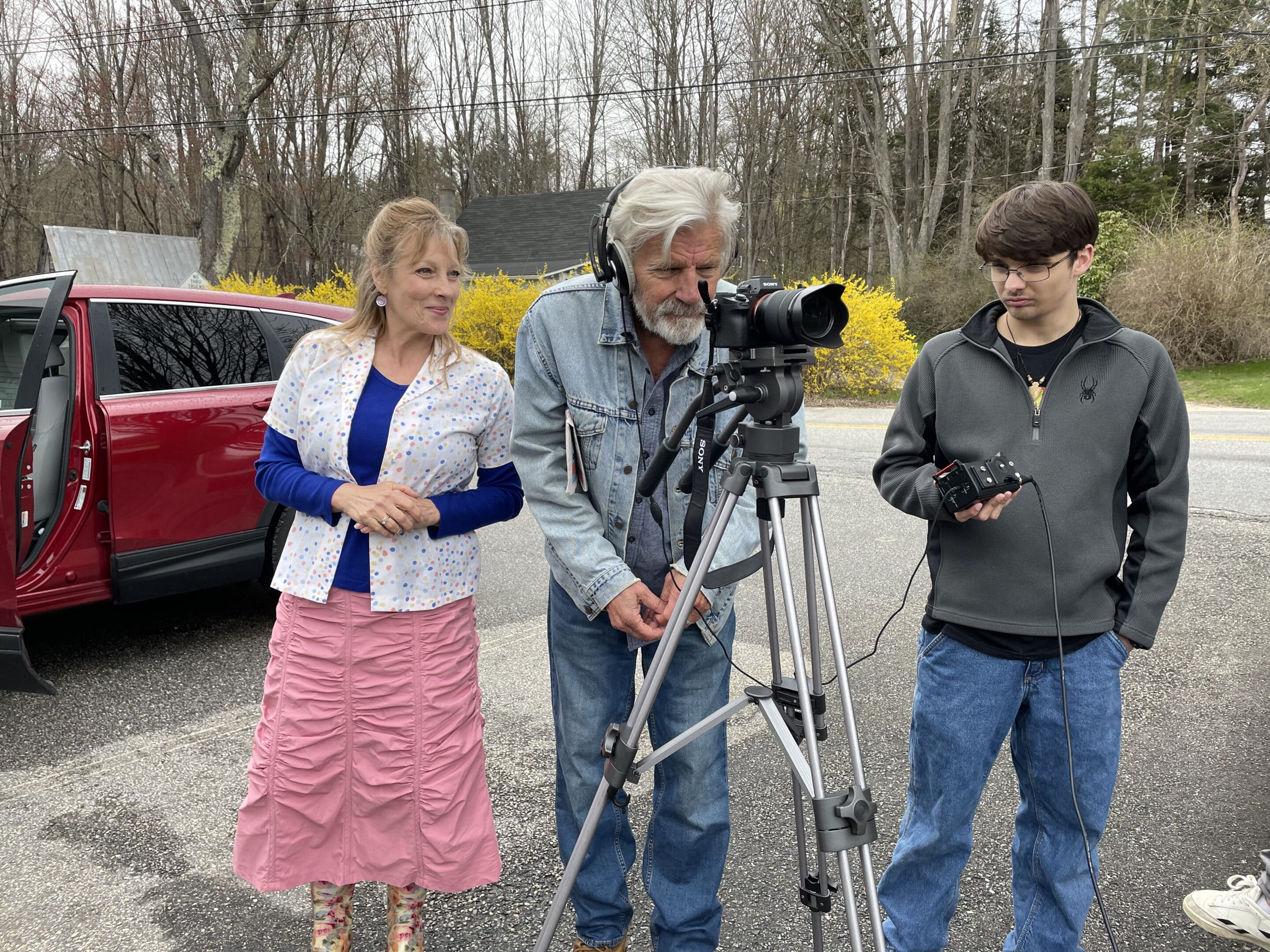
Now, I live on 40 acres. Nobody can see us. I haul wood. I shovel snow. I rake leaves. It’s daily existence, and I embrace it because it’s important for the other part of my brain.
A lot of my creativity comes while I’m doing that. If someone droned in on me, they’d think I was nuts because I’m talking to myself all the time, driving my tractor, thinking of a song, thinking of a line.
But that’s my life. It feeds everything.
For sync inquiries, please contact info@verdictmusic.com