From June 3–5, the Centre de Cultura Contemporània de Barcelona becomes the nerve center of the global music industry as Primavera Pro returns for its 17th edition—bigger, sharper, and more future-facing than ever.
With over 100 international speakers and a program that stretches from songwriting camps to AI-driven licensing debates, Primavera Pro 2026 isn’t just a conference. It’s a pressure test for where music is headed next.
A Global Lineup Shaping the Conversation
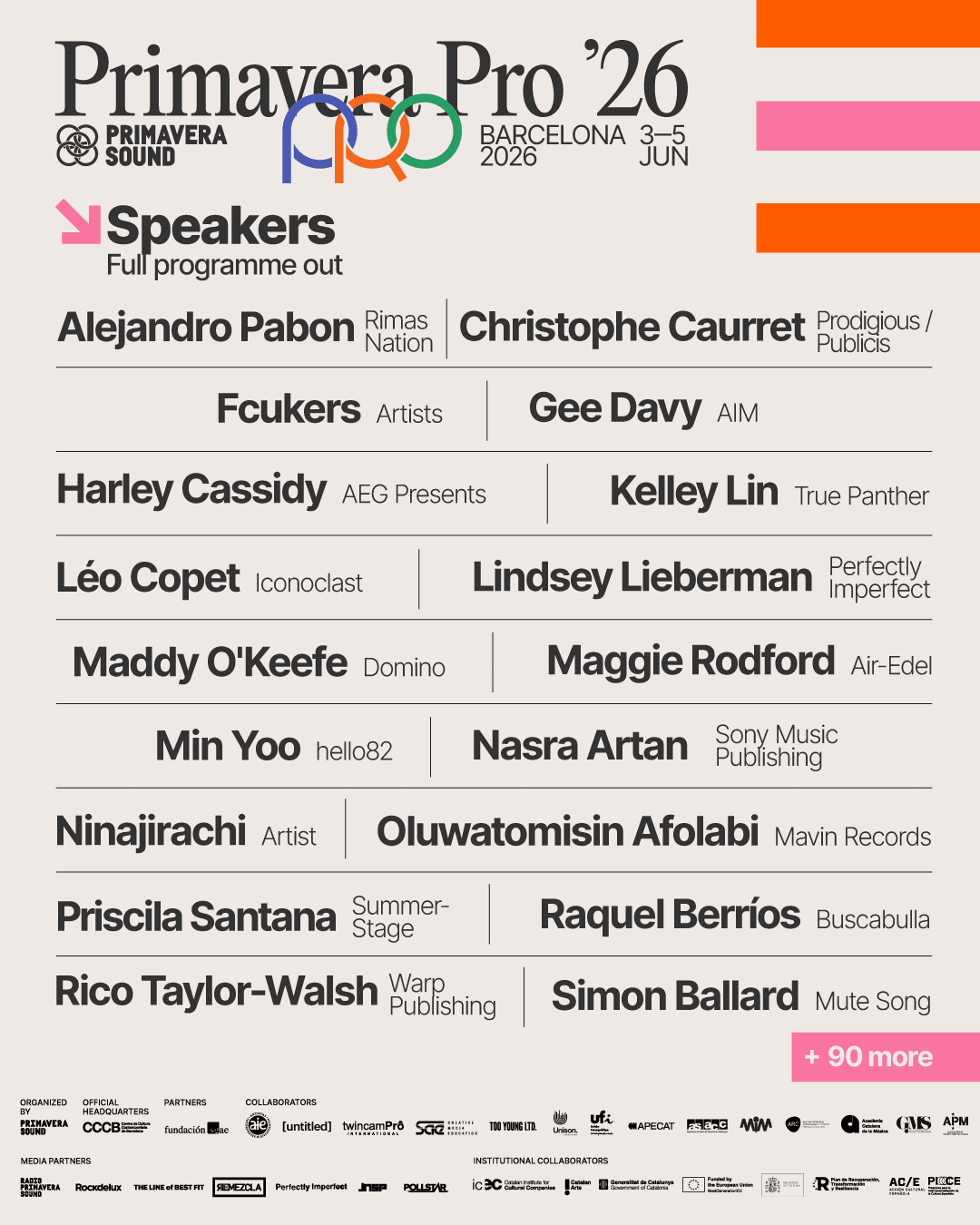
This year’s speaker roster reads like a cross-section of the industry’s most forward-thinking voices. Among them:
- Ninajirachi
- Fcukers
- Raquel Berrios
- Nasra Artan
- Alejandro Pabon
- Oluwatomisin Afolabi
- Min Yoo
- Lindsey Lieberman
- Kelley Lin
It’s a lineup that deliberately blurs the lines between artist, executive, and cultural operator—mirroring an industry where those roles are increasingly interchangeable.
New Paradigms for a Shifting Industry
Primavera Pro 2026 leans hard into transformation. Across three days, the program tackles:
- The new music economy and cultural identity
- Songwriting as global exchange
- The evolving artist–fan relationship
- Experimental live performance formats
- The growing tension between AI, rights, and ownership
A standout moment will unpack the live production machine behind Bad Bunny’s record-breaking Puerto Rico residency, with insights from Rimas Nation’s Alejandro Pabon—offering a blueprint for large-scale cultural impact in a post-streaming era.
Meanwhile, Ninajirachi joins Jeremy D. Larson for a Pitchfork Talk dissecting the evolution of electronic music and what it means to build a sound in a hyper-digital landscape.
Identity, Power, and the Global Sound
One of the most compelling threads this year is the focus on cultural identity as currency.
From Latin alt-pop conversations featuring Raquel Berrios to discussions on African music’s global rise led by Mavin Records’ Oluwatomisin Afolabi (home to stars like Rema and Ayra Starr), Primavera Pro is asking a bigger question:
Who owns culture when it scales globally—and who gets left behind?
Songwriting, Sync, and the AI Frontier
If composition is the first step in the value chain, Primavera Pro is zooming in on how that step is evolving.
Sessions led by Sony Music Publishing and the SGAE Foundation will explore songwriting as both creative expression and economic battleground—especially as writers face increasing pressure in an artist-first economy.
At the same time, the return of the Digital Licensing & Sync Sessions digs into the high-stakes world of synchronization, featuring industry heavyweight Maggie Rodford (credits include Shakespeare in Love, Gosford Park, and Wicked).
Expect sharp conversations around:
- AI-generated music saturation
- Streaming fraud
- Rights fragmentation
- The consolidation moves of major players like Universal Music Group
Beyond Panels: Where Deals Actually Happen
Primavera Pro doesn’t stop at theory.
Alongside the talks:
- 22 live showcases spotlight emerging artists
- Listening Sessions connect creators with global music supervisors
- Mentoring Sessions offer direct access to execs from labels like Domino Recording Company and Beggars Group
- #FollowTheSong camp brings artists and producers together in real-time collaboration
It’s less about sitting in rooms—and more about what happens after you leave them.
Why It Matters
Since 2010, Primavera Pro has positioned itself as more than a satellite to Primavera Sound Barcelona. It’s become one of the few spaces where the industry doesn’t just promote itself—it interrogates itself.
In 2025 alone, the event hosted 3,200 professionals from 68 countries. This year, with AI accelerating change and global sounds reshaping the mainstream, the stakes feel even higher.
Because if festivals reflect culture, Primavera Pro is where that culture gets decoded.