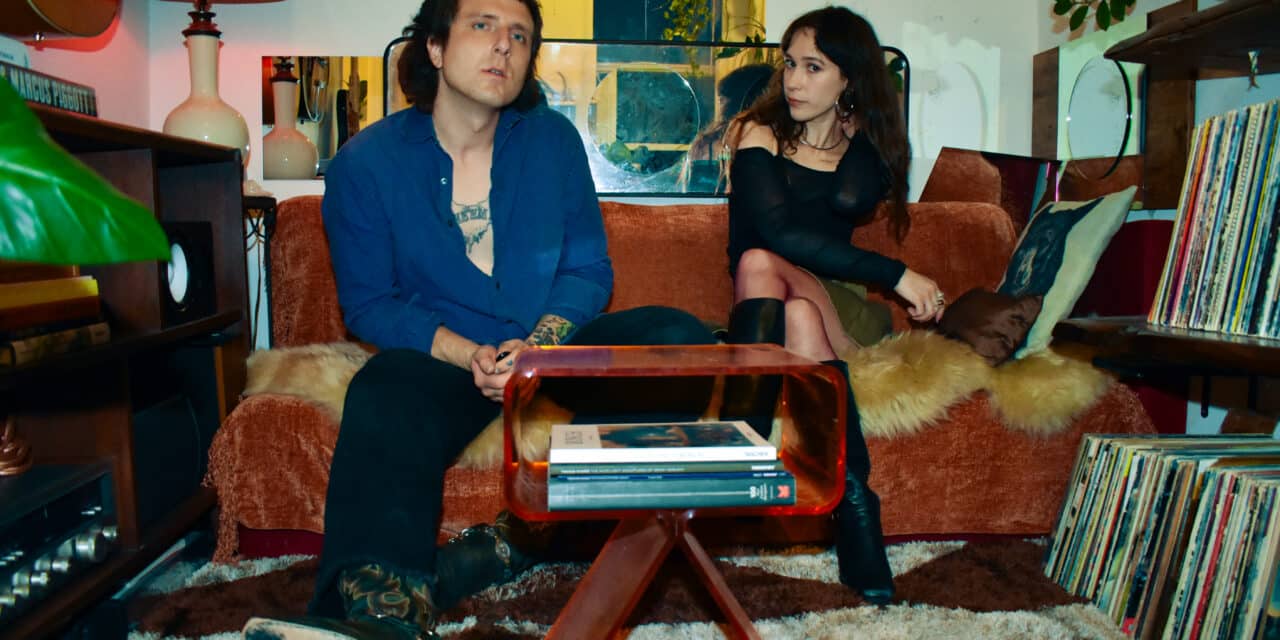
There’s something timeless about Moon Darling. The Los Angeles-based band, led by vocalist and guitarist Michael Julian alongside bassist Eliza Karpel, channels the spirit of classic ’70s psychedelia without ever feeling trapped by nostalgia. Their music feels sun-soaked yet melancholic, dreamy yet grounded, carrying the kind of emotional weight that lingers long after the final note fades.
Following a successful West Coast run and a growing reputation for immersive live performances, Moon Darling is preparing to release their highly anticipated full-length album Hearts To Blame in Fall 2026, followed by an extensive national tour stretching from California to Seattle, Texas, and beyond. While the band’s sound has been described as “saucy and stylish” and “bewitching,” the heart of Moon Darling lies in something deeper: a relentless pursuit of authenticity, emotional honesty, and artistic freedom.
For Michael Julian, style isn’t something manufactured.
“Style is automatic, and part of who we are and how we express ourselves,” he explains. “Moon Darling is alive, with its own entity and style. It’s not just about us as individuals, but what it’s becoming as a whole.”
Eliza echoes that sentiment, viewing style as a direct reflection of inner experience rather than outward aesthetics.
“I’m not chasing a certain aesthetic,” she says. “I’m desperately trying to recreate and express my inner world into a physical manifestation. That authentic, genuine style of self is a big part of Moon Darling.”
That commitment to authenticity extends into the band’s relationship with psychedelia. While Moon Darling clearly draws inspiration from the golden era of psych rock, their music avoids becoming a museum piece. Instead, they embrace spontaneity and unpredictability.
“I’m not necessarily trying to curate anything in particular,” Michael says. “I’d rather chase the chaos and intuition as it pours out of the soul.”
Eliza views the process similarly.
“I’ve learned to lean into the chaos that comes from creating without expectation,” she explains. “We embrace the chaos of self-expression while still seeking the authenticity and DIY spirit reflected in that era.”
Interestingly, despite the common narrative of Moon Darling evolving between Seattle’s introspective atmosphere and Los Angeles’ glamorous creative landscape, Michael doesn’t see the two cities as opposites.
“Both Seattle and Los Angeles are gloomy in their own way,” he laughs. “Seattle is just a little more obvious on paper.”
That nuanced perspective speaks to the emotional complexity running throughout Hearts To Blame. The album title itself suggests accountability, heartbreak, and self-reflection in equal measure.
“It’s about understanding my role,” Michael says. “But it’s really about both. It’s about love gone wrong in many different forms and the role I play in that—or choose not to.”
For Eliza, the themes hit close to home.
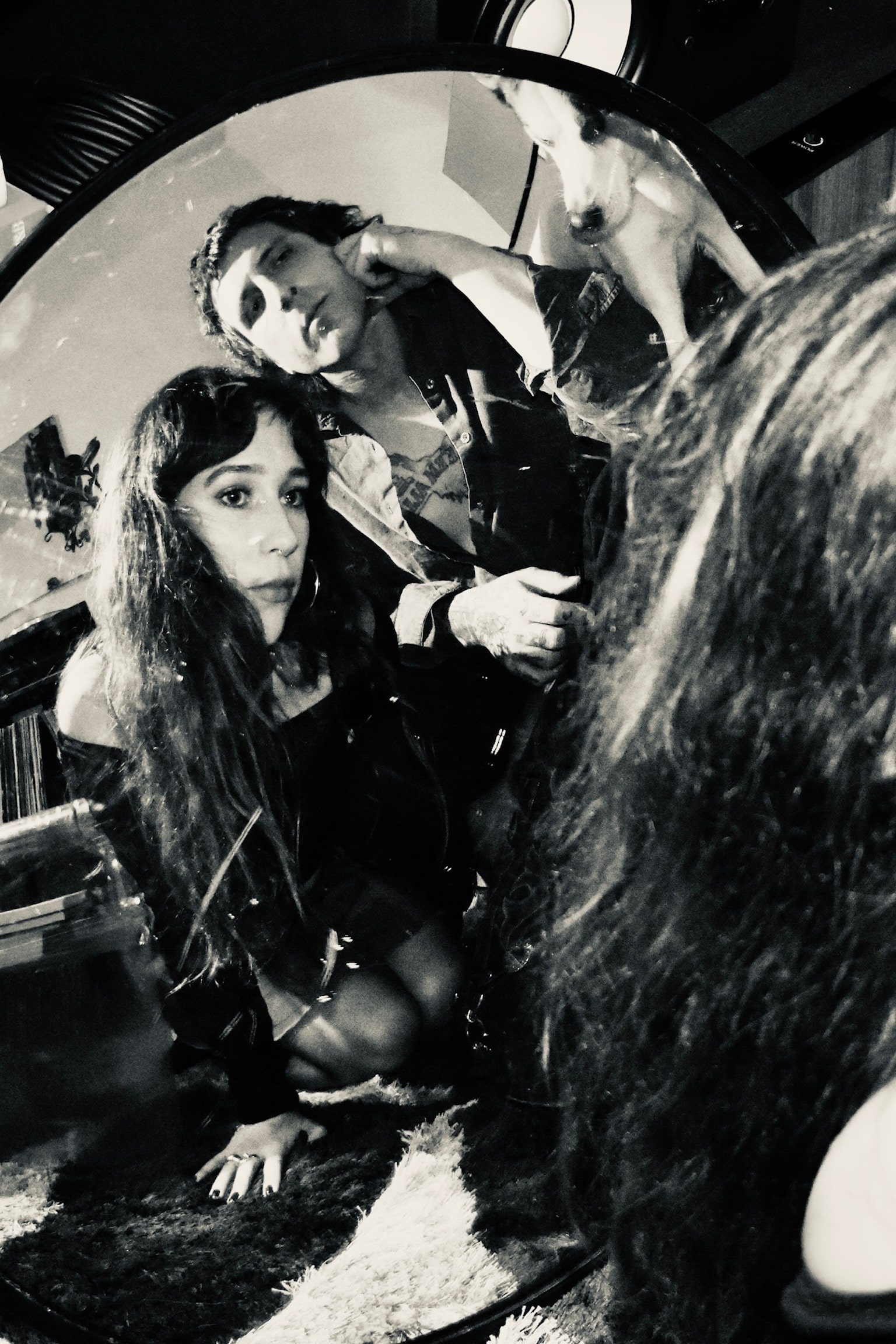
“I felt an emotional pull toward Michael’s writing,” she explains. “To me, Hearts To Blame is equally about love gone wrong as it is about taking a look at myself in the mirror.”
The dynamic between Michael and Eliza has become central to Moon Darling’s identity. Their creative partnership appears less like a calculated collaboration and more like a natural convergence of artistic energies.
“The two of us joining together felt instinctive,” Michael says. “Our creative expression meshed naturally.”
Eliza agrees.
“Our creative relationship had a spirit of its own from the moment we met,” she says. “It’s really rewarding to see how this dynamic has propelled us forward as a creative team.”
That chemistry becomes particularly powerful on stage, where Moon Darling’s live shows have developed a reputation for transporting audiences into an entirely different emotional space.
“I want the audience to be entranced,” Michael says. “I want people to let themselves feel what they feel. Let the sounds take them wherever they need to go.”
For Eliza, the experience is about shared emotional connection.
“I want people to find their own relation to our music,” she says. “It’s truly about the exchange of energy between our music and the audience.”
As the band prepares to move beyond the West Coast and embark on a full national tour, neither member sees growth as a threat to intimacy.
“Scale is exciting,” Michael says. “The thought of reaching bigger audiences just means the intimacy of our music will expand alongside it.”
Eliza views it similarly.
“The intimacy of our sound doesn’t lie in the scale of our performances, but in how it’s expressed and received.”
Perhaps the most revealing aspect of Moon Darling’s philosophy emerges when discussing what remains unresolved about the project itself.
“The entire band exists as unresolved,” Michael says. “That’s why a lot of the songs don’t resolve in their endings. There is no resolve. It is forever living as it is. It changes, climbs, and falls. It is constantly evolving.”
Eliza sees that uncertainty not as a flaw, but as the band’s lifeblood.
“Our lives are imperfect, never to be fully resolved,” she says. “But that depth plays into our music. It will always be fluid and ever changing, just like us.”
With Hearts To Blame, Moon Darling isn’t offering easy answers. Instead, they’re embracing the beautiful uncertainty of growth, heartbreak, desire, and self-discovery. In an era obsessed with certainty and conclusions, there’s something refreshing about a band willing to remain unfinished.
And that’s exactly what makes Moon Darling so compelling.