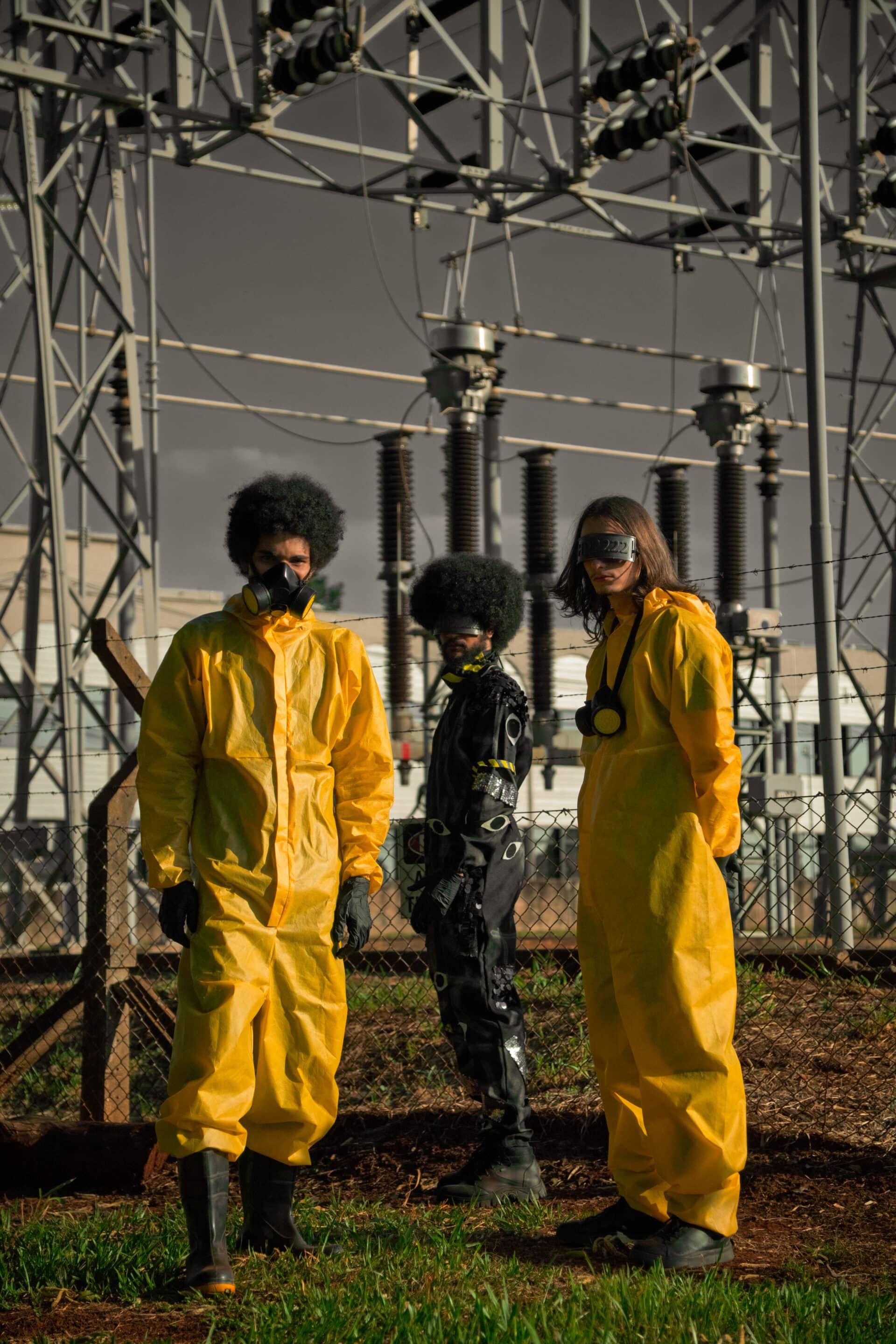
Brazilian singer-songwriter Leandro Serizo has never been interested in making comfortable music. His upcoming album, SOL QUIMÉRICO, arrives as an ambitious conceptual work that blends dystopian storytelling, Afro-Brazilian rhythms, progressive rock, political urgency, and philosophical reflection into a world set in the year 2222—but one that speaks directly to our present.
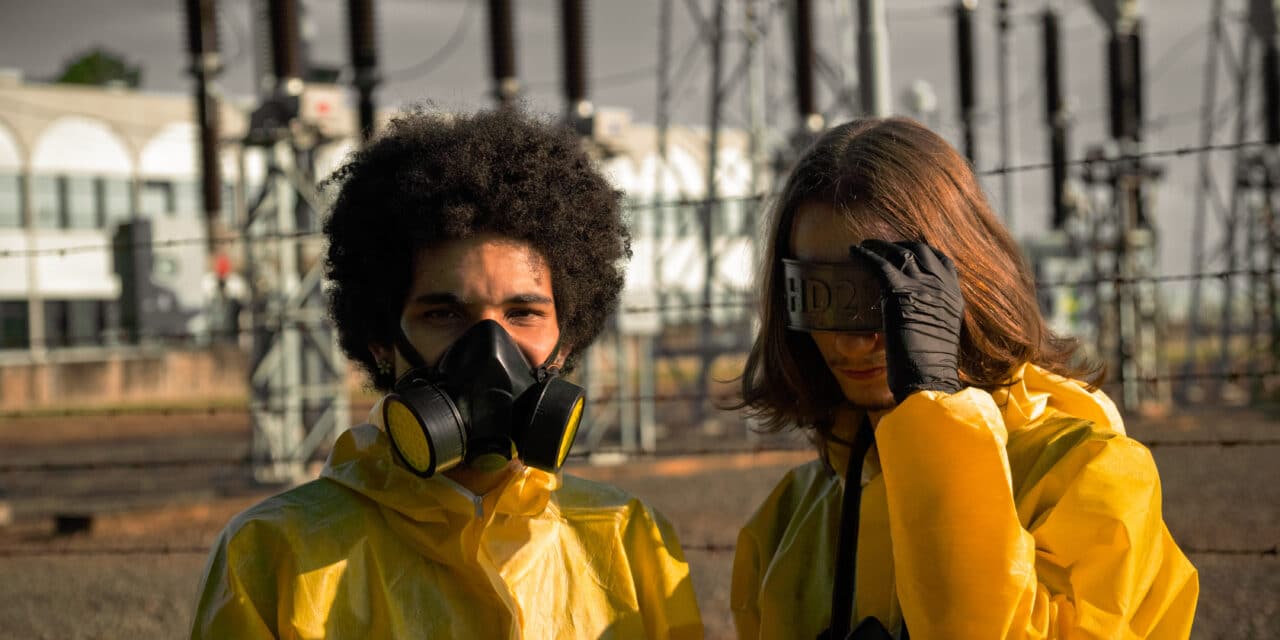
Its latest single, “G-HD,” featuring Kim & Dramma, examines the gradual “robotization” of humanity, questioning how technology, environmental collapse, and digital dependency reshape our relationships with ourselves and each other. Drawing inspiration from the revolutionary spirit of Chico Science & Nação Zumbi, the incendiary force of Rage Against the Machine, and the symbolic songwriting tradition of Chico Buarque, Serizo constructs a cinematic universe where dystopia becomes a mirror for contemporary life.
Ahead of the release of SOL QUIMÉRICO, we spoke with Serizo about environmental anxiety, artistic resistance, metaphor as revolution, and why hope remains the most radical act of all.
“G-HD” explores the “robotization” of human beings and the erosion of human sensitivity. What first inspired you to examine how technology and modern systems are reshaping our relationships?
It all began on a day when the sky over Campinas suddenly turned completely dark.
During the peak of the Amazon wildfires, I looked up and genuinely wondered if I’d ever see the sun again. That smoke wasn’t just environmental—it became the physical manifestation of everything that felt suffocating: the collapse of the planet, people glued to their screens while the world burned, and this strange collective paralysis in the face of everything that’s happening.
My generation grew up without social media, and now we live almost entirely inside it. What concerns me isn’t technology itself, but the emotional anesthesia it can produce.
That’s exactly what happens in Megápolis, where the character Ciborgue Tyrannus controls society through a robotic song that erases people’s ability to dream.
I’m not outside that process either. I’m inside it.
Writing “G-HD” became a reminder to myself that this robotization isn’t some distant science-fiction future. It happens every time I instinctively reach for my phone instead of simply sitting in silence.
The song balances images of collapse and system failure with the possibility of transformation. Why was it important that hope remained part of such a dystopian narrative?
Because without hope, art becomes decoration.
The kind of hope I’m interested in isn’t naïve optimism.
It’s fuel.
It’s the force that allows you to stare directly at collapse while still believing that people can wake up—that another economic and social logic is still possible.
That idea exists in the song’s structure itself.
It begins fragmented, mechanical, almost hacked.
Then, gradually, something starts returning.
Not a perfect ending.
Not redemption.
Just a spark.
And sometimes a spark is all you need to keep moving forward.
Musically, “G-HD” draws from Afro-Brazilian traditions, politically charged rock, jazz, and experimental music. How did those influences become something uniquely your own?
Chico Science and Manguebeat transformed northeastern Brazilian traditions like maracatu, coco, and ciranda into something urban, explosive, and politically urgent.
They completely redefined what Brazilian rock could become.
Rage Against the Machine showed me that music can function as organized resistance—that anger can have structure and purpose.
Those influences naturally live inside “G-HD,” alongside producers Granadeiro Guimarães and Quico Dramma.
But we also drew inspiration from artists like Armenian pianist Tigran Hamasyan and Brazilian musician Buhr, whose fearless approach to experimentation constantly inspires me.
At the center of all of it is rock—not necessarily as a genre, but as an attitude.
A willingness to be political, emotionally intense, and creatively free.
Kim & Dramma play an important role on the single. What did they contribute creatively?
Kim & Dramma don’t really fit into categories.
They’re not indie.
They’re not alternative rock.
They’re simply themselves.
That made collaborating feel completely natural.
Our strongest connection comes through Quico Dramma, who serves as producer and drummer across both projects.
He’s the person capable of taking our strangest rhythmic ideas, polyrhythms, impossible riffs, and somehow making them work.
For “G-HD,” I imagined their voices representing the Sol Quimérico itself—the central entity within the album’s mythology.
When they enter the song, they sound both divine and unsettling.
They’re simultaneously announcing redemption and destruction.
Only they could deliver that balance.
Your upcoming album SOL QUIMÉRICO clearly belongs to a larger conceptual universe. How does “G-HD” introduce listeners to that world?
Releasing “G-HD” first was a very deliberate decision.
I wanted listeners to immediately understand where the emotional core of this record comes from: this restlessness, this sense of paralysis while witnessing everything happening around us.
During a course at the State University of Campinas, we explored the artist’s role in the face of environmental collapse.
One of the books that profoundly influenced me was Ideas to Postpone the End of the World by Indigenous Brazilian thinker Ailton Krenak.
That book became one of the philosophical foundations of SOL QUIMÉRICO.
When people hear “G-HD,” they’re hearing the album’s DNA.
The fragmented mind.
The hacked human.
The spark that refuses to disappear.
Everything that follows grows from that beginning.
Throughout the record there’s a constant tension between humanity and machinery, instinct and control. Do you see these conflicts as uniquely Brazilian, or universal?
They’re universal.
But Brazil experiences them in very particular ways.
We’re home to the Amazon, one of the planet’s greatest natural treasures, while simultaneously witnessing its destruction for the benefit of very few people.
That’s an incredibly tangible contradiction.
At the same time, I work as a music educator with children and teenagers.
Every day I watch how excessive screen use affects attention, presence, and even identity formation.
When you’re never alone with your own thoughts, it becomes increasingly difficult to discover who you are outside the screen.
Brazil today exists at the intersection of immense biodiversity and rapid technological transformation.
That contradiction sits at the heart of SOL QUIMÉRICO.
Your previous singles have begun finding audiences outside Brazil. What has it meant to see deeply Brazilian music resonate internationally?
As the son of a domestic worker who grew up on the outskirts of Campinas, it’s difficult to even describe what that means.
I know access to these spaces remains unequal.
Often they feel reserved for people born into entirely different circumstances.
Every opportunity carries weight beyond the music itself.
Ironically, I think what allows the work to travel internationally is precisely how rooted it is.
My musical education began with Brazilian forró.
Then Afro-Brazilian percussion.
Then Cuban rumba.
Those traditions are my foundation.
Combining them with the universality of rock was always intentional.
Seeing that resonate abroad reminds me that artistic freedom shouldn’t belong only to certain people or places.
Your songwriting often relies on symbolism rather than direct commentary. Where does that approach begin?
I always begin with the title.
Every song on SOL QUIMÉRICO had its title before I wrote a single lyric or melody.
The title becomes a seed.
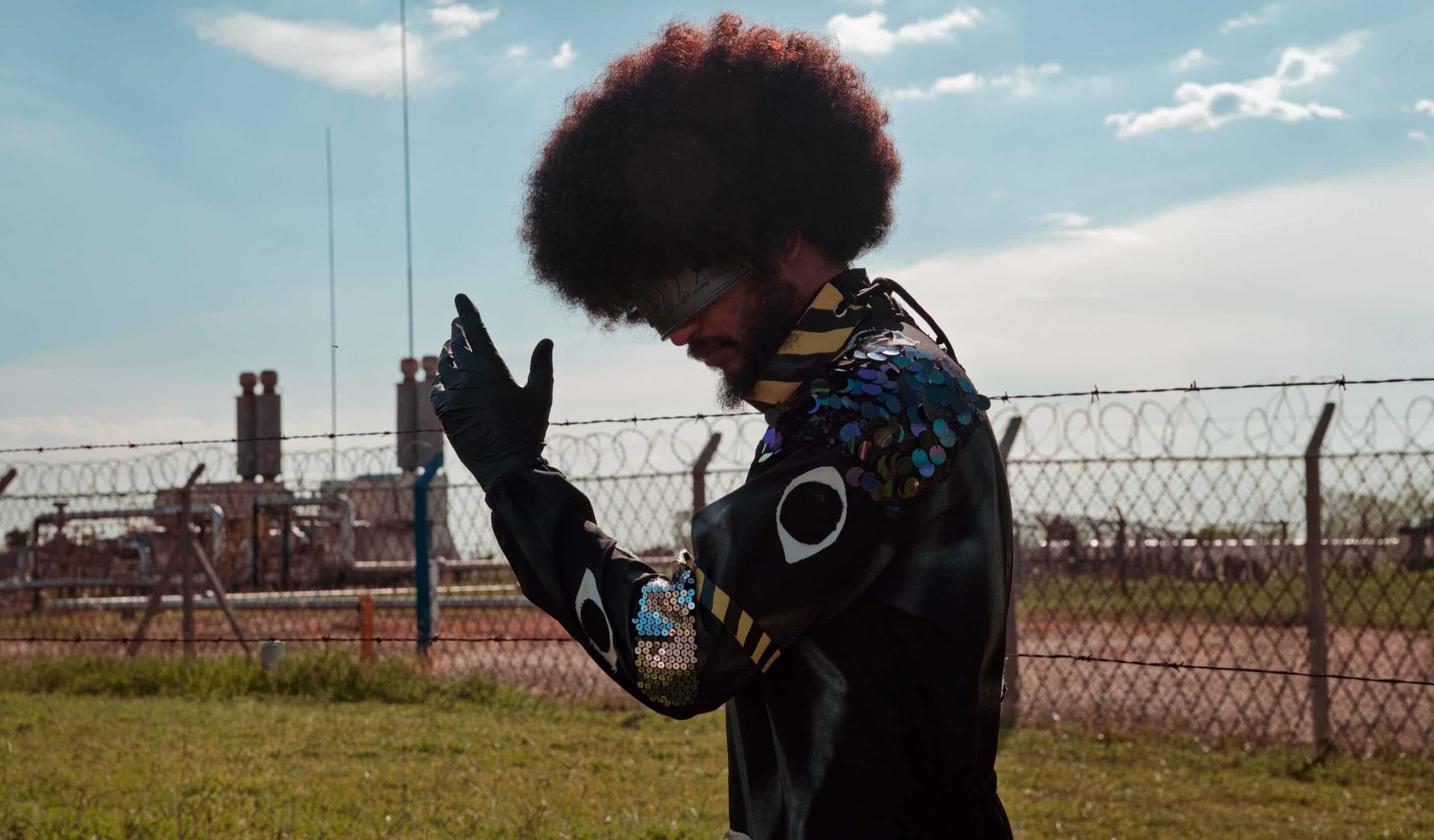
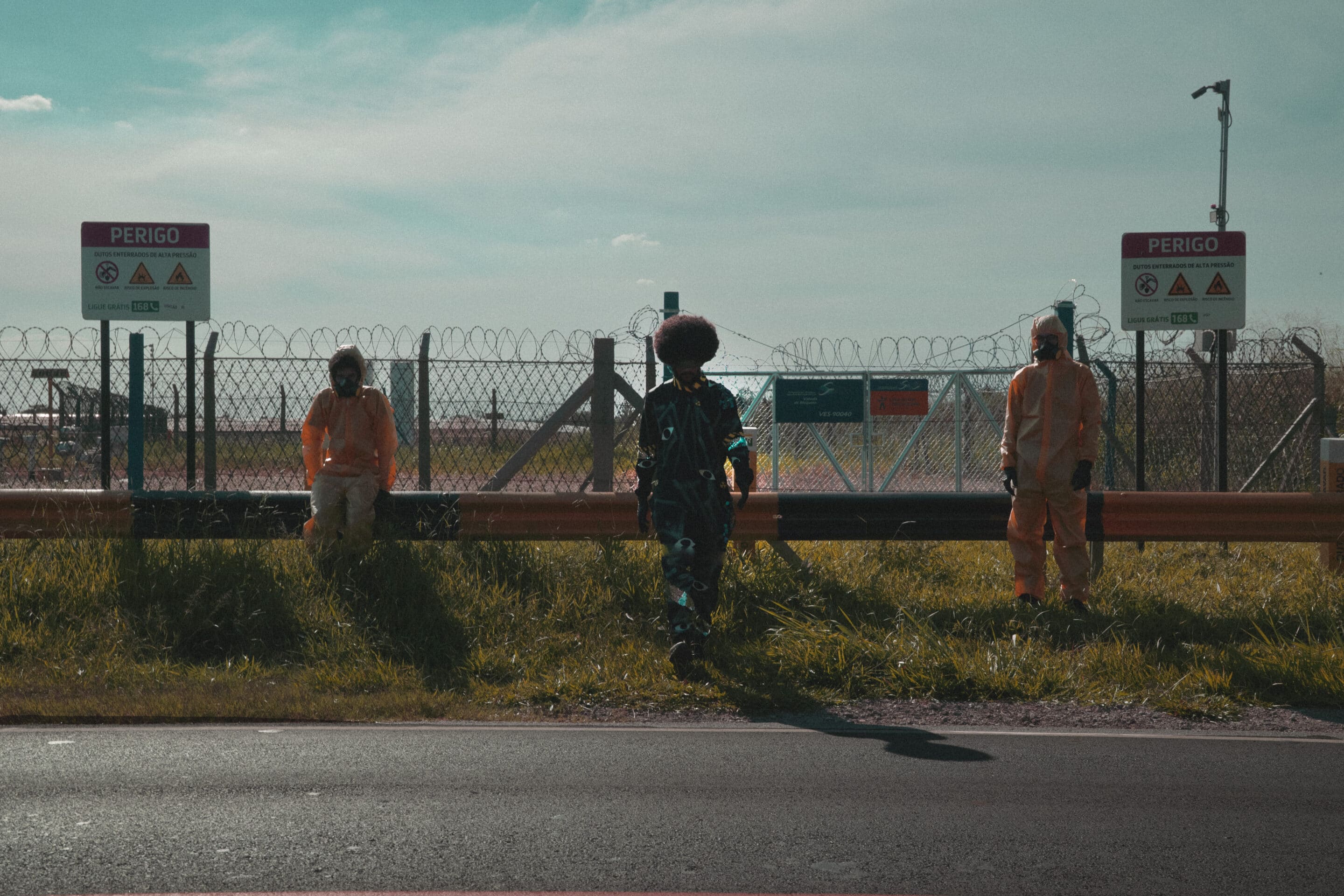
“G-HD” has fascinated me since adolescence because visually it could be almost anything—a chemical element, a system code, part of a license plate.
That ambiguity already contains the character of the song.
My greatest lyrical influence is Chico Buarque.
Studying his work—and the protest music created during Brazil’s dictatorship—completely transformed how I think about writing.
He taught me that metaphor isn’t decoration.
It’s resistance.
Many contemporary artists respond to social issues very directly. Why do you prefer allegory and symbolism?
Because symbolism existed long before language itself.
Direct language tells people what something is.
Symbols create space.
When you leave that space open, listeners enter it with their own memories, fears, and experiences.
The meaning stops belonging to the artist.
It belongs to whoever receives it.
That’s much more interesting to me.
During Brazil’s dictatorship, direct language was often impossible.
Metaphor became the only way truth could survive.
That lesson has stayed with me.
Reason convinces people.
Poetry transforms them.
SOL QUIMÉRICO ultimately grows from a spark into something much larger. What do you hope listeners discover about themselves after experiencing the entire album?
Above all, I hope people—especially artists—leave this record wanting to go further.
Beyond labels.
Beyond genres.
Beyond the fear of experimenting.
At its core, SOL QUIMÉRICO is about creative freedom.
I hope listeners realize they have that same freedom too.
To mix worlds.
To invent new languages.
To create without asking permission.
This album demanded years of courage and complete surrender.
If people finish listening with the confidence to break their own creative boundaries, then everything was worth it.
Because the most meaningful artistic memories are always born in those moments when we dare to leave familiar territory behind.