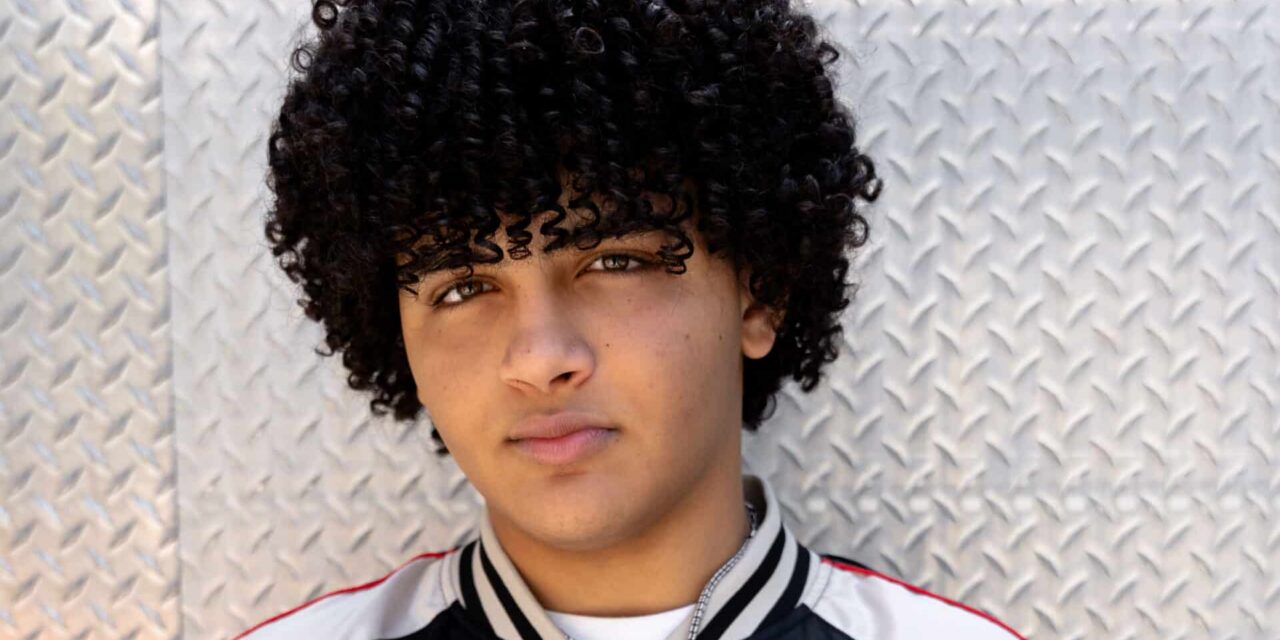
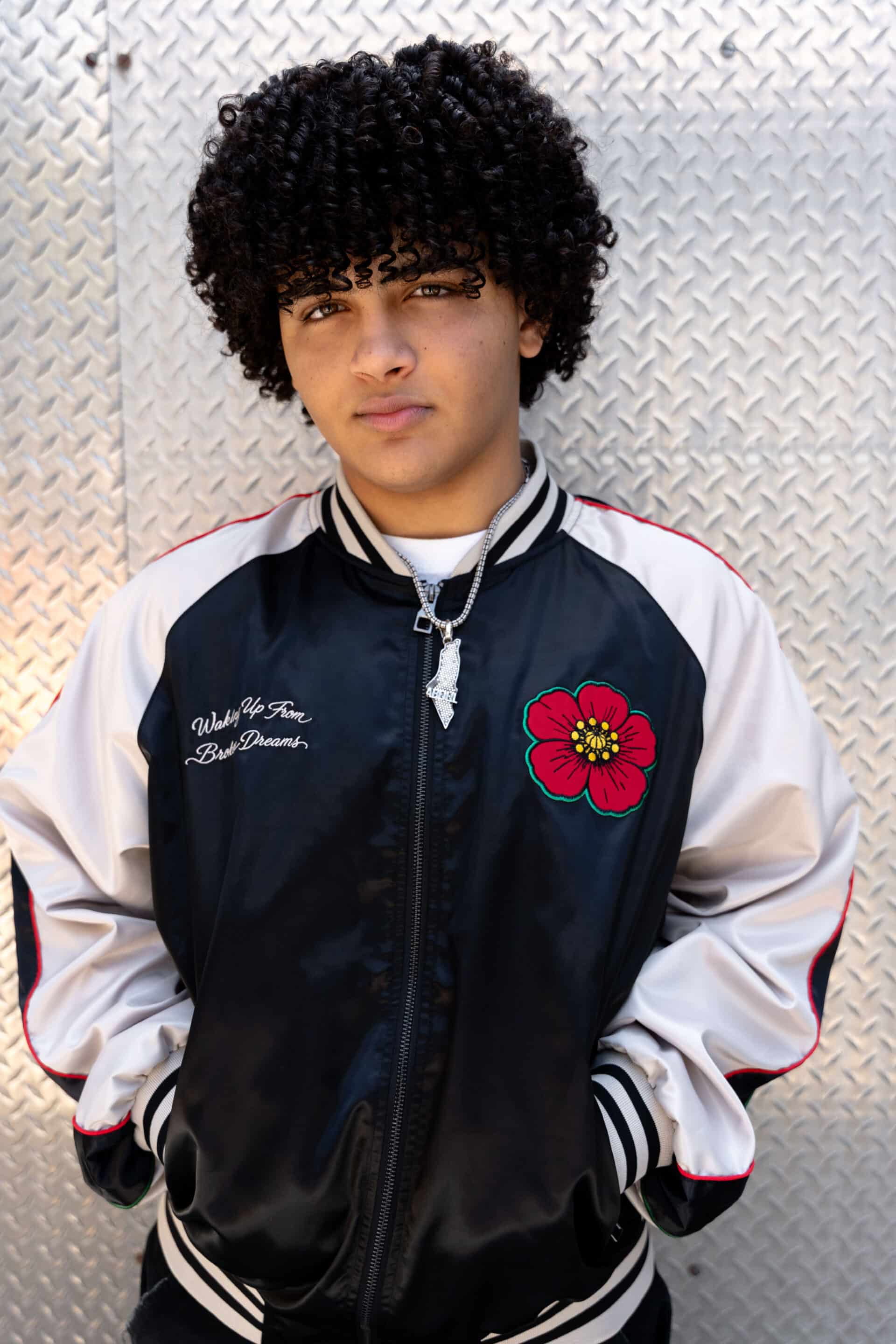
For MC Abdul, hip-hop was never simply a sound. It was an education, a refuge, and eventually a way to transform experiences that might otherwise have remained impossible to articulate.
Growing up in Gaza, the 17-year-old Palestinian rapper learned English by listening to rap records and watching documentaries about the artists who shaped the culture. In their music, he found both a language and a lineage: generations of artists using rhythm, storytelling, and uncompromising honesty to speak about oppression, survival, and the realities surrounding them.
That connection gave Abdul a way to process his own world. Long before reaching international stages, he was writing from within circumstances defined by conflict, uncertainty, and displacement. His music carried the immediacy of lived experience, but it also revealed a young artist unwilling to be reduced to trauma alone.
Now based in the Bay Area after a complex journey out of Gaza and an eventual reunion with his family, MC Abdul is preparing to release his debut album, Day By Day, Shway Shway. The nine-track project marks his arrival on a global scale while preserving the perspective that first shaped him.
Its title reflects a philosophy rooted in patience. “Shway shway” is an expression used back home meaning to move slowly, take things one step at a time, and resist the pressure to rush. In Abdul’s hands, it becomes a message for children whose circumstances have forced them to grow up too quickly.
The album follows an already extraordinary rise. Abdul made his Rolling Loud debut in 2024 as the youngest performer to appear on the festival’s stage, delivered a performance for the Recording Academy’s Global Spin series, and appeared alongside Bella Hadid in Mustafa’s “Gaza Is Calling” video. He has also performed and collaborated with artists including Macklemore, Elyanna, Saint Levant, and Atif Aslam.
Yet the scale of those opportunities has not disconnected him from the emotional core of his work. On “Wait For Me,” Abdul reflects on the rap icons who gave him refuge during his childhood. On “Wein Abdul?” he addresses movement, culture shock, and the people circling as his career grows, reminding listeners that his journey involved far more than simply moving down the street.
Across Day By Day, Shway Shway, he makes space for hardship, confidence, humor, curiosity, and joy. His story is present, but it does not imprison him. Instead, it becomes the foundation from which he imagines everything still ahead.
We spoke with MC Abdul about learning English through hip-hop, protecting his inner child, adapting to life in the United States, and the responsibility of becoming a voice for a generation.
Follow MC Abdul online: Instagram | TikTok | YouTube | Spotify
You’ve described hip-hop as more than music—it has been a lifeline. What was it about rap that gave you hope while growing up in Gaza?
Growing up, I watched my dad play many different kinds of music. That’s how I discovered hip-hop, and to me, it sounded so good.
It was also the reason I learned English. I learned through music and by watching hip-hop documentaries.
I used it as a way to cope with the difficult circumstances I grew up with.
Your debut album, Day By Day, Shway Shway, carries a title that suggests patience and perseverance. What does “shway shway” mean to you beyond its literal translation?
“Shway shway” is a saying from back home. It means, “Take it easy, step by step, and don’t rush.”
For me, it’s a message to all the kids—not only those in Gaza, but children anywhere in the world who are struggling or living through hard circumstances that force them to skip their childhood.
This is me telling them that it’s okay. Don’t grow up too fast. Take it day by day.
Shway shway.
The song “Shway Shway” encourages young people to embrace childhood instead of living in constant fear. Why was it important to create something centered on joy and resilience rather than only hardship?
Music isn’t about only one emotion.
I know that in many of my songs I document hardship, but I thought it would be fun to mix things up and turn a song with a deep message into something joyful.
I also wanted to sing it over an Afrobeats-inspired sound.
Your music confronts displacement without allowing conflict to define your entire identity. How do you balance telling your own story with creating something universally relatable?
I simply write about what I go through.
I never feel pressured to talk about one particular subject, because that isn’t what music is to me.
Music is about translating whatever emotions you’re experiencing into bars.
Moving from Gaza to the Bay Area meant adapting to an entirely different world. How has that transition influenced your songwriting and your understanding of identity?
Moving to a completely different environment and to a country that speaks a different language and has such a different culture was obviously very new for me.
It took some time for me and my family to adapt, but that’s also the beautiful thing about it.
New experiences give me new things to talk about in my music.
Alongside the album, you’re launching a Where’s Waldo-inspired interactive game based on “Wein Abdul?” What inspired you to tell your story through gaming?
Since the beginning of my career, I’ve never felt like I was doing this alone.
I’m here because of my family, my team, and the people who have believed in me since day one. When we began thinking about how to bring “Wein Abdul?” to life, I wanted people to experience the journey rather than only hear about it.
The game allows people to search for me across different places and moments that shaped who I am. They’ll discover small details, memories, and symbols that are part of my story.
At the same time, I never want to lose my inner child. Life has been serious for so much of my journey, but I still believe in curiosity and joy.
It’s a playful way to tell a deeply personal story, and it feels like the right bridge from “Wein Abdul?” into “Shway Shway” and the rest of the album.
You’ve performed alongside artists including Macklemore, Elyanna, Saint Levant, and Atif Aslam, and appeared at Rolling Loud and Global Spin. Have those experiences changed how you see your role as an artist?
It has been amazing to collaborate with artists like them.
Seeing their work ethic and spending time with them motivated me to keep learning and become sharper.
Having the opportunity to perform on stages like Rolling Loud was definitely a dream come true.
I can’t wait for people to see my growth, both as an artist and as a person. I want to keep doing great things and make the people who believe in me proud.
Your lyrics hold the weight of lived experience while still leaving space for humor, confidence, and wordplay. How important is it to show every side of yourself?
The main things I talk about are the circumstances I’ve experienced, but those aren’t the only things I can discuss.
There are so many other sources of inspiration and so many other subjects I can explore. It’s really about the right timing.
For example, I’m a teenager and a senior in high school. I can’t wait to create music about all the new emotions I’ve been experiencing.
At 17, you’ve become an international voice for a generation of young Palestinians. Do you feel pressure from that responsibility?
I don’t really feel pressure.
It feels more like a responsibility to keep going, especially when I look at how far I’ve come compared to where I started.
I stay connected to my own artistic vision by trying to be as authentic as possible and by not being afraid to experiment with new things.
When listeners finish Day By Day, Shway Shway, what do you hope remains with them most: your story, the message, or the music itself?
I want them to understand how far I’ve come, how far I still have to go, and the sacrifices that came with this journey.
I also want them to understand that no matter how difficult things become, hard times don’t last.
Everything happens for a reason.
At only 17, MC Abdul has already experienced a life that would be difficult to contain within any single narrative. He is a rapper shaped by Gaza, a teenager adapting to a new country, a student still discovering himself, and an artist stepping onto stages that once existed only in his imagination.
What distinguishes Day By Day, Shway Shway is not simply the severity of the experiences behind it. It is Abdul’s refusal to allow those experiences to eliminate wonder.
His music recognizes fear without surrendering to it. It speaks about displacement while still making room for humor. It carries the memory of childhood while protecting the part of him that remains curious, playful, and eager to experiment.
In that sense, “shway shway” is more than an album title. It is a survival philosophy and an invitation to anyone who has been forced to move faster than their spirit could follow.
Take your time. Keep moving. Do not confuse hardship with permanence.
Day by day. Step by step.