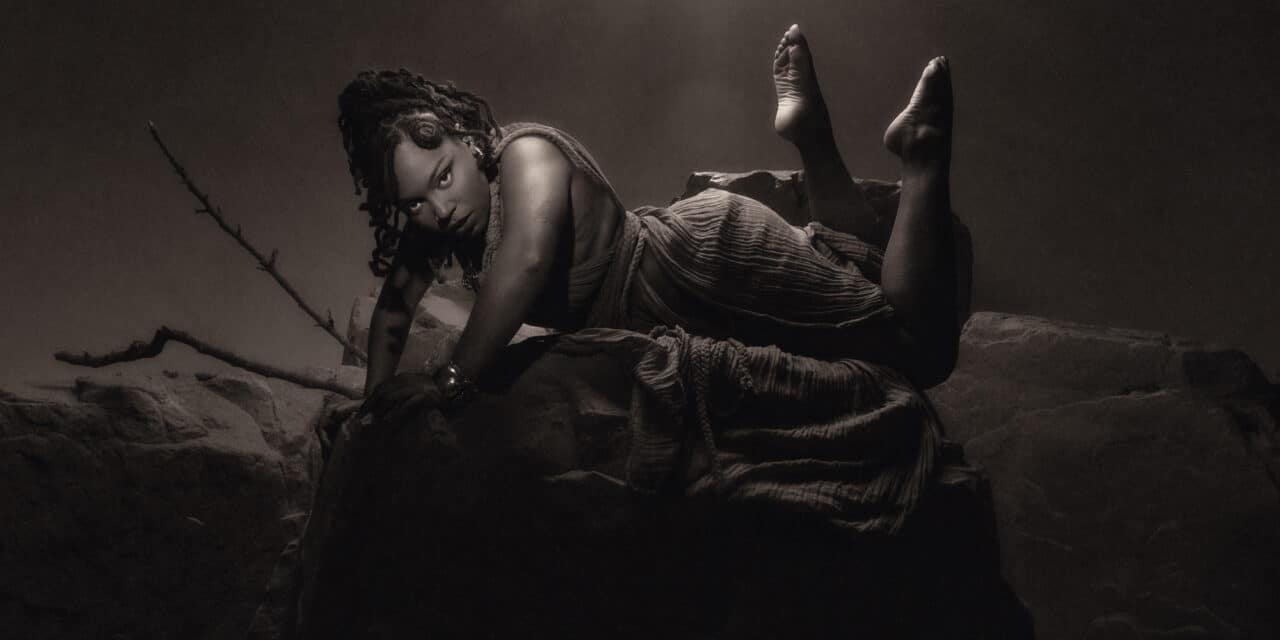
RYL0 has never treated music as something that exists in isolation.
Across seven years of releases, the Los Angeles-based electro-pop artist has approached every song as part of a larger visual and emotional architecture—one shaped by cinematic storytelling, electronic experimentation, internet-born pop culture, and a restless desire to turn private experiences into immersive worlds.
Her debut album, 5T4RP0W3R, arriving October 2, 2026, represents the fullest realization of that instinct.
Three years in the making, the record was developed alongside executive producers Taydex and AOBeats and constructed as a linear narrative inspired by Greek mythology. Its songs do not simply share a sonic palette. They function like scenes in an epic, tracing an oracle’s confrontation with destiny, ambition, psychological vulnerability, and a relentless supernatural attack imposed by Zeus.
The mythology gives RYL0 enough distance to confront experiences that once felt nearly impossible to name directly.
During the album’s creation, she endured more than a year of intrusive thoughts, disrupted sleep, spiritual fear, and compulsive anxiety. Rather than document that period through straightforward confession, she transformed it into legend. The result is a record where psychic distress becomes divine punishment, personal ambition becomes prophecy, and the exhausting repetition of self-doubt takes on the shape of Sisyphus eternally pushing his boulder uphill.
The album’s newest single, “Odyssey,” represents the return home after that long internal journey.
Built over a summery two-step rhythm with experimental electronic textures, distorted guitar, and luminous vocal melodies, the track finds RYL0 beginning to relocate her joy. Its optimism is not naïve. It is the sound of someone deciding that pain no longer deserves to be carried simply because it has been carried for a long time.
“I lived in doubt, I had my reasons / The sun came out, a change of season,” she sings, presenting release not as erasure but as a conscious return to the present.
Emerging from the early-2020s hyperpop scene, RYL0 has continuously pushed beyond its boundaries. Her music blends cinematic pop, club production, trip-hop, EDM, distorted electronics, and instinctive melody without abandoning accessibility. She has performed alongside and opened for artists including Arca, underscores, Ayesha Erotica, Namasenda, Alice Longyu Gao, Sophie Cates, and others, while maintaining creative control over much of her own visual direction and editing.
With 5T4RP0W3R, she is not merely releasing a collection of songs. She is inviting listeners into a world built from lore, psychological symbolism, visual clues, hidden details, and the accumulated lessons of every project that came before it.
We spoke with RYL0 about mythmaking as emotional protection, the meaning of returning home, collaboration, OCD, visual storytelling, and creating an album that feels like the soundtrack to someone else’s heroic journey.
5T4RP0W3R has been three years in the making and feels like much more than a collection of songs. At what point did you realize you were building a complete universe rather than simply writing an album?
No matter the size or scale of the projects I release, worldbuilding is non-negotiable for me. I’m always trying to create a world, either visually or sonically, and I think that’s why a lot of people have confused my previous mixtapes for albums.
What makes 5T4RP0W3R my debut album isn’t necessarily a difference in quality, but the level of detail.
The mixtapes gave me the freedom to explore without worrying about being too precious about anything. Planning this album was the complete opposite. So many details had already been decided before Tay, Andrew, and I even had our first session together.
The concept came first, and the music came afterward. I knew I wanted the tracklist to reflect a linear narrative. I was writing out the story beats before I had even written the first song, and some tracks were created only after we realized a piece of the plot was missing.
It all followed a very long plan, and it took a lot of patience to see it through.
Greek mythology plays a central role throughout the record. What drew you to those ancient stories, and how did they become the lens through which you explored your own experiences?
Greek mythology has always existed in the periphery of my life in very casual ways.
I distinctly remember learning about Icarus when my parents took me to see Cirque du Soleil. They came to New Jersey in 2005 with a show called Varekai, which reimagined the Icarus story as he fell back to Earth.
It was a pretty psychedelic experience for a seven-year-old, and I still think about it often.
Between Hercules, the Percy Jackson series, Clash of the Titans, school assignments involving The Odyssey, and classes on theater history, there were many cultural touchstones that became fundamental to my early media consumption. They stayed with me.
Mythology didn’t become a lens through which I viewed my own life until I encountered the story of Sisyphus—the man condemned by Zeus to push a boulder uphill, only for it to roll back down every time.
There have been so many moments in my life that felt exactly like that. I always knew I wanted to reference Sisyphus on the album cover.
The myth is technically a cautionary tale, but it inspires me on a much deeper philosophical level.
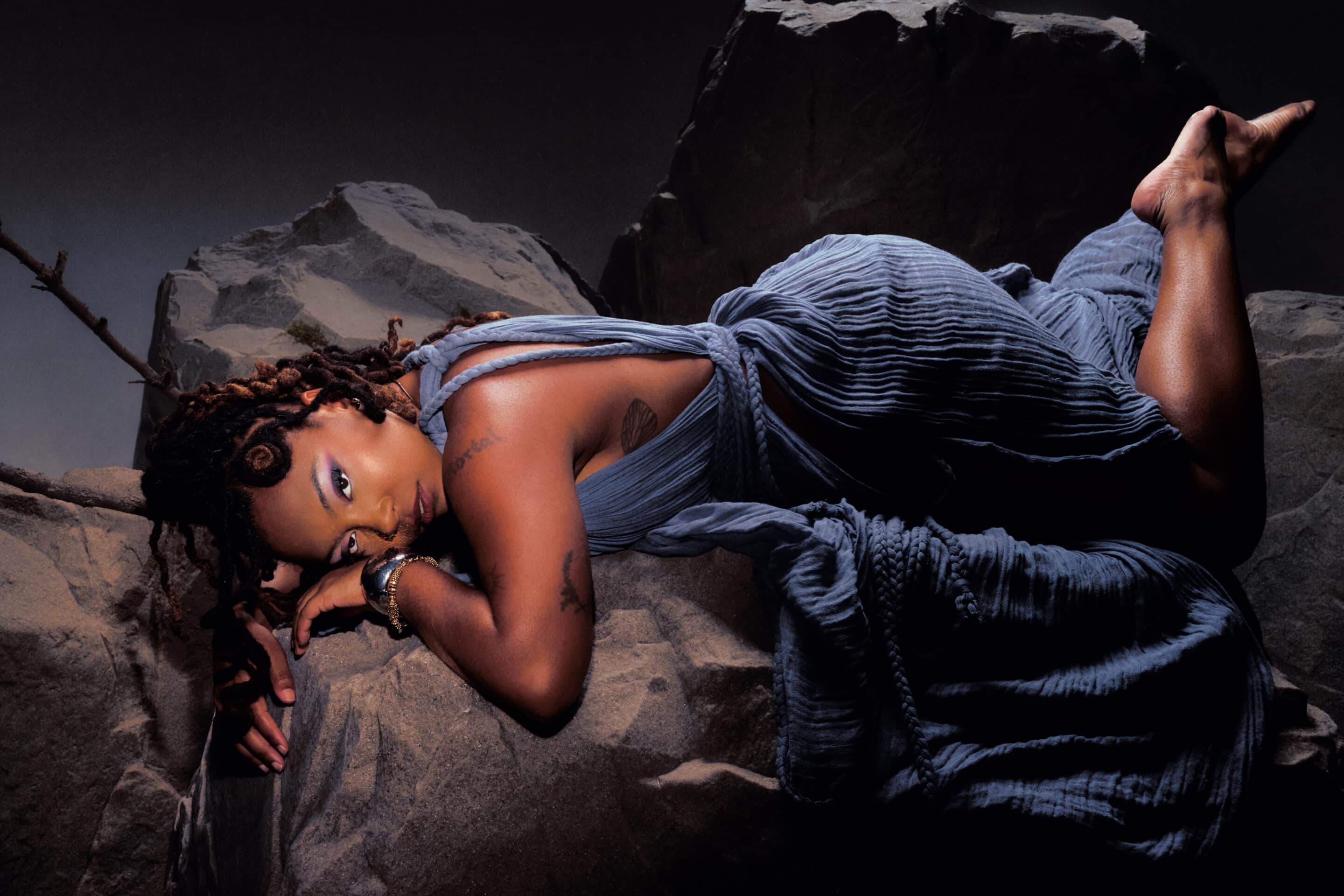
You’ve described the album as an “epic,” transforming personal emotions into larger-than-life narratives. Why is mythmaking such a powerful way to tell deeply personal stories?
Mythmaking has always been used to make sense of the world and explain the inexplicable.
In my case, I wanted to construct a fantastical, larger-than-life mythology that I could rely on when my own emotions felt too painful to discuss directly.
In early 2023, I was suddenly hit with what felt like an endless attack of intrusive thoughts that didn’t subside for 13 months.
I felt like I was having a psychotic break that nobody else was allowed to see or know about. It was a form of emotional torture unlike anything I had experienced before.
I became afraid to look at clocks because I might see “bad numbers.” I could barely sleep because I was terrified of what I might encounter in my dreams.
I eventually found a lot of relief when I realized that my experiences aligned with the way other people described OCD in online discussions. From a spiritual perspective, I also saw some people describe similar feelings as a kind of “psychic attack,” and suddenly the album concept clicked into place.
5T4RP0W3R is deeply personal and explores my relationship with destiny and ambition, but it is also the story of an oracle suffering through an eternal psychic attack as punishment from Zeus.
I realized it became much easier to talk about everything out loud when it didn’t feel completely literal.
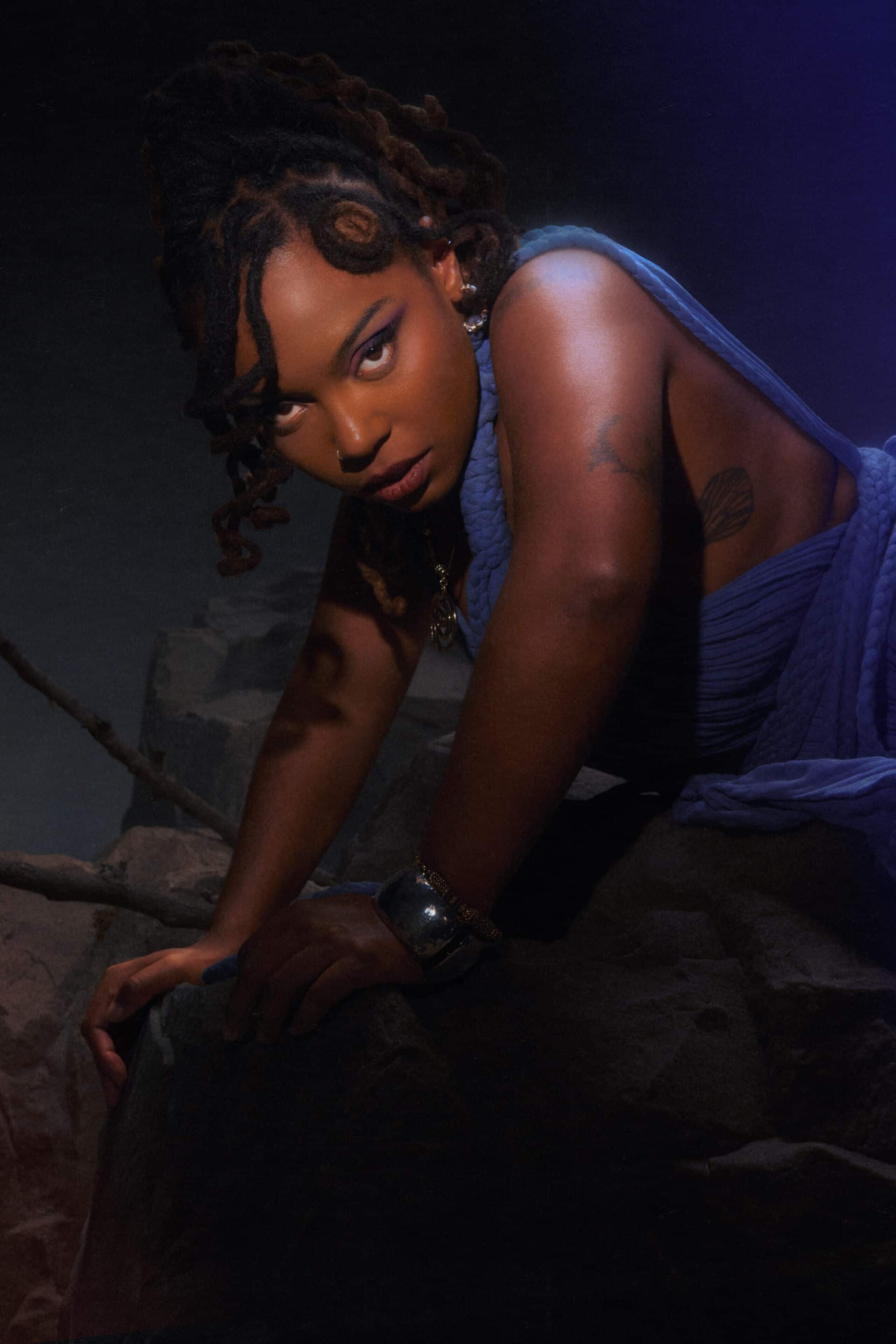
“Odyssey” represents the moment of returning home after a long journey. Beyond the mythological reference, what does coming home mean to you at this point in your life and career?
We made the song in 2024, and fittingly, it was one of the final tracks we wrote for the album.
I was beginning to return to myself and feel much lighter than I had at the start of the writing process.
It was also the day after my twenty-sixth birthday, so the idea of “coming home” carried a lot of meaning.
Ultimately, it is a celebratory song about relocating my joy, living in the present, and embracing the journey regardless of how tumultuous it has been.
It is also a gentle reminder that I’m allowed to release baggage when I no longer want to carry it or allow it to weigh me down.
Your music moves between hyperpop, electronic experimentation, trip-hop, cinematic production, and direct pop melodies. How do you determine the balance between experimentation and accessibility?
At every stage of my career, I’ve felt like I was creating relatively accessible music.
As a student of 2010s EDM and pop, I never considered my own music particularly unique or experimental until other people began describing it to me that way.
I take pride in making things my own, and I do think I’ve established a distinct style at this point. At the same time, I’ve never been afraid to openly reference the things that inspire me.
Ironically, the more closely I try to reference a source, the more distorted it becomes through my own voice. Maybe that’s where the experimentation enters.
I don’t actually know where the balance is.
It’s all very intuitive and Delphic to me. I can’t always explain how or why something works, but I can definitely tell when it does—and when it doesn’t.
As a film school graduate and the creative director behind your own visuals, you have unusual control over your artistic world. How do music and imagery inform one another while you’re writing?
During the songwriting process, lyrics and melody usually present themselves to me simultaneously.
A lyric will arrive with a specific melody already baked into it, and I think something similar happens with the visual elements.
Songwriting was something I discovered only after I had learned to write screenplays, so there is an inherently cinematic approach to everything I create.
When the album is a movie, every song becomes a scene and the tracklist becomes the script.
From a narrative perspective, 5T4RP0W3R could just as easily have been a film. But I became a little bored with screenwriting once I discovered that I could still build immersive stories through my own music.
That said, if I could adapt every song I’ve ever written into a full-length visual format, I would do it immediately.
You emerged from the early hyperpop movement, but this album feels like a major evolution beyond that scene. How have you grown as both a songwriter and a world-builder?
I’ve been releasing music as RYL0 for seven years, and during that time I’ve explored a wide range of styles and sounds.
Some experiments worked better than others, but the goal was never to sound absolutely perfect. I wanted to sound as good as my resources allowed while constantly leaving room for growth.
When you listen to my discography chronologically, you can hear me working things out in real time.
The one through line is that everything I’ve attempted has been an exploration of left-of-center electronic music with pop songwriting sensibilities. That has always been true of me as an artist, and 5T4RP0W3R doesn’t challenge that identity.
My tastes have become more refined over time. I’m sharper as a songwriter, and I’ve improved at curating, critiquing, and collaborating.
The album feels like the culmination of seven years of effort and of constantly pushing myself toward my fullest potential.
You can hear pieces of nearly every song I’ve released somewhere inside 5T4RP0W3R. This album could never have existed without all of that time spent developing and processing who I am.
You’ve worked with a wide range of artists and producers while maintaining a singular identity. How do you approach collaboration without losing control of the larger vision?
When I collaborate, I love leaning into what makes the other person distinctive, and I enter the process expecting that respect to work both ways.
I try to remain as true to myself as possible, but there is always something to learn from another person’s process or workflow.
I absorb as much as I can while working closely with others, and I’ve learned some of the most important things about my own artistry through collaboration.
As my sound has developed, however, I’ve become less interested in collaborating casually.
Working with Tay and AO was such a magical experience that it completely changed my relationship with collaboration. I’ve become extremely particular in recent years because I want to protect my artistic identity ahead of this album.
I care deeply about who I work with, how we work together, and what we create.
Toward the end of the album process, we developed such an intuitive flow that finding the project’s sound felt almost natural.
This rollout allows fans to experience the album through songs, visuals, hidden details, and an unfolding narrative. Why was it important to create a complete album experience in an era dominated by playlists and short-form content?
I always knew I wanted my debut album to feel like a top-down experience with videos, Easter eggs, and a huge amount of lore.
When I was making my previous mixtapes, I wasn’t yet in a position where that level of detail felt necessary. I didn’t have the experience to confidently execute something on the scale of 5T4RP0W3R, and I also didn’t have enough people who would care yet.
Those earlier projects were about learning through the act of doing—improving and gradually building an audience along the way.
Everything I know about packaging and presentation came through trial and error, along with endless observation.
Looking back, my discography is essentially a document of my learning curve as an artist.
Rollouts can also be very demanding for audiences, especially in an attention economy where cycles move so quickly.
I knew I wanted this era to feel undeniable and rewarding for everyone who chose to believe in me as a relatively small artist.
It is my way of thanking people for giving me a chance. I wanted to make sure the rollout was worth the wait.
This album feels like both the culmination of everything you’ve created and the beginning of something larger. When listeners reach the final track, what journey do you hope they have taken through your mythology—and through themselves?
In terms of the mythology, I hope reaching the final track feels like arriving at the end-credits sequence of a whirlwind fantasy-action blockbuster.
Everything within the world of 5T4RP0W3R is so hyperspecific that I want it to leave a lasting impression. I want the album to cement me within people’s musical lives.
I felt deeply uncool in many ways while growing up, but the music I listened to made me feel like someone important.
I want to do for someone else what Charli xcx, Porter Robinson, and Lorde did for me when I was fourteen.
I want this album to feel like the soundtrack to somebody’s own hero’s journey.
There is a temptation in pop music to treat accessibility and complexity as opposing forces.
RYL0 refuses that premise.
The songs of 5T4RP0W3R are built to be immediate, melodic, and emotionally legible, but they also belong to an elaborate symbolic system—one populated by gods, punishment, prophecy, obsession, and the possibility of release.
That mythology does not conceal the person behind it. It allows her to speak.
By transforming intrusive thoughts into psychic warfare and ambition into destiny, RYL0 builds enough distance from her pain to confront it without allowing it to define the limits of the story.
“Odyssey” signals the moment when survival begins to look like return. Not a return to innocence, or to the person she was before the journey, but to a self capable of joy after moving through uncertainty.
The album’s title may suggest power, but its most compelling strength lies in vulnerability: the willingness to admit that creation can be obsessive, frightening, exhausting, and still worth completing.
After seven years of experimentation and three years of meticulous construction, RYL0 is no longer simply searching for a world to inhabit.
She has built one.