The internet has made music infinitely accessible while making its history strangely disposable.
Songs that once required hours of crate-digging can now be found in seconds, but the interviews, local stories, critical essays, fan archives, and independent platforms that gave those songs context can disappear without warning. A publication closes. A blog is deleted. A platform changes ownership. A digital archive vanishes, leaving behind fragments with no clear source or shared memory.
In that environment, preserving hip-hop history is not simply about remembering release dates, chart positions, or canonical albums. It means preserving the atmosphere surrounding the music: the scenes that nurtured it, the arguments that shaped it, the records that were overlooked, and the way a particular moment felt before history had decided what mattered.
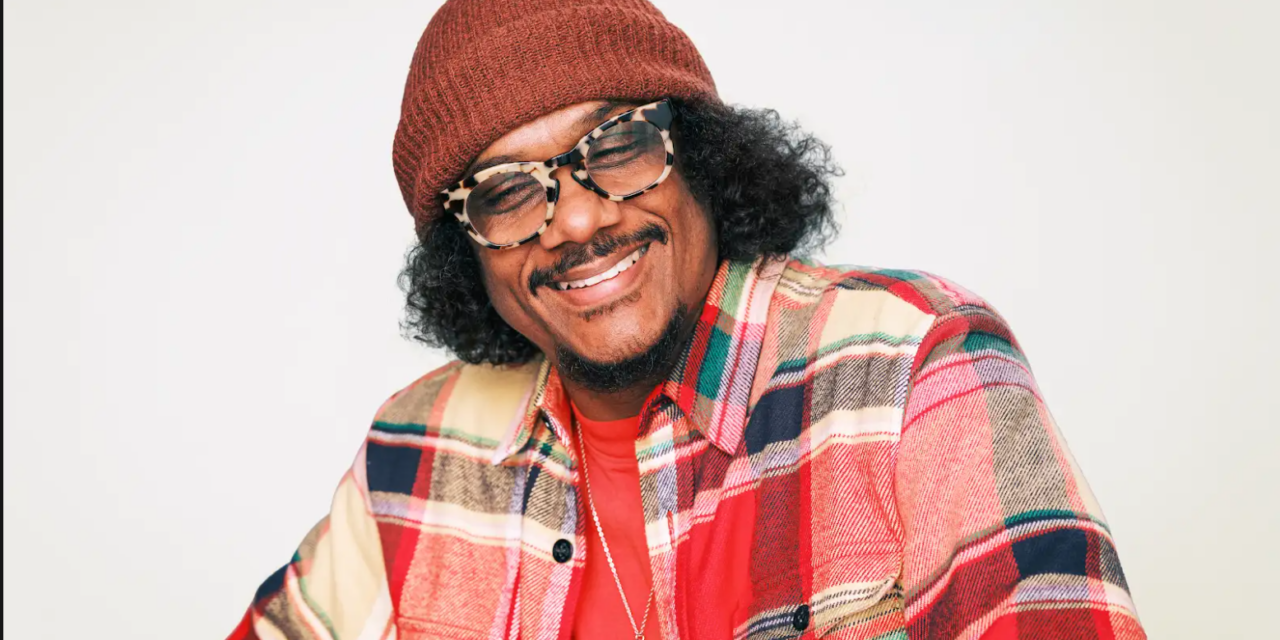
That is the space occupied by Donwill, the two-time Webby Award-winning podcaster and host of The Almanac of Rap, powered by Okayplayer.
The show approaches hip-hop history as something alive, unfinished, and constantly being reconsidered. Through carefully researched interviews and recurring segments including “The Ballistics” and “The Big Playback,” Donwill revisits the music, cultural disputes, overlooked details, and industry dynamics that have shaped the genre. His guests have included artists and producers such as Raekwon, Flying Lotus, Shaggy, Rodney Jerkins, and others whose personal memories expand the historical record beyond what survives online.
Donwill’s authority comes from more than fandom. Born in Cincinnati and later based in Brooklyn, he entered the industry as one-third of the rap group Tanya Morgan alongside Von Pea and Ilyas. The group’s 2009 album Brooklynati has since become an underground classic, but his career has extended far beyond performing.
He has worked as a journalist, DJ, producer, and composer, writing for The Village Voice, interviewing artists including Lupe Fiasco, and contributing music to projects such as Last Week Tonight with John Oliver. He has also created music for podcasts including Slow Burn, Another Round, and #Adulting, while touring as the DJ for comedian Michelle Buteau.
That range of experience allows him to occupy a rare position. He understands the pressures facing artists, the mechanics behind the music, the demands of journalism, and the responsibilities involved in preserving a culture without reducing it to click-driven mythology.
In an era shaped by algorithms, disappearing archives, shrinking criticism, and an increasingly unstable media ecosystem, The Almanac of Rap argues that hip-hop deserves more than nostalgia. It deserves research, context, humor, and a durable record.
We spoke with Donwill about the failure of the internet to preserve context, the disappearance of authoritative criticism, the dangers of algorithmic discovery, and why refusing to document hip-hop’s history should never be an option.
Listen to The Almanac Of Rap wherever you get your podcasts:
youtube | spotify | apple | amazon
The Almanac of Rap treats hip-hop history as something living rather than something frozen in time. What inspired you to create a show that revisits the genre through context, conversation, and memory instead of simply documenting milestones?
It was partly a response to how quickly social media and content move.
The internet is great at content, but it’s terrible at context. Photos with blocks of text that don’t link anywhere are often accepted as news.
That started to bother me, so I felt like I had to do something about it.
I also wanted to create a show that I wished existed—one that treated our stories as actual history.
At a time when music journalism is shrinking and digital archives can disappear overnight, what do you think we risk losing if we don’t actively preserve hip-hop’s history?
Ultimately, we’re losing our story.
It’s similar to the way the current administration decides which monuments and plaques it will allow to remain.
Culture is always evolving, but the tools we use to preserve it are becoming more disposable every day.
Your career has included work as an artist, journalist, producer, DJ, and podcast host. How have those different perspectives shaped the questions you ask and the stories you want to tell?
The common thread across all my work is curiosity.
At this point, all of those experiences inform one another. I’ve been on the other side of the questions. I understand how a bad mix can prevent a great song from working. I know that analytics are simply information, and I know that getting to do the work is often more rewarding than receiving an award for it.
Those experiences have helped me look beyond the persona and see the person I’m actually speaking with.
They give me a clearer understanding of someone’s motivations in certain situations, and they also provide the foundation for many of the subjects I explore.
The podcast balances detailed historical research with humor and accessibility. How do you make conversations filled with niche references engaging for both longtime hip-hop fans and newer listeners?
I try to make every episode feel like an open inside joke that isn’t difficult to understand.
There’s depth in the questions, but there are also moments where I’m clearly being silly.
One of my biggest inspirations for the show was Last Week Tonight on HBO. I love the way the show tackles a complicated subject, breaks it down to reveal its ugliness, and then juxtaposes that with humor.
I’m just trying to keep things whimsical.
You’ve interviewed artists including Raekwon, Flying Lotus, and Shaggy. Have any conversations completely changed your understanding of an artist, an era, or a pivotal moment in music history?
Cupid and Rodney Jerkins both stand out to me.
Because I approach everything through a hip-hop lens, it was fun to apply certain rap tropes to Cupid’s career and discover that they all fit, just in a slightly different way.
Finding out that there is line-dance beef was mind-blowing, but it also made complete sense.
Rodney Jerkins’ episode was eye-opening for a different reason.
During the interview, he told me that he was the person who brought the Neptunes to Michael Jackson and also convinced Michael Jackson to attend Summer Jam.
That, along with his proximity to Teddy Riley, completely blew my mind.
You frequently revisit overlooked records, forgotten scenes, and underappreciated artists. Why do some chapters of hip-hop history become celebrated while others quietly disappear?
Everything is marketing.
Everyone and everything has a story, but the stories that usually break through are the ones that are easy to market and widely appealing.
That doesn’t make the other stories less interesting. In many cases, it makes them more interesting to me.
Even when artists are being celebrated, if you listen to two or three interviews with the same guest, you’ll eventually notice that both the questions and answers begin to feel rehearsed.
My goal is to make sure my interview deviates from that template.
Not in a confrontational or “gotcha” way, but in a way that deepens the subject.
You’ve experienced hip-hop from the blog era through today’s algorithm-driven landscape. How has the culture’s relationship with discovery, criticism, and storytelling changed?
I think storytelling is the only area that has truly benefited.
The ability to build worlds has become more sophisticated, but discovery is much harder.
Algorithms promise to give us more of what we already like, but that creates a convenience loop. It removes independent curators from the process and limits the listener’s curiosity.
You don’t really fall in love with something when you don’t have to work to find it. You simply save it and continue with your day.
The verdict is still out on criticism, but I think it has suffered too.
There are no longer clear authorities. Everyone’s voice has the opportunity to be heard, which feels like it should be a positive development, but it also raises questions about the integrity of the person speaking.
And that doesn’t even account for stan culture, with or without the involvement of bots.
The spaces where people can have genuinely critical conversations about the internet’s favorite artists are becoming endangered.
As a member of Tanya Morgan, you’ve experienced both sides of the relationship between artists and the media. Has being an artist made you more empathetic or more demanding when interviewing musicians?
Definitely more empathetic—perhaps even too empathetic.
That’s why I prepare so extensively for every interview.
I feature artists at many different stages of their careers, and I want every one of them to feel that I genuinely cared about speaking with them.
Hip-hop has always reflected larger conversations around identity, politics, fashion, and technology. Which cultural shifts do you think future generations will remember as defining this era?
Queer voices are finally being heard and accepted.
Even if they aren’t fully accepted, they are occupying space within a culture that silenced them for a long time.
Hip-hop has also turned 50, which means it has entered its midlife crisis.
We’re beginning to see what that actually looks like.
Artists are being given the opportunity to become fully developed adults, and we are watching their careers mature with them.
If The Almanac of Rap becomes an essential archive for future listeners, what do you hope people take away—not only about hip-hop, but about why preserving music history matters?
As a Black American, not being able to trace my family history because of slavery is something I think about every day.
I think the same principle applies here.
Not knowing history is one thing. Choosing not to preserve a record of it should never be an option.
Hip-hop has always preserved itself through sound. It has sampled forgotten records, carried local slang into global culture, built mythology from neighborhood history, and transformed personal memory into collective experience.
But music alone cannot preserve every detail surrounding it.
It cannot always capture the interviews that were never archived, the local scenes abandoned by the media, or the artists whose stories were never considered commercially viable enough to document. It cannot preserve every disagreement, production decision, cultural shift, or intimate recollection that shaped a movement as it unfolded.
That responsibility often falls to journalists, researchers, artists, and cultural archivists willing to resist the speed of the moment.
Donwill’s work on The Almanac of Rap is built around that resistance. His research-led approach rejects the assumption that immediacy is more valuable than depth. His interviews begin with the understanding that a guest is not merely promoting a project but contributing to a historical record.
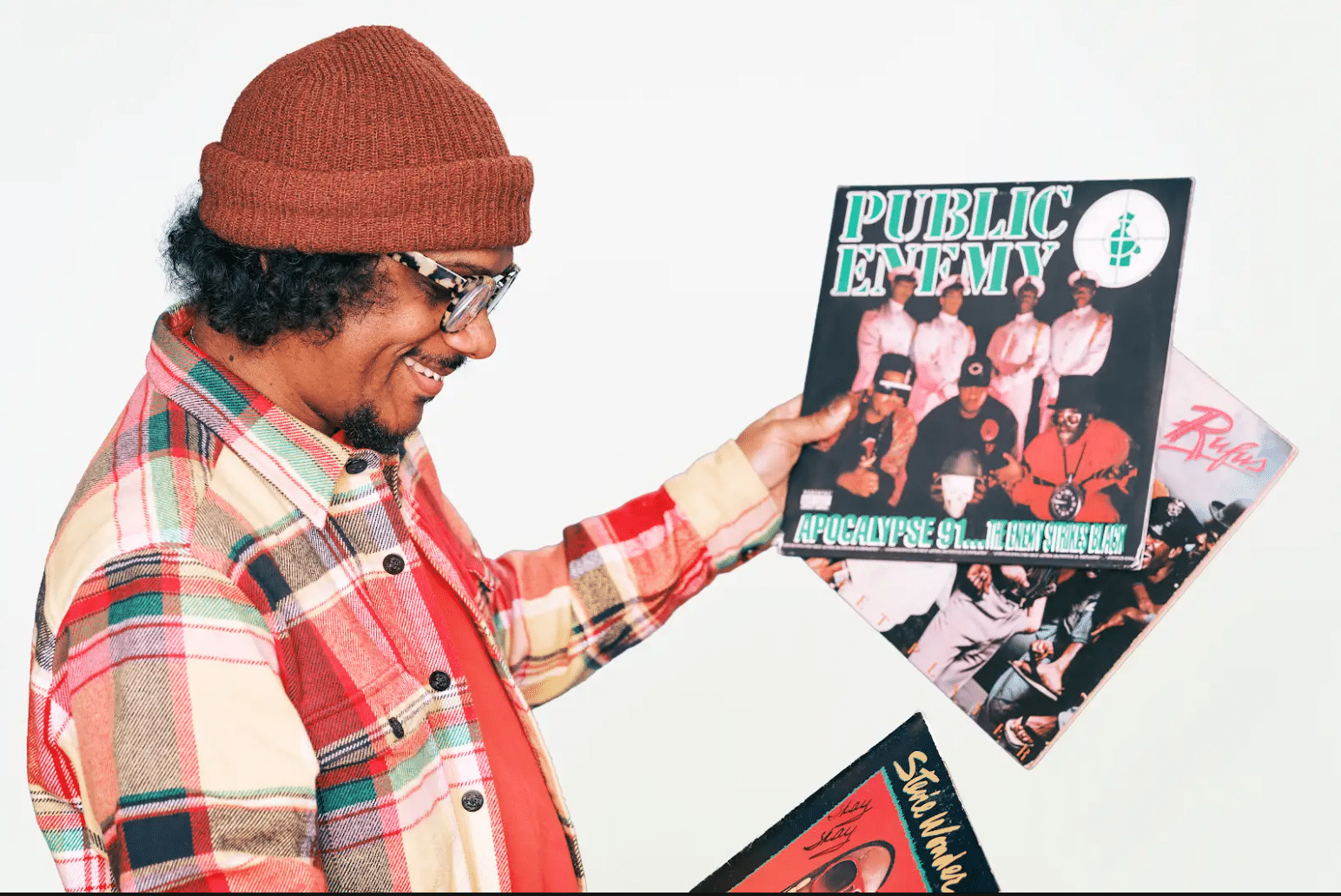
The show’s humor does not diminish that responsibility. It makes the archive approachable, allowing deep fandom, sharp criticism, and playful cultural references to coexist.
In a digital landscape where content can be copied instantly but context can disappear completely, that distinction matters.
Preserving hip-hop history is not only about deciding which artists deserve statues or which albums should enter a canon. It is about maintaining enough of the original record for future generations to make those decisions themselves.
The archive must remain alive because the culture remains alive.
And if history is too important to be left to an algorithm, then perhaps the most urgent act is simply to keep asking better questions—and to make sure the answers are never lost.