Nostalgia is rarely as simple as remembering the past. More often, it is the feeling of returning to a version of yourself who did not yet understand how temporary everything was.
On “Summer 09,” New Jersey neon pop-punk artist lolitslea revisits the brief, electric freedom of adolescence: riding bikes through the neighborhood, spending entire days with friends, experiencing a first kiss, and wandering without a schedule or destination. It is a coming-of-age anthem built around a summer that felt endless precisely because adulthood had not yet taught her otherwise.
The track arrives ahead of lolitslea’s sophomore album, RollerCoaster Tycoon, out September 15, 2026. Inspired in part by Mayday Parade’s “Kids in Love,” “Summer 09” captures the emotional architecture of the music that once filled her iPod—soft-spoken emo, bright electronic textures, huge melodies, and pop-punk guitars that make memory feel physical.
For Lea, the summer between middle school and high school represented an early taste of independence. There was no summer school, no camp, and no fully developed understanding of what freedom might eventually cost. There was only movement, possibility, and the strange confidence that comes from discovering the world a few blocks at a time.
That tension between joy and impermanence runs throughout lolitslea’s work.
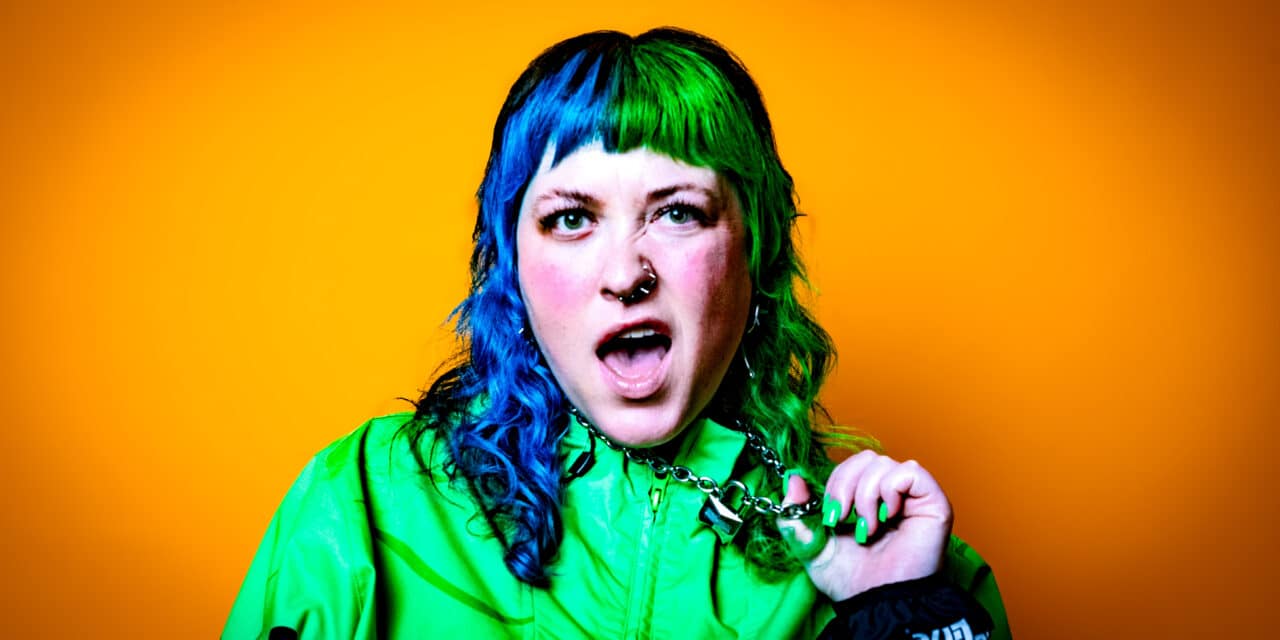
Her fluorescent visual universe—defined by electric blues, greens, split-dye hair, video-game references, and the kitschy brightness of the Jersey Shore—often surrounds stories about exhaustion, pressure, isolation, and the realities of sustaining an artistic life. The songs may look and sound euphoric, but the emotions underneath them are rarely uncomplicated.
That contrast is central to RollerCoaster Tycoon.
The title began as a playful reference to the beloved simulation game, but quickly became a larger metaphor for a life defined by sharp turns, sudden drops, and the uncomfortable awareness that personal chaos can become entertainment for other people. The familiar phrase “life is a rollercoaster” becomes more specific in Lea’s hands: colorful, unstable, carefully designed, and always one mechanical failure away from disaster.
Yet the album does not approach unpredictability solely with fear.
Its world is built around accepting the ride, embracing individuality, and refusing to spend an entire life bracing for impact. That philosophy feels particularly meaningful for an artist whose career requires her to balance music with multiple jobs, businesses, creative responsibilities, and the continuous demand for visibility.
lolitslea released her debut album, Nothing Lasts Forever!, in October 2024, collaborating with artists and producers including Chase Coy, Tom Denney, Kellin Quinn, and Joshua Roberts. The record earned support from outlets and tastemakers across the pop-punk world, while her live career brought her to Emo Nite stages, a national tour with Diva Bleach, and performances alongside Taylor Acorn and Games We Play.
For RollerCoaster Tycoon, she expanded her collaborative world further, writing with Cassadee Pope and Dan Swank and developing the album over more than a year with Tony Pietrafesa. The result promises a more immersive expression of Lea’s sound: traditional pop-punk guitars colliding with electronic production, bright melodies, humor, vulnerability, and the intricate worldbuilding of a favorite childhood game.
We spoke with lolitslea about nostalgia, burnout, creative survival, and building a community where nobody has to apologize for being different.
RollerCoaster Tycoon borrows its name from a game associated with nostalgia, creativity, and controlled chaos. What made it the perfect metaphor for this chapter of your life and music?
I think the silliness of wanting to add components of the game to a song we were writing quickly turned into an eye-opening realization that the chaos and ups and downs of my life are, in fact, “amusing for you”—like RollerCoaster Tycoon.
People often use the metaphor “life is a rollercoaster,” so I wanted to express what my version of that looked and sounded like.
Your sound combines pop-punk energy, electronic production, and irresistibly catchy pop songwriting. How did you arrive at that combination?
Thank you!
It started because I wanted to write music that sounded like the cute, soft-spoken emo music I had on my iPod.
It wasn’t aggressive or angry. It was happy, upbeat, and electric.
Then you add the traditional pop-punk style of those mean guitars, and there you have it: inspiration from traditional pop-punk music combined with more colorful, positive electronic elements.
I think it fits into an interesting niche because it isn’t always accepted within the heavier scene, while pop sometimes thinks we’re too rock.
I personally love both pop music and traditional pop punk, so it is fun to fuse them with that digital, positive-sounding energy.
“BURNOUT!! BURNOUT!!” immediately suggests exhaustion and emotional overload. What inspired the song?
Honestly, I showed up to a writing session one day excited to work on new music but afraid that I was too exhausted to create anything good.
Cameron Walker, the songwriter and producer, turned that around when he suggested we write about exactly that feeling.
Finishing the song and performing it live has opened up conversations about burnout and working multiple jobs just to be able to pursue your passion.
Before I released it, people were already asking at shows when it would come out. That made me realize that, unfortunately, many other people feel this way too.
There is a playful, colorful aesthetic throughout your work, but underneath it are stories about chaos, pressure, and self-discovery. How important is that contrast?
The honest emotion comes from the stories in my mind and my lived experiences.
I only write about things that feel genuine to me, and I haven’t really thought much about the contrast.
It is cool when people recognize it, though, because it makes me stop and process how I’m perceived and what that means.
I have always loved colorful things, so being able to express myself visually in that way is fun and exciting.
I want the music to look and sound happy, even when the themes are real, uncomfortable, or honest.
You collaborated with Cassadee Pope and Tony Pietrafesa on the album. What did those partnerships bring out in your songwriting?
The session with Cassadee showed me that I could walk into a professional environment with acclaimed songwriters and create something awesome.
She and Dan Swank created such a comfortable, safe environment for me to explore ideas out loud.
Collaborating at that level was—and still is—somewhat new to me, so having that support and uplifting energy meant a lot.
Then I brought the full record to Tony and worked on it with him over the course of more than a year.
We immediately clicked. Anything I said out loud, he was able to transform into an explosive, colorful version of the idea.
It has been such a pleasure, and I cannot wait to collaborate more.
The album embraces the idea that life is unpredictable and messy rather than perfectly planned. Have you become more comfortable with uncertainty?
Life is always uncertain.
If you aren’t learning how to enjoy the ride and the cards you’re dealt, you are never going to be happy.
Why not embrace originality, uniqueness, and individuality?
You can spend your life bracing for impact, or you can expect the unexpected and go with the flow.
YOLO.
Pop punk has experienced a major resurgence, but you approach it through a distinctly modern lens. How do you honor the genre’s roots while making the music your own?
We’re creating through a modern lens because the year is 2026.
I was inspired by raw, homebrewed, DIY pop punk from the 2010s, and we have tried to revamp that with years of songwriting inspiration and new tools that can keep the music relevant to mainstream radio today—or at least, that is what I hope we are doing.
I don’t necessarily think I am creating a genre that is completely original, but I appreciate people recognizing that we are combining a lot of past and present inspiration in the songs.
Your music is intensely high-energy, but burnout often comes from vulnerable places. How do you protect your creativity in an industry that constantly demands more content and momentum?
I enjoy working hard and creating visuals, content, and stories through my music.
The imbalance and burnout come from all the other things creatives often have to do simply to survive as creatives.
I work multiple paid jobs while also running a transportation service, a T-shirt shop, and a jingle house.
In all seriousness, it is a lot of work.
I don’t think it will ever stop being a lot of work.
I also believe that when you want something badly enough, you will do anything to make it happen.
I have made many sacrifices to create art to this degree. I don’t regret it, but it is certainly a major commitment.
RollerCoaster Tycoon invites listeners into your world through humor, chaos, and personality. What do you hope someone learns by the end of the album?
While I hope the listener enjoys learning about me as an artist, I would rather they take away an emotion or feeling that the music leaves with them.
I hope the melodies, energy, and personality are contagious and allow for a brief escape from reality.
Your work carries a strong sense of authenticity. As your audience grows, what kind of community are you hoping to build around the music?
Through my music and live shows, I always want to open the doors for all kinds of people to feel accepted, understood, heard, seen, and appreciated.
Growing up, I often felt isolated.
I was treated differently and bullied because of the clothes I wore or the hobbies I enjoyed.
I want to make sure that, whether something is within your control or not, people feel safe and comfortable being themselves.
If you fall down, we lift you up.
I have also noticed that many of my peers and other artists I admire create similar environments, and it is incredibly inspiring.
Going to shows and seeing the community come together is exactly the kind of energy and support I hope to bring through my music.
“Summer 09” is not only a song about childhood freedom. It is a song about the period before freedom became entangled with work, survival, ambition, and responsibility.
The contrast becomes especially clear when placed beside “BURNOUT!! BURNOUT!!”
One song remembers days with nowhere to be. The other emerges from a life in which there is always somewhere else to be, another job to complete, another piece of content to make, another business to run, and another reason to keep moving despite exhaustion.
Together, they reveal the emotional range at the center of RollerCoaster Tycoon.
Lea’s world may be fluorescent, but it is not artificial. Its colors do not conceal difficulty; they offer a way of surviving it. The brightness is not evidence that nothing hurts. It is evidence of a deliberate refusal to let hardship determine the entire visual or emotional landscape.
That choice also explains why nostalgia feels so natural within her music.
The pop-punk and emo songs that inspired her were not simply entertainment. They were spaces where intensity, awkwardness, vulnerability, and escape could exist together. By drawing from those sounds without trying to replicate them exactly, lolitslea creates music for listeners who may be searching for the same kind of refuge now.
Her approach is modern not because she rejects the genre’s history, but because she understands what made it meaningful in the first place.
Pop punk has always belonged to people who felt slightly out of place. It offered language to those who were bullied, underestimated, dismissed, or told that their clothes, interests, or emotions were excessive.
Lea carries that spirit into a more colorful world—one shaped by electronic textures, video-game logic, internet culture, and the realities of sustaining a creative career in 2026.
The amusement park at the heart of RollerCoaster Tycoon is therefore more than an aesthetic.
It is a place where disorder can become design, where fear and excitement share the same machinery, and where the most chaotic parts of life can briefly be transformed into something communal.
You cannot prevent every drop.
You cannot predict every turn.
But you can build a space where, when someone falls, the people around them know to lift them back up.