With Grind turning gig-economy anxiety and late-stage capitalism into horror comedy, the actress, comedian and filmmaker is leaning deeper into the genre that lets her confront the world while still making people laugh
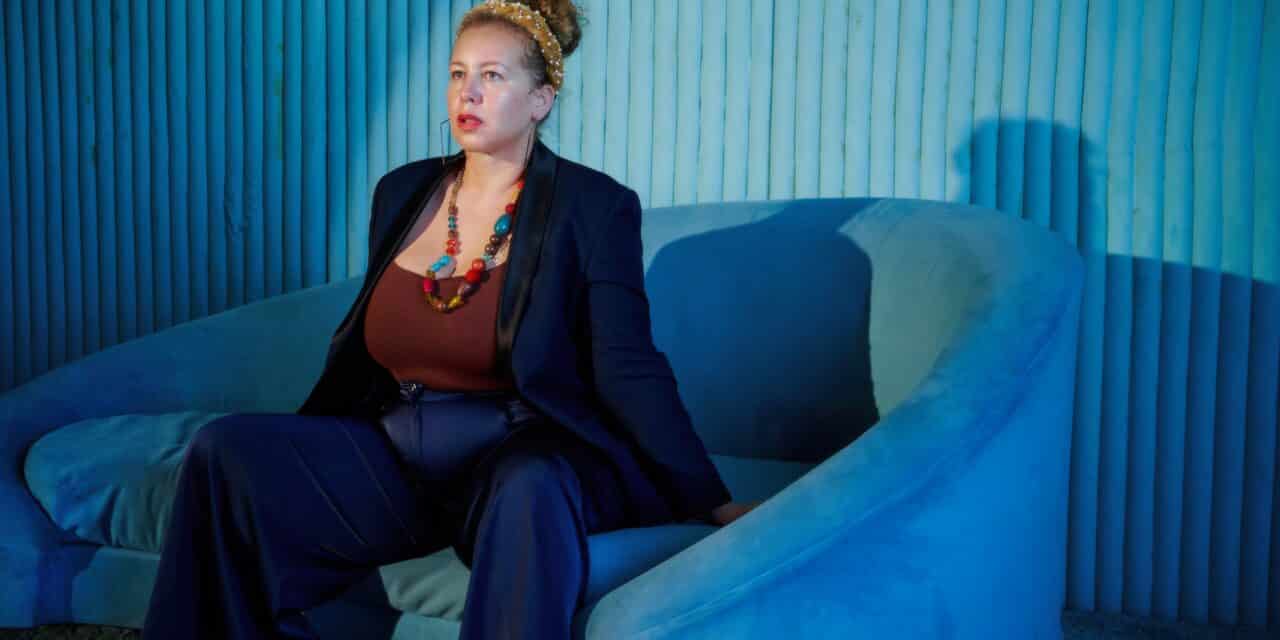
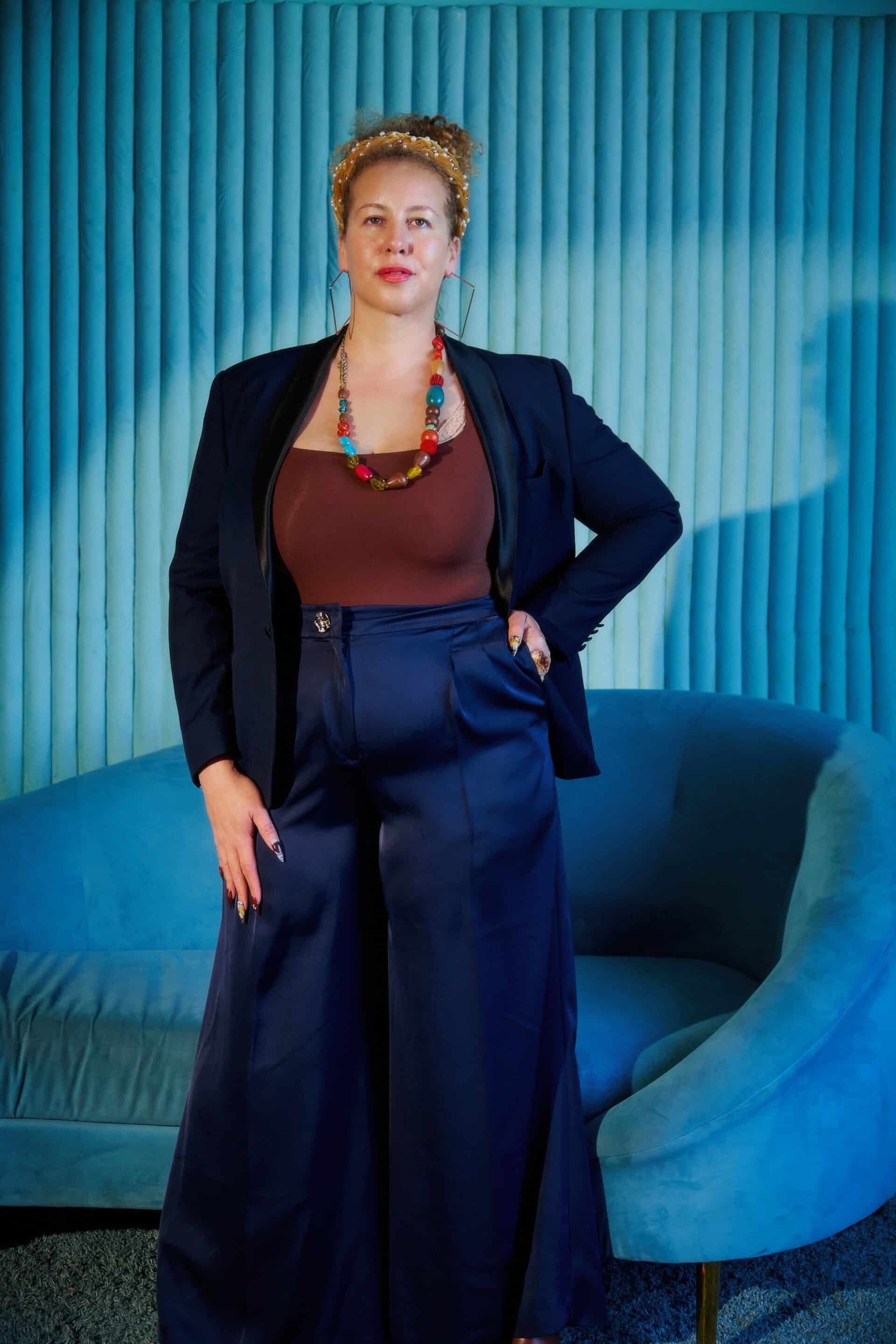
Anastasia Washington has never been particularly interested in choosing one lane.
Actor. Comedian. Writer. Director. Podcaster. Model. Horror filmmaker. Community builder. The list keeps expanding, but the through line is much simpler: Washington wants to say something.
Sometimes that means talking about colorism, police brutality, eating disorders or what it means to move through the world as a biracial woman. Sometimes it means turning those subjects into stand-up or a short film. And sometimes it means stepping into a horror-comedy universe where capitalism itself begins to feel like the monster.
Her latest project, Grind, seems especially suited to that instinct.
The four-part horror-comedy anthology, which premiered at SXSW and was also selected for the Chattanooga Film Festival, connects four stories centered on the gig economy, hustle culture and the increasingly surreal machinery of late-stage capitalism. Washington appears in multiple roles across the anthology, functioning as part of the connective tissue between its different stories.
For Washington, though, the project began with trust.
“I love and trust Brea Grant so much,” she says. “Anything she asks me to be in, I will.”
That relationship matters because Washington’s career has increasingly been shaped not only by the stories she wants to tell, but by the kinds of creative ecosystems she wants to help build around them. She speaks about Grant not simply as a filmmaker she admires, but as someone whose allyship translates into action—particularly for women of color working in genre spaces.
It connects directly to Washington’s own approach.
Through horror filmmaker meetups, her Comedy 4 Nice People series and her wider advocacy work, she has made community-building part of the art itself. For someone who has experienced moments of feeling unsafe or isolated in the industry, creating rooms where other people do not have to feel the same way has become essential.
“If I don’t see it,” she says, “I’ll just make it.”
That attitude also explains why horror and comedy remain such natural partners in her work.
Both genres depend on timing. Both build tension and then demand release. And both can make difficult truths easier—or sometimes harder—to ignore.
Washington sees that combination as particularly potent right now.
“I think people always look for laughter, and they always look for horror—specifically monsters—in times of oppression,” she says.
Rather than choosing between escapism and confrontation, she is interested in giving audiences both at once: something funny enough to let them breathe, frightening enough to make them look again, and specific enough to start a conversation after the credits roll.
Mundane spoke with Anastasia Washington about Grind, the politics of horror comedy, working across multiple creative disciplines, using humor to approach uncomfortable subjects, creating safer artistic communities, and why she wants to be the woman kicking ass in the next horror movie just as much as she wants to be the one writing it.
Grind explores the gig economy and late-stage capitalism through horror and comedy. What drew you to a project that uses genre storytelling to reflect the anxieties of the modern working world?
Actually, the people involved are what drew me to the project.
I love and trust Brea Grant so much. Anything she asks me to be in, I will. She’s a creative force in horror and I respect her so much.
She’s such an ally for people like me—women of color who work hard and have something to say. Her advocacy is not just a social media post; it’s action. I will always have her back as she has mine.
The project also sounded fun and like a great reflection of what is currently going on in the world, so I was doubly interested.
You play multiple roles that act as a connective thread throughout the anthology. How did approaching different characters within the same narrative universe challenge or expand your performance?
It just grounded it in the given story.
The characters were so different and diverse that I had room to play with their characterization and meanings, but the world of Grind is so vivid that you know the rules and what interactions are like in it right away.
This gave me boundaries to play in.
I loved that about this project—the room we had to play.
Horror and comedy are both genres that thrive on tension and release. What is it about that combination that feels particularly powerful for telling stories about society right now?
I think people always look for laughter, and they always look for horror—specifically monsters—in times of oppression.
I think it’s smart to combine both to give that sense of release in multiple ways in the same film.
I think we need to be scared of our circumstances and how the world is right now, but at the same time find joy and relief that we are, in fact, the change that needs to be made.
Besides being my two favorite genres, I also just feel like horror and comedy play well together—timing, tension, the release of laughter.
And what a vehicle for change.
Nothing changes the world more than comedy and horror. Maybe sci-fi, but really blending genres helps deliver messages.
I love that, and I think more than ever we need to start discussions with our creative endeavors and make some change happen for the world.
Your work often tackles difficult topics like colorism, police brutality and eating disorders through humor. How do you navigate the line between making audiences laugh and making them confront uncomfortable truths?
Hopefully well! Just kidding.
I think laughter is a great way to start a conversation and to really make a lasting impact in our brains.
I think it’s important, at least for me, to create with a purpose. I love it when that purpose can get people talking about the really hard things that we need to deal with.
I feel as long as I have good intentions, come at it with empathy and love and understanding, and the willingness to accept if I’m wrong, then I will always be doing the good work.
I will mess up, but I will always be accountable and make the necessary changes.
You’ve been described as channeling a blend of voices like W. Kamau Bell and Jordan Peele. How do those influences resonate with your own approach to storytelling and social commentary?
Those influences mean everything to me.
I would say Jordan Peele, W. Kamau Bell, and Roy Wood Jr. inspire me every day not just to make, but to create with passion, unleash my voice, and make a difference.
Also, to uplift and be open to conversations that are with or about the toughest things.
I made my one-woman show after seeing W. Kamau Bell and Roy Wood Jr. do their specials.
I was like, “I feel seen. I feel like I have something to say in this conversation. So let’s have it.”
As a biracial creator in Hollywood, your work frequently explores identity and belonging. How have your personal experiences shaped the characters and stories you feel compelled to tell?
I honestly put a lot of my real-life experiences in my work.
I may raise the stakes, or I may not.
But I have lived a weird life, and I put it in my scripts and stand-up all the time.
I won’t name names, but I will tell my truths.
And I have so many more to tell.
You move fluidly between acting, comedy, writing, directing and podcasting. Do those different creative outlets feed each other, or do they serve different emotional purposes for you as an artist?
Definitely.
They fulfill the different sides of me and the needs I have to explore in my own life.
I need to create, collaborate, constantly get inspired, and I need to say something.
So it really helps that I’m not boxed in and waiting on other people to create for me.
I can try things out and make them happen in various ways depending on the idea.
It’s very freeing.
The horror genre has long been a space for exploring social fears and taboos. What do you think horror allows storytellers to say that other genres sometimes can’t?
It hides things.
Also, horror people are the nicest and most empathetic people—the fans are the best, and they want to be scared and push boundaries and learn.
It’s really special to talk about a horror film with a horror fan. They see things. They pay attention.
I think their openness and willingness, and sometimes demand to push the limits, are why horror is such a good medium for change.
Beyond your on-screen work, you’ve built communities through events like Comedy 4 Nice People and your Horror Filmmaker meetups. Why is creating safe, collaborative spaces for artists so important to you?
I think there are many times I have felt unsafe and alone, and I never want anyone to feel that way.
I want to advocate for others and make sure they are uplifted.
No one does anything truly great alone. We need each other, and I’m willing to help with that.
I’m willing to bring you up with me and make opportunities I wasn’t able to see.
If I don’t see it, I’ll just make it.
With Grind premiering at SXSW and your career spanning so many creative disciplines, what kind of stories do you feel most excited to tell in this next chapter of your journey?
I want to do more horror comedy.
I have so many horror-comedy scripts I can’t wait to unleash on the world that talk about what it’s like to be a woman of color, biracial, and more.
I want to explore that.
I also want to be honest about what it’s like being a woman in Hollywood, or a kid in Hollywood.
I want to keep going with the hard, amazing, empathetic conversations I need to have.
Also, I would love to kick ass on screen more. Let me at ’em.
I love being physical. I’m a workout junkie, so I want to take to the screen and show what a final girl, action star, Bond villain, or Bond girl can look like.
Washington’s work makes a strong argument for the idea that entertainment and advocacy do not have to occupy separate rooms.
A horror film can still be fun.
A joke can still carry anger.
A monster can be ridiculous and terrifying while representing something very real.
And a filmmaker can want to start difficult conversations without turning every creative decision into a lecture.
That balance seems central to Washington’s approach.
She is less interested in presenting herself as someone who always has the right answer than in being willing to start the conversation, listen when she gets something wrong, and keep making work anyway.
The same philosophy extends beyond the screen.
If Hollywood does not provide enough safe spaces, she creates them.
If a particular experience is absent from horror, she writes it.
If the image of the “final girl” feels too narrow, she wants to expand it.
And if something terrible about contemporary life can be processed more effectively with a scream followed immediately by a laugh, Washington sees no reason audiences should have to choose between the two.
For an artist who has spent much of her career moving between categories, perhaps that refusal to choose is the point.
Horror and comedy.
Actor and filmmaker.
Advocacy and entertainment.
Vulnerability and absurdity.
They do not cancel one another out.
In Anastasia Washington’s world, they make each other louder.
With Grind turning gig-economy anxiety and late-stage capitalism into horror comedy, the actress, comedian and filmmaker is leaning deeper into the genre that lets her confront the world while still making people laugh
Anastasia Washington has never been particularly interested in choosing one lane.
Actor. Comedian. Writer. Director. Podcaster. Model. Horror filmmaker. Community builder. The list keeps expanding, but the through line is much simpler: Washington wants to say something.
Sometimes that means talking about colorism, police brutality, eating disorders or what it means to move through the world as a biracial woman. Sometimes it means turning those subjects into stand-up or a short film. And sometimes it means stepping into a horror-comedy universe where capitalism itself begins to feel like the monster.
Her latest project, Grind, seems especially suited to that instinct.
The four-part horror-comedy anthology, which premiered at SXSW and was also selected for the Chattanooga Film Festival, connects four stories centered on the gig economy, hustle culture and the increasingly surreal machinery of late-stage capitalism. Washington appears in multiple roles across the anthology, functioning as part of the connective tissue between its different stories.
For Washington, though, the project began with trust.
“I love and trust Brea Grant so much,” she says. “Anything she asks me to be in, I will.”
That relationship matters because Washington’s career has increasingly been shaped not only by the stories she wants to tell, but by the kinds of creative ecosystems she wants to help build around them. She speaks about Grant not simply as a filmmaker she admires, but as someone whose allyship translates into action—particularly for women of color working in genre spaces.
It connects directly to Washington’s own approach.
Through horror filmmaker meetups, her Comedy 4 Nice People series and her wider advocacy work, she has made community-building part of the art itself. For someone who has experienced moments of feeling unsafe or isolated in the industry, creating rooms where other people do not have to feel the same way has become essential.
“If I don’t see it,” she says, “I’ll just make it.”
That attitude also explains why horror and comedy remain such natural partners in her work.
Both genres depend on timing. Both build tension and then demand release. And both can make difficult truths easier—or sometimes harder—to ignore.
Washington sees that combination as particularly potent right now.
“I think people always look for laughter, and they always look for horror—specifically monsters—in times of oppression,” she says.
Rather than choosing between escapism and confrontation, she is interested in giving audiences both at once: something funny enough to let them breathe, frightening enough to make them look again, and specific enough to start a conversation after the credits roll.
Mundane spoke with Anastasia Washington about Grind, the politics of horror comedy, working across multiple creative disciplines, using humor to approach uncomfortable subjects, creating safer artistic communities, and why she wants to be the woman kicking ass in the next horror movie just as much as she wants to be the one writing it.
Grind explores the gig economy and late-stage capitalism through horror and comedy. What drew you to a project that uses genre storytelling to reflect the anxieties of the modern working world?
Actually, the people involved are what drew me to the project.
I love and trust Brea Grant so much. Anything she asks me to be in, I will. She’s a creative force in horror and I respect her so much.
She’s such an ally for people like me—women of color who work hard and have something to say. Her advocacy is not just a social media post; it’s action. I will always have her back as she has mine.
The project also sounded fun and like a great reflection of what is currently going on in the world, so I was doubly interested.
You play multiple roles that act as a connective thread throughout the anthology. How did approaching different characters within the same narrative universe challenge or expand your performance?
It just grounded it in the given story.
The characters were so different and diverse that I had room to play with their characterization and meanings, but the world of Grind is so vivid that you know the rules and what interactions are like in it right away.
This gave me boundaries to play in.
I loved that about this project—the room we had to play.
Horror and comedy are both genres that thrive on tension and release. What is it about that combination that feels particularly powerful for telling stories about society right now?
I think people always look for laughter, and they always look for horror—specifically monsters—in times of oppression.
I think it’s smart to combine both to give that sense of release in multiple ways in the same film.
I think we need to be scared of our circumstances and how the world is right now, but at the same time find joy and relief that we are, in fact, the change that needs to be made.
Besides being my two favorite genres, I also just feel like horror and comedy play well together—timing, tension, the release of laughter.
And what a vehicle for change.
Nothing changes the world more than comedy and horror. Maybe sci-fi, but really blending genres helps deliver messages.
I love that, and I think more than ever we need to start discussions with our creative endeavors and make some change happen for the world.
Your work often tackles difficult topics like colorism, police brutality and eating disorders through humor. How do you navigate the line between making audiences laugh and making them confront uncomfortable truths?
Hopefully well! Just kidding.
I think laughter is a great way to start a conversation and to really make a lasting impact in our brains.
I think it’s important, at least for me, to create with a purpose. I love it when that purpose can get people talking about the really hard things that we need to deal with.
I feel as long as I have good intentions, come at it with empathy and love and understanding, and the willingness to accept if I’m wrong, then I will always be doing the good work.
I will mess up, but I will always be accountable and make the necessary changes.
You’ve been described as channeling a blend of voices like W. Kamau Bell and Jordan Peele. How do those influences resonate with your own approach to storytelling and social commentary?
Those influences mean everything to me.
I would say Jordan Peele, W. Kamau Bell, and Roy Wood Jr. inspire me every day not just to make, but to create with passion, unleash my voice, and make a difference.
Also, to uplift and be open to conversations that are with or about the toughest things.
I made my one-woman show after seeing W. Kamau Bell and Roy Wood Jr. do their specials.
I was like, “I feel seen. I feel like I have something to say in this conversation. So let’s have it.”
As a biracial creator in Hollywood, your work frequently explores identity and belonging. How have your personal experiences shaped the characters and stories you feel compelled to tell?
I honestly put a lot of my real-life experiences in my work.
I may raise the stakes, or I may not.
But I have lived a weird life, and I put it in my scripts and stand-up all the time.
I won’t name names, but I will tell my truths.
And I have so many more to tell.
You move fluidly between acting, comedy, writing, directing and podcasting. Do those different creative outlets feed each other, or do they serve different emotional purposes for you as an artist?
Definitely.
They fulfill the different sides of me and the needs I have to explore in my own life.
I need to create, collaborate, constantly get inspired, and I need to say something.
So it really helps that I’m not boxed in and waiting on other people to create for me.
I can try things out and make them happen in various ways depending on the idea.
It’s very freeing.
The horror genre has long been a space for exploring social fears and taboos. What do you think horror allows storytellers to say that other genres sometimes can’t?
It hides things.
Also, horror people are the nicest and most empathetic people—the fans are the best, and they want to be scared and push boundaries and learn.
It’s really special to talk about a horror film with a horror fan. They see things. They pay attention.
I think their openness and willingness, and sometimes demand to push the limits, are why horror is such a good medium for change.
Beyond your on-screen work, you’ve built communities through events like Comedy 4 Nice People and your Horror Filmmaker meetups. Why is creating safe, collaborative spaces for artists so important to you?
I think there are many times I have felt unsafe and alone, and I never want anyone to feel that way.
I want to advocate for others and make sure they are uplifted.
No one does anything truly great alone. We need each other, and I’m willing to help with that.
I’m willing to bring you up with me and make opportunities I wasn’t able to see.
If I don’t see it, I’ll just make it.
With Grind premiering at SXSW and your career spanning so many creative disciplines, what kind of stories do you feel most excited to tell in this next chapter of your journey?
I want to do more horror comedy.
I have so many horror-comedy scripts I can’t wait to unleash on the world that talk about what it’s like to be a woman of color, biracial, and more.
I want to explore that.
I also want to be honest about what it’s like being a woman in Hollywood, or a kid in Hollywood.
I want to keep going with the hard, amazing, empathetic conversations I need to have.
Also, I would love to kick ass on screen more. Let me at ’em.
I love being physical. I’m a workout junkie, so I want to take to the screen and show what a final girl, action star, Bond villain, or Bond girl can look like.
Washington’s work makes a strong argument for the idea that entertainment and advocacy do not have to occupy separate rooms.
A horror film can still be fun.
A joke can still carry anger.
A monster can be ridiculous and terrifying while representing something very real.
And a filmmaker can want to start difficult conversations without turning every creative decision into a lecture.
That balance seems central to Washington’s approach.
She is less interested in presenting herself as someone who always has the right answer than in being willing to start the conversation, listen when she gets something wrong, and keep making work anyway.
The same philosophy extends beyond the screen.
If Hollywood does not provide enough safe spaces, she creates them.
If a particular experience is absent from horror, she writes it.
If the image of the “final girl” feels too narrow, she wants to expand it.
And if something terrible about contemporary life can be processed more effectively with a scream followed immediately by a laugh, Washington sees no reason audiences should have to choose between the two.
For an artist who has spent much of her career moving between categories, perhaps that refusal to choose is the point.
Horror and comedy.
Actor and filmmaker.
Advocacy and entertainment.
Vulnerability and absurdity.
They do not cancel one another out.
In Anastasia Washington’s world, they make each other louder.