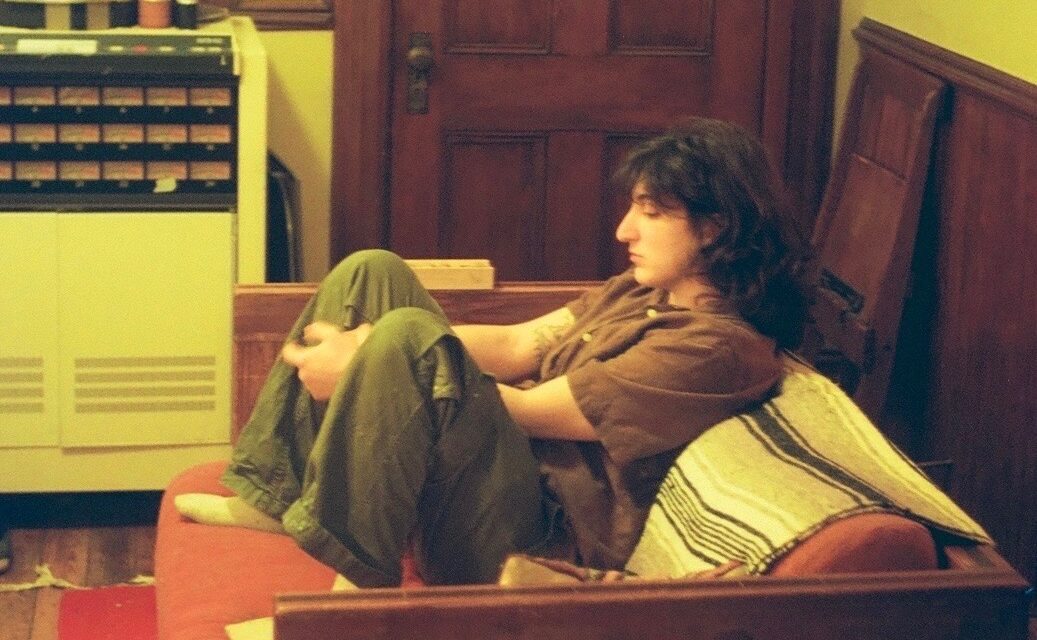
On her new single “Twomac,” the New York City folk-rock songwriter explores the uncomfortable space between patience and self-abandonment. Following her album You Won’t Get My Message but You’ll Hear It, Smith opens up about grief, chronic illness, creative intimacy, and why hope is sometimes the most difficult thing to hold onto.
There’s something quietly devastating about waiting for someone who knows you’re there.
Not someone who’s lost, or someone who doesn’t understand how you feel. Someone who knows exactly where to find you but refuses to meet you halfway.
For New York City songwriter Coco Smith, that emotional contradiction sits at the heart of her new single, “Twomac.”
Inspired by Angelo De Augustine’s “Old Hope,” the song imagines someone standing at the bottom of a tree, waiting for another person to climb down.
It’s an almost childlike image, but the emotional implications are anything but simple.
“They know you’re down there waiting; they’re just refusing to come down,” Smith explains.
Beneath the metaphor lies a familiar question: at what point does being patient with someone become a form of neglecting yourself?
Smith doesn’t pretend there’s a universal answer.
“Humans are animals and we all know when we’re being taken advantage of at some point,” she says. “There’s no ‘too late’ in that, just learning.”
That refusal to reduce complicated emotions to easy lessons has become central to her songwriting.
Following the July release of her album You Won’t Get My Message but You’ll Hear It via Brooklyn’s VHS Records, “Twomac” continues Smith’s exploration of love, grief, anger, and the strange persistence of hope.
Built around delicate drums, a driving bassline, and unfurling guitars, the song moves toward catharsis without necessarily offering resolution.
And perhaps that’s the point.
The Difference Between Hope and Denial
Hope occupies an unusual place in Coco Smith’s music.
It’s neither a sentimental promise that everything will work out nor a convenient escape from difficult realities.
Instead, it’s something closer to a survival mechanism.
Throughout You Won’t Get My Message but You’ll Hear It, Smith returns to a philosophy she describes as triumph, despite.
The phrase acknowledges that life rarely provides neat victories. More often, progress arrives in small, unexpected moments that somehow justify the difficulties surrounding them.
For Smith, those moments might involve making a family member with a chronic illness laugh, reconnecting with someone after a long absence, or experiencing the rare satisfaction of a musical idea finally coming together.
“I write music about the hopeful moments that make the non-hopeful moments worth it,” she explains.
“The hope is far and few between, but it’s big enough that it casts a shadow over all of the non-hopefuls.”
It’s a striking way to understand optimism.
Rather than allowing hope to erase pain, Smith sees the two as inseparable.
Her songs don’t deny the existence of grief, illness, or disappointment. They search for the moments that make those experiences bearable.
That distinction is particularly important on “Twomac,” where the desire to believe in another person exists alongside the growing realization that they may never change.
Hope can sustain us, but it can also keep us waiting.
And Smith seems increasingly interested in understanding the difference.
Making Music From the Things That Don’t Go Away
Smith’s recent album is deeply personal, moving chronologically through experiences of insecurity, family illness, anger, friendship, and love.
On “Tortious,” she examines feelings of disconnection from her body while reflecting on her father’s chronic illness.
Unlike the anger that inspired “Multiform,” which she says she has largely moved beyond, the emotions behind “Tortious” remain part of her everyday life.
“‘Tortious’ is kind of a forever feeling,” she admits.
The song connects childhood experiences of bodily discomfort with the vulnerability of watching a parent navigate illness.
But Smith’s relationship with her family also carries a profound sense of continuity.
She wears her father’s old clothes, noticing how they began fitting her around the time they stopped fitting him.
And she now performs in some of the same New York venues where her parents once played music.
“Him and my mom also kind of passed the torch to me musically and with living in NYC,” she explains.
It’s a quietly powerful image of inheritance.
The same city, the same stages, even the same clothes, inhabited by a different generation.
Rather than presenting family history as something that exists exclusively in the past, Smith allows it to remain physically present in her life and music.
Her songs become a way of carrying those experiences forward without pretending they have been resolved.
The Band Is Part of the Story
Although Coco Smith’s name appears on the records, she’s quick to challenge the idea that the music belongs to her alone.
She writes the lyrics, vocal melodies, and rhythm guitar parts, but her bandmates develop their own contributions.
For Smith, that distinction is fundamental.
“To me, that signifies it being our music, not just mine.”
Her closest musical collaborator is Isaiah Rowe, a drummer, vocalist, and pianist whose relationship with Smith extends far beyond rehearsals and recording sessions.
The two share remarkably similar personal histories, including experiences involving their fathers’ chronic illnesses and their upbringing.
That understanding creates a kind of creative shorthand.
“It’s nice to make music with someone who can almost read my mind,” Smith says.
Their musical connection becomes particularly meaningful on You Won’t Get My Message but You’ll Hear It, where Rowe’s contributions help transform intensely personal experiences into something communal.
On “Jasper,” the relationship between the two musicians becomes part of the song’s emotional foundation.
Elsewhere, Smith frequently allows the instruments to continue telling the story after her lyrics have ended.
Rather than treating the band as accompaniment, she gives each musician space to express their own interpretation of the emotions behind the songs.
It’s an approach that values collective intuition over individual control.
And in an industry increasingly dominated by carefully polished productions, Smith believes that preserving the humanity of a performance carries its own importance.
“I like polish, but not too much of it, because I like to listen to music that feels like it’s being made in front of me.”
Finding Community in an Increasingly Digital World
Smith’s music is also inseparable from the independent New York folk-rock scene in which it has developed.
Having shared bills with artists including Avery Friedman, Wulfer, and Untitled Freak, she belongs to a community where personal relationships and creative collaboration often overlap.
Her label, VHS Records, reflects a similar philosophy.
Founded in 2024 by producer and engineer Reed Black, the Brooklyn-based independent imprint emerged from Vinegar Hill Sound, a recording studio rooted in intimate, artist-centered production.
Rather than prioritizing rapid expansion, the label emphasizes carefully developed releases and close relationships with its artists.
For Smith, that environment offers something the digital music industry cannot fully reproduce.
“You never know who’s listening to your music and talking about it behind closed doors,” she explains.
“In person, they see your shows and actually speak to you about it.”
It’s a simple observation, but one that resonates with the larger themes of her work.
The difference between being observed and being genuinely connected to someone is enormous.
And in a culture where visibility is often mistaken for intimacy, Smith seems particularly aware of how easily the two can become confused.

Being Heard Isn’t the Same as Being Understood
The title You Won’t Get My Message but You’ll Hear It suggests an almost paradoxical relationship between communication and connection.
Someone can hear what you’re saying without understanding what you mean.
They can listen to your music, follow your life, and remain aware of your existence without actually knowing you.
For Smith, that distinction has become increasingly clear.
“I’m often heard and watched by people that I don’t interact with anymore,” she says.
“But the people around me are the people that understand me. The people that I love.”
It’s a sentiment that brings the emotional world of “Twomac” into sharper focus.
The person at the top of the tree knows someone is waiting below.
But awareness alone doesn’t constitute love.
Connection requires participation, vulnerability, and the willingness to meet another person somewhere in the middle.
Through her music, Smith continues to explore the difficult space between wanting that connection and recognizing when it isn’t being reciprocated.
And although her songs frequently emerge from grief, uncertainty, and frustration, she refuses to surrender the possibility of something better.
“We get one life,” she says. “I can’t afford to be a pessimist.”
Perhaps that’s the most compelling thing about Coco Smith’s songwriting.
Her hope isn’t naive.
It knows exactly how much things can hurt.
And it chooses to keep looking for something beautiful anyway.

In Conversation With Coco Smith
“Twomac” is about waiting on someone who knows you’re there and won’t meet you halfway. When does patience stop being love and start being you putting yourself last?
I think it depends on the person’s threshold. Humans are animals and we all know when we’re being taken advantage of at some point. There’s no “too late” in that, just learning. I’d say “Twomac” represents a learning experience where you’re lost in the feeling and just beginning to realize that the other person won’t ever come down.
The image at the centre of “Twomac” is someone waiting at the bottom of a tree for another person to come down. Why does a simple, almost kid-like picture work so well for something this complicated?
Thanks! Haha. I don’t know. I think being with and around people who have hurt you is something that brings out the child in all of us. We all want to be loved in platonic and romantic ways. We all want to be happy and healthy. Why shouldn’t we want that for other people (that’s where it gets political)? They’re very basic needs that people have since childhood but are the most difficult to meet.
The album is built around “triumph, despite.” Do you choose hope, or does it show up on its own once you’ve run out of other options?
Personally, I find myself choosing hope in the moments where I can only rely on it. I don’t know if that answers your question well enough. They’re the moments where I’m like, “Well, I have to make it in music because it’s all I’ve trained myself to do for years. There’s nothing else I’m skillful at. So I’m going to make it because I have to.” That’s something I’ve definitely seen some old musician talk about in a YouTube video that I took too seriously. But it’s true. It’s debatable if I’m skillful enough at music, music is all so subjective. But I have to be, because there’s nothing else.
You write about grief, illness, anger and uncertainty without making any of it purely tragic. Have you ever felt pushed to make something sound more hopeful than it was, or is finding the beauty just how you see things?
These questions are awesome! I try to find the beauty. It’s harder now because I’m on medication. But that makes finding the beauty all the more rewarding. I still take pictures on my phone that make me happy. I still find hope in hanging out with my friends and my girlfriend. And on going on mini-tours and seeing a project through. I find less hope in being able to read more books; my ability has gone down because I haven’t had the time or attention span. Something I’m working on. But I really do love seeing the bright side or trying to find solutions to things. We get one life. I can’t afford to be a pessimist. Depression is one thing, willful pessimism is another.
I write music about the hopeful moments that make the non-hopeful moments worth it. The hope is far and few between, but it’s big enough that it casts a shadow over all of the non-hopefuls. That’s how I feel about it.

“Tortious” is about feeling cut off from your body and “Multiform” is about anger you can’t shake. Looking back at the album, do you see yourself moving through those feelings, or are they all still sitting there together?
I’ve definitely moved past the instances of “Multiform.” Anger is not something that sticks with me very well. But “Tortious” is kind of a forever feeling. It’s about how I grew up, feeling not in my body and relating it to my dad’s illness. “Tortious” reminds me of how I felt back then, and to not cover my body up when I’m going swimming, or something. And to wear clothes that I truly want, not just things to cover myself up because I don’t know what I am. I wear a lot of my dad’s old clothes. I feel like he stopped fitting into them right when I began fitting into them. Him and my mom also kind of passed the torch to me musically and with living in NYC. They played a bunch of shows where I currently play, and they hung out where I currently hang out. So that’s also nice.
You’ve said you let the instruments take over once you’ve finished saying what you need to say, like your bandmates carry the story on in their own way. How much of the music is yours, and how much only exists because of the people playing with you?
I write the lyrics, chords of my rhythm guitar and melody of my voice, but the band writes whatever they play. To me, that signifies it being our music, not just mine. They’re all very close to me and they know what the music is about, so I want them to feel free to play what’s on their minds. I acknowledge that my playing is as much of a separate entity to their playing as it is a part of it. It’s not “Coco and the band,” and I’ve never liked that implication.
Isaiah Rowe is a big part of this record, and you two share some of the same experiences. What changes when you make music with someone who already gets it and doesn’t need things explained?
It’s kind of weird. In a good way. Sometimes, Isaiah and I say the same thing at the same time, and we both decide that maybe we should spend less time together. We never do. It’s nice to make music with someone who can almost read my mind. We don’t need to rehearse as much. And I have a friend who can make faces at me in crowded rooms for life.
You’ve said folk-rock is about overcoming something, even if the win is small or doesn’t last. Is there something special about hearing imperfect people make imperfect music together, when so much of what we hear is polished to death?
Yes. Yes. It’s extremely important. It teaches young musicians that they can do it, too. I like polish, but not too much of it, because I like to listen to music that feels like it’s being made in front of me.
You’re part of a growing folk-rock scene in New York, and VHS Records feels very close and hands-on. What does a local scene give you that the digital side of the industry can’t?
Oh, thank you! The local scene does so much. You never know who’s listening to your music and talking about it behind closed doors. In person, they see your shows and actually speak to you about it. Sometimes, it can feel like more of a “thing” to text or DM a musician.
The album title is “You Won’t Get My Message but You’ll Hear It.” Now the record’s made and “Twomac” is out, what have you learned about the difference between being heard and being understood?
I’ve learned that being heard can be a baseline for people who are on the outside of your social group. I’m often heard and watched by people that I don’t interact with anymore. But the people around me are the people that understand me. The people that I love.
“Twomac” is available now on digital streaming platforms, following Coco Smith’s album You Won’t Get My Message but You’ll Hear It, released via VHS Records.
Follow Coco Smith on Instagram at @cocosmith__.
Photo credit: Chris Garcia.