Photo credit Mihai Badic
Creator Adam Znaidi transforms the scores, deep cuts and musical oddities of Rushmore, The Royal Tenenbaums, The Life Aquatic, Fantastic Mr. Fox and more into a theatrical five-piece live show touring the UK and Europe this September.
Wes Anderson’s films are among the most instantly recognizable in modern cinema. The symmetrical compositions, carefully calibrated color palettes, deadpan performances and meticulously constructed sets have become so embedded in popular culture that you can often recognize an Anderson-inspired frame before knowing anything about the story inside it.
But remove the music, and something essential disappears.
From Mark Mothersbaugh’s eccentric original scores to carefully chosen needle-drops spanning rock, classical music, Bollywood, jazz and more, Anderson’s films have always used sound as another layer of world-building. His soundtracks don’t simply accompany the images; they frequently become inseparable from the way we remember them.
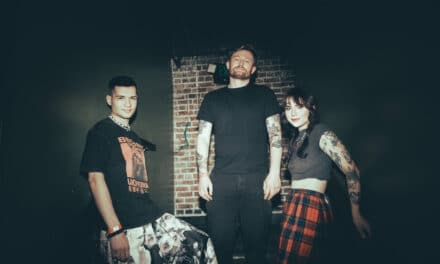
That relationship between music and cinema sits at the heart of Wes Banderson: The Music of Wes Anderson, a five-piece live project created and directed by Adam Znaidi, also known as the bassist for The Go! Team and co-founder of The Physics House Band.
This September, the group will bring the show across the UK and Europe, performing music from Rushmore, The Grand Budapest Hotel, The Royal Tenenbaums, The Life Aquatic With Steve Zissou, Moonrise Kingdom, The Darjeeling Limited, Fantastic Mr. Fox and beyond.
And despite the obvious cinematic foundation, Znaidi never wanted the experience to feel like a conventional film-score concert.
“The aim for this show was to make it feel like a ‘gig,’ something that anyone could enjoy, even if they weren’t that familiar with Wes Anderson’s films,” he explains. “It gets really loud, it gets really quiet and takes you on a journey through a whole load of genres.”
That journey involves everything from the work of Mark Mothersbaugh and Alexandre Desplat to Sven Libaek, Shankar-Jaikishan, Maurice Ravel and the deeper musical discoveries threaded through Anderson’s catalogue.
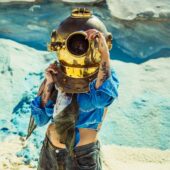
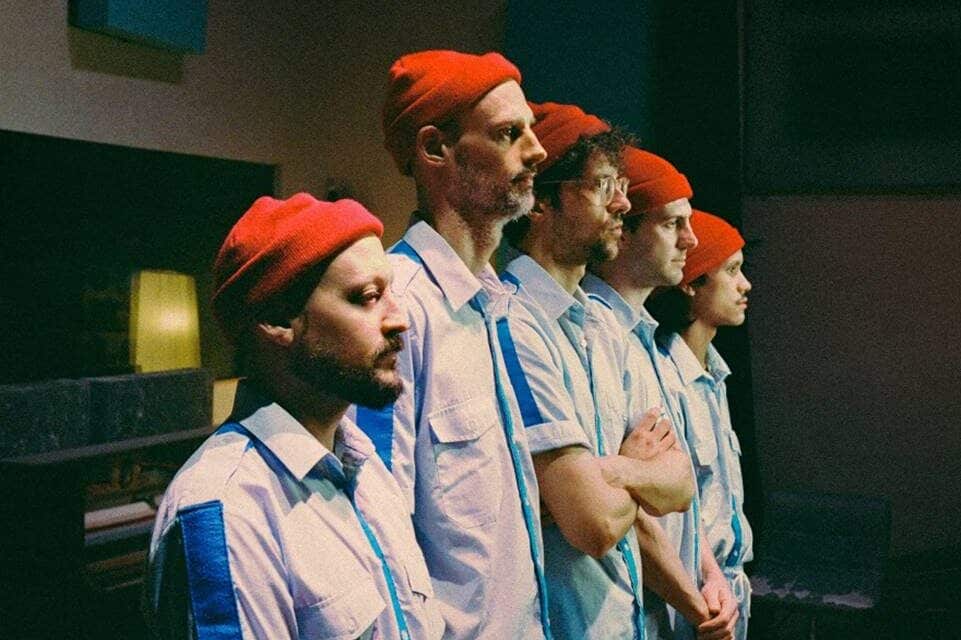
The band even performs in Team Zissou livery, leaning into the playful theatricality of The Life Aquatic With Steve Zissou without turning the show into straightforward cosplay.
Instead, the costumes reinforce something Znaidi sees throughout Anderson’s work: the recurring presence of crews, families and strange little units bound together by some shared mission.
“One of the recurring themes in Wes Anderson’s movies is the idea of a little crew, team or family unit,” he says. “I think us performing this as a small group actually plays into that quite nicely.”
From one song to an entire universe
Wes Banderson began much more casually.
Znaidi originally wanted to film a live rendition of “Ping Island/Lightning Strike Rescue Op,” the Mark Mothersbaugh piece heard in The Life Aquatic, with a group of friends.
Then the scope of the idea changed.
“I had the thought that there might actually be an audience for a full live show centred around the original score music from Wes’s films,” he recalls.
Part of his motivation came from feeling that Anderson’s recognizable pop needle-drops often overshadowed some of the extraordinary original compositions surrounding them.
“There’s so much incredible, original music that often gets overlooked in favour of the better-known needle drops, like Nico’s ‘These Days’ or ‘Making Time’ by The Creation.”
As a composer himself, Znaidi wanted to pull those less celebrated pieces into the foreground.
But there was another, simpler motivation.
“I just really wanted to tackle it live.”
That desire quickly became an elaborate arrangement problem.
Five musicians, dozens of instruments and a lot of logistics
Recreating a catalogue this sonically broad with only five musicians means Wes Banderson functions less like a conventional band and more like an intricate live puzzle.
Members move constantly between instruments, and arranging a single piece can require Znaidi to anticipate what somebody will need to be playing several minutes later.
“You’ve almost got to create a map of who is playing what instrument at what time, how much time they have to swap to another instrument, so how can you create little gaps that let them do that,” he explains.
Not every transition is equal.
“Swapping from a saxophone to a keyboard is much easier than swapping from an acoustic guitar to violin.”
Sometimes, an arrangement can appear solved until the final section exposes a logistical impossibility.
“I’ll get to the end of an arrangement and realise that I have to go all the way back to the beginning and redistribute the instruments to fix a problem that only appears four minutes down the line.”
That restriction has also shaped what the project simply cannot perform.
Some heavily orchestral pieces would require expanding the ensemble significantly to do them justice. Znaidi cites “Loquasto International Film Festival” from The Life Aquatic as one he would have loved to include but ultimately couldn’t recreate satisfactorily with five musicians.
That limitation, however, has become part of the project’s identity.
The same five people navigating wildly different musical traditions gives even the most eclectic material a common sonic language.
The Wes Anderson mixtape
With so much music to choose from, Znaidi approaches the setlist almost like making someone the ultimate Wes Anderson mixtape.
“I really want to show them all the best pieces of music from his films,” he says.
And sequencing is almost as important as selection.
Znaidi has always been obsessive about setlists, frequently handling running orders in his previous bands. With Wes Banderson, that instinct becomes essential.
“Knowing where to be fast, slow, loud, quiet, dense, sparse,” he explains.
That dynamic philosophy is especially important because music written for film does not automatically work in a concert environment.
A piece can be perfect beneath a scene while becoming surprisingly static when removed from it.
“The first thing to always consider is: Will this be entertaining?” Znaidi says. “There’s a lot of music that sounds great within the context of the film that doesn’t really pack a punch when performed live.”
His job is therefore not simply preservation. It is translation.
The goal is to retain the emotional identity of the original compositions while reshaping them into something capable of carrying an audience through an entire evening.
“I’m always imagining the show from the audience perspective and trying to think what’s going to let them leave the evening feeling like they’ve gone on a really beautiful, exciting and frequently unexpected journey with us.”
That journey reaches the UK this September before continuing through Italy and France, bringing soundtrack obsessives and listeners who may barely know the films into the same room.
For Znaidi, that mixture is part of the point.
He hopes hardcore fans experience the thrill of finally hearing obscure pieces performed live, while newcomers discover music they may never have encountered otherwise.
And ideally, everyone leaves talking.
“Ultimately, if people can walk away having conversations about the music, and conversations about the importance of film music, I think I’ll have done something good for the world.”
Below, MUNDANE speaks with Adam Znaidi about building Wes Banderson, arranging orchestral music for five musicians, Anderson’s legendary needle-drops and the one piece he would perform if Wes Anderson himself suddenly walked into the room.
MUNDANE: Wes Anderson’s films are so visually distinctive that it’s easy to forget just how much of their emotional identity comes from music. When did you first realize his soundtracks could exist as their own world outside of the films?
ADAM ZNAIDI: It actually started with me wanting to film a live version of “Ping Island/Lightning Strike Rescue Op” with some friends, just for fun. I then had the thought that there might actually be an audience for a full live show centred around the original score music from Wes’s films.
There’s so much incredible, original music that often gets overlooked in favour of the better-known needle drops, like Nico’s “These Days” or “Making Time” by The Creation. As a composer myself, I really wanted to bring some of that music to the forefront, but also because I just really wanted to tackle it live.
MUNDANE: Your sets move between original scores and some pretty deep-cut needle-drops. How do you decide which pieces deserve to make it into a Wes Banderson show rather than simply choosing the songs audiences already know?
ADAM ZNAIDI: It was quite a long process of going through all the soundtracks and looking for pieces that met three main criteria.
Firstly, was there enough variation and musical interest to make it something that would be both exciting to listen to and fun to play live? Secondly, was it long enough to work as a standalone piece? Some tracks are only a minute or so long, so in those cases we’d look at whether we could combine them with another piece from the same film to create a medley, which we’ve done with a few of them.
And finally, could we actually make it work as a five-piece band? There were a few more orchestral pieces that I’d have loved to include — “Loquasto International Film Festival” from The Life Aquatic With Steve Zissou, for example — but there was no way of presenting them in a satisfying way without expanding the band by several more musicians.
In terms of choosing songs the audience already knows, I didn’t really have that problem as unless you’re a huge fan of film scores, you won’t know it until you hear it and go, “Oh yeah! That tune!” Which is a really fun thing to do for people.
MUNDANE: You’re jumping between Rushmore, The Royal Tenenbaums, The Life Aquatic, Fantastic Mr. Fox, Moonrise Kingdom, The Grand Budapest Hotel and beyond. Which film has been the most fascinating soundtrack to pull apart as musicians?
ADAM ZNAIDI: Each of them have had their fun and challenges. The Royal Tenenbaums and The Life Aquatic probably have the most varied selections of music, so pulling those apart is a lot of fun.
The Darjeeling Limited has a lot of awesome Bollywood film score pieces, which I would have loved to play live, but ultimately, too difficult to do in a way that didn’t feel like a slightly dodgy Western pastiche.
I think they all have their challenges and moments of compositional beauty, but the earlier movies definitely have more music that feels like it can stand alone, and therefore be a lot more exciting for an audience to listen to.
MUNDANE: “Shark Attack Theme” is such a great example of how strange, playful and unexpectedly intense the music in these films can be. What happens when you take something originally designed to accompany a scene and rebuild it for a live audience?
ADAM ZNAIDI: The first thing to always consider is: Will this be entertaining? There’s a lot of music that sounds great within the context of the film that doesn’t really pack a punch when performed live.
When choosing the pieces and working on these arrangements, I’m always imagining the show from the audience perspective and trying to think what’s going to let them leave the evening feeling like they’ve gone on a really beautiful, exciting and frequently unexpected journey with us.
MUNDANE: Part of the fun of Wes Banderson is clearly theatrical—you’re even performing in Team Zissou livery. How important was it that the project feel like entering Anderson’s universe rather than simply attending a concert of soundtrack music?
ADAM ZNAIDI: One of the recurring themes in Wes Anderson’s movies is the idea of a little crew, team or family unit. I think us performing this as a small group actually plays into that quite nicely.
I love seeing full orchestras do film music, and the power of that is undeniable, but by that same merit, I think there’s a bit of a disconnection between audience and performers. In our shows, there’s lots of chat with the audience, and a lot of interaction between the band members.
MUNDANE: The five of you switch instruments throughout the performance. Does recreating such a wide-ranging catalogue force you to approach yourselves less like a conventional band and more like musical problem-solvers?
ADAM ZNAIDI: Definitely. The whole process of creating these arrangements was me figuring out what I could do with just five people.
You’ve almost got to create a map of who is playing what instrument at what time, how much time would they have to swap to another instrument, so how can you create little gaps that let them do that—which also depends on the instrument. For example, swapping from a saxophone to a keyboard is much easier than swapping from an acoustic guitar to violin.
There is also sometimes the issue where I think I’ve distributed the instruments correctly, but then I’ll get to the end of an arrangement and realise that I have to go all the way back to the beginning and redistribute the instruments to fix a problem that only appears four minutes down the line.
Occasionally we’ll have a change of personnel, where a new member might not play the same instruments as whoever was previously in their place, so that then results in having to make adjustments to the arrangements—but it’s all a fun challenge.
MUNDANE: Wes Anderson has introduced generations of viewers to older and sometimes relatively obscure music through his films. Why do you think his needle-drops have such an unusual ability to make a song feel completely different once you’ve heard it attached to one of his scenes?
ADAM ZNAIDI: That’s an interesting one. I think it’s largely on the strength of the song, and I guess by extension music itself.
It can be so personal—we can attach a piece of music to a moment or time in our lives, and I think that’s kind of what happens with tunes in Wes’s films.
It’s also down to how well the songs have been chosen. Randall Poster is Wes’s music supervisor, and he has an unbelievably good taste in pairing music with film.
MUNDANE: There’s something inherently nostalgic about Anderson’s filmmaking, but his soundtracks pull from so many different countries, decades and traditions. How do you preserve that eclecticism while still making the live show feel like one cohesive journey?
ADAM ZNAIDI: There’s a part of me that treats this show as me making a Wes Anderson “mixtape” for someone. I really want to show them all the best pieces of music from his films, and it’s important to do it in a way that feels like all the pieces belong together.
I think part of that comes from my obsession with creating perfect setlists for shows—in my previous bands I was generally the one who put those set orders together. Knowing where to be fast, slow, loud, quiet, dense, sparse, etc.
But also, I think the fact that we are a small ensemble with a limited range of instruments helps keep even a very wide selection of genres sounding cohesive.
MUNDANE: You’re bringing the show across the UK and Europe this September. What are you hoping happens in the room between the hardcore film obsessives who recognize every reference and the music fans who might encounter some of these compositions for the first time?
ADAM ZNAIDI: I think it would be nice for the new fans to see how excited the soundtrack nerds are about seeing these pieces performed live, and for the soundtrack nerds to share in the excitement of sharing something they love with someone new.
Ultimately, if people can walk away having conversations about the music, and conversations about the importance of film music—especially with AI bloodsuckers like Suno and Udio getting into the mix—I think I’ll have done something good for the world.
MUNDANE: If Wes Anderson unexpectedly walked into a Wes Banderson show and you were allowed to play him just one piece to explain what this entire project is about, what would you choose—and why?
ADAM ZNAIDI: I would probably say our Royal Tenenbaums Suite, because it’s seven minutes long, it kind of has everything genre-wise, and he’ll hopefully enjoy how much of a bastard it is to perform.
WES BANDERSON — UK & EUROPE TOUR
September 9 — Manchester — Yes Pink Room
September 10 — Bristol — Jam Jar
September 11 — London — Hootananny
September 12 — Birmingham — Hare And Hounds
September 17 — Turin, Italy — Hiroshima Mon Amour
September 18 — Milan, Italy — Arci Bellezza
September 19 — Bologna, Italy — TEST Prototipo Urbano
September 20 — Rome, Italy — Monk
September 21 — Livorno, Italy — Teatro Goldoni
September 23 — Paris, France — Bus Palladium