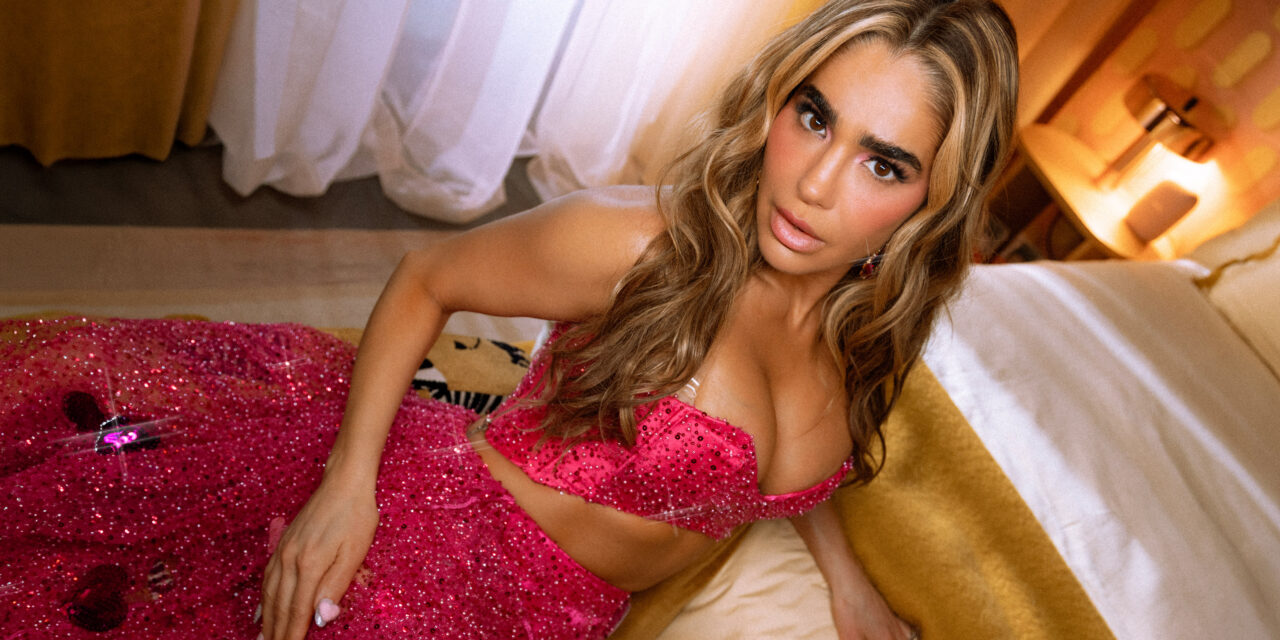
On “Perfume,” the Iranian-born independent pop artist turns glamour, femininity and the dancefloor into something more meaningful: the freedom to stop proving who you are and start enjoying the person you’ve become.
There was a time when SHAB thought confidence meant making sure people noticed her.
Be fearless. Be strong. Enter the room and announce yourself without necessarily saying a word.
It made sense.
When you’ve spent significant portions of your life rebuilding yourself, visibility can become intertwined with survival. Being seen means being acknowledged. Being heard means proving you have a voice. Success means demonstrating that you deserve the space you’ve fought to occupy.
SHAB doesn’t think about confidence that way anymore.
“Today, confidence is much quieter for me,” she says. “It’s knowing who I am without needing everyone else to agree.”
That sentence contains the real story behind “Perfume.”
On its surface, SHAB’s latest release—and its newly dancefloor-charged remix—is unabashed pop: glamorous, flirtatious, feminine and designed to make people move. Written with Bonnie McKee and JHart, the original folds contemporary pop production around subtle Persian influences, while the remix takes its central attitude somewhere bigger and more communal.
But underneath all that glamour is a woman reconsidering what confidence actually looks like after spending years becoming herself.
“The young Persian girl that I once was, the woman I became in America, the mother, the dreamer and the performer who loves putting on something fabulous and walking onto a stage,” SHAB says. “I’m much more comfortable with all the different parts of myself now.”
And then comes the thesis:
“Confidence isn’t something someone else gives you. You put it on yourself.”
Like perfume.
What Remains After You Leave the Room?
It’s a remarkably effective metaphor.
Perfume is invisible, yet its presence can transform how someone feels entering a room. It can linger after they leave. Years later, a familiar scent can suddenly resurrect a person, place or memory you thought had disappeared.
SHAB was drawn to precisely that tension between invisibility and presence.
“Real presence isn’t always about being the loudest person in the room,” she says. “Sometimes it’s simply an energy that people feel.”
There is also the ritual itself.
The last look in the mirror. The bottle on the dresser. The decision about how you want to encounter the world that day.
“This is how I want to feel today,” as SHAB puts it.
For her, “Perfume” takes that private ritual and turns it into a philosophy: putting on confidence like a favorite fragrance and carrying it with you.
That interpretation becomes even more interesting considering how SHAB’s understanding of femininity has evolved.
This isn’t femininity performed for approval.
It’s femininity experienced as ownership.
Dressing for Herself
The visual universe surrounding “Perfume” is inseparable from the song.
Fashion, beauty, movement and photography aren’t accessories SHAB attaches after the music is finished. She considers them extensions of the storytelling itself.
“I’ve always believed pop music should engage your imagination as well as your ears,” she says.
Fashion is particularly interesting because of its ability to temporarily transform the wearer without necessarily making any of those transformations false.
“You can put on something romantic and feel completely different than when you put on something powerful and architectural,” she explains. “Neither version is less authentic. They’re different sides of the same woman.”
For “Perfume,” that distinction mattered.
The woman at the center of its visual language can be glamorous, sensual and aware of her own beauty without existing primarily to be consumed by someone else’s gaze.
“She is dressing for herself,” SHAB says. “She knows she’s beautiful. She knows she’s powerful.”
It sounds straightforward.
Depending on where and how you’ve lived, it isn’t.
Surviving Something Doesn’t Mean You Owe Your Life to Sadness
SHAB was born in Iran and eventually rebuilt her life in America after leaving the country as a refugee.
That history has understandably become part of the way her story is told. Her 2025 double album One Suitcase engaged directly with that journey, while her advocacy for refugees and women’s rights remains deeply connected to her own experiences.
But a complicated thing can happen when an artist survives something extraordinary.
People begin expecting the trauma to become the permanent subject.
SHAB felt that responsibility herself.
“For a long time I think I felt that because my story contained difficult chapters, I had some responsibility to always make serious music about them.”
Eventually she realized that expectation contained its own trap.
“Surviving something difficult doesn’t mean you owe the rest of your life to sadness.”
It’s difficult to find a better explanation for the exuberance of “Perfume.”
SHAB isn’t abandoning the young girl who experienced displacement by making glamorous pop music.
She’s giving that girl something she wanted too.
“She wanted to dance and dress up and fall in love and laugh and make music,” SHAB says.
The joy isn’t a rejection of survival.
It’s part of what survival was for.
“When I make something glamorous or joyful, I’m not abandoning my history. In some ways, I’m honoring what all that struggle was for—the freedom to become whoever I wanted to become.”
Persian Isn’t Something She Adds to the Music
That freedom also means SHAB no longer feels obligated to make her cultural identity legible on command.
“Perfume” contains Persian influences, but she doesn’t approach those elements as decorations to be strategically inserted into a pop song.
“I don’t really approach my Persian heritage as something I have to add to a song,” she says. “It is already inside me.”
Sometimes that heritage arrives explicitly through melody, instrumentation, rhythm or imagery.
Other times it behaves more like seasoning.
“You may not be able to identify exactly what you’re tasting, but without it the dish wouldn’t taste the same.”
The difference is instinct.
SHAB doesn’t want to include something Persian simply because she’s Persian. It needs to belong emotionally to the music.
Her ambition is simultaneously local and global: make songs capable of traveling anywhere without erasing the fingerprints of where she came from.
A Pop Song Can Be Flirtatious and Still Mean Something
That balance extended into the writing room with Bonnie McKee and JHart.
SHAB describes McKee as bringing out the song’s boldness—the playful, flirtatious confidence willing to enjoy itself without apology.
JHart brought another dimension.
“He has a beautiful instinct for finding the feeling underneath the lyric, even when you’re making a record that is supposed to make people dance.”
SHAB didn’t want to choose between the two.
“Perfume” could be glamorous without being empty. Playful without being meaningless. Emotional without becoming solemn.
That’s also where collaboration becomes useful to her.
The right collaborator doesn’t impose an identity.
“When you have writers who understand you, they don’t try to turn you into someone else,” she says. “They help you reveal more of yourself.”
Then the Dancefloor Changed the Song
The remix offered another kind of revelation.
SHAB already understood the original “Perfume” as an expression of individual confidence. But translating that attitude onto a dancefloor changed its scale.
“The original has this sensual confidence, but when that same attitude is translated onto the dancefloor, it becomes almost communal,” she says.
One woman saying “I know who I am” becomes a room full of people experiencing some version of the same feeling.
And that reminded SHAB of something artists inevitably discover once music leaves the studio.
It stops entirely belonging to them.
Listeners drag songs into their own lives.
Cars. Bedrooms. Workouts. Clubs. Heartbreaks.
“You release a song thinking you know what it is, and then suddenly somebody shows you another version of it that was hiding there all along.”
The remix isn’t merely another product attached to “Perfume.”
It’s another possible life for the song.
Independence Means Protecting Her Voice
SHAB has been navigating those different lives while operating independently.
Asked what independence has allowed her to protect, her answer is immediate.
“My voice.”
Not merely the physical voice singing the songs.
“The ability to decide what SHAB represents.”
Independence comes without the automatic machinery that can accompany a traditional major-label pop career. Teams have to be assembled. Decisions have consequences. Failure belongs to you too.
But so does success.
SHAB has seen multiple releases reach Billboard and Mediabase Top 40 territory while maintaining that autonomy.
“When something does work, you know it happened without sacrificing the person you wanted to be.”
For SHAB, that’s significant because the person she wants to be contains multitudes that a more rigid pop apparatus might have tried to simplify.
Persian.
American.
Mother.
Refugee.
Pop star.
Advocate.
Woman who occasionally just wants to put on something incredible and dance.
“There isn’t only one road into pop music anymore.”
Joy Can Be Political Without Becoming a Political Song
That multiplicity also complicates the supposed division between SHAB’s advocacy and her escapist pop music.
She doesn’t see the two as opposites.
“When you’ve experienced a world where freedom can be taken away—especially from women—you understand that self-expression is not something to take for granted.”
The freedom to choose your clothes.
Your music.
Your beliefs.
Who you love.
The life you build.
These things can look mundane when they’re guaranteed.
They become profound when they aren’t.
SHAB sees a similar problem in how refugees are discussed. Displacement can become the defining characteristic of a person until the person underneath disappears.
“They aren’t simply stories of suffering,” she says. “They are mothers, artists, entrepreneurs, children, teachers and dreamers.”
People don’t survive simply to continue performing survival.
They survive because they want lives.
And sometimes a meaningful life includes something as uncomplicated as feeling beautiful while dancing to a pop song.
“Sometimes empowerment can be a serious conversation,” SHAB says. “But sometimes empowerment is a woman dancing to a pop song, feeling beautiful and completely free inside her own skin.”
Both matter.
Maybe She Doesn’t Need to Become SHAB Anymore
For years, SHAB’s life could be described through becoming.
Becoming American.
Becoming an artist.
Becoming strong enough to survive.
Becoming successful enough to prove something.
Becoming SHAB.
Her ambitions haven’t disappeared. There are audiences she wants to reach, stages she wants to perform on and further territory she wants to conquer in America.
But ambition feels different when it isn’t being used as evidence that you deserve to exist where you already are.
“I’ve reached a point where success feels less like proving that I belong here and more like enjoying the fact that I am here.”
That’s the version of SHAB we hear on “Perfume.”
Not someone who has forgotten where she came from.
Someone who has finally stopped requiring her past to dictate the emotional possibilities of her future.
She can be ambitious without fear.
Feminine without apology.
Persian and American without selecting one identity at the expense of the other.
She can make serious records.
She can make glamorous ones.
She can advocate for refugees.
She can put on perfume.
She can dance.
“Maybe for the first time, I’m not trying so hard to become SHAB,” she says.
“I’m simply enjoying being her.”
In Conversation With SHAB
“Perfume” is centered on confidence, femininity and self-expression. What does confidence mean to you now compared with when you first began building your identity as an artist?
I think when I was younger, confidence felt like something I had to prove—being fearless and strong all the time, or walking into a room and making sure people noticed you.
Today, confidence is much quieter for me. It’s knowing who I am without needing everyone else to agree.
That has been one of the great gifts of growing as both a woman and an artist. I’m much more comfortable with all the different parts of myself now—the young Persian girl that I once was, the woman I became in America, the mother, the dreamer and the performer who loves putting on something fabulous and walking onto a stage.
“Perfume” really comes from that place. Confidence isn’t something someone else gives you. You put it on yourself.
You wrote the track with Bonnie McKee and JHart, two writers with very distinct pop sensibilities. What did each of them bring out of you during the writing process?
Bonnie & JHart are both incredible because they understand great pop music, but they approach it with such different instincts.
Bonnie has this amazing ability to find something bold, playful and instantly memorable. She encouraged in me that very feminine, flirtatious confidence in the song—the part that isn’t afraid to have fun.
JHart brings so much emotion and humanity into a room. He has a beautiful instinct for finding the feeling underneath the lyric, even when you’re making a record that is supposed to make people dance.
What I loved about the collaboration was that I didn’t have to choose between those things. “Perfume” could be glamorous and playful but still say something very real about identity and self-worth. And when you have writers who understand you, they don’t try to turn you into someone else—they help you reveal more of yourself.
The original “Perfume” incorporates subtle Persian influences within contemporary pop production. How do you decide when elements of your Iranian heritage should be explicit in the music and when they should exist more subtly beneath the surface?
I don’t really approach my Persian heritage as something I have to add to a song. It is already inside me, so inevitably it finds its way into the music.
Sometimes it should be unmistakable—a melody, an instrument, a rhythm or a visual that immediately takes you somewhere Persian. Other times it’s almost like a spice in cooking. You may not be able to identify exactly what you’re tasting, but without it the dish wouldn’t taste the same.
I’ve also become much more comfortable letting those influences happen instinctively. I don’t want to put something Persian into a record simply because I am Persian. It has to belong there emotionally. My goal is always to make music that can travel anywhere in the world while still carrying some of the fingerprints of where I came from.
The remix transforms “Perfume” into something designed for the dancefloor without changing the emotional identity of the song. What did hearing it reimagined teach you about the different lives a single song can have?
That’s one of my favorite things about music—you release a song thinking you know what it is, and then suddenly somebody shows you another version of it that was hiding there all along.
The remix made me hear “Perfume” differently. The original has this sensual confidence, but when that same attitude is translated onto the dancefloor, it becomes almost communal. It’s no longer just one woman saying, “I know who I am.” Suddenly you can imagine an entire room of people feeling that way together.
I love that a song doesn’t really belong entirely to the artist anymore once it’s released. People take it into their cars, their bedrooms, their workouts, their nights out, their heartbreaks. A remix is another example of that. The song gets another life.
There’s something interesting about perfume itself as a metaphor: it’s invisible, but it can completely change how someone enters a room or how we remember them. Was that connection between scent, identity and presence part of what attracted you to the concept?
Absolutely. Scent is incredibly powerful because you can’t see it, but you feel its presence. Someone can leave a room and somehow their perfume stays behind. And years later, one familiar scent can suddenly bring back a person or a memory you thought you had forgotten.
I loved that as a metaphor for confidence. Real presence isn’t always about being the loudest person in the room. Sometimes it’s simply an energy that people feel.
And there is something wonderfully feminine about the ritual of putting on perfume before you leave the house. It’s that final little moment with yourself: This is how I want to feel today. I wanted the song to capture that feeling—putting on your confidence the same way you put on your favorite fragrance and carrying it with you into the world.
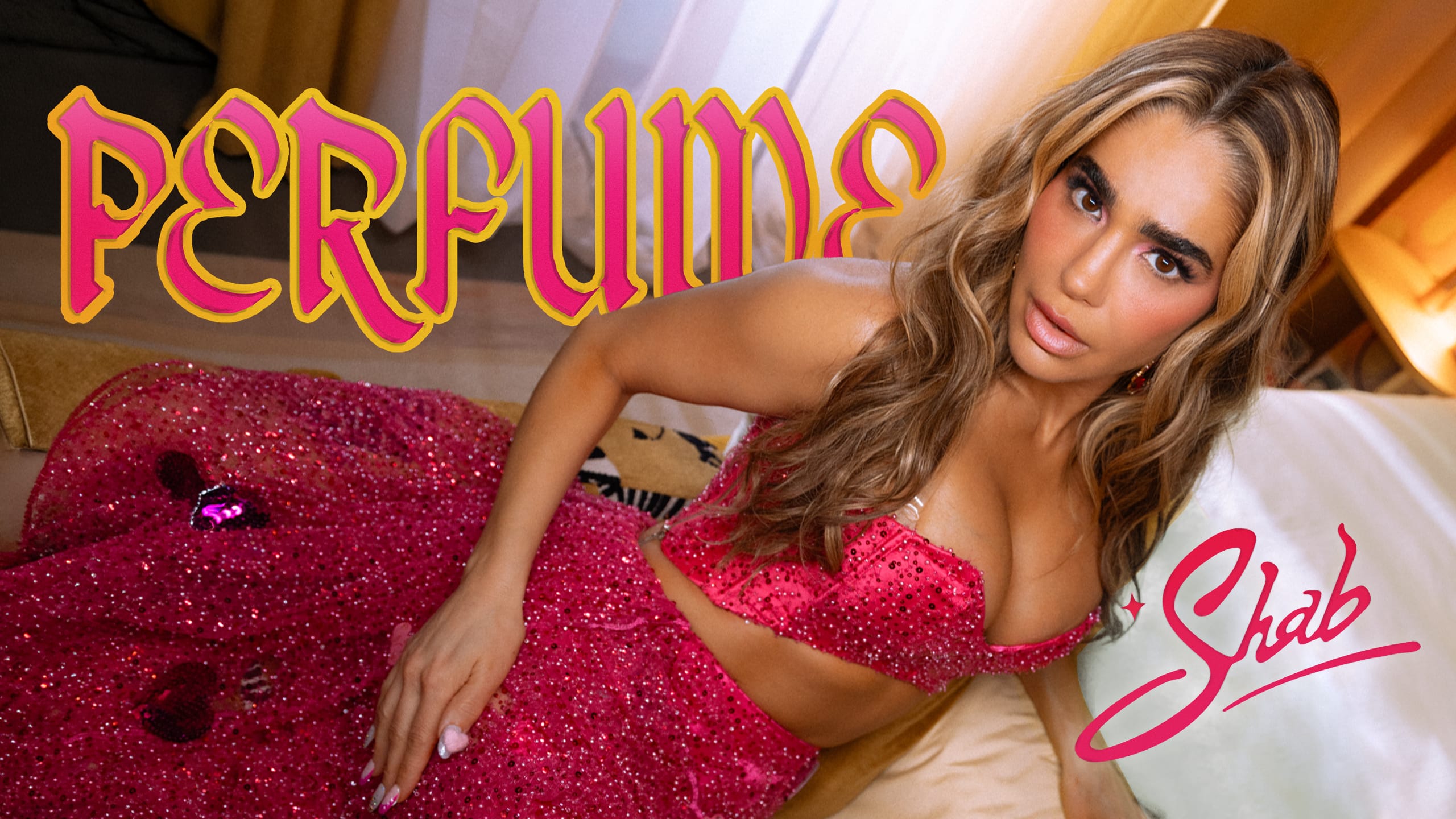
Fashion and visual presentation are clearly important within the world surrounding “Perfume.” Do you see clothing, beauty and styling as extensions of your songwriting—another way of communicating character before you’ve even sung a word?
Completely.
I’ve always believed pop music should engage your imagination as well as your ears. Fashion, beauty, movement, photography—all of those things can tell part of the story before the first lyric begins.
I also genuinely love fashion and its transformational possibilities. You can put on something romantic and feel completely different than when you put on something powerful and architectural. Neither version is less authentic. They’re different sides of the same woman.
For “Perfume,” the visuals needed to communicate confidence, femininity and sensuality without making the woman feel like an object. She is dressing for herself. She knows she’s beautiful. She knows she’s powerful. That distinction was very important to me.
You’ve now had several Billboard and Mediabase Top 40 chart appearances while continuing to operate as an independent artist. What has independence allowed you to protect creatively that you might have lost within a more traditional pop structure?
My voice.
And I don’t mean only my singing voice. I mean the ability to decide what SHAB represents.
Being independent is certainly not the easiest road. You don’t have this enormous machine automatically appearing every time you release a record. You have to build the team, make the decisions and take responsibility when something doesn’t work. But the beautiful part is that when something does work, you know it happened without sacrificing the person you wanted to be.
I’ve been able to make records that reflect my background, embrace femininity, experiment with different sounds and tell my story on my own terms. The chart success means a lot to me precisely because we’ve accomplished it independently. It reminds me that there isn’t only one road into pop music anymore.
Your story encompasses being a refugee from Iran, rebuilding your life and eventually becoming an international performer. How do you balance honoring that history with allowing yourself to make music that can simply be playful, glamorous and fun?
For a long time I think I felt that because my story contained difficult chapters, I had some responsibility to always make serious music about them. But eventually I realized something important: surviving something difficult doesn’t mean you owe the rest of your life to sadness.
My history will always be part of me. Leaving Iran, coming to America, learning a new language and building a life in a completely unfamiliar place shaped the woman I became. My One Suitcase double album was very connected to that journey, and I will always be proud of telling that story.
But that same little girl who went through those experiences also dreamed. She wanted to dance and dress up and fall in love and laugh and make music.
So when I make something glamorous or joyful, I’m not abandoning my history. In some ways, I’m honoring what all that struggle was for—the freedom to become whoever I wanted to become.
Your advocacy for refugees and women’s rights exists alongside a pop career increasingly associated with escapism and celebration. Do you see those worlds as separate, or can joy and self-expression themselves become forms of empowerment?
I don’t see those two concepts at all as being separate.
When you’ve experienced a world where freedom can be taken away—especially from women—you understand that self-expression is not something to take for granted. The ability to choose what you wear, what you sing, whom you love, what you believe and what kind of life you want to build is incredibly precious.
That’s also why my work supporting refugees means so much to me. Refugees are often defined by the worst thing that happened to them. But they aren’t simply stories of suffering. They are mothers, artists, entrepreneurs, children, teachers and dreamers who want the same opportunities to create meaningful and joyful lives that everyone else wants.
So yes, sometimes empowerment can be a serious conversation. But sometimes empowerment is a woman dancing to a pop song, feeling beautiful and completely free inside her own skin. I think both matter.
After One Suitcase, touring internationally and now a run of increasingly successful U.S. pop singles, what does this current chapter represent for you: breaking into a new market, redefining yourself as a pop artist, or something more personal?
I think it’s something more personal.
Of course, I’d like to think of myself as ambitious. I want the records to reach more people, I want to keep growing in America, and there are stages around the world upon which I still dream about performing. Moreover, I don’t pretend those things don’t matter to me—they absolutely do.
But I’ve reached a point where success feels less like proving that I belong here and more like enjoying the fact that I am here.
When I think about the girl who left Iran and eventually arrived in America with one suitcase, she couldn’t possibly have imagined all the places music would take her. For a long time my story was one of becoming—becoming American, becoming an artist, becoming strong enough to survive whatever came next.
This chapter feels different. It’s about freedom. It’s about joy. It’s about allowing myself to be ambitious without being afraid, feminine without apologizing for it, Persian and American without feeling that I have to choose between them.
Maybe for the first time, I’m not trying so hard to become SHAB.
I’m simply enjoying being her.