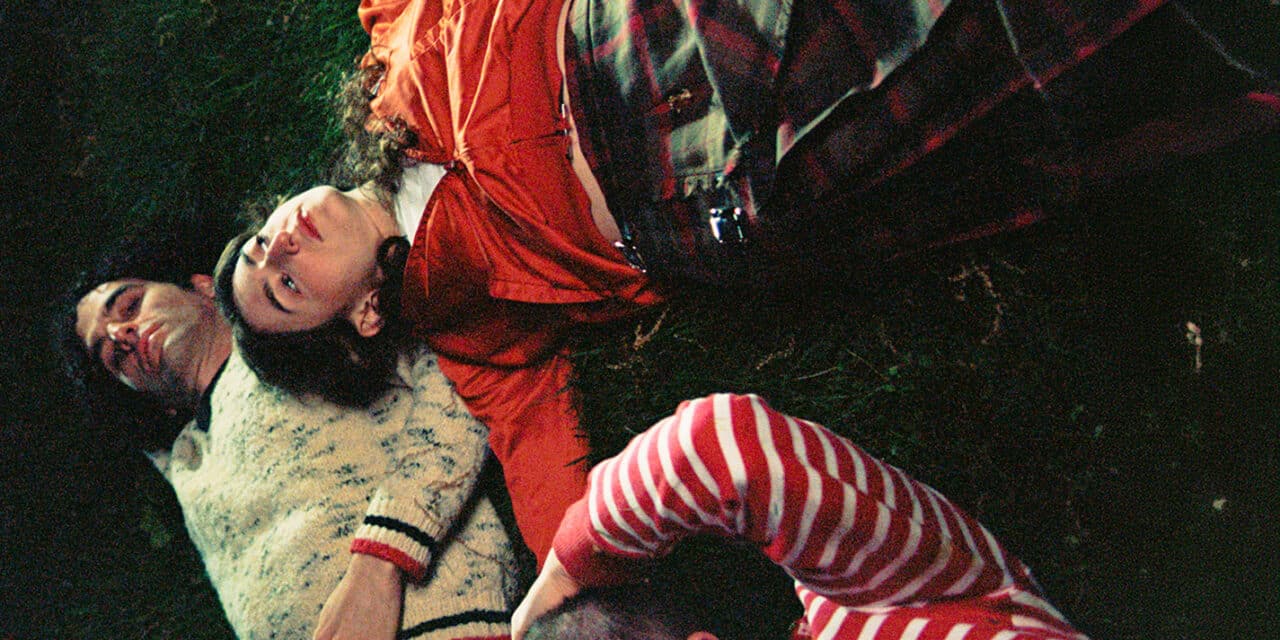
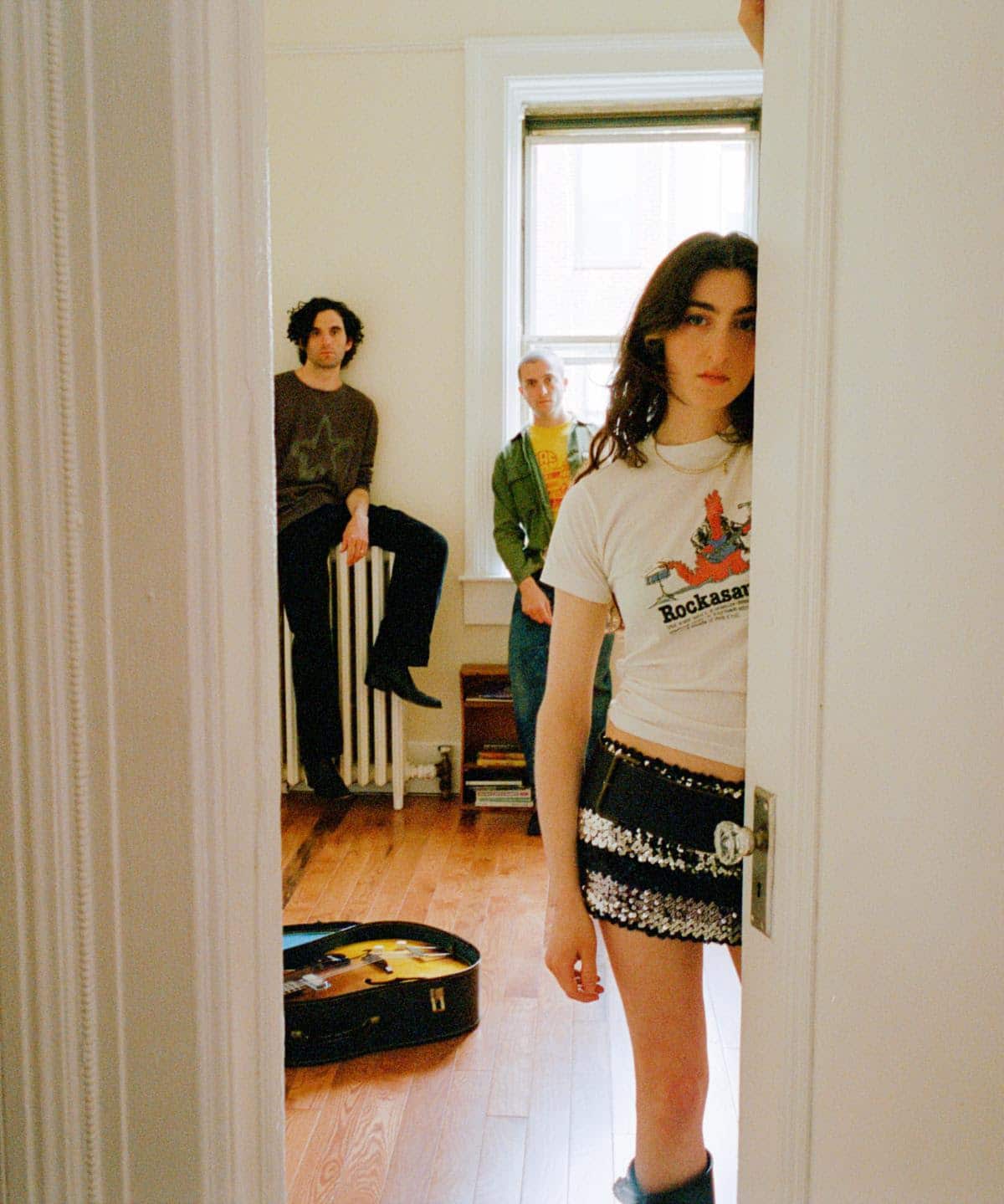
After a terrifying car accident, the New York sibling trio found themselves questioning the music industry’s expectations, reclaiming their independence and rediscovering the joy of creating together. On SWIM!!!, Julia, David and Daniel Bailen turn a brush with mortality into a celebration of imperfection, family and the beautiful absurdity of being alive.
There’s something almost comically surreal about surviving a potentially fatal car accident only to discover that the paramedic treating you happens to be a fan of your band.
For Julia Bailen, that was precisely what happened.
A vehicle traveling approximately 65 miles per hour crashed into the car carrying Julia and her parents. They survived without serious injuries, but the experience left Julia confronting something considerably larger than the accident itself.
What exactly was she doing with her life?
And why had making music—something so fundamental to her identity—become tangled in so many expectations?
The absurdity of the situation reached its peak when an emergency medical technician recognized her.
“The world is so absurd,” she remembers. “That was really crystallized for me when the EMT that treated us on the side of the road recognized me and turned out to be a fan.”
It’s the kind of moment that would feel almost too contrived in a screenplay.
But sometimes reality is stranger than anything an artist could invent.
And for Julia, the experience arrived at a particularly significant moment: BAILEN’s record contract was coming to an end.
Suddenly, the possibility of starting over didn’t feel quite so frightening.
“The music industry is the strangest of them all so you might as well make the music that you want to make.”
That realization became the philosophical foundation of SWIM!!!, the New York sibling trio’s first independent album, released September 25.
And despite emerging from an experience that could easily have produced a dark, introspective record, SWIM!!! moves toward something far more liberating.
Joy.
Resilience.
Humor.
And the radical possibility of no longer caring quite so much about what everybody else thinks.
Surviving the Crash Was Only the Beginning
Near-death experiences have a way of becoming convenient narratives in music journalism.
Something terrible happens.
An artist experiences a revelation.
A transformative record emerges.
But Julia’s description of the experience is more complicated—and considerably more human.
She didn’t suddenly discover a completely new philosophy of life.
Instead, the accident clarified something she’d been struggling to give herself permission to do.
Make music for herself.
“I think being in a car accident right around the time our record contract was ending reoriented my priorities and made me feel like I had license to make music for myself.”
That distinction matters.
BAILEN weren’t starting from nothing.
Julia and her twin brothers, David and Daniel, had already established themselves through critically acclaimed releases, international touring and collaborations with an impressive range of musicians.
Their debut album, Thrilled to Be Here, was produced by John Congleton. Their 2023 follow-up, Tired Hearts, further developed their intricate songwriting and unmistakable three-part harmonies.
But external recognition doesn’t necessarily protect artists from creative uncertainty.
Sometimes it introduces more of it.
Expectations accumulate.
Professional relationships become complicated.
The work begins carrying the weight of what other people might think it should be.
For Julia, the accident interrupted that cycle.
And the song that eventually became “SWIM!!!” began taking shape that very night, written on a damaged guitar that had survived the crash alongside her father’s eighteenth-century cello.
It’s a remarkable image.
A wrecked car.
A battered instrument.
A family still alive.
And a musician returning almost immediately to the thing she had nearly convinced herself to abandon.
What Happens When You Stop Making Music for Everybody Else?
SWIM!!! represents a significant change in BAILEN’s working relationship with the music industry.
It’s their first fully independent album.
But independence here doesn’t simply mean operating without a record label.
It means reclaiming authority over the entire creative process.
The siblings wrote and produced the record, with David handling the mixing and much of the engineering, Daniel contributing production and string arrangements, and Julia overseeing the creative direction.
There was only one co-write: “Eve Babitz,” written with their close friend Devin Hoffman.
They also worked with trusted collaborators including Lee Falco, Chris Tabron, Ricky Damian and Jake Sinclair, who helped co-produce individual tracks.
So independence didn’t mean isolation.
It meant deciding whom to invite into the process and why.
“We really did trust ourselves with a lot of this record,” Julia explains.
And because the band maintained such direct involvement in the production, there was relatively little separating their initial ideas from the finished music.
“It feels really us—there’s not a lot of mediation so it’s the most BAILEN record we could make.”
That’s an interesting definition of artistic freedom.
Not necessarily doing everything alone.
But creating a situation in which the final decisions belong to the people whose lives and relationships give the music its identity.
Three Siblings, Three Opinions, One Song
Of course, creative independence becomes a slightly more complicated proposition when the creative team consists of three siblings.
Especially siblings who have spent their entire lives making music together.
Julia, David and Daniel grew up in New York City in a household where music wasn’t treated as an extracurricular activity.
It was part of the architecture of everyday life.
Their parents were freelance classical musicians.
Chamber music rehearsals happened at home.
Cello and flute students came and went.
Their father played guitar and could casually pull out Beatles or James Taylor songs.
The children grew up singing with him.
Long before BAILEN became a professional band, music was already the family’s common language.
“It’s all a dialogue and music has always been a language of family for us.”
That upbringing shaped more than their ability to sing in harmony.
Listening to their parents rehearse chamber music taught them about dynamics, arrangement, color and the complicated relationship between individual musical lines.
But shared history doesn’t mean shared taste.
“David, Daniel and I are all very different people and have pretty different tastes in music or writing tendencies.”
And those differences produce friction.
Sometimes fierce friction.
They disagree about arrangements.
They disagree about songwriting.
They push each other’s ideas in directions the original writer might never have imagined.
But the arguments are ultimately in service of something larger than any one person’s preferences.
The song.
“We can get into pretty fierce disagreements about writing but we always know we’re only trying to serve the song.”
And when the arrangement finally works, the result is almost physical.
Julia describes the sensation of three voices finding their perfect blend.
“It resonates in your teeth when it’s really in tune.”
That might be the most compelling description of BAILEN’s musical identity.
Three people disagreeing their way toward something that eventually feels like one organism.
The Family Basement Might Be the Most Important Studio in the World
There’s a certain mythology surrounding professional recording studios.
Expensive equipment.
Acoustically perfect rooms.
Elaborate production environments.
BAILEN recorded significant portions of SWIM!!! in their grandparents’ basement in Connecticut.
They moved their equipment downstairs, assembled a makeshift live room and positioned themselves facing one another.
Drums.
Bass.
Guitar.
Three siblings playing music in the same room.
“We were always facing each other while we recorded.”
The arrangement sounds simple.
But it reflects a deliberate rejection of a recording culture in which musicians can become isolated inside separate booths, separate sessions and endless layers of digital editing.
BAILEN wanted to experience the songs together.
To respond to one another in real time.
To find arrangements through physical interaction rather than purely theoretical discussion.
The basement also offered something less tangible.
Safety.
“Our grandparent’s basement in Connecticut was also a very safe space to experiment in.”
They could work late.
Try different arrangements.
Make mistakes.
Start over.
There wasn’t the same pressure to justify every hour or arrive with every decision already made.
And that freedom extended to the other unconventional spaces used during recording.
They tracked music in churches, including an enormous space near Gramercy Park where they captured drums from the choir balcony with Jake Sinclair.
They recorded with Lee Falco at his church-turned-studio in Marlboro, New York.
They also spent time at Studio 13 in London with Ricky Damian, experimenting with an extensive collection of unusual keyboards and synthesizers.
Different spaces.
Different sonic possibilities.
But the same fundamental principle.
Make the music feel alive.
“Kansas Tornado” Is About Remembering That the World Exists Outside Your Phone
One of the album’s most affecting songs, “Kansas Tornado,” began in circumstances that almost perfectly embody its message.
The band was touring through Colorado when a snowstorm left them stranded in Boulder.
They ended up staying at a friend’s house for two days.
No rushing to the next destination.
No immediate performance obligations.
Just unexpected time.
And music.
“We felt totally unplugged and outside of time,” Julia remembers.
The experience produced a song that Daniel largely spearheaded and that the siblings would eventually sing for the first time at his wedding.
That detail adds another layer of intimacy to a track already concerned with surrender, love and the strange beauty of being overwhelmed by something larger than yourself.
The song’s imagery moves between natural forces and romantic devotion.
A tornado approaching.
The smell of rain.
A person appearing in the porch light.
The sensation of being carried away.
But underneath the imagery sits a distinctly contemporary frustration.
The world is full of astonishing things.
And we’re increasingly distracted from noticing them.
Daniel has described the song as an invitation to surrender to wonder rather than the endless noise of contemporary life.
Julia agrees.
“I think really it’s those experiences of wonder where you feel the expansiveness of the world that make us the happiest.”
Then she offers a wonderfully unpretentious conclusion.
“We should really all touch grass more.”
It’s funny because it’s true.
And because it’s becoming increasingly difficult.
“I think it is a radical act to live outside your phone. It’s not easy to do.”
The Artist Is Not the Same Thing as the Content Creator
There’s another tension embedded in “Kansas Tornado.”
One that extends beyond BAILEN.
Daniel has spoken about his discomfort with the way the word artist has increasingly become interchangeable with content creator.
The distinction isn’t necessarily about the quality of the work being produced.
It’s about attention.
An artist traditionally creates something out of observation, experience, curiosity or emotional necessity.
A content creator, at least within the dominant logic of digital platforms, is often expected to maintain an uninterrupted stream of visibility.
The pressure to constantly document life can interfere with the ability to actually experience it.
And for musicians, that creates a particularly strange contradiction.
The same technologies that allow artists to reach audiences directly can also pull them away from the experiences that make their art meaningful.
“Kansas Tornado” emerges from a moment when BAILEN were unexpectedly removed from that cycle.
A snowstorm interrupted the schedule.
And something beautiful happened.
Not because the band optimized its productivity.
But because, for a little while, the usual demands stopped.
Even at the End of the World, There Will Still Be Beautiful Days
One phrase became particularly important during the creation of SWIM!!!.
“Even at the end of the world there will still be beautiful days.”
It’s tempting to interpret that sentiment as uncomplicated optimism.
Everything will be fine.
Look on the bright side.
Find the silver lining.
But Julia’s understanding is considerably more nuanced.
The phrase acknowledges the possibility that the world might not be fine at all.
Terrible things can happen.
Personal circumstances can become overwhelming.
Political and social realities can feel frightening.
And yet the weather might still be beautiful.
A friend might still make you laugh.
A familiar street might still feel comforting.
A song might still sound extraordinary.
Julia describes the cognitive dissonance of encountering terrible news on a warm, sunny day.
“How could the weather not read the room?”
It’s an almost perfect expression of the absurdity.
The world doesn’t organize itself around our emotional experiences.
Beauty doesn’t disappear simply because something terrible is happening.
And suffering doesn’t become less real because the sun is shining.
Both things can exist simultaneously.
For Julia, the response isn’t to retreat into denial.
It’s to pay attention to the people and places within reach.
“I think focusing on what you can do in your community and nurturing the people and institutions that are local to you is a great way to find the beautiful things in the world despite all of the bad news.”
That’s a much more grounded philosophy than generic positivity.
It doesn’t require believing that everything will eventually work out.
It asks what can still be cared for while things remain uncertain.
The Friction Is the Point
Throughout the album, BAILEN return to a deceptively uncomfortable idea.
Life isn’t supposed to be frictionless.
Neither is collaboration.
Neither is family.
Neither is art.
“I think friction is an important part of life,” Julia says. “It makes the good things worthwhile.”
It’s a perspective that connects the band’s personal experiences with their creative process.
They don’t avoid disagreement.
They work through it.
They don’t pretend uncertainty can be eliminated.
They learn to live alongside it.
And they don’t treat discomfort as evidence that something has gone wrong.
“Being able to live with discomfort and find ways through it is how we grow.”
That philosophy is audible in the way the siblings describe making SWIM!!!.
One person arrives with a song.
Another adds a verse.
Someone else changes the chorus.
They keep experimenting until the arrangement feels right.
No one voice completely dominates.
And the final result becomes something that couldn’t have existed without all three.
After Everything, They Still Play Their Songs for Their Parents
BAILEN have accomplished a great deal.
They’ve released critically acclaimed records, toured internationally, appeared on major television programs and shared stages with artists including Hozier, Amos Lee, Grace Potter and Burt Bacharach.
But when asked what has remained constant through all of it, Julia doesn’t offer a carefully crafted artistic manifesto.
She laughs.
“We still show all the songs we’re writing to our parents haha. That, I don’t think will ever change.”
It’s an almost disarmingly ordinary answer.
And perhaps the most revealing one.
For all the changes in the music industry, for all the career milestones and professional expectations, BAILEN still operate within a relationship to music that began in their childhood home.
The family is still listening.
The siblings are still arguing.
The songs are still being worked out together.
And the people who first introduced them to music are still part of the conversation.
In an industry obsessed with reinvention, perhaps there’s something powerful about knowing which parts of yourself don’t need to change.
Swim, Even When You Don’t Know Where You’re Going
The title SWIM!!! feels less like a suggestion than an instruction.
Keep moving.
Don’t let the current decide everything.
Don’t confuse uncertainty with defeat.
And don’t wait until life becomes perfectly manageable before allowing yourself to enjoy it.
For Julia, the album emerged from the realization that everything could have ended unexpectedly.
But what followed wasn’t a fixation on mortality.
It was a renewed desire to participate in life more completely.
To make music without constantly anticipating judgment.
To work with her brothers.
To trust the imperfect process.
To recognize beauty without denying difficulty.
And to let the emotional experience of the songs become something larger than the circumstances that produced them.
When asked what she hopes someone might feel if they discover SWIM!!! during a difficult chapter of their own life, Julia doesn’t offer a comforting slogan.
Her answer is much more expansive.
“I want them to feel a total abandonment of emotional inhibition.”
Perhaps that’s what the exclamation points are really doing.
Not announcing that everything is wonderful.
Not pretending that the current isn’t strong.
But insisting that even when life becomes unpredictable, frightening or absurd, there is still something worth throwing yourself into.
The water might be cold.
The weather might change.
You might not know where you’re going.
Swim anyway.
In Conversation With BAILEN
SWIM!!! feels like an album born from a second chance. After Julia’s near-death experience, did making this record change from simply creating music into something much more personal and urgent?
The record definitely felt liberating to make. We were thinking less about other people or how the music would be received. I think being in a car accident right around the time our record contract was ending reoriented my priorities and made me feel like I had license to make music for myself.
I mean the world is so absurd—that was really crystallized for me when the EMT that treated us on the side of the road recognized me and turned out to be a fan. Like how funny and weird and strange.
The music industry is the strangest of them all so you might as well make the music that you want to make.
“Kansas Tornado” is filled with beautiful imagery about surrendering to wonder instead of getting lost in the noise of everyday life. In an era dominated by endless scrolling and constant distraction, do you think choosing presence has become a radical act?
Daniel really spearheaded the writing of this song—and we sang it first at his wedding which was really special.
The song was written in Boulder, Colorado when we got snowed in on tour. We were all held up in our friend’s house and it ended up being a really beautiful two days of writing where we felt totally unplugged and outside of time—so I don’t find it surprising that “Kansas Tornado” came out of that experience.
I think really it’s those experiences of wonder where you feel the expansiveness of the world that make us the happiest—we should really all touch grass more.
So yes, I think it is a radical act to live outside your phone. It’s not easy to do.
This is your first fully independent album, and it’s clear every member of the band had a hand in shaping every aspect of it—from production and engineering to arrangements and creative direction. How liberating was it to trust yourselves completely without outside expectations?
We really did trust ourselves with a lot of this record. We produced it and wrote all of it—there’s only one co-write on the record (“Eve Babitz,” which we wrote with our close friend Devin Hoffman).
David also mixed the whole record and engineered on most of the songs too. It feels really us—there’s not a lot of mediation so it’s the most BAILEN record we could make.
Being so close to the music can sometimes make it harder to get perspective on the songs—so our friends and collaborators were really helpful in those moments.
We had our friends Lee Falco, Chris Tabron, Riccardo Damien, Devin Hoffman and Jake Sinclair co-produce some of the songs with us. They are all really important friends and collaborators for us.
Your harmonies have always been one of your greatest strengths, but because you’re siblings, there’s an emotional chemistry that can’t really be manufactured. How has growing up together shaped the way you communicate musically, even when you completely disagree creatively?
Music was always a part of the household for us. Our parents are both freelance classical musicians and would rehearse chamber music in the house or teach cello and flute students.
Our Dad also grew up playing guitar in bands and would always have a guitar in hand and could play any Beatles song or James Taylor song—we grew up singing together casually with him.
I think also hearing them rehearse and interpret chamber music was so integral to how we think about dynamics and color in our own arrangements. It’s all a dialogue and music has always been a language of family for us.
That being said, David, Daniel and I are all very different people and have pretty different tastes in music or writing tendencies. We can get into pretty fierce disagreements about writing but we always know we’re only trying to serve the song.
And often we know a song is working when we can play it in the room easily.
Three-part harmony can take a long time and a lot of work to figure out, i.e. blend and arrangements. What registers we’re singing in determines blend, and it is very clear when we’ve figured out the best blend because it resonates in your teeth when it’s really in tune.
But yes, the boys have twin telepathy and no one ever enunciates to each other because we have Bluetooth brains and can communicate whole conversations in a series of grunts.
The album moves between resilience, humor, vulnerability, and optimism without ever feeling sentimental. Was it important for SWIM!!! to acknowledge life’s uncertainty while still insisting that beauty is always worth searching for?
Of course—I think friction is an important part of life. It makes the good things worthwhile.
Being able to live with discomfort and find ways through it is how we grow. Especially in collaborating as writers the three of us have a lot of creative friction—but I think that’s a good thing.
You recorded parts of this album in family homes, church spaces, and even your grandfather’s basement. How did those unconventional environments influence the intimacy and warmth that runs throughout the record?
We recorded a lot of this record in our grandparent’s basement, where we moved our equipment for a while.
We made a live room where we had the drums, bass, and guitar set up so we could play together—we were always facing each other while we recorded.
And really all of the other spaces—the churches we recorded in as well as the studios—allowed us to face each other and record live. That felt pretty critical to how we approached the recording process.
Our grandparent’s basement in Connecticut was also a very safe space to experiment in—we were able to try out a lot of different arrangements for the songs until we felt like we found them. We could work late into the night and it felt very relaxed.
We recorded in a couple churches—which was super fun. Lee’s studio in Marlboro is a dream to sing in—it’s so idyllic and beautiful.
The church on Gramercy Park where we recorded “SWIM!!!” is so enormous—we were able to get an enormous drum sound from the choir balcony where we set up. It was really fun getting to do that with Jake Sinclair.
We also recorded a couple songs, “Inevitable” and “Unreal,” in London with our friend Ricky Damian at Studio 13, which is owned by the Gorillaz, and they have this ridiculous closet of keyboards and synths that are so obscure—we got to play with all of the toys they have there.
Julia has said that SWIM!!! was inspired by the idea that “even at the end of the world there will still be beautiful days.” What are the everyday moments that continue to remind you of that philosophy when life feels overwhelming?
The idea means several things to me. There’s the first idea that there are always ways of finding the beauty in the world when things are overwhelming or difficult.
But it also speaks to the cognitive dissonance that is so often present in our everyday lives—that we can find normalcy and mundanely pleasant things and experiences when we’re living through really difficult and strange circumstances.
Like reading some terrible news on a day that’s 72 degrees and sunny—how could the weather not read the room?
But people have always peopled in the face of crazy things—I think focusing on what you can do in your community and nurturing the people and institutions that are local to you is a great way to find the beautiful things in the world despite all of the bad news.
I think each of the songs on the record are able to connect to something in the two meanings of that phrase—in some way or other it’s been a kind of guiding force in the record.
From chamber music and folk traditions to indie rock and Americana, your influences are incredibly diverse. When you’re writing together, do you consciously blend genres, or does the BAILEN sound naturally emerge once all three of your voices come together?
We each have different songwriting tendencies and tastes. I think the sound just kind of happens when we’re pulling each other in different creative directions.
It’s a unique collaboration and it only happens when we all have a hand in making a song.
You’ve built an impressive career while constantly evolving—from acclaimed albums and television performances to touring alongside artists like Hozier and Burt Bacharach. Looking back, what has remained the one constant that defines BAILEN, regardless of where your music takes you?
We still show all the songs we’re writing to our parents haha. That, I don’t think will ever change.
SWIM!!! celebrates resilience, family, and finding joy after uncertainty. If someone discovers this record years from now during a difficult chapter of their own life, what feeling or message do you hope stays with them long after the final song ends?
I want them to feel a total abandonment of emotional inhibition.