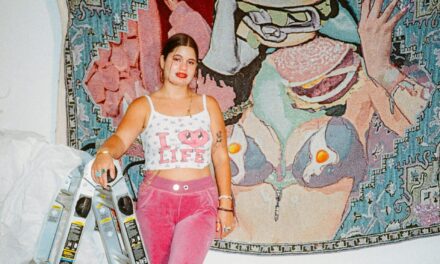
From podcast studios to Super Bowl campaigns, the Vice President of Revenue and Partnerships at Podium explains why the future of entertainment belongs to creators who can turn cultural influence into lasting businesses.
The creator economy has spent the better part of the last decade convincing the world that attention is currency. Followers, views, downloads, and engagement rates became the benchmarks of a new entertainment landscape, one in which a single personality with a camera and an internet connection could challenge the reach of traditional media institutions. But as the industry matures, a more complicated question is emerging: What happens after someone captures an audience?
For Catherine Browne, Vice President of Revenue and Partnerships at Podium, the answer has less to do with going viral and more to do with building something that can survive beyond the next algorithmic shift.
Podium, a top-ten, video-first podcast network, operates at the intersection of talent, advertising, and media entrepreneurship. Browne oversees talent acquisition while helping shape the partnerships and revenue strategies that transform creator-led shows into sustainable, multiplatform businesses.
It’s a position that offers her a particularly revealing vantage point on the changing economics of entertainment. As creators expand into publishing, live events, merchandise, branded collaborations, and entirely new ventures, the distinction between an internet personality and a media company is becoming increasingly difficult to draw.
The opportunity is enormous, but so is the tension. Audiences are drawn to creators for their independence, individuality, and perceived authenticity. Turning that relationship into a scalable business requires commercial infrastructure, advertising partnerships, and operational support—the very structures that can threaten the spontaneity that made those creators successful in the first place.
Browne believes the solution lies in keeping creative ownership with the talent while surrounding them with the resources to grow.
From Abbey Sharp’s evolution into a multiplatform nutrition brand to Theo Von’s unconventional Super Bowl partnership with PepsiCo, Browne has witnessed how creator businesses are redefining the relationship between audiences, advertisers, and entertainment.
We spoke with her about the difference between popularity and longevity, the value of genuine fandom, the growing sophistication of creator-led advertising, and why the next generation of media companies may be built around individuals rather than networks.
MUNDANE: Podium operates in a moment when successful podcasts are increasingly becoming multiplatform media brands rather than individual shows. What separates a creator who has built a popular audience from one who has the potential to build an enduring business around that audience?
Catherine Browne: Podium is a creator-led, video-first podcast network, so all of our shows are multiplatform. This is core to who we are and our value proposition in the market.
A creator who can do this successfully knows everything about their audience and captures their attention across multiple platforms. These creators offer value through various touchpoints with their fans and listen when their audience provides feedback in the comments.
Abbey Sharp is a great example of this, and we work with her on her podcast, Bite Back with Abbey Sharp. She developed a massive following on TikTok as “The No BS Dietitian,” bringing education and value to nutrition and food science.
Abbey turned her short-form audience into a community that follows her YouTube and audio podcast, multiple cookbooks, and coaching business. Abbey understands attention on the internet and has built an incredible multiplatform media company.
MUNDANE: Talent acquisition is a major part of your role. When you’re evaluating creators, what signals matter beyond follower counts and downloads—and what can tell you that someone has built a community with genuine long-term value?
Catherine Browne: Our roster has grown by over 15 podcasts this year, but we’ve been very specific about who is the right fit for Podium.
There are a lot of factors we consider when evaluating talent partnerships for long-term success and growth. While downloads and subscribers are considerations, a standout component is the fandom and audience of a creator.
The inner circle of fans is key for us: these are the fans who follow a creator across all platforms. This unique audience is the one that converts for brands, cheers a creator on when they test new things, and shows up at live events.
A recent example is Lex P and our partnership with her weekly show, Love, Lex P. Lex co-hosts Pour Minds, stars in BET’s Travel Queens, and consistently sells out her tours. Her fans follow her from show to show and across every platform, and that’s exactly the inner circle we look for.
MUNDANE: Creators often become successful because audiences perceive them as independent and authentic, but building a sustainable business inevitably introduces advertisers, partners, and larger commercial structures. How do you professionalize a creator business without professionalizing away its personality?
Catherine Browne: Our ethos at Podium has always been to champion creators and support them in every way we can.
All of our podcast hosts own their own IP and therefore drive the creative decision-making for their shows. Our job on the network side at Podium is to offer the commercial tools to scale a creator’s business.
This means anything from monetizing with brand partnerships, managing advertising calendars, supporting guest booking, sourcing content editors, and strategizing audience development opportunities.
Allowing a partner like Podium to focus on the commercial side gives our creators the space to focus on originality and producing top-quality content.
MUNDANE: You work at the intersection of talent, advertising, and monetization. When developing brand partnerships, what makes something feel like a genuine extension of a creator’s world rather than an advertisement temporarily inserted into it?
Catherine Browne: A truly special partnership comes to life in two ways. First, the creator has room to develop something special. Second, the idea goes beyond a 60-second midroll ad.
Podcast and creator advertising scaled quickly through the insertion of standardized ads throughout a long-form episode, but brand partnerships have the opportunity to be so much more.
We worked closely with PepsiCo on their Super Bowl LX campaign with Theo Von. Instead of just having Theo read a script endorsing Pepsi Zero Sugar, he hosted the Pepsi Polar Bear from their Super Bowl commercial on the set of his podcast.
They played a game of “This or That,” and the final question confirmed that Pepsi Zero Sugar is the fan favorite.
This partnership allowed Theo’s creativity to shine and was a great component of Pepsi’s Super Bowl campaign.
MUNDANE: The creator economy has historically been incredibly dependent on platforms whose algorithms and priorities can change overnight. From a revenue perspective, what does real independence look like for a creator-led business today?
Catherine Browne: Real independence for creators is working with trusted partners and platform diversification.
There’s mutual benefit for creators and platforms to work together, and at Podium we have strong partnerships with all of the major tools and platforms our creators work with.
We meet with them regularly to share information and keep our creators as up to date as possible.
Trust and transparency are core values at Podium. We want the talent we work with to focus on creativity and know they have us to support them wherever they need.
MUNDANE: As creators develop multiple revenue streams, how do you distinguish between smart diversification and stretching a personal brand so far that audiences stop understanding what it represents?
Catherine Browne: Creators who have a strong understanding and appreciation for their core audience know where to keep growing.
I am a big believer in testing and learning, and listening to your audience is key. Not every platform, every product, or every venture is right for a creator.
We signed Trisha Paytas to the network earlier this year, and she’s a perfect example. Trisha started posting on YouTube over 20 years ago and launched her podcast, Just Trish, three years ago.
She continues to evolve in how she engages her fans. Her debut memoir, Crying on the Kitchen Floor, will be released in November of this year.
This book makes so much sense: her audience craves her storytelling, loves long-form content, and seeks out her honest self-reflection.
MUNDANE: Creator-led media increasingly competes with traditional entertainment companies for audiences, advertising dollars, and cultural relevance. Are brands beginning to evaluate creators with the same seriousness they historically reserved for established media properties?
Catherine Browne: Brands are finally seeing creators as powerful media properties.
I started my career in traditional advertising at Discovery Channel, and linear TV was non-negotiable for major advertising brands.
Creators are the new frontier. Visa CMO Frank Cooper III said that within the last year, Visa has doubled its investment in creators, and the company plans to do the same next year.
Creators bring a unique set of value propositions for advertisers: trust with their audience, fully produced content, and cross-platform engagement.
We’re going to see creator ad spend accelerate over the next 12 months.
MUNDANE: Because you work behind the scenes, you see the infrastructure audiences rarely think about. What is one aspect of building a successful creator business that looks effortless from the outside but actually requires an enormous amount of strategy and coordination?
Catherine Browne: For every seamless brand campaign, hundreds of emails and dozens of calls have happened behind the scenes.
My team at Podium recently worked on a Mountain Dew campaign in celebration of America 250 this summer.
It was so fun to help bring nostalgic summer moments to life on Theo Von’s podcast with Mountain Dew, and behind the scenes, we were so lucky to work with both the PepsiCo team and their amazing ad agency partner.
On a campaign like that, where the partnership feels effortless, you’d never know how much coordination, trust, and work went on behind the scenes.
MUNDANE: If the current generation of successful creators is moving beyond simply having an audience and toward owning sustainable media businesses, what do you think the most sophisticated creator-led companies will look like five years from now?
Catherine Browne: The most sophisticated creator-led companies support and acknowledge the superpower of their talent: creativity.
And the future success of this business will hinge on the adaptability, nimbleness, and ingenuity of partners like Podium.
We support the creative pursuits of our partners in various ways: monetization, best-in-class technology, audience development, operational support, and creative consulting. All of this varies by creator.
At Podium, we recently co-produced and supported development for Olivia Lopes and Ian Slater’s new podcast, Stan Wars. This included support for studio buildout, audience strategy, marketing, and brand sponsors.
The next great media companies won’t be built around a network. They’ll be built around a creator with the right partners beside them.
The Future of Media Has a Face
If there’s a recurring theme throughout Browne’s perspective, it’s that the creator economy is entering a period in which influence alone is no longer enough.
The real value of an audience increasingly lies in its willingness to follow someone beyond the platform where that relationship began. A viral moment can introduce a creator to millions of people, but it takes trust, consistency, and a clear creative identity to turn that attention into something lasting.
For advertisers, this represents a fundamental shift in how media value is understood. Creators aren’t simply another distribution channel. They can be the talent, the production company, the audience relationship, and the cultural context all at once.
For creators, however, the challenge is learning how to expand without losing the very qualities that made their work resonate.
Browne’s vision suggests that the most successful media businesses of the next decade won’t necessarily be those with the largest audiences or the most elaborate corporate structures. They’ll be the ones capable of building the right infrastructure around a distinct creative voice.
And perhaps that’s the most interesting reversal of all: after decades of media companies building brands and searching for personalities to represent them, the next generation of entertainment businesses may begin with the personality itself—and build everything else around it.