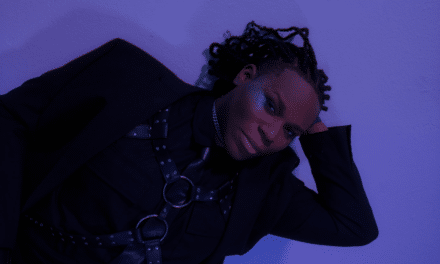
There comes a point in adulthood when the idea of finally having everything figured out begins to feel like a myth.
For Alisan Porter, that realization became the foundation of PORTER, her fifth studio album and most personal project to date.
Built around ten songs she describes as the Ten Commandments of PORTER, the record explores grief, marriage, motherhood, resentment, ambition, boundaries, and the difficult process of letting go.
“I feel more unfinished now than I ever have, but in a really beautiful way,” she admits.
Rather than presenting herself as someone who has mastered adulthood, Porter documents the lessons she’s still learning: how to stop repeating destructive cycles, accept people without trying to change them, take up space without apologizing, and recognize when surrender is more powerful than fighting.
The album begins and ends with grief, an intentional reflection of how loss becomes something we learn to live alongside rather than overcome.
“Grief taught me that time is the thing. That’s the currency. And I don’t want to waste mine anymore.”
Recorded live at Chaplin Recording with longtime collaborator Drew McKeon and producer Sam Barsh, PORTER combines Laurel Canyon-inspired songwriting, soul, alt-pop, and modern rock. Its foundation of live musicians and unfiltered performances reflects Porter’s desire to preserve the imperfections that make music human.
But perhaps the album’s most compelling statement is about visibility.
Having spent her life performing, Porter knows how to command a stage. Learning to assert herself in everyday life, however, has proved considerably more difficult.
“Performing taught me how to be seen. Adulthood is teaching me how to be seen without performing.”
In an industry that often prioritizes youth and reinvention, PORTER offers a different perspective: women don’t become less interesting with age. Their stories become richer, more complicated, and more specific.
And Porter has finally stopped trying to make hers easier for everyone else to understand.
In Conversation With Alisan Porter
When did you realize the ten songs on PORTER had become a set of commandments for surviving the middle of life, rather than simply a collection of personal experiences?
I think I realized it after the songs were already there. I didn’t sit down and say, “I’m going to write ten commandments for surviving your forties.” I was just writing my life. And then I stepped back and realized every song was teaching me something I apparently needed to learn.
That’s when PORTER became bigger than an album to me. It became this rule book I had accidentally written for myself. How to grieve. How to stop repeating the same cycles. How to take up space. How to stop being bitter. How to let people be who they are instead of constantly trying to get them to become who I needed them to be. It’s really a survival guide for this incredibly complicated middle part of life.
What has surprised you most about adulthood now that you’re living beyond the version of it you imagined when you were younger?
That there is no arrival.
When I was younger, I thought adulthood was this place you eventually got to. You’d have the career, the marriage, the kids, the house, and somehow you’d become this finished person. And it’s almost the opposite. I feel more unfinished now than I ever have, but in a really beautiful way.
Everything exists at the same time. I can be wildly grateful for my life and still want more. I can love people deeply and be disappointed by them. I can be a great mother and feel completely overwhelmed. I can be incredibly confident and still question everything. I think the biggest surprise has been realizing that adulthood isn’t about resolving all those contradictions. It’s learning how to hold them.
Was accepting that you cannot change other people more about relinquishing control, or confronting the ways you had been exhausting yourself trying?
Definitely confronting how exhausted I was.
I spent a lot of my life believing that if I explained something better, loved somebody harder, gave them another chance, showed them another perspective, eventually they would understand. That can become its own form of insanity.
There was something incredibly freeing about realizing: people are allowed to be exactly who they are. And then I get to decide what I do with that information.
That’s very different from trying to change them. I think I confused love with endurance for a long time. PORTER taught me that accepting someone as they are doesn’t mean you have to keep volunteering for the ways they hurt you.
Why do you think pop music has traditionally been less interested in middle-aged women as complicated, evolving protagonists?
Because we’ve been sold this idea that women are most interesting while they’re becoming something, especially when they’re young. We don’t talk nearly enough about what happens after you’ve supposedly “become” it.
I’m much more interesting at 45 than I was at 25. I have more to lose. I have more to say. I’ve loved people, lost people, raised children, fucked things up, rebuilt things, had success, watched success disappear and come back in completely different forms. There’s so much story here.
Women do not become less interesting as we age. We become more specific. And specificity is where great art lives.
Does putting your own name on this record feel like a declaration that you’ve finally arrived at the version of yourself you’re least interested in editing for other people?
Yes. Completely.
PORTER is my last name, but somehow it feels more intimate than calling the album ALISAN. It represents the whole lineage of me. The little girl, the performer, the mother, the wife, the friend, the woman I am now and all the versions of myself I had to shed to get here.
I’ve spent a lifetime being perceived. I started performing when I was a child, so there have always been people with ideas about who I am or who I should be. This is probably the first record where I genuinely don’t care about correcting anyone’s perception of me.
I’m not presenting the most palatable version anymore. This is PORTER. Take it or leave it.
Did grief become a framework for understanding what actually deserves your attention while you’re here?
Absolutely. Grief rearranges your priorities whether you want it to or not.
The album begins and ends with grief because grief doesn’t really have an ending. You just learn how to build a life around it. And strangely, loss has made me much more interested in living.
It makes the petty shit feel really petty. It makes you ask: Who do I want to spend my time with? What am I still afraid to say? Why am I making myself smaller? Why am I carrying resentment that is costing me more than the person I’m resentful toward?
Grief taught me that time is the thing. That’s the currency. And I don’t want to waste mine anymore.
Has taking up space as Alisan the person been more difficult than taking up space as Alisan the performer?
A thousand percent.
I know how to walk onto a stage. I’ve been doing that my entire life. Give me a microphone and I understand exactly what to do with space.
But taking up space in my actual life is different. Saying, “This is what I need.” Saying no without writing a dissertation afterward. Having boundaries and allowing somebody to be disappointed by them. Wanting things without apologizing for wanting them. That’s much harder.
Performing taught me how to be seen. Adulthood is teaching me how to be seen without performing.
That’s what “take up space” means to me now.
Why was preserving human interaction and imperfection particularly important for these songs?
Because these songs are about being human. I didn’t want to make a record about imperfection and then polish every human fingerprint off of it.
We built the foundation live because I wanted people reacting to one another. A drummer pushing into something because of what the bass player just did. A vocal changing because the room changed. Those tiny moments can’t really be manufactured.
Then Drew, Sam and I could bring in modern production and electronic elements without losing the heartbeat underneath it.
I love modern records. I love production. But I wanted PORTER to breathe. I wanted you to hear people making choices in real time. There are things on this record that technically could have been “fixed,” but fixing them would have made them worse.
Has adulthood taught you that strength sometimes looks less like fighting and more like knowing what to stop fighting?
That might actually be the thesis of the entire album.
I used to think strength was how much I could withstand. How hard I could work. How long I could hang on. How many times I could get back up and fight for something.
Now I think strength is also discernment.
What deserves the fight? What doesn’t? What am I keeping alive simply because I’m terrified to let it die?
Surrender used to sound like failure to me. Now surrender can be one of the most powerful choices I make. Sometimes you’re not giving up. You’re just finally putting down something that was never yours to carry.
Which of the ten commandments was the hardest one for you to actually live by?
“Do not repeat cycles.”
Because you don’t know you’re in a cycle when you’re in it. You think this time is different. This person is different. This situation is different. Meanwhile, you’re standing in the same emotional room wearing a different outfit.
Breaking a cycle means you have to eventually acknowledge the common denominator. You.
That’s uncomfortable. It’s much easier to make a list of everything everyone else has done to you than to ask why you keep finding yourself in the same places.
And I think that’s why it’s the hardest commandment for me and probably the most important. Because once you can see the pattern, you have a choice.
PORTER is really the sound of me finally making different choices.
Listen to PORTER.