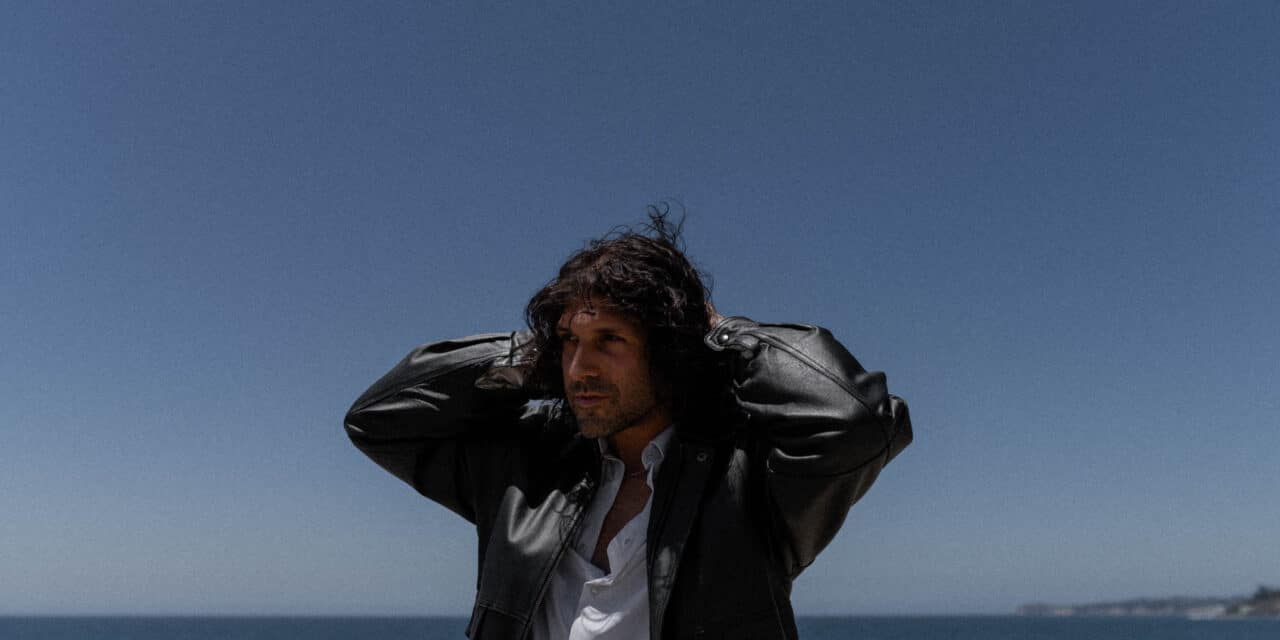
With his new single “cave in” and forthcoming album low impact, Toronto-based alternative artist Sam Louis explores anxiety, emotional exhaustion, and the strange freedom of accepting uncertainty. Blending atmospheric guitars, vulnerable songwriting, and restless alt-pop production, he’s turning the overwhelming experience of being trapped inside your own thoughts into something listeners can share.
Sometimes hope doesn’t look like a breakthrough.
It doesn’t arrive with a sudden realization, a clear solution, or the reassuring certainty that everything will eventually work out.
Sometimes hope is simply the decision to keep going.
For Toronto-based alternative artist Sam Louis, that distinction sits at the heart of his new single, “cave in,” a restless exploration of anxiety, emotional overload, and the feeling of losing control without entirely surrendering to despair.
“I think hope in this song is actually pretty small,” Louis explains. “It’s more like having just enough belief that things can change to keep moving.”
Built around atmospheric guitars, raw vocals, and production that continuously pushes forward, “cave in” captures an uncomfortable contradiction: the desire for space while feeling increasingly trapped.
The song is simultaneously expansive and claustrophobic, with wide sonic textures repeatedly giving way to a growing sense of pressure.
That tension wasn’t accidental.
“We kept creating space and then filling it back up,” Louis says. “You get these moments where it feels like the song is opening up, and then suddenly you’re surrounded again.”
The result reflects an experience that feels increasingly familiar in a culture obsessed with productivity, constant communication, and perpetual self-improvement.
There’s always another message to answer, another goal to pursue, another version of yourself you’re expected to become.
And sometimes even rest feels like failure.
For Louis, those pressures are particularly intense as an independent artist navigating the demands of creating, releasing, and promoting his own music.
But he recognizes that the feeling extends far beyond the music industry.
“We’re incredibly connected to each other and somehow simultaneously really good at getting trapped alone inside our own heads.”
The Weight of Small Things
With more than 2.5 million streams, support from Spotify’s New Music Friday, YouTube’s Pop Before It Breaks, and Amazon Music’s Brand New Music, Louis has already established himself as a promising voice in Canada’s alternative music landscape.
An Indigenous Music Award winner and International Songwriting Competition semifinalist, he has also reached the Top 50 on Canada’s Got Talent, performed sold-out Canadian Music Week showcases, and secured international sync placements.
Yet those accomplishments have complicated rather than eliminated his relationship with ambition.
Louis admits that external recognition matters, but he’s learning not to let streaming figures or career milestones determine the value of his work.
“The problem is when they become the only evidence you have that what you’re doing is worthwhile.”
That perspective informs his forthcoming full-length album, low impact, a project whose title deliberately contrasts with its emotional intensity.
The record explores how seemingly insignificant experiences—small disappointments, shifting relationships, unspoken feelings, and accumulated expectations—can eventually become overwhelming.
“We tend to imagine the things that change us as these massive events, but a lot of the time it’s much quieter than that.”
For Louis, “cave in” introduces that world by capturing an entirely internal crisis.
From the outside, nothing particularly dramatic may be happening.
Inside, everything feels as though it’s collapsing.
Learning to Live Without the Answers
As Louis prepares to release low impact and embark on his first touring circuit in 2027, he’s also reconsidering what emotional honesty means in his songwriting.
Rather than explaining every feeling through lyrics, he’s increasingly allowing production, silence, and musical tension to communicate what words cannot.
That approach gives listeners space to recognize their own experiences within his songs.
And while “cave in” emerges from isolation, Louis hopes performing it live will create the opposite experience.
“I want it to feel like we’re all inside the songs together for an hour.”
Ultimately, low impact doesn’t promise a neat resolution to the anxieties it explores.
Instead, it follows the gradual process of becoming more comfortable with uncertainty.
The darkness doesn’t necessarily disappear.
But perhaps, by the end, walking through it becomes a little less frightening.
In Conversation With Sam Louis
“cave in” is built around the feeling of losing control without completely losing hope. That distinction feels crucial to the song. When you were writing it, what did hope actually look like to you when everything else felt like it was moving too quickly?
I think hope in this song is actually pretty small. It’s not this huge moment where suddenly everything makes sense and you know you’re going to be okay. It’s more like having just enough belief that things can change to keep moving.
When everything feels overwhelming, sometimes hope is literally just getting through the next day without needing to know what happens after that. I think I used to view hope as having confidence that something good was coming. Now I think there’s another version of it where you have absolutely no idea what’s coming, but you keep going anyway.
That’s closer to where “cave in” came from. The song doesn’t really solve anything. There’s still this feeling of searching all the way through it, and I like that because it felt much more truthful to where I was when we made it.
You describe the song as searching for “light at the end of the collapsing tunnel.” There’s something interesting about that image because the way forward and the danger are happening simultaneously. Was the song written from inside that emotional state, or did you need some distance from it before you could articulate it?
Definitely from inside it.
I actually think that’s why parts of the song feel unresolved. I wasn’t sitting down months later with a clear understanding of what I’d gone through and trying to summarize it. I was writing while I was still trying to understand it.
There’s a rawness about writing that way because you don’t have the benefit of hindsight. You can’t give the song this perfect ending because you don’t know the ending yet.
That image of a collapsing tunnel really captured it for me. You can see where you’re trying to get to, but everything around you is changing while you’re moving toward it. The instinct isn’t necessarily “I’m going to overcome this.” It’s more like, “Just keep moving.”
Sometimes I think songs written from inside an experience are messier, but that messiness can be the thing that makes them interesting.
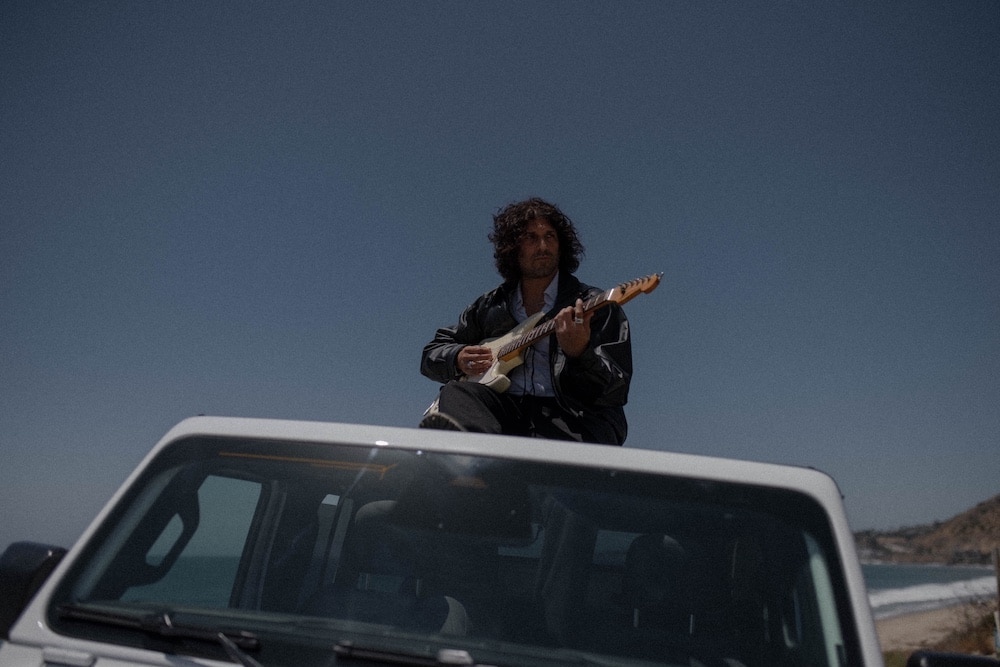
Sonically, “cave in” feels both expansive and claustrophobic: atmospheric guitars create space while the production keeps pushing forward. How intentional was that contradiction between wanting room to breathe and feeling like the walls are closing in?
Very intentional, although I don’t think we necessarily had those exact words for it while we were making it.
We kept creating space and then filling it back up. The guitars can feel really wide and atmospheric, but underneath them there’s always something moving or building. So you get these moments where it feels like the song is opening up, and then suddenly you’re surrounded again.
That became almost a physical representation of the lyrics.
I’m really drawn to contradictions like that in production. Something can be beautiful and uncomfortable at the same time. A vocal can feel incredibly close while everything behind it feels enormous. A guitar can create this huge sense of space while also being distorted enough that it feels suffocating.
I think that tension is becoming a big part of the sonic language of low impact.
Your songwriting is emotionally direct, but the production around it can be quite textured and atmospheric. When you’re dealing with something vulnerable, how do you decide what needs to be said explicitly and what is better communicated through sound?
I’m learning to say less.
Earlier in my songwriting, I think I sometimes felt like I had to explain the entire emotion to the listener. Now I’m much more comfortable giving them enough information to enter the song and letting the music do the rest.
If a lyric says exactly how I’m feeling, I don’t necessarily need five more lines explaining why. Maybe the guitar answers it. Maybe something changes in the drums. Maybe the vocal suddenly gets really small.
I love when production communicates something that would sound almost ridiculous if you tried to put it into words.
That’s also where the listener gets to participate. If I explain every detail of what happened to me, then you’re listening to my story. If I leave some empty space, you can start putting your own experiences into it. That’s usually where songs become bigger than whatever originally inspired them.
The idea of being unable to slow yourself down feels particularly relevant to the way we live now, where we’re constantly being asked to produce, respond and move on to the next thing. Is “cave in” specifically autobiographical, or did you begin to see that anxiety as something much more generational while writing it?
It started personally, but the further I got into it, the less it felt like something that belonged only to me.
There’s this strange expectation now that you’re always supposed to be progressing. You’re supposed to be working, answering something, posting something, improving something, planning whatever comes next. Even rest can start feeling like something you’re failing at.
Being an independent artist definitely amplifies that because there is literally always something you could be doing. You can finish a song and immediately you’re thinking about artwork, content, playlists, the next release, the next show. There’s no natural point where someone tells you, “Okay, you’re done for today.”
But I don’t think that’s exclusive to musicians at all. I see versions of it in almost everyone around me.
So “cave in” came from my own experience, but I think the feeling underneath it is much bigger than that. We’re incredibly connected to each other and somehow simultaneously really good at getting trapped alone inside our own heads.
You’ve already experienced very different forms of validation—from streaming playlists and songwriting recognition to Canada’s Got Talent, sold-out showcases and sync placements. Has external success changed the way you measure whether a song is successful, or are you trying to detach your creative identity from those markers?
I’m probably trying to find a healthier relationship with them rather than pretending they don’t matter.
Of course they matter a great deal to me. I’m ambitious. I want to help people with my music. I want songs to stream well, I want to play bigger rooms, I want more sync placements and I want opportunities that I haven’t had yet. I don’t think there’s anything wrong with wanting those things.
The problem is when they become the only evidence you have that what you’re doing is worthwhile.
I’ve had moments that felt huge and then almost immediately found myself thinking about whatever I hadn’t achieved yet. That’s a pretty exhausting way to build a career because the finish line just keeps moving.
So now success is a combination of things. Did we make something I’m proud of? Did people actually connect with it? Did it move the project forward? Did it allow me to make the next thing? Did my live show allow someone to get lost in the moment and forget about their stressors or pressures.
I still look at the numbers. I’ve just stopped asking them to tell me how I should feel about the music.
You’ve described low impact as the beginning of your most ambitious chapter yet. The title almost sounds like the opposite of ambition. What does “low impact” mean within the world of the album, and how does “cave in” help introduce that idea?
That’s actually part of why I love the title. There’s a contradiction built into it.
We tend to imagine the things that change us as these massive events, but a lot of the time it’s much quieter than that. It’s small disappointments, relationships changing, expectations you put on yourself, getting older, things you didn’t say, things you thought you’d have figured out by now. None of them necessarily seem catastrophic on their own.
Then one day you realize all of those supposedly “low impact” things have accumulated into something enormous.
That idea runs throughout the record emotionally, but it also exists in the sound. There are moments that are really quiet and restrained sitting next to things that are distorted and huge symbolizing that release. Sometimes the smallest sound in a song carries more weight than the loudest one.
“cave in” is a really good introduction to that world because from the outside, almost nothing is happening. The entire crisis is internal. But when you’re the person experiencing it, it can feel like the whole world is collapsing.
With more than 2.5 million streams behind you, you’re entering this album with an audience already forming expectations around what a Sam Louis record sounds like. Do you find those expectations motivating, or is part of making low impact about escaping the version of yourself that listeners already know?
Probably both.
I’m grateful that there are people who have listened long enough to even have an expectation of what a Sam Louis song sounds like. That’s been a dream of mine in this industry.
But I never want that expectation to become a rule.
If someone discovered me through one particular song, I understand why they might want another version of that song. As an artist, though, making the same thing again because you know it worked is probably the quickest way for me to lose interest.
With low impact, I wasn’t deliberately trying to reject anything I’ve done before. I just gave myself more permission to follow ideas further. If something needed heavier guitars, we went there. If something needed to be electronic or weird, we didn’t try to make it more conventional. If a song only needed a few elements, we didn’t add things just because a Sam Louis record was “supposed” to sound a certain way.
Hopefully people who connected with the earlier music can still recognize the DNA. I’m just more interested in expanding what that can mean than protecting one specific version of it.
You’re planning your first touring circuit in 2027. Because songs like “cave in” come from such internal and isolating experiences, what interests you about eventually turning those emotions into something physical and communal in a live room?
That’s actually one of the things I’m most excited about.
Writing and recording can be incredibly isolating. You spend months obsessing over something in a studio, sometimes literally listening to the same five seconds over and over again, and then eventually you release it and it belongs to everybody else.
Live music completely reverses that.
Suddenly something that came from a very private experience is being sung back at you by a room full of people who have attached their own lives to it. I think there’s something really powerful about that transformation.
And musically, these songs have so much potential to change live. I want the quiet moments to feel really exposed, but when things open up, I want them to feel physical, louder guitars, live drums, bass, heavy and weird synth lines, introspective visuals and ethereal lighting… all of it creating a new experience each time for the audience.
I don’t want the 2027 shows to feel like people came to watch us recreate a recording. I want it to feel like we’re all inside the songs together for an hour.
If “cave in” captures the moment when everything feels as though it might collapse but you’re still searching for a way through, where does low impact take us after that? By the end of the album, have you found the light—or have you simply learned how to exist inside the uncertainty?
I don’t think the album ends with everything figured out, because I don’t think that’s how life usually works.
There isn’t this moment where the clouds disappear and suddenly the person at the end of low impact has all the answers that the person at the beginning didn’t have.
What changes is the relationship with the uncertainty.
At the beginning, there’s a lot of resistance trying to control things, trying to understand why something is happening, trying to get back to whatever “normal” was supposed to be. As the record moves forward, I think there’s gradually more acceptance that maybe you don’t get to know exactly what’s coming next.
And strangely, there’s some freedom in that. It’s interesting because “cave in” is the third song on the album while my next single that will follow is the final song on the album entitled “end times” – one of my favourite songs I’ve ever written.
So I don’t know if low impact necessarily finds the light at the end of the tunnel. I think by the end, you’re just not as afraid of walking through the dark and you start to realize you’re not alone in the emotion of it all.
Sam Louis’s new single “cave in” introduces his forthcoming full-length album, low impact. His first touring circuit is planned for 2027.