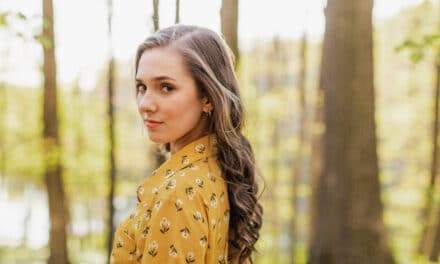
On “Are you willing to change?”, the Alabama-raised, Brooklyn-based artist explores the contradictions of love, the spirituality of music and the freedom of finally trusting her own voice. After years of learning how to write songs, she’s discovering something more difficult: how to stop performing and simply be herself.
There is a particular kind of freedom that comes from no longer needing to appear impressive.
Not successful. Not interesting. Not endlessly productive. Not even particularly beautiful.
Just human.
For A.G. Sully, that freedom is becoming an increasingly important part of her artistic identity.
“I really hate the idea of only showing wins or good parts of life,” she says. “I mean all we ever see these days are highlight reels and curated moments. I want to show grit and sadness too.”
Then she takes the idea a little further.
“I am an unpolished person. I’m working up the courage to feel ugly in photos and think it’s sexy. I want to post songs that I think suck and didn’t make the project.”
And finally:
“I don’t want to perform anymore!”
It’s a fascinating declaration from someone whose life revolves around performance.
But Sully isn’t talking about abandoning music. She’s talking about abandoning the carefully maintained distance between an artist and the person underneath.
That distinction sits at the center of her latest single, “Are you willing to change?”, a hypnotic exploration of love’s transformative possibilities and the risks of believing too deeply in someone else.
Built around cascading harmonies, restless percussion and atmospheric synthesizers, the track occupies a hazy intersection of trip-hop, dream-pop and Quiet Storm R&B. There’s something intimate and unsettled about its atmosphere, as though the song is suspended between the moment before a confession and the uncertainty of what happens afterward.
Its central question sounds simple.
Are you willing to change?
But change for whom?
And at what cost?
Love Isn’t Supposed to Save You From Yourself
Romantic music has spent generations convincing us that love can fix almost anything.
Find the right person, and suddenly the broken pieces will make sense. The loneliness will disappear. The difficult parts of yourself will become easier to understand.
Sully isn’t particularly interested in that fantasy.
“I don’t think expecting another person to transform you is the answer,” she says. “It’s the same sentiment as loving someone into loving themself—it won’t work.”
But she also believes that love without transformation might not be love at all.
“A relationship that holds any amount of love, whether romantic, platonic, or familial, will inevitably change you. If it doesn’t, I don’t think there was any love there in the first place.”
The difference lies in whether transformation is demanded or allowed to happen.
Sully references bell hooks’ All About Love, particularly the writer’s understanding of love as an active commitment to nurturing spiritual growth.
That definition complicates the familiar narrative of romantic surrender.
Love isn’t necessarily about losing yourself in someone else.
It might be about becoming more fully yourself because of the relationship.
And sometimes that process is uncomfortable.
Hope and Doom Can Coexist
Interestingly, “Are you willing to change?” didn’t begin as a song about Sully’s own relationship.
She initially intended to tell a friend’s story.
But as the writing developed, elements of her marriage and her feelings about the world began finding their way into the music.
The distinction between someone else’s experience and her own gradually dissolved.
“I guess hope and doom can coexist,” she says.
It’s a striking way to describe the emotional landscape of the song.
Hope requires believing in something that hasn’t happened yet.
Faith requires accepting the possibility of disappointment.
And love, perhaps more than anything else, requires making yourself vulnerable to an outcome you cannot control.
Sully didn’t necessarily sit down and plan for the production to embody those contradictions. Looking back, however, she recognizes that the musical decisions and emotional tensions were connected.
“I see now that it does embody the depths of hope and the risk of faith.”
The song’s atmosphere makes that contradiction tangible.
Its harmonies feel inviting, but the percussion keeps moving. The softness never entirely resolves the tension underneath.
There’s romance here.
But there is also suspense.
The Church Never Entirely Left Her Voice
Long before Brooklyn, Nashville or the production experiments that now define her sound, Sully was singing in church in Alabama.
Her childhood was surrounded by Christian music, and the spiritual framework of that upbringing shaped the way she understood performance.
In church, she encountered the concept of the “anointing”—the belief that God could work through a person’s gifts to move others.
Sully no longer identifies as Christian, and her understanding of spirituality has changed considerably.
But the emotional experience of singing has remained.
“I still believe in a sense of divine purpose,” she explains. “Music has a really strong spiritual power over me and I do believe it’s my purpose to use my voice.”
That connection helps explain the almost devotional quality of her music.
Even when she’s singing about romantic uncertainty, there is something in the delivery that suggests a larger emotional search.
The subjects have changed.
The sense of surrender hasn’t entirely disappeared.
“Singing does still feel very spiritual, or transcendent,” she says. “I still feel the same emotions as when I was singing in church growing up, to now.”
In that sense, Sully’s musical evolution isn’t a clean rejection of her past.
It’s a transformation of the language she inherited.
Discovering Music Outside the World She Knew
College in Tennessee exposed Sully to music that had been largely absent from her upbringing.
Suddenly, the possibilities of songwriting expanded.
Solange’s A Seat at the Table.
Sampha’s Process and Dual EP.
Noname’s Telefone.
D’Angelo.
These artists weren’t necessarily connected by one genre, but they shared something Sully hadn’t fully encountered before.
Freedom.
“I remember my freshman year of college hearing Telefone by Noname and it was literally like nothing I’d ever heard before.”
What fascinated her was the sense that these musicians weren’t trying to fit into predetermined categories.
They seemed completely themselves.
“All these records, while different, showed me a new kind of performance that felt completely authentic and unafraid of boxes and labels.”
Eventually, Sully left college to pursue songwriting outside the religious music world she had known.
It was the beginning of a much longer process of figuring out what her own voice might sound like.
Nashville Taught Her to Work. New York Taught Her to Live.
Sully spent nine years developing her craft in Nashville.
The city gave her discipline, professional experience and a deep understanding of songwriting as a practice.
It also introduced her to a particular kind of creative productivity.
“Nashville is a ‘write a song everyday’ kind of place,” she says.
There’s enormous value in that mentality.
You show up. You work. You collaborate. You finish things.
But after years of writing, Sully began questioning whether producing more songs necessarily meant having more to say.
Moving to New York changed her perspective.
“Nashville taught me one way to write, and New York helped me learn that there’s no wrong way to write.”
Brooklyn, with its expense, intensity and relentless demands, might seem like an unlikely place to discover creative freedom.
Yet Sully found herself recognizing the importance of experiences that couldn’t be manufactured inside a writing session.
“Writing 1000 songs and having cowrites everyday looks good, and feels good, but nothing can replace life experience.”
It’s a particularly interesting realization in a music industry that frequently measures artistic progress through output.
More sessions.
More releases.
More content.
More visibility.
Sully began discovering that sometimes the most important thing a songwriter can do is stop writing long enough to have something worth writing about.
Finding Her Sound in a Brooklyn Sublet
Her next breakthrough happened in relative isolation.
Living in a Brooklyn sublet, Sully began teaching herself music production.
It started out of necessity.
But learning to build her own sonic environments fundamentally changed her relationship with her music.
“I’d never had full control before, and once I got it I feel like I found what I was missing in my music before.”
For years, Sully had worked with other producers and musicians, including collaborators she describes as supportive and talented.
The problem wasn’t necessarily that anyone was preventing her from expressing herself.
It was that she had internalized the assumption that their technical experience meant their instincts were more trustworthy than hers.
“I still believed that they had to know better than me, just because of their experience as a producer.”
That dynamic can be particularly complicated for women working in music production, where technical authority has historically been associated disproportionately with men.
Sully’s solution wasn’t to become better at explaining her ideas to someone else.
It was to learn how to execute them herself.
“The past year I’ve had little to no outside influence and I’ve really trusted myself for the first time.”
The result is the intimate, atmospheric world of her recent material.
Trip-hop rhythms.
Dream-pop textures.
Quiet Storm sensuality.
Vocals that seem to drift between confession and prayer.
But the significance goes beyond genre.
For the first time, Sully feels that the sound coming out of the speakers corresponds to the sound she had been hearing in her own imagination.
“I feel like a really authentic version of myself as an artist right now.”
Distance Can Make Intimacy Feel Louder
Around the same period, Sully was navigating a long-distance relationship.
Physical separation introduced another kind of creative isolation.
And another kind of intimacy.
“Missing someone that much, only getting to see your partner once a month, feels extremely vulnerable,” she says.
When someone isn’t physically present, memory begins doing some of the work normally performed by proximity.
You remember conversations.
You replay moments.
You hold on to the last time you were together.
“You have to just hold on to the last memory you had with them—hold it tight until you can see them again.”
That emotional state naturally found its way into Sully’s music.
The yearning in her songs isn’t simply an aesthetic borrowed from R&B.
It reflects the peculiar experience of feeling deeply connected to someone who isn’t there.
And it led her to question something about contemporary relationships.
“I think it’s really easy, especially in this age, to be physically close to someone and not be intimate.”
Technology makes constant communication possible, but it doesn’t guarantee emotional presence.
Meanwhile, a relationship conducted largely through phone calls can sometimes produce a remarkable degree of vulnerability.
“It’s so strange feeling closer to someone that you can only talk to on the phone than someone you see everyday.”
Sully’s songs live inside that contradiction.
The body is absent.
The emotional connection feels overwhelming.
And the distance between those realities becomes a space for music.
She Doesn’t Care What Genre It Is. She Wants to Feel It.
It’s tempting to describe Sully’s work through its influences.
Trip-hop.
Dream-pop.
Alternative R&B.
Quiet Storm.
All of those references help locate the sound, but they don’t necessarily explain what she’s trying to achieve.
For Sully, the connection between those styles is emotional rather than technical.
“Anything that carries a strong sense of depth and soul pulls me.”
She gravitates toward R&B and alternative R&B, but ultimately it’s the voice that matters most.
The emotion behind it.
The possibility that a performance might communicate something before the listener has even fully understood the words.
“Whether it’s yearning, anger, hope, or sadness, I just want to feel it in my bones.”
That desire connects the young girl singing in church with the artist producing atmospheric music alone in Brooklyn.
The surroundings have changed.
The fundamental objective hasn’t.
Make somebody feel something.
What If Being Authentic Means Letting People See the Bad Parts?
Sully’s current creative renaissance has arrived at a moment when authenticity has become one of the most overused words in contemporary culture.
Everyone wants to appear authentic.
Brands manufacture authenticity.
Artists carefully curate images of being uncurated.
Even vulnerability can become a recognizable aesthetic.
Sully is increasingly suspicious of that performance.
Her response is to become less protective of the parts of herself that might not photograph particularly well.
The unsuccessful songs.
The sadness.
The awkwardness.
The unflattering images.
The moments that don’t fit neatly into a compelling narrative of artistic growth.
“I want to show grit and sadness too.”
She describes herself as an “extroverted introvert,” initially shy but willing to reveal almost anything once a conversation begins.
And she’s trying to bring that same openness into the way she presents herself as an artist.
“I’m working up the courage to feel ugly in photos and think it’s sexy.”
There’s something quietly radical about that ambition.
Not because posting an imperfect photograph is inherently revolutionary.
But because so much of contemporary artistic identity depends on maintaining the impression that every visible detail is intentional.
Sully wants to loosen that control.
To allow things to exist without needing them to support a flawless image.
“I want to post songs that I think suck and didn’t make the project.”
Maybe the imperfect work has something to reveal too.
Maybe the unflattering photograph is still worth keeping.
Maybe the moments that don’t belong in the highlight reel are the ones that make the rest of the story believable.
Are You Willing to Change?
At first, the question at the center of Sully’s new single appears to be directed toward someone else.
A lover.
A partner.
Someone being asked whether they’re willing to grow.
But the more Sully talks about the experiences surrounding the song, the more the question seems to extend toward herself.
Was she willing to leave the musical world she grew up in?
Was she willing to abandon familiar songwriting methods?
Was she willing to stop assuming other producers knew better?
Was she willing to trust the strange sounds she heard in her own head?
Was she willing to let people see the parts of herself that weren’t particularly polished?
And perhaps most importantly, was she willing to stop confusing being an artist with performing an idealized version of one?
The answers are still unfolding.
Sully doesn’t present herself as someone who has finally arrived at a perfect understanding of love, spirituality or identity.
She’s interested in the mess.
The contradictions.
The possibility that hope and doom might coexist.
That distance might create intimacy.
That leaving a religious tradition doesn’t necessarily mean abandoning the spiritual power of music.
That becoming more yourself might require giving up the desire to look like you have everything figured out.
“I guess I have nothing to hide,” she says.
And maybe that’s the most meaningful transformation of all.
After years of learning how to perform, A.G. Sully is discovering the freedom of no longer feeling that she has to.
In Conversation With A.G. Sully
“Are you willing to change?” asks a deceptively complicated question. Do you see real love as something that inevitably changes us, or can expecting transformation from another person become dangerous?
I don’t think expecting another person to transform you is the answer. It’s the same sentiment as loving someone into loving themself—it won’t work. However, I think a relationship that holds any amount of love, whether romantic, platonic, or familial, will inevitably change you. If it doesn’t, I don’t think there was any love there in the first place.
I really believe in this bell hooks quote from her book All About Love, that love is the “will to extend one’s self for the purpose of nurturing one’s own or another’s spiritual growth.” I hope this song reflects that.
There’s a tension in the song between hope, surrender and the risk of placing too much faith in someone else. Was that contradiction something you consciously wanted the production to embody as well as the lyrics?
To be honest, the song wasn’t initially about my relationship at the time of writing it. I was hoping to tell a friend’s story, but as the song developed I realized how much I was subconsciously pulling from my own marriage and also the state of the world.
I guess hope and doom can coexist. So, with that I think every decision, lyrically and sonically, was subconscious in a way—I see now that it does embody the depths of hope and the risk of faith.
Your music draws from trip-hop, dream-pop and Quiet Storm R&B, but it never feels particularly interested in staying inside one genre. What connects those musical worlds for you emotionally?
Anything that carries a strong sense of depth and soul pulls me. Musically I’m definitely drawn most to R&B, alternative R&B, but mostly I care about vocals—the emotion behind them, whether it’s yearning, anger, hope, or sadness, I just want to feel it in my bones.
You grew up singing in church in Alabama, and there’s still an almost spiritual quality to the way you use your voice. What parts of that musical upbringing have stayed with you even as your relationship with music and spirituality evolved?
Nothing without intention I guess! Growing up in the church we talked a lot about the “anointing,” meaning that God is working through you, using your gifts to move people.
While I don’t consider myself a Christian anymore or believe in this exact “anointing,” I still believe in a sense of divine purpose. Music has a really strong spiritual power over me and I do believe it’s my purpose to use my voice.
So I guess with that, singing does still feel very spiritual, or transcendent, and I still feel the same emotions as when I was singing in church growing up, to now.
College introduced you to music outside the Christian world you grew up around and ultimately helped push you toward writing non-secular music. Do you remember any particular artists or records that radically changed what you thought songwriting could be?
Solange’s A Seat at the Table, Sampha’s Process and his Dual EP.
I remember my freshman year of college hearing Telefone by Noname and it was literally like nothing I’d ever heard before. That year I heard D’Angelo too.
All these records, while different, showed me a new kind of performance that felt completely authentic and unafraid of boxes and labels.
You spent nine years developing as an artist in Nashville before moving to Brooklyn. What did Nashville teach you about songwriting, and what did you have to unlearn once you arrived in New York?
Nashville taught me one way to write, and New York helped me learn that there’s no wrong way to write. Nashville absolutely helped me develop, and showed me how to work hard. Nashville is a “write a song everyday” kind of place.
Moving to New York (oddly enough because of how crazy expensive and cut throat the city is) showed me the value of experience, and how writing 1000 songs and having cowrites everyday looks good, and feels good, but nothing can replace life experience.
Teaching yourself production in the isolation of a Brooklyn sublet sounds like an important turning point. How did becoming your own producer change the way you understood your artistic identity?
I’d never had full control before, and once I got it I feel like I found what I was missing in my music before.
I think sometimes when you’re in a room with another producer or musician, it can be really hard to communicate exactly what you want to hear, especially as a woman. I worked with really amazing men that never made me feel small in the studio, but I still believed that they had to know better than me, just because of their experience as a producer.
The past year I’ve had little to no outside influence and I’ve really trusted myself for the first time and because of it, I feel like a really authentic version of myself as an artist right now.
Your recent work coincided with a long-distance relationship and explores yearning, devotion, distance and surrender. What did physical distance reveal to you about intimacy that being physically close to someone perhaps couldn’t?
There’s a level of yearning that has to exist within distance. Missing someone that much, only getting to see your partner once a month, feels extremely vulnerable. You have to just hold on to the last memory you had with them—hold it tight until you can see them again.
Also, I think it’s really easy (especially in this age) to be physically close to someone and not be intimate. It’s so strange feeling closer to someone that you can only talk to on the phone than someone you see everyday.
Both “Dive In” and “Are you willing to change?” seem fascinated by the vulnerability required to fully enter a relationship. Do you think your current music is ultimately about love itself, or about what love reveals about the person experiencing it?
Inevitably it has to be both because the experience and revelations of love cannot happen without love itself.
You’ve described something of a private creative renaissance behind this new material. As more people begin discovering A.G. Sully, what parts of that private world are you excited to reveal—and what parts do you want to keep for yourself?
To be honest I really feel like an open book—I’m somewhat of an extroverted introvert, in that I’m at first a bit shy, but once prompted I will tell you everything.
I really hate the idea of only showing wins or good parts of life, I mean all we ever see these days are highlight reels and curated moments. I want to show grit and sadness too.
I guess I have nothing to hide. I am an unpolished person. I’m working up the courage to feel ugly in photos and think it’s sexy. I want to post songs that I think suck and didn’t make the project.
I don’t want to perform anymore!