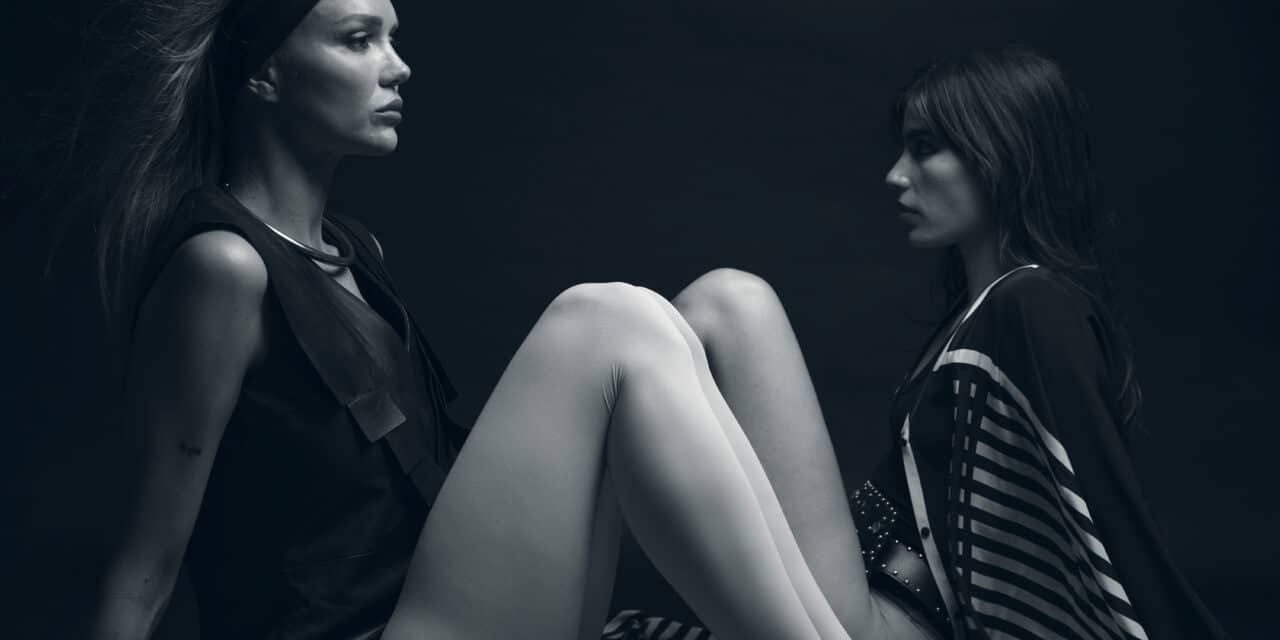
With its monochrome silhouettes, outlaw-inspired names and after-dark attitude, BANKROBBER is challenging fashion’s obsession with excess. For founders Sabine and John, rebellion isn’t about breaking every rule. It’s about knowing which ones aren’t worth following.
There are already too many clothes in the world.
Too many collections, too many trends, too many pieces designed to be worn once, photographed, forgotten and replaced by something nearly identical three weeks later.
Fashion has become extraordinarily good at convincing people they need another thing. Another dress. Another interpretation of a trend. Another opportunity to become whoever the algorithm thinks they should be this season.
BANKROBBER would rather you find one dress you never forget.
That’s the philosophy behind the fashion label founded by Sabine and John, whose monochrome designs, architectural silhouettes and provocatively named pieces seem to exist somewhere between a luxury atelier, a punk record sleeve and a very stylish criminal conspiracy.
Alcatraz. San Quentin. Rikers Island. Bonnie. Clyde. Dillinger.
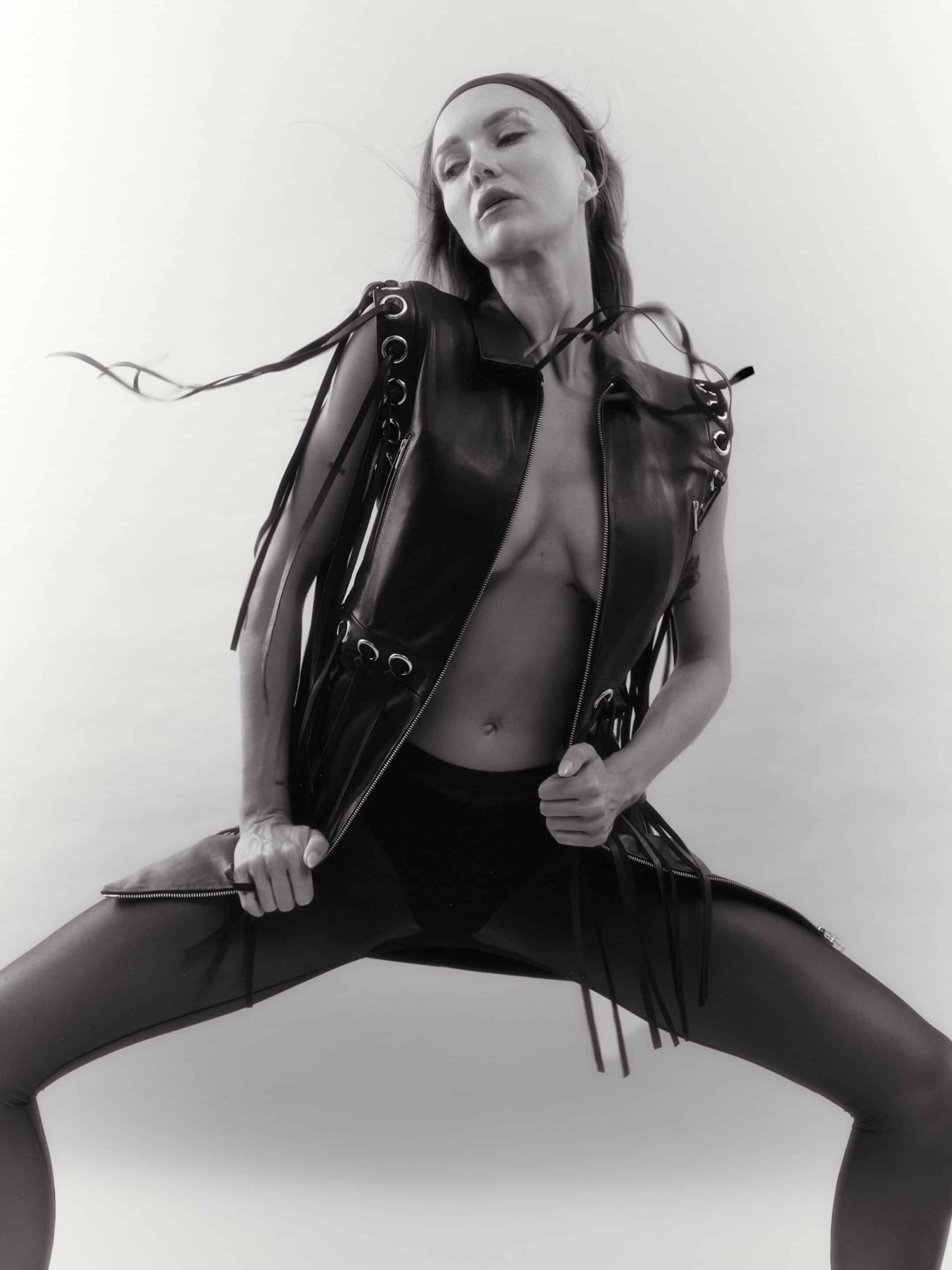
The names suggest outlaws, confinement, escape and transgression. The clothes themselves are considerably more controlled: clean lines, strong geometric forms, pure silk, leather and unexpected details that reveal themselves slowly.
It’s a contradiction the brand seems perfectly comfortable inhabiting.
“We want the clothes to feel seductive but slightly dangerous,” the founders explain. “Refined enough to draw you in, but with enough tension to make you look twice.”
And while fashion has spent decades equating luxury with more—more embellishment, more visibility, more seasonal reinvention—BANKROBBER is interested in what happens when you deliberately remove things.
Less decoration.
Less production.
Less noise.
More intention.
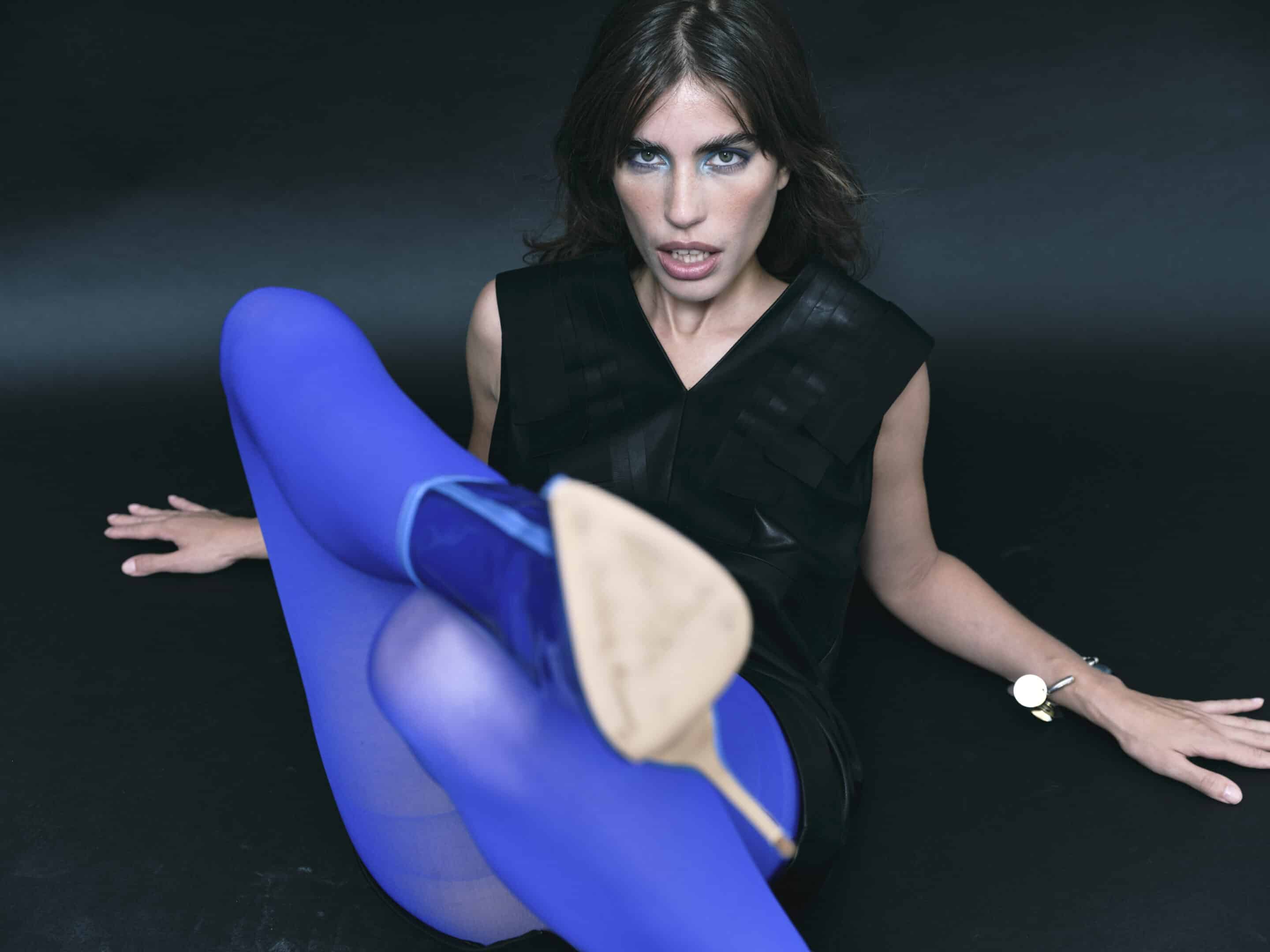
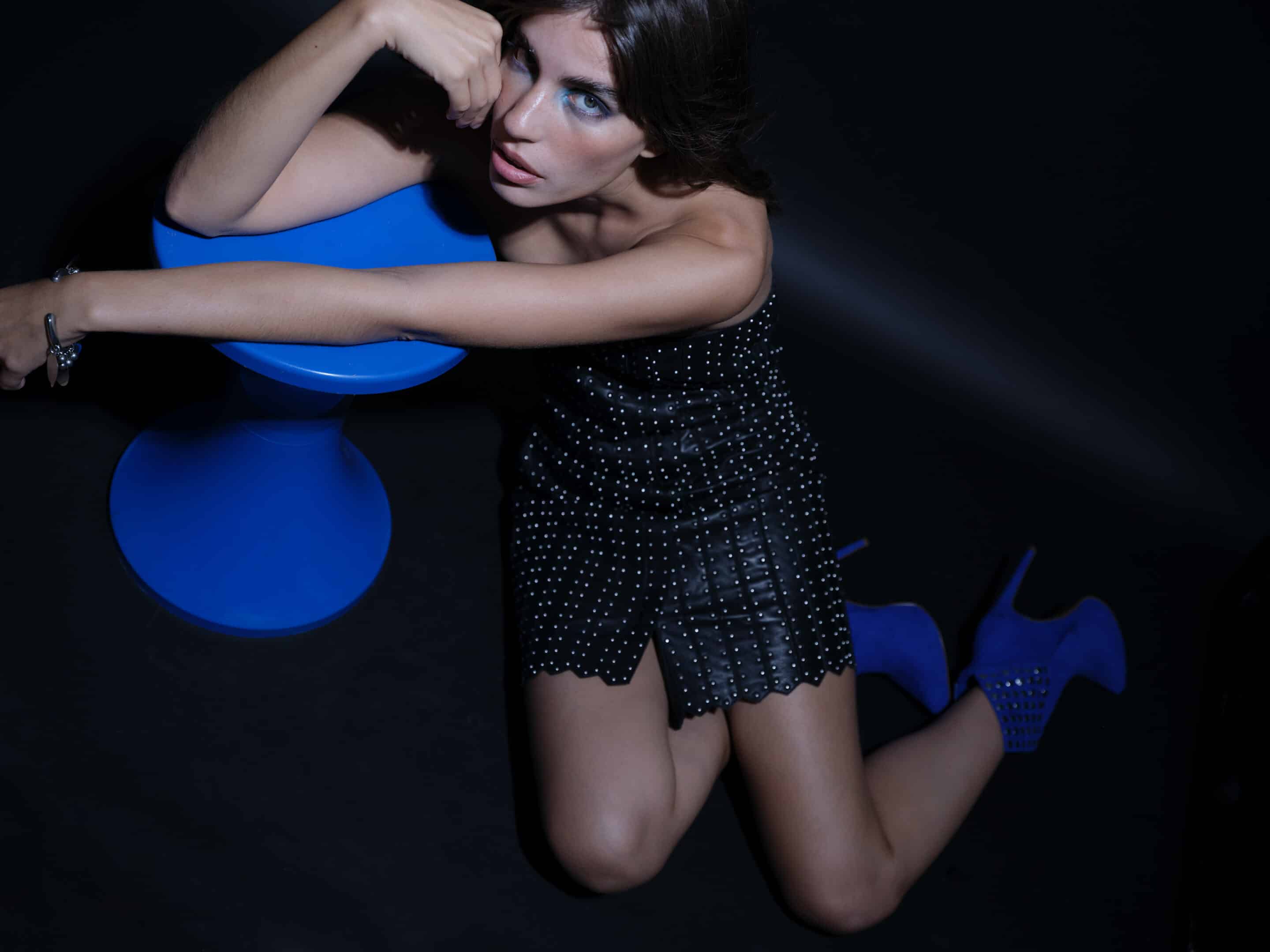
Punk Was Always About Doing More With Less
BANKROBBER’s minimalism wasn’t originally conceived as a rigid design manifesto.
One of the brand’s earliest pieces, the Sundance Kid, emerged from an exhibition about the history of the kimono that Sabine and John visited in Paris.
What fascinated them wasn’t simply the silhouette, but the restraint.
Many of the garments were black and white or used remarkably little color. Some of their most beautiful details were concealed on the inside, visible only to someone who knew where to look.
That observation became foundational.
Something could be visually commanding without announcing every detail of its construction. A garment could contain complexity without displaying all of it at once.
The Sundance Kid, a silk kimono that can function as a dress or be worn over swimwear, might initially appear different from the brand’s more structured designs. But the founders see it as an early expression of the same principle.
And then there’s punk.
Not necessarily punk as a visual costume, with every familiar signifier carefully assembled, but punk as a method.
“Punk was about doing more with less—a few chords, a raw sound, a strong attitude, and suddenly you have something powerful.”
For BANKROBBER, the equivalent is a precise cut, an unexpected proportion or one carefully placed detail.
“We don’t add detail for the sake of it; one strong shape or unexpected detail can say more than excessive embellishment.”
The idea is almost musical.
A great punk song doesn’t need an orchestra to make its point. Sometimes three chords are enough, provided the person playing them actually means something.
BANKROBBER approaches a dress in much the same way.
“Less, but with more intent.”
A Little Danger Makes Elegance More Interesting
There is a particular kind of luxury fashion that seems terrified of disrupting its own perfection.
Everything is tasteful. Everything is polished. Everything has been carefully designed to communicate the correct level of sophistication.
BANKROBBER isn’t opposed to sophistication.
It just doesn’t think sophistication should be boring.
“For us, refinement and confrontation aren’t opposites—they work best when they challenge each other.”
That philosophy is particularly visible in the label’s Night collection, designed specifically for after-dark dressing.
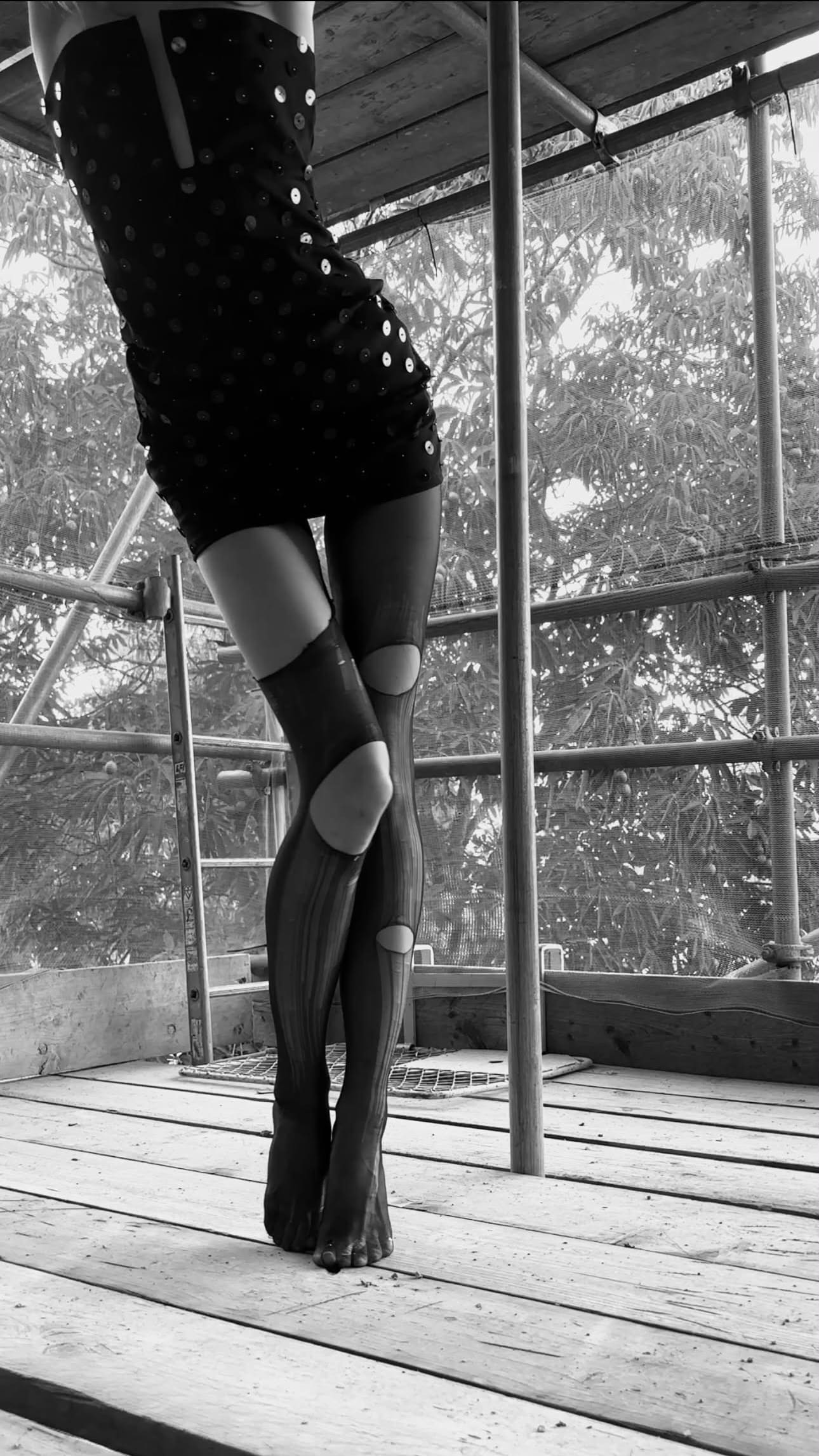
Soft fabrics encounter harder details. Silk meets studs. Rhinestones appear against black surfaces, sometimes deliberately difficult to distinguish until the light catches them.
The effect isn’t about immediately overwhelming the viewer.
It’s about creating a second impression.
A dress might appear almost austere at first, only to reveal another personality as its wearer moves.
Black-on-black embellishments become visible under changing light. Subtle glitter emerges from darkness. Something that initially looked restrained becomes considerably more provocative.
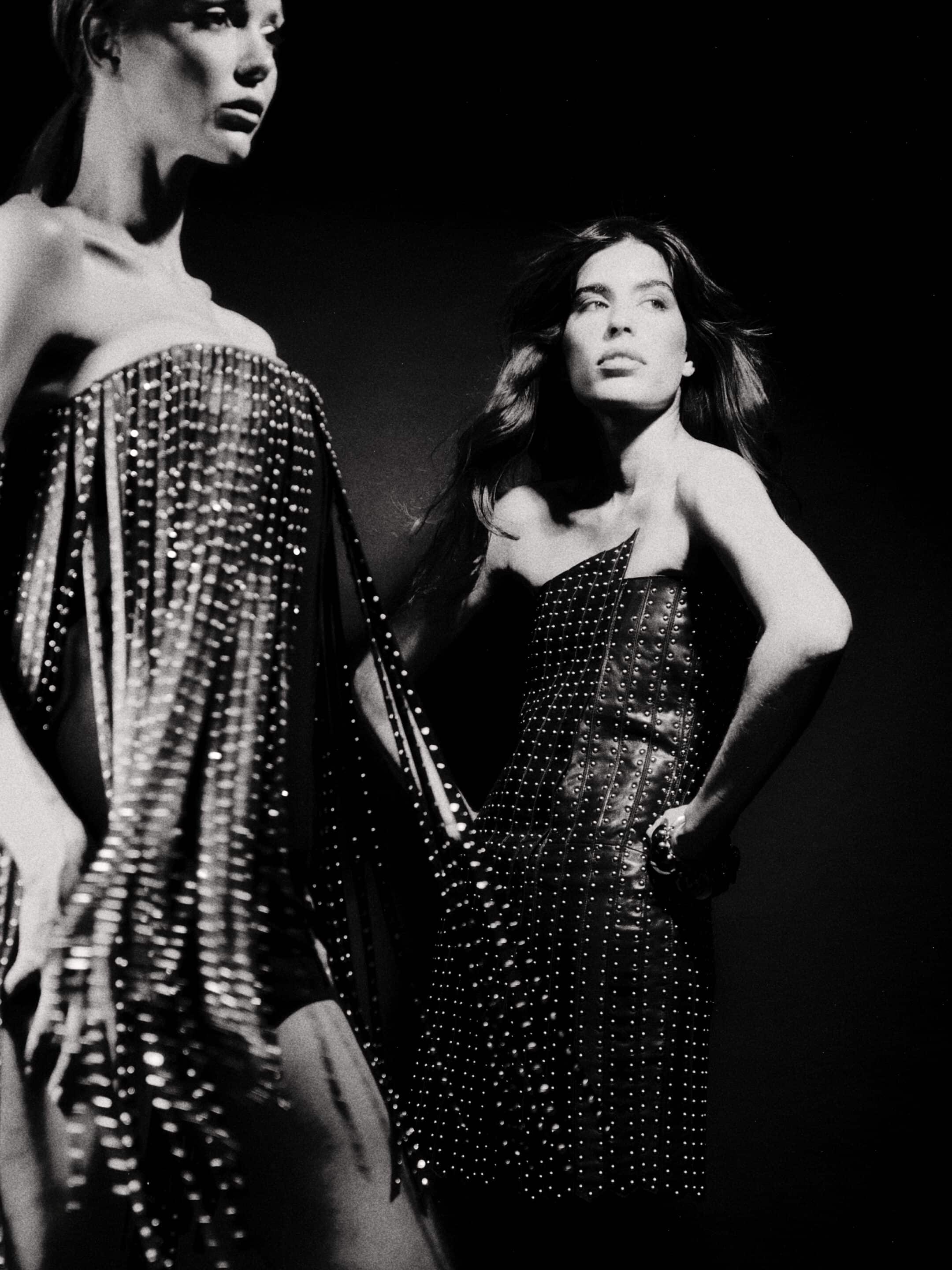
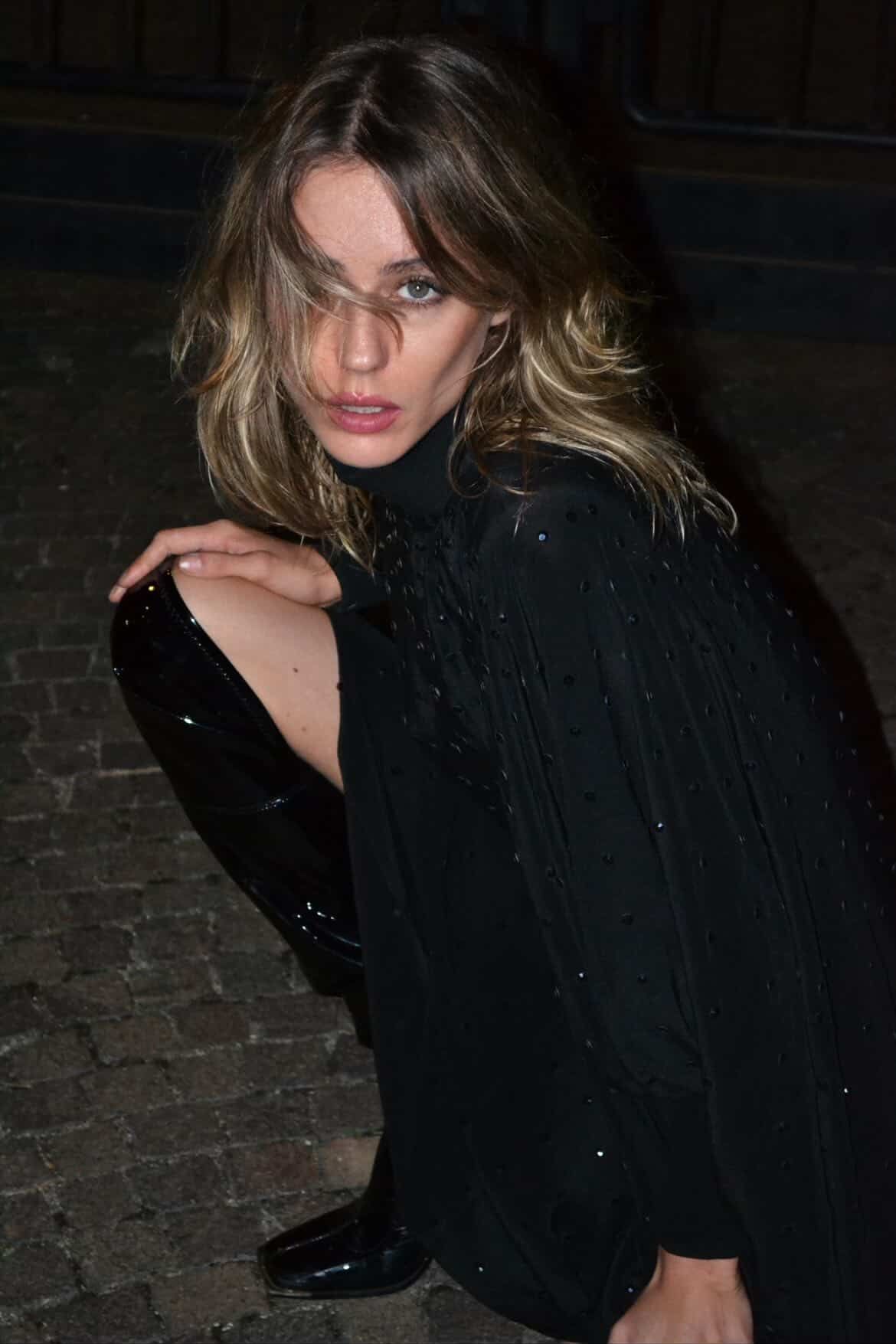
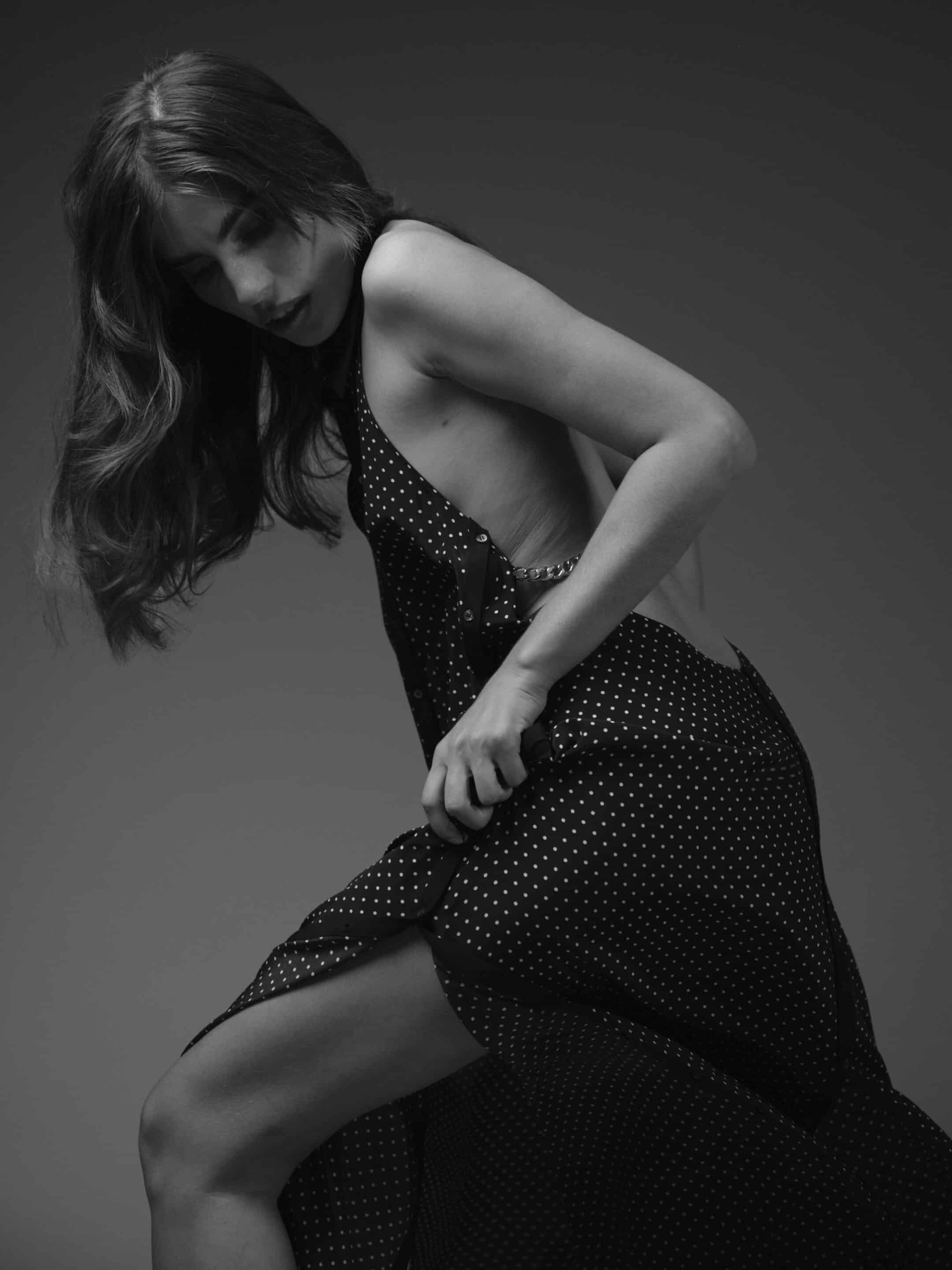
“We like that sense of discovery,” the founders explain. “Something can appear understated at first, then reveal another side depending on how you see it, how it moves, or how the light hits it.”
It’s a compelling alternative to fashion designed primarily for the instantaneous impact of a social media feed.
Not everything needs to reveal itself in the first second.
Some things are worth looking at twice.
The BANKROBBER Woman Isn’t Asking Permission
The brand’s fascination with criminal mythology is less about romanticizing crime than borrowing the attitude associated with people who refuse to operate according to conventional expectations.
The BANKROBBER woman isn’t necessarily interested in being disruptive for the sake of it.
She’s interested in being free.
“We like to think that the real ‘outlaw’ ethos of Bankrobber is about being free to express yourself and do what you want.”
It’s a definition of rebellion that moves away from theatrical confrontation and toward personal autonomy.
Wear the dress because you want to.
Choose the silhouette because it makes you feel something.
Ignore the trend because it has nothing to do with you.
The clothes are designed to be special rather than everyday essentials. The founders deliberately work with materials such as pure silk and leather, creating garments intended for moments when getting dressed becomes an occasion in itself.
The goal isn’t simply to attract attention.
It’s to give the wearer a particular sense of herself.
“Confidence, individuality and a little bit of rebellion.”
In that context, the prison and outlaw references become a visual language for a broader idea: the freedom to refuse the expectations attached to how a woman should look, dress or present herself.
There’s something amusing about naming a luxury dress after a prison.
There’s also something appropriate about using the language of confinement to sell a philosophy of liberation.
What If Luxury Meant Having Less?
Fashion has a complicated relationship with the idea of exclusivity.
The industry frequently celebrates scarcity while simultaneously producing extraordinary quantities of clothing. Brands manufacture desire through limited availability, then build entire business models around convincing customers to keep purchasing.
BANKROBBER wants to approach that contradiction differently.
Its dresses are produced in very small quantities, with designs intended not to be reproduced once those editions are gone.
The founders describe this as part of their commitment to more responsible production, alongside their desire to make each piece feel genuinely special.
“We want to make beautiful, high-quality clothes without being wasteful, and that means being thoughtful about what we produce and how we produce it.”
Limited production alone doesn’t settle every question surrounding sustainability. Materials, manufacturing, transportation and the lifespan of a garment all matter.
But BANKROBBER’s argument is as much about changing the psychology of consumption as it is about changing the quantity of production.
Buy something because you genuinely want it.
Keep it because it still means something.
Don’t confuse endless choice with freedom.
“There are too many clothes, too much choice, too much noise,” the founders say.
“So we think you have to be definite. Know what you want. Know what you like.”
That idea feels almost confrontational in an industry whose commercial momentum depends on encouraging people to reconsider what they want every season.
BANKROBBER isn’t arguing that fashion should stop being exciting.
It’s arguing that excitement shouldn’t necessarily require constant replacement.
Even the Algorithm Can’t Predict What People Want
Of course, creating fashion in 2026 means confronting another uncomfortable reality.
Clothes increasingly exist as images before they exist as physical experiences.
A design might be judged through a photograph, a video or a few seconds of scrolling before someone has any opportunity to encounter its fabric, construction or movement.
BANKROBBER isn’t pretending to be immune to that pressure.
Certain poses work better online. Certain visual approaches attract attention. Understanding those patterns is part of operating a contemporary fashion brand.
But the founders are also fascinated by how frequently their assumptions prove wrong.
Sometimes an image they love but don’t expect to perform particularly well becomes one of their most successful posts.
“Never underestimate human unpredictability!”
It’s a refreshing observation at a time when so much creative work is shaped around the promise that audience behavior can be measured, anticipated and optimized.
There is still something gloriously irrational about taste.
People don’t always want what they’re expected to want.
They don’t necessarily respond to the image that has been engineered most carefully to attract them.
And sometimes the thing that works best is the thing nobody thought would.
For a brand built around refusing certain conventions, that unpredictability isn’t necessarily a problem.
It might be part of the appeal.
Power Dressing Doesn’t Have to Shout
The idea of power dressing has changed considerably over time.
There was a period when dressing powerfully often meant borrowing the visual vocabulary of traditionally masculine authority: sharp shoulders, rigid tailoring, imposing silhouettes.
Today, power can mean something far less prescriptive.
For BANKROBBER, it begins with knowing what you want.
The founders aren’t interested in treating femininity, gender or luxury as fixed categories that must remain separate.
They want those ideas to be mixed, challenged and reinterpreted.
But their most significant objection is to the assumption that luxury should be defined through status or accumulation.
“For us, luxury isn’t about status, excess or having more. In fact, it can be the opposite.”
A powerful garment doesn’t necessarily need to dominate the room.
It needs to make the person wearing it feel unmistakably present.
That’s why BANKROBBER’s restraint matters.
The absence of excessive decoration places greater emphasis on the wearer, the silhouette and the relationship between the two.
Instead of asking a woman to disappear beneath the spectacle of a garment, the clothes aim to amplify her presence.
And sometimes that means the most powerful statement is simply refusing to wear what everyone else is wearing.
The Dress, Not Another Dress
The name BANKROBBER promises a certain amount of trouble.
It sounds like something you shouldn’t be doing.
Something that involves risk.
Something that might require breaking a few rules.
But the founders’ most provocative ambition isn’t to make clothing that looks dangerous.
It’s to challenge the assumption that the world needs more clothing in the first place.
They point toward the enormous quantities of garments already circulating through global markets and discarded-clothing systems as evidence of an industry that has confused production with progress.
At the same time, they recognize something extraordinary about fashion.
Human beings took the basic necessity of covering their bodies and transformed it into art, identity, culture and expression.
The problem isn’t clothing.
It’s the endless accumulation of clothing without much consideration for what any individual piece actually contributes to someone’s life.
“For us, the answer isn’t to have more. It’s to have the right piece.”
One dress that feels different.
One dress that has presence.
One dress that makes its wearer feel incredible.
One dress she wants to keep.
“Designed to be the dress—not another dress.”
It’s a deceptively radical proposition for a fashion label.
BANKROBBER is still selling clothes, after all. Beautiful, carefully considered, deliberately seductive clothes.
But it is also asking customers to be more selective about what deserves a place in their wardrobes.
To choose with intention rather than impulse.
To treat luxury as something personal rather than something determined by an external hierarchy.
And perhaps, most importantly, to stop waiting for fashion to tell them who they’re supposed to be.
“Become an outlaw,” the founders say.
“The old rules of fashion no longer need to apply.”
In Conversation With BANKROBBER
BANKROBBER describes itself through bold minimalism, monochrome design and strong geometric forms. What originally attracted you to restriction and simplicity as a creative language rather than maximalism?
We didn’t initially set out to create a minimal aesthetic. One of the first pieces we made for BANKROBBER—and one that really planted the seed for the idea—was the Sundance Kid, a silk kimono that can be worn as a dress or thrown over swimwear at the beach.
It might look like an outlier within the collection, but it actually came from the combination of two things. The first was an exhibition we saw in Paris about the kimono through the ages. What struck us wasn’t just the incredible shape, but the restraint of the colours. So many of the kimonos were black and white, or used very little colour, with some of the most beautiful details hidden on the inside.
That idea stayed with us. It made us think about how something can be visually striking without needing to be loud—and that became an important part of the BANKROBBER aesthetic.
There’s something simultaneously elegant and rebellious about the clothes. How do you balance refinement with confrontation without allowing one side to overpower the other?
There’s a lot we take from punk music. Punk was about doing more with less—a few chords, a raw sound, a strong attitude, and suddenly you have something powerful. That simplicity is what gives it its energy.
We approach the clothes in much the same way. The cut, material and proportion have to be just so. We don’t add detail for the sake of it; one strong shape or unexpected detail can say more than excessive embellishment.
That tension between restraint and attitude has become our creative language. Less, but with more intent.
For us, refinement and confrontation aren’t opposites—they work best when they challenge each other. The silhouettes and fabrics bring a sense of elegance and precision, while the darker details, unexpected elements and attitude keep the pieces from feeling too polished. We want the clothes to feel seductive but slightly dangerous—refined enough to draw you in, but with enough tension to make you look twice.
Your pieces have names like Alcatraz, San Quentin, Rikers Island, Bonnie, Clyde and Dillinger. Where does this fascination with outlaws, prisons and transgression come from, and what does it say about the BANKROBBER woman?
We like to think that the real “outlaw” ethos of BANKROBBER is about being free to express yourself and do what you want. We hope the clothes go some way towards making each person feel good.
Our dresses aren’t designed to be worn every day. In fact, our new collection, Night, is specifically designed for after dark. We want each piece to feel special to the wearer, which is why we work with high-end materials like pure silk and leather. The clothes should feel luxurious, but also give the wearer a sense of confidence, individuality and a little bit of rebellion.
Pieces like Noir combine pure silk, an almost architectural silhouette and hand-applied rhinestones. How important is the tension between luxury craftsmanship and a harder, almost subversive visual identity?
The juxtaposition is very important to us. Studs, stones and harder edges against softer fabrics create a tension that runs through the collection. With our new collection, Night, we’ve taken that idea further with black-on-black rhinestones and glitter pieces. They’re deliberately subtle, but dark—details that don’t always catch your eye, but suddenly reveal themselves when they catch the light.
We like that sense of discovery. Something can appear understated at first, then reveal another side depending on how you see it, how it moves, or how the light hits it. It’s another way of creating that balance between refinement and rebellion.
BANKROBBER operates through limited production rather than endless collections. Is that primarily a sustainability decision, a creative philosophy, or a reaction against the speed of contemporary fashion?
For us, sustainability starts with producing fairly and responsibly. We want to make beautiful, high-quality clothes without being wasteful, and that means being thoughtful about what we produce and how we produce it.
The other part is being limited. These dresses are produced in very small numbers and will not be reproduced. We want each piece to feel genuinely special—something you can feel privileged to own and one of only a few people to wear. We want every customer to feel exclusive.
Fashion increasingly exists online, where clothes often have to communicate their identity in a matter of seconds. Do you ever think about Instagram and digital imagery while designing, or do you deliberately resist that pressure?
We’d love to say we don’t, but of course it’s part of how we think about things. Certain poses and certain types of content naturally work well on Instagram, so understanding what people respond to is useful. But there’s also a really nice unpredictability to it. Sometimes we post an image we love but don’t expect much from, and it ends up being one of our best-performing posts.
Even though Meta wants to control it all, you could also look at the organic part—people’s tastes are unpredictable.
Never underestimate human unpredictability!
That’s part of what makes it interesting. You can have a sense of what might work, but you can never completely predict it—and that element of surprise is something we enjoy.
Your clothes feel designed to make the wearer noticeable without relying on excessive decoration. What does “power dressing” mean to you in 2026, particularly when ideas around femininity, gender and luxury continue to evolve?
Femininity, gender and luxury have all evolved—and we think they should be mixed up, challenged and made real. But we’re also interested in questioning the idea of luxury itself. For us, luxury isn’t about status, excess or having more. In fact, it can be the opposite.
There are too many clothes, too much choice, too much noise. So we think you have to be definite. Know what you want. Know what you like. Choose something because it says something about you, rather than because you’re told it’s desirable.
That’s where we hope BANKROBBER offers an alternative. Bold, unforgettable, responsibly made and yours for the taking. A different kind of luxury—one based on individuality, quality and the freedom to wear exactly what you want.
The name BANKROBBER immediately suggests risk, rule-breaking and taking something for yourself. What does that name represent philosophically, and what rules of the fashion industry would you most like BANKROBBER to break?
Ultimately, if you look at the sheer excess of clothes—the mountains of clothing in Africa, the market stalls in France or the US—there are simply too many clothes. And yet, clothing is also a reflection of how sophisticated we are as a species. We took something we fundamentally need and elevated it into a form of expression, identity, creativity and culture.
For us, the answer isn’t to have more. It’s to have the right piece. One dress that makes you feel something. One dress that you reach for because it has presence, because it makes you feel incredible, because you know you won’t disappear in it.
That’s what BANKROBBER is about. Or we hope it is. We make bold, distinctive dresses designed to be the dress—not another dress. Limited in number, made to be kept, and impossible to forget. We want you to never forget it.
We want people to buy better, regardless of their income, and to choose with more intention. Runway-level style, made in limited editions and at a price that feels within reach. And that is what we do.
Become an outlaw. The old rules of fashion no longer need to apply. Dark, rebellious and built for after hours.