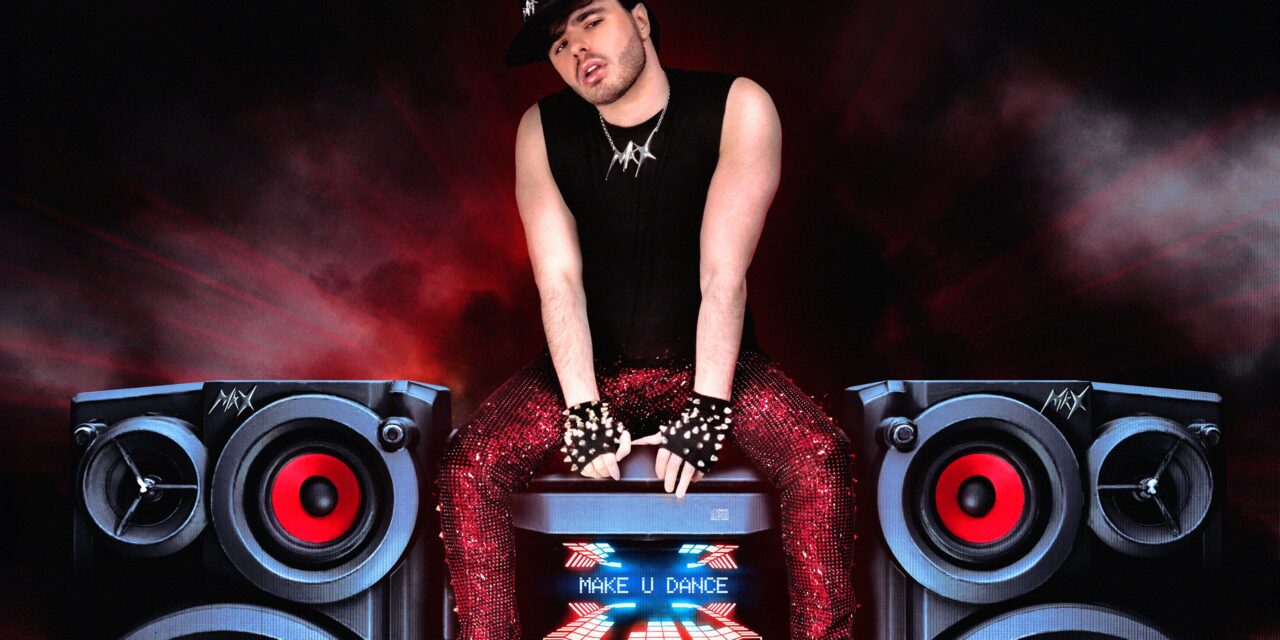
With his new music video for “MAKE U DANCE,” Los Angeles-based pop artist MkX transforms a spontaneous parking lot party into a full-scale celebration of choreography, Y2K nostalgia, and unapologetic self-expression. Drawing inspiration from the larger-than-life pop culture of the late ’90s and early 2000s, the independent singer, songwriter, and producer is determined to make pop music feel like an event again. In an exclusive conversation with MUNDANE, he discusses creative independence, queer nightlife, the disappearing art of the music video, and why embracing his identity changed everything about his relationship with music.
There was a time when a pop music video could feel like an entire cultural universe.
Elaborate choreography, extravagant styling, meticulously constructed sets, and larger-than-life personalities weren’t simply promotional accessories. They were essential parts of the music itself.
For Los Angeles-based singer, songwriter, and producer MkX, that era never really ended.
While contemporary pop increasingly exists through fragmented clips, streaming algorithms, and fleeting social media moments, MkX is determined to preserve the excitement of the full-scale pop spectacle.
His latest single, “MAKE U DANCE,” and its accompanying music video represent that philosophy in its purest form.
Directed by Andy Koeger and choreographed by Ian McKenzie, whose credits include Lady Gaga, the video transforms an ordinary late-night parking lot into an elaborate after-hours dance party.
There are synchronized routines, a romantic storyline, and the glossy visual language of the early 2000s.
But behind the polished production is a surprisingly simple memory.
A night out with friends that became more exciting after the club closed.
“Someone rolled down all their windows and blasted music,” MkX recalls. “When I was thinking of what story I wanted to tell with this video, this memory immediately came to mind.”
For an artist whose work combines pop precision with extravagant visual imagination, that experience captures something essential about music.
Sometimes the most meaningful moments happen when nobody is trying to manufacture them.
“It’s not about the lights or the equipment, it’s about the energy!”
Making Pop Music Without Apologizing for It
MkX has spent much of his career studying the mechanics of pop music.
From the precision of an unforgettable chorus to the visual details that transform a performance into an experience, he approaches pop as both an artistic language and a technical craft.
With “MAKE U DANCE,” he wanted to create what he describes as the most unapologetically pop song in his discography.
“There really is a science to making a great pop record. It has to be catchy but not too monotonous. It has to feel familiar, but still innovative and unique.”
Written alongside Brandon Colbein and Myylo, and produced by MkX himself, the track draws from the infectious energy of turn-of-the-millennium dance-pop while incorporating his own futuristic electronic sensibility.
At the time of the video’s September release, the single had reached No. 44 on the Mediabase Dance Chart, with support from stations including KGAY 103.1, Revolution 99.7, and Pulse 87.
But MkX’s commitment to pop extends beyond commercial performance.
He remembers a period when glossy, bubblegum-inspired music was considered unfashionable.
Rather than adapting his sound to accommodate those expectations, he continued making the music that genuinely excited him.
“I never really cared about the trends that were happening in music, so I just kept making really catchy pop music and people seemed to gravitate towards it.”
His attitude reflects a broader understanding of artistic authenticity.
Being true to yourself doesn’t necessarily mean making something obscure, difficult, or deliberately unconventional.
Sometimes it means embracing pleasure, accessibility, and spectacle without embarrassment.
“I’m really glad that pop music is becoming ‘cool’ again, because to me it was never not cool!”
Reclaiming Identity Through Creative Control
For MkX, artistic freedom is inseparable from personal identity.
Although he has been making music and performing for approximately twenty years, his relationship with creative expression changed dramatically after coming out.
During the first decade of his career, he frequently worried about how others would perceive his music, appearance, and artistic choices.
He found himself accommodating outside expectations rather than pursuing the visual and musical references that genuinely inspired him.
“For the first 10 years I was in the closet and always worried about what other people would think of me/my work.”
Coming out transformed that relationship.
He began taking greater ownership of his music, fashion, visuals, and performances, embracing influences such as Britney Spears and Lady Gaga without worrying about whether they would be considered too theatrical or overtly pop.
“Once I came out of the closet, I made sure to take full control of my artistry.”
Today, MkX is known for his unusually hands-on creative approach.
He writes and produces his own music while developing the visual concepts, fashion, and multimedia technology that shape his performances.
His work has generated more than 18 million streams, while his songwriting and production credits include TWICE, Kim Petras, Ayesha Erotica, 6arelyhuman, That Kid, and CupcakKe.
Yet his approach to collaboration remains distinct from his solo work.
When producing for another artist, he sees his responsibility as helping realize their vision.
When creating as MkX, every element must reflect his own identity.
That distinction allows him to remain open to collaborators without surrendering the personality that makes his project recognizable.
The Dance Floor as a Place of Liberation
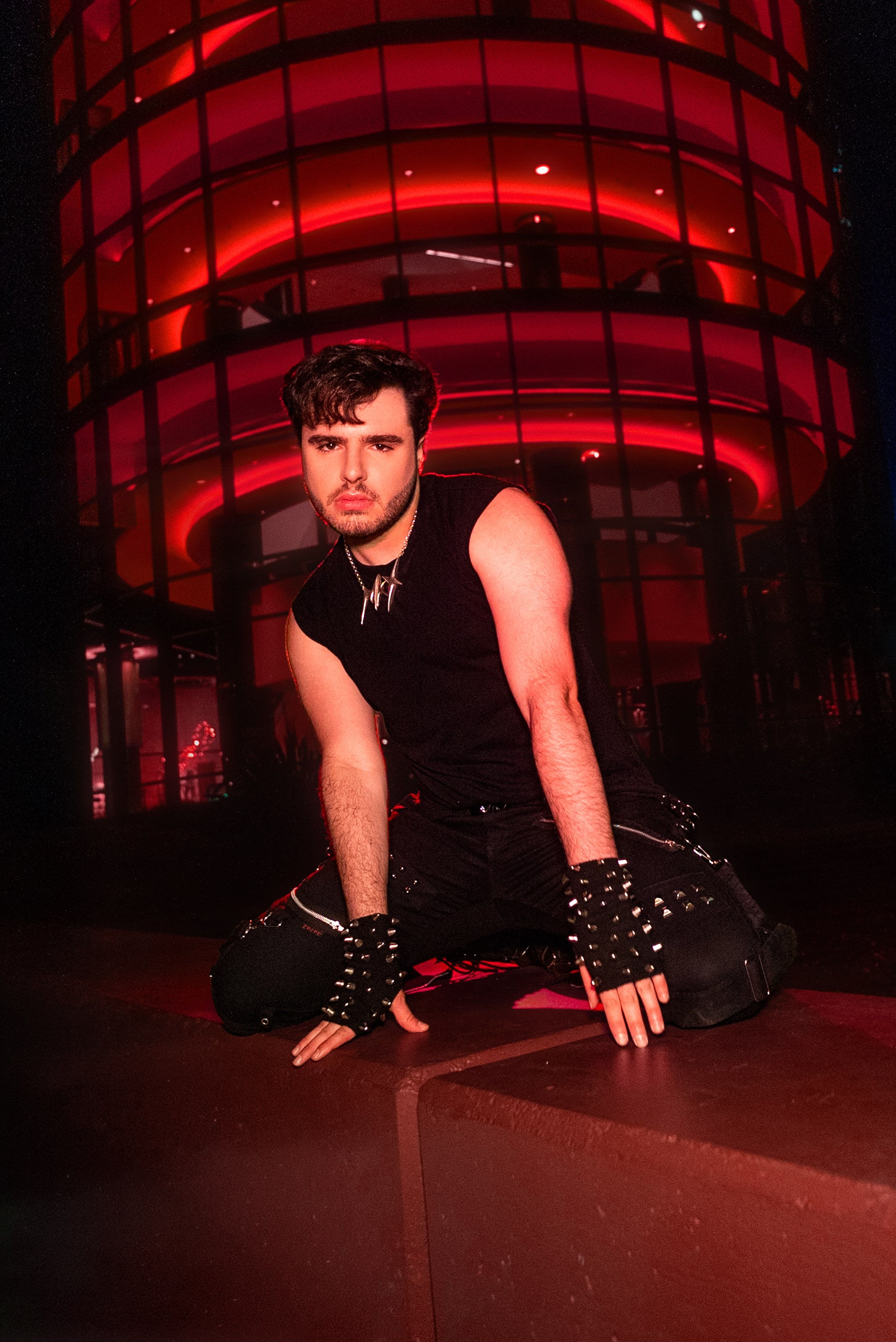
Although “MAKE U DANCE” was conceived primarily as a celebration of nightlife, its underlying spirit also connects to MkX’s experience within queer culture.
He didn’t fully encounter queer nightlife until moving to Los Angeles in 2021.
Through a friend who introduced him to the city’s underground dance community, he discovered an environment defined by openness, experimentation, and freedom of expression.
“My friend Jamie brought me into the underground dance scene with open arms, and it was so liberating to experience such a fearless community of people.”
That experience helped strengthen his confidence, both personally and artistically.
It also gave him a deeper appreciation for the cultural significance of dance music.
Historically, nightlife has provided communities with spaces to experiment with identity, build connections, and experience forms of freedom that aren’t always available elsewhere.
MkX doesn’t insist that every dance track must carry an explicit social message.
In fact, he says “MAKE U DANCE” was never intended to be particularly introspective.
But he appreciates that listeners can find different meanings within the same song.
For some, it might simply be an invitation to dance.
For others, it might represent the freedom of expressing themselves without judgment.
The beauty is that both interpretations can coexist.
Can the Pop Spectacle Survive the Algorithm?
One of MkX’s most compelling observations concerns the changing relationship between music and visual culture.
The artists who shaped his imagination emerged during an era when music videos could become major cultural events.
Audiences watched entire productions on television, memorized choreography, and shared a relatively common collection of pop references.
Today, that experience has become increasingly fragmented.
Streaming services and social media algorithms allow audiences to discover music through highly personalized feeds, but they also encourage artists to communicate their creative identities within increasingly limited windows of attention.
“It’s really kind of heartbreaking that artists have to showcase their art within 3 seconds before someone scrolls away.”
MkX recognizes the advantages of contemporary technology, particularly the freedom it offers listeners to explore music outside traditional gatekeeping systems.
But he also questions what gets lost when audiences no longer share the same cultural experiences.
“It’s cool that people are able to customize their experience, but it also feels culturally isolating.”
His response isn’t to abandon contemporary platforms.
Instead, he continues investing in the kind of ambitious visual storytelling that inspired him in the first place.
For MkX, choreography, styling, and cinematic production aren’t nostalgic decorations.
They’re essential tools for building an artistic universe that audiences can return to repeatedly.
And “MAKE U DANCE” is only one part of that ambition.
He has spent years imagining increasingly elaborate installations and technological elements for his live performances.
What audiences have seen so far, he suggests, is only the beginning.
In Conversation With MkX
MUNDANE: Your new music video for “MAKE U DANCE” transforms a spontaneous late-night parking lot party into a fully choreographed pop spectacle. What was it about that original experience that inspired you to recreate it on screen, and do you think the most memorable moments in nightlife often happen outside the carefully curated environments of clubs and traditional venues?
MkX: Yes this video was the polished “pop” version of a real life experience. I went out for my friend’s birthday a few years ago. We were at the bar for about an hour before they closed. It was kinda fun, but the REAL fun started afterwards. It was a little outside of the city so no one cared when we all went to the parking lot to keep the party going. Someone rolled down all their windows and blasted music. When I was thinking of what story I wanted to tell with this video, this memory immediately came to mind. When it comes to memorable party moments, the most important factors are the people you’re with and the music. Sometimes the most fun parties are when someone plugs in their phone and plays ‘00s bangers directly from Spotify. It’s not about the lights or the equipment, it’s about the energy!
MUNDANE: You’ve described “MAKE U DANCE” as your attempt to create the most unapologetically pop song in your discography. What does unapologetic pop mean to you, and how do you balance the mathematical precision of crafting an infectious hook with the unpredictability and emotional spontaneity that make a song genuinely exciting?
MkX: There really is a science to making a great pop record. It has to be catchy but not too monotonous. It has to feel familiar, but still innovative and unique. I’ve been a student and super-fan of pop music for most of my life. There was a period of time where making super bubblegum pop music was seen as lame or outdated. I never really cared about the “trends” that were happening in music, so I just kept making really catchy pop music and people seemed to gravitate towards it. I’m really glad that pop music is becoming “cool” again, because to me it was never not cool!
MUNDANE: The video draws heavily from the ambitious choreography and larger-than-life visual language of late-’90s and early-2000s pop. What do you think made that era of pop music and music videos so culturally influential, and how do you reinterpret those aesthetics for a contemporary audience without simply reproducing nostalgia?
MkX: All of the best 90s/00s music videos had so much attention to detail. Vibrant colors, electric choreography, and really fierce concepts that would tie everything together. The best music videos are the ones that you can watch over and over. My personal favorites always create a “world” within the video. I always wear my references proudly on my sleeve, so I’m not afraid to incorporate nostalgic elements in what I do. If people clock a reference I made, then I’m doing my job correctly. That being said, I always try to put a futuristic MkX-flip on things so my references still feel exciting and not like “oh I’ve heard/seen this before.”
MUNDANE: You worked with director Andy Koeger and choreographer Ian McKenzie, whose credits include Lady Gaga, to bring the visual world of “MAKE U DANCE” to life. How did those collaborations push your original concept further, and what did the experience teach you about using choreography as a form of storytelling rather than simply an extension of the music?
MkX: Choreography has always been such an important part of putting together my videos and live shows. There’s such an electricity that comes with a really fierce routine to a pop song. For this video, I knew I wanted to tell a story with a love interest and do a parter dance moment. Ian loved the idea and did a fantastic job bringing it to life. He totally gets all of my references and ideas so he’s really able to create the exact kind of choreo I picture in my head. Same with Andy who directed the video. I explained the concept and the pacing of the video with picture/video references. He immediately got it and helped me make it a reality. I’m so grateful to collaborate with such strong artistic forces.
MUNDANE: You’re known for maintaining an unusually hands-on approach to your creative output, from songwriting and production to fashion, visuals, and the technology behind your performances. Where does that desire for creative control come from, and how do you navigate the tension between maintaining a cohesive artistic vision and allowing collaborators to introduce ideas you might never have considered yourself?
MkX: I’ve been making music and performing for the last 20 years. For the first 10 years I was in the closet and always worried about what other people would think of me/my work. I would listen to what other people thought would be good for music, music-wise, and was never really happy with what I was creating or wearing. Once I came out of the closet, I made sure to take full control of my artistry. I was able to unapologetically reference my favorite artists like Gaga or Britney, without being worried of people judging me. Being able to express yourself is the most important part of being an artist, so I’m incredibly grateful I’ve been able to do exactly that. Anything I create for my artist project needs to feel 100% like me, but I love bouncing ideas around with collaborators that understand how my brain works. I love incorporating collaborative ideas that I resonate with, but if it doesn’t feel right I have enough confidence in my skillset and identity to pass on things I don’t like.
MUNDANE: Your production credits include artists as varied as TWICE, Kim Petras, Ayesha Erotica, and 6arelyhuman, placing you at the intersection of mainstream pop, K-pop, and more experimental electronic scenes. What have these different musical worlds taught you about the evolution of pop, and how has working with other artists influenced the sonic identity you’re developing under your own name?
MkX: Creating my own music and making music for other artists is actually very different for me. When I work with other artists, my main goal as a producer/songwriter is to bring their vision to life. It’s one of the most fulfilling feelings to be creating something with someone and have them be like “YES!!! That’s EXACTLY what I was picturing in my head!!” Of course my style still shines through, but the artist is always the captain. If they’re not happy, then what’s the point?
MUNDANE: Dance music has historically provided spaces for freedom, self-expression, and community, particularly within queer culture. What role has nightlife played in shaping your artistic identity, and do you see a song like “MAKE U DANCE” as simply an invitation to have fun or as part of a larger tradition of using music and movement to create spaces where people can feel uninhibited?
MkX: I really didn’t experience queer nightlife until I moved to LA in 2021. My friend Jamie brought me into the underground dance scene with open arms, and it was so liberating to experience such a fearless community of people. This definitely helped me become a lot more confident as an artist and a queer person. So that has played a huge role in my music. That being said, when I wrote MAKE U DANCE it wasn’t meant to be super introspective or deep. But I love when songs can be interpreted in different ways. If you want to think of it as just a fun song about dancing, that’s great. If you want to think of it as commentary on liberation through music/movement/culture, go figure!
MUNDANE: You’ve built a career that combines independent success, chart recognition, major songwriting credits, and performances alongside established pop stars. How has your definition of success changed throughout that journey, and what do you think independent pop artists can accomplish today that might have been impossible without the traditional machinery of a major label?
MkX: Of course my biggest goal as an artist is to have cultural impact. I’m still working on that of course, but I’ve had a lot of smaller goals along the way that I’ve been extremely grateful to have achieved. Whenever I start to overthink about where I am in my career, I think back to a few years ago when all I wanted was to perform at my first pride festival and collaborate with a bunch of artists. I’ve done both of those things SO much in the past few years. So I always try to remind myself of how much I’ve accomplished as an independent artist and to keep going! It’s been really special to watch all of my friends who are independent artists thrive without a label. It’s really inspiring and reminds me that I can do it too! I would love to be signed to a major label eventually, but being an independent artist holds a lot of power.
MUNDANE: Pop music is increasingly shaped by short-form content, streaming algorithms, and rapidly changing trends, while the kind of elaborate music video you’re creating recalls an era when visuals were major cultural events in their own right. Do you think the art of the pop spectacle has lost some of its cultural significance in the streaming age, and how do you approach creating ambitious visual experiences for an audience whose attention is constantly being divided?
MkX: Yes definitely. It’s really kind of heartbreaking that artists have to showcase their art within 3 seconds before someone scrolls away. People used to sit at their TVs and watch full videos on TRL. There’s definitely still an audience for full music videos (s/o gay guy music video night), but it’s not the standard for consuming music anymore. It’s also weird that everyone’s algorithm is different. Before streaming, everyone was listening to the same songs on the radio. It’s cool that people are able to customize their experience, but it also feels culturally isolating.
MUNDANE: Your artistic world brings together futuristic production, Y2K nostalgia, choreography, fashion, and technology, all while maintaining a strong sense of pop accessibility. As you look toward the next stage of your career, what boundaries between music, performance, and technology are you most interested in pushing, and what would your ultimate MkX live experience look like if you had no creative or financial limitations?
MkX: I’ve been dreaming up different innovative installations for my live shows for as long as I can remember. It’s honestly just a matter of have a big enough audience and budget to eventually execute my ideas. I’ve been blessed enough to be able to create a lot of really cool technology and fashion for my shows and videos. But what people have seen so far is just the tip of the iceberg. I’m really excited to release the upcoming music I’ve been working on. It definitely pushes the boundaries of what I’ve been doing when it comes to sound design and also lyrics. It’s a little more bold and cutting edge than what I’ve done in the past. I’m planning to start the rollout in the next few months, so stay tuned!
Making Pop Feel Like an Event Again
Perhaps the most interesting thing about MkX’s artistic philosophy is that his commitment to spectacle isn’t simply about creating something bigger, louder, or more extravagant.
It’s about recovering a sense of possibility.
The possibility that a song can become an entire visual world.
That choreography can tell a story.
That a parking lot can become a dance floor.
And that embracing the things you genuinely love can be more creatively liberating than attempting to satisfy whatever expectations happen to dominate contemporary culture.
For MkX, the journey toward that freedom has been deeply personal.
Coming out allowed him to embrace the artists, aesthetics, and performances that had always inspired him.
Independent success gave him the confidence to continue building his own creative universe.
And his experiences within queer nightlife reinforced the importance of music as a space for connection and self-expression.
Now, with “MAKE U DANCE,” those influences converge in a project that celebrates pop music as something worth experiencing in its entirety.
Not merely as a fifteen-second clip.
Not simply as background music for a social media trend.
But as an immersive experience that invites audiences to participate.
Because sometimes the most radical thing a pop artist can do is stop apologizing for wanting to make something spectacular.
Artist: MkX
Single: “MAKE U DANCE”
Music video director: Andy Koeger
Choreography: Ian McKenzie
Songwriters: MkX, Brandon Colbein, Myylo
Producer: MkX
Watch: “MAKE U DANCE” Official Music Video
Instagram: @mkxmusic
Photo credit: David Oldenburg
With “MAKE U DANCE,” MkX celebrates the nostalgia, freedom, and theatrical ambition of classic pop while creating a visual universe entirely his own.