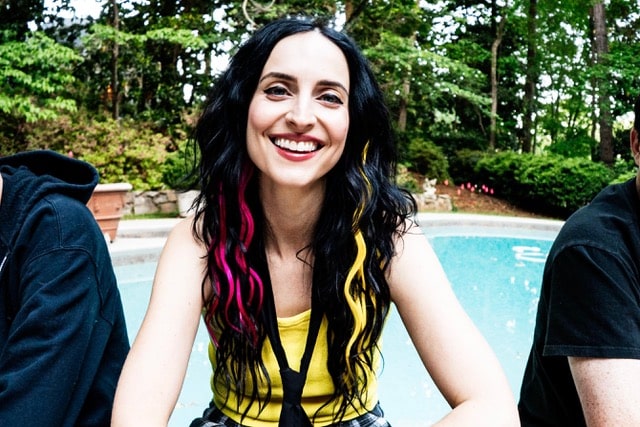
All images by Alexandra Scuffle (Aka: Scuffie)
Atlanta-born, Nashville-based artist Nadia Vaeh is turning the music that helped her survive her darkest moments into a celebration of resilience, individuality, and community. With her single “Warped Tour,” the self-described “poptimistic rock” musician pays tribute to the alternative scene that shaped her childhood, culminating in a full-circle performance at the Warped Tour Museum and her first crowd-surfing experience. MUNDANE speaks with Vaeh about losing her mother to suicide, finding strength through songwriting, the healing power of live music, and her ambition to build a creative universe that empowers independent artists.
There is something profoundly moving about finally experiencing a moment you spent your childhood imagining.
For some, it’s standing on a stage they once watched from the audience.
For others, it’s meeting the artists whose music helped them navigate adolescence.
And sometimes, it’s finding yourself suspended above a crowd of strangers, realizing that the community you spent years dreaming about is finally holding you up.
For Nadia Vaeh, that moment arrived at Warped Tour.
The Atlanta-born, Nashville-based singer-songwriter had spent much of her childhood listening to the bands associated with the legendary alternative music festival.
But growing up in a sheltered environment meant attending the event was never an option.
Instead, she experienced the scene through its music.
The emotionally charged anthems of Paramore, Avril Lavigne, Green Day, Blink-182, Yellowcard, and Simple Plan became a source of identity, emotional freedom, and belonging.
Years later, Vaeh wrote a song called “Warped Tour,” a love letter to the music and community that had helped shape her.
The track captured more than 106,000 YouTube views within its first three weeks, introducing her personal connection to the festival to a wider audience.
Then something extraordinary happened.
With the support of Shira Yevin and Gritty in Pink, Vaeh finally attended Warped Tour in Long Beach, where she experienced her first crowd-surfing moment.
Later, she was invited to perform her own song, “Warped Tour,” as part of the festival’s official museum programming, with support from Yevin and renowned rock photographer Lisa Johnson.
For an artist whose music has always been rooted in resilience and the search for belonging, the experience represented much more than a professional milestone.
It was an encounter with the younger version of herself who had once imagined being part of that world.
“It felt like handing my younger self a backstage pass to a world she used to dream about,” Vaeh tells MUNDANE.
And in many ways, the moment encapsulates everything she hopes to communicate through her music.
That dreams can unfold on unexpected timelines.
That identity can be shaped by communities we haven’t yet physically encountered.
And that the music that helps us survive difficult experiences can eventually become the foundation for something joyful.
The Music That Raised Her
For Vaeh, the alternative music scene of the 2000s wasn’t simply a collection of favorite bands.
It was a world that offered emotional possibilities she didn’t always feel comfortable exploring elsewhere.
Growing up sheltered, she discovered artists whose music embraced vulnerability, rebellion, individuality, and the complicated emotions of adolescence.
Paramore’s debut album, All We Know Is Falling, became particularly influential.
The record’s combination of melodic immediacy and emotional intensity resonated deeply with her.
Avril Lavigne also played an important role, not only musically but aesthetically.
As one of the first pop-leaning female solo artists Vaeh connected with, Lavigne helped her begin discovering her own personal style.
Meanwhile, bands such as Green Day, Blink-182, Yellowcard, and Simple Plan contributed to the musical vocabulary that would eventually inspire “Warped Tour.”
But what connected those artists for Vaeh wasn’t simply their sound.
It was their willingness to make space for complicated feelings.
“I’m especially drawn to music that gives you permission to have big feelings and take up space,” she explains.
“You can be hurt, angry, awkward, ridiculous, and hopeful within the same song.”
That emotional freedom became central to her artistic development.
The songs she loved didn’t require listeners to present a polished version of themselves.
They allowed contradiction.
Anger could coexist with vulnerability.
Humor could exist alongside heartbreak.
And a massive, infectious chorus could provide a communal release for feelings that were otherwise difficult to express.
For Vaeh, that combination of emotional honesty and musical energy would eventually become the foundation of her own sound.
Writing Herself Into a World She Had Never Experienced
One of the most fascinating aspects of “Warped Tour” is that Vaeh wrote the song before fully participating in the experience it celebrates.
The track emerged from years of listening to the music, imagining the community surrounding it, and wanting to feel part of something larger than herself.
In that sense, the song became an act of creative anticipation.
A way of imagining a future she hadn’t yet lived.
“I already had a relationship with the music, but writing the song let me imagine myself inside the experience,” she explains.
“It was almost like writing a little permission slip for a version of my life I still wanted to have.”
The idea is particularly revealing.
For Vaeh, songwriting isn’t simply a way of documenting what has already happened.
It can also become a means of exploring possibilities.
A way of giving emotional shape to experiences she hopes to have.
And, in this case, a way of reclaiming aspects of her formative years that she felt she had missed.
Beneath the references to the festival, “Warped Tour” explores universal themes of freedom, individuality, and finding a community where people can express themselves without fear of judgment.
Those ideas resonated with Vaeh long before she ever attended the event.
When she finally experienced Warped Tour in person, the distinction between imagination and reality began to disappear.
The community she had written about became something she could physically participate in.
And the experience exceeded her expectations.
Including one particularly memorable moment.
The Spiritual Experience of Crowd Surfing
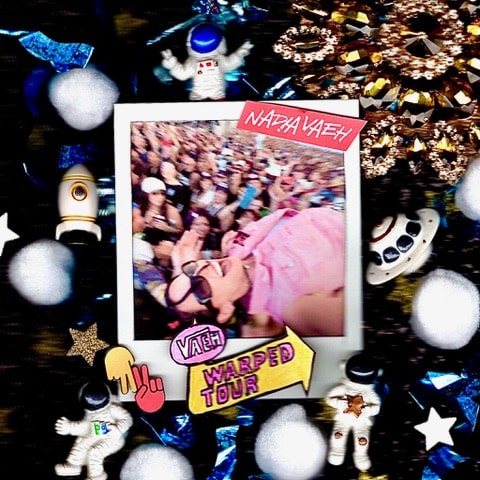
For more than a year, Vaeh had been singing about crowd surfing.
But when the opportunity finally arrived at Warped Tour in Long Beach, she found herself confronting the reality of something she had previously only imagined.
Suddenly, she had to trust a group of strangers to carry her.
“Oh my God, we’re actually doing this!” she remembers thinking.
The experience was exhilarating, but it also carried an unexpected emotional significance.
For someone who describes herself as prone to overthinking, surrendering control to a crowd required a particular kind of trust.
She had to allow herself to be vulnerable.
To rely on people she didn’t know.
And to believe that the collective energy surrounding her would keep her safe.
“It was surprisingly spiritual,” she explains.
“You lean back, let go of some control, and count on people you don’t know to help move you safely forward.”
It’s an unusually powerful metaphor for the sense of community that originally drew her toward alternative music.
The scene wasn’t simply about shared musical preferences.
It was about the possibility of finding connection among people who might otherwise feel isolated.
For Vaeh, the physical experience of being carried by the crowd transformed that idea into something tangible.
“Long Beach was one of the best times of my life,” she says.
“It healed a little part of me that had been having trouble trusting the process.”
The moment also represented a personal transformation.
The sheltered child who had once been unable to attend Warped Tour had become an artist participating in the very culture that shaped her.
And the experience reinforced her belief that music can create forms of connection that extend far beyond the stage.
The Meaning of “Poptimistic Rock”
Vaeh describes her sound as “solar-powered poptimistic rock.”
It’s a phrase that captures the collision of pop accessibility, alternative-rock grit, nostalgic rebellion, and unapologetic optimism that defines her music.
But the optimism isn’t intended to deny life’s darker realities.
Quite the opposite.
For Vaeh, hope becomes meaningful precisely because difficult emotions exist.
“I love a pop hook, but I also need some teeth in the music,” she explains.
“I want the guitars, the tension, and the feeling that something could spill over.”
That combination reflects the artists who shaped her early musical identity.
The infectious melodies of pop coexist with the urgency and emotional intensity of alternative rock.
The songs invite listeners to move, sing, and celebrate while acknowledging experiences that may be painful or unresolved.
Vaeh is particularly interested in the relationship between those contrasting emotions.
She doesn’t believe a catchy chorus should erase the seriousness of the subject matter beneath it.
Instead, the music creates an environment in which difficult feelings can be experienced collectively.
“Sometimes that means crying in the clerbbb; sometimes it means dancing while you’re still figuring things out,” she says.
The humor in that statement is important.
Vaeh’s artistic identity embraces playfulness without sacrificing emotional depth.
She can approach anxiety, grief, and uncertainty with sincerity while still finding room for absurdity and joy.
That balance gives her music a distinctive personality.
Rather than presenting optimism as a permanent emotional state, she treats it as something people can return to even while navigating difficult experiences.
It’s a philosophy rooted in her own history.
Losing Her Mother and Finding Refuge in Songwriting
When Vaeh was 17, she lost her mother to suicide.
The experience profoundly changed her relationship with music.
What had already been a source of identity and emotional freedom became an essential space for processing grief.
“Losing my mom to suicide changed my life in ways I’m still understanding,” she says.
“Music became somewhere I could put feelings that didn’t have a clear destination.”
For Vaeh, songwriting offered a way to engage with emotions that didn’t follow a predictable path.
Grief isn’t a linear experience.
It can change shape over time, resurfacing through memories, relationships, and different stages of life.
The meaning of a loss can also evolve as the person experiencing it grows older.
Vaeh recognizes that process in her own writing.
“Grief doesn’t follow a neat storyline, and songwriting gives me room to revisit it as different versions of myself,” she explains.
That perspective has become central to her understanding of music’s purpose.
Her songs aren’t simply expressions of personal pain.
They’re opportunities to create connections with listeners who may be carrying experiences of their own.
And as her audience has grown, Vaeh has become increasingly aware of the responsibility and possibility that come with sharing vulnerable stories publicly.
From Personal Healing to Mental Health Advocacy
Vaeh’s experience with grief has shaped her commitment to mental health awareness and suicide prevention.
But she approaches that advocacy with an important sense of perspective.
She doesn’t believe music can solve every problem.
Nor does she suggest that emotional suffering can be overcome through optimism alone.
Instead, she sees honesty and connection as meaningful starting points.
“I want my music and my shows to help people feel less alone and more comfortable talking about their mental health,” she explains.
“Suicide prevention is deeply personal to me.”
Her goal is to create environments where listeners feel comfortable acknowledging difficult experiences without shame.
That ambition extends beyond the lyrics themselves.
Live performances become opportunities for connection.
The energy of a crowd can create a sense of shared experience.
And the vulnerability of an artist speaking openly about grief can encourage others to feel less isolated in their own struggles.
“I can’t fix someone’s life with a song,” Vaeh acknowledges.
“But I can be honest about mine and hopefully help open a door to connection and support.”
It’s a grounded perspective that gives her advocacy emotional credibility.
Rather than positioning herself as someone who has overcome every difficulty, Vaeh remains open about the ongoing nature of her experiences.
The optimism in her music doesn’t emerge from pretending that pain has disappeared.
It comes from the belief that connection is possible even when pain remains.
Bringing the Songs to Life on Stage
For Vaeh, live performance is an essential extension of her artistic identity.
Her background includes acting and circus performance, disciplines that have influenced her approach to movement, storytelling, and audience engagement.
She has performed at venues including Whisky A Go Go, The Masquerade, and Rockwood Music Hall, building a reputation for energetic performances that combine musical intensity with theatrical expression.
Her live band provides the foundation, while additional tracks help reproduce the layered textures of her studio recordings.
When the venue allows, programmed lighting and fog contribute to the atmosphere.
But Vaeh is equally interested in emotional pacing.
She wants the audience to experience both high-energy moments and quieter passages that allow for direct connection.
“The live show is where I get to make the songs physical,” she explains.
“I care a lot about the emotional pacing, too.”
That approach reflects her broader belief that music should create space for people to express themselves.
The stage isn’t simply a place where the artist performs and the audience observes.
It’s an environment where energy can move in both directions.
Vaeh wants listeners to feel invited into the experience.
To sing loudly.
To move freely.
And to become more comfortable occupying space.
The theatrical elements help create that environment, but the emotional connection remains central.
The Warped Tour Museum: A Full-Circle Moment
The opportunity to perform “Warped Tour” as part of the festival’s official museum programming represented a particularly meaningful milestone.
The song had begun as an imagined connection to a community Vaeh couldn’t physically access during childhood.
Years later, she found herself performing it within an institution celebrating that very culture.
The experience brought together different stages of her life.
The sheltered teenager discovering alternative music.
The young songwriter processing grief and searching for belonging.
The independent artist developing her own sound.
And the performer finally participating in the community she had spent years celebrating.
For Vaeh, the significance was deeply personal.
“There were so many little steps between being that kid and standing there dreaming of being in a pop-rock band,” she explains.
“It reminded me that things can happen on a timeline you never could have planned.”
She credits Shira Yevin and Lisa Johnson with helping make the museum performance possible.
Their involvement also reflects the importance of community within her career.
The same culture that once helped Vaeh feel less alone is now creating opportunities for her to share her music with others.
And the song that began as a tribute has become part of her own story within that world.
Beyond the Music: The Reality of Independent Artistry
While Vaeh continues writing and recording, she is also expanding her creative work beyond music releases.
One of her most significant current projects is a feature documentary titled One Poop Scoop Away: A Journey to a Dream.
The film explores the realities of pursuing an independent artistic career, particularly the labor and financial sacrifices that audiences rarely see.
For Vaeh, the documentary is rooted in personal experience.
She has worked in pet care and taken on various jobs to support her musical ambitions.
Those experiences inspired the film’s deliberately humorous title.
But beneath the humor lies a serious examination of what it means to build a creative life without the resources typically associated with mainstream success.
“I know how much work happens outside the frame,” she explains.
“People see the performance or the finished video, but there’s also the side hustle that paid for rehearsal, the travel expenses, and the hours spent trying to make the next opportunity happen.”
It’s a reality familiar to countless independent musicians.
Behind every release, performance, and promotional campaign are logistical challenges that often remain invisible.
Artists must balance creative development with financial survival.
They must invest in their work without always knowing whether those investments will produce measurable returns.
And they must continually redefine what success means within an industry that often prioritizes visibility over sustainability.
Vaeh wants her documentary to explore those contradictions honestly.
The project asks a deceptively simple question:
What does it actually mean to make it?
Galactic Cat Records and the Dream of a Creative Universe
Alongside the documentary, Vaeh is developing Galactic Cat Records, her independent label and creative platform.
Currently serving as the home for her own music and artistic projects, the label represents a longer-term ambition to support other independent artists.
For Vaeh, the goal is to build an environment where creativity and community can coexist with sustainable professional development.
She understands the difficulties of pursuing music independently.
The financial pressure.
The uncertainty.
The need to constantly balance creative ambition with practical responsibilities.
And the emotional challenges that can accompany an unpredictable career.
Galactic Cat Records is intended to grow from those experiences.
“Right now, it’s the home planet for my music and creative world, with a longer-term goal of supporting other artists,” she explains.
“I want to help build something where people have room to develop their craft, express themselves, and make a sustainable life doing it.”
The language she uses to describe the project reflects the playful cosmic identity surrounding her work.
Rather than imagining a conventional music company, Vaeh envisions a creative universe.
A place where artists can develop their own identities while remaining connected to a larger community.
That vision also connects directly to the emotional themes of “Warped Tour.”
Both are concerned with belonging.
Both celebrate individuality.
And both reflect Vaeh’s desire to create the kind of supportive environment she once found through the music of other artists.
In Conversation With Nadia Vaeh
You recently had the full-circle experience of performing your song “Warped Tour” at the Warped Tour Museum. What did that moment mean to you personally and artistically?
It felt like handing my younger self a backstage pass to a world she used to dream about. I grew up sheltered and wasn’t allowed to attend Warped Tour, but that music still found me and gave me somewhere to belong. To eventually perform my own song called “Warped Tour” as part of the official museum programming was pretty surreal.
There were so many little steps between being that kid and standing there dreaming of being in a pop-rock band. It reminded me that things can happen on a timeline you never could have planned. I’m so grateful to Shira Yevin and Lisa Johnson for helping make that moment possible. It’s a memory I’ll be carrying around forever.
You’ve mentioned growing up in a sheltered environment where attending Warped Tour wasn’t an option, yet the music found its way to you regardless. Which specific artists or albums from that era had the biggest impact on your early development?
Paramore’s All We Know Is Falling was massive for me. Avril Lavigne was the first female pop-leaning solo artist I found that truly resonated with me, and her style helped me discover my own personal style. Green Day, Blink-182, Yellowcard, and Simple Plan are all part of the musical world that inspired “Warped Tour” too, amongst more bands and tunes from the scene and even adjacent to it. There’s something about these artists that just takes me to a place of discovery and stepping into my own skin that feels so me, before the world started trying to tell me who to be.
I’m especially drawn to music that gives you permission to have big feelings and take up space. You can be hurt, angry, awkward, ridiculous, and hopeful within the same song. That freedom has definitely shaped the artist I’ve become. I love a chorus where you can scream with your friends, especially when there’s something underneath it that you might have trouble finding a way to process externally.
You wrote “Warped Tour” as a love letter to a subculture and festival experience you hadn’t fully participated in yet at the time. How did writing about that community shape your connection to it before you actually attended?
I already had a relationship with the music, but writing the song let me imagine myself inside the experience. It was almost like writing a little permission slip for a version of my life I still wanted to have, and it’s almost a reclamation of my formative years, too.
Underneath the festival references, the song is about belonging, freedom, and finding people you can be fully yourself around. Those were things I understood wanting long before I ever walked through the gates. Then I finally went, and there was this beautiful overlap between something I’d imagined and something I was actually living. Including the crowd surfing! Apparently, I needed to write that into a song before I worked up the courage to do it. And it was honestly everything I’d dreamt and more! Crowd surfing was beautifully spiritual, and there’s something so healing about a crowd of strangers all working together to try to safely carry you forward.
Your sound is described as “poptimistic rock”—combining infectious pop melodies with alternative grit. How did you arrive at this blend of genres, and how do you strike the right balance between dark themes and hopeful energy in your music?
I love a pop hook, but I also need some teeth in the music. I want the guitars, the tension, and the feeling that something could spill over. “Poptimistic rock” became my way of describing how those things live together in my sonic world.
The hope comes from being honest about the hard stuff and trusting the universe to catch you when you’re falling. Like any of us walking around on this spinning rock inside a meat suit lol, I’ve experienced grief, anxiety, and the kind of overthinking that could totally be award-winning if that was a thing, hahaha. I don’t want to pretend any of that disappears because the chorus is catchy. But I do want to create somewhere we can move through pain together. Sometimes that means crying in the clerbbb; sometimes it means dancing while you’re still figuring things out. Life is just one giant juxtaposition, and so is optimistic rock 🙂
After losing your mother at age 17, songwriting became a crucial sanctuary for processing grief. How has your relationship with music evolved from a tool for personal healing into a public platform for mental health advocacy?
Losing my mom to suicide changed my life in ways I’m still understanding. Music became somewhere I could put feelings that didn’t have a clear destination. Grief doesn’t follow a neat storyline, and songwriting gives me room to revisit it as different versions of myself.
Sharing those songs has made me think more about who might be listening and what they might be carrying. I want my music and my shows to help people feel less alone and more comfortable talking about their mental health. Suicide prevention is deeply personal to me. I can’t fix someone’s life with a song, but I can be honest about mine and hopefully help open a door to connection and support. That’s a huge part of my why.
The music video and release of “Warped Tour” captured over 100,000 views in just a few weeks. What has the response from fans and listeners of the Warped Tour generation been like since the track came out?
Seeing it reach over 100,000 views in just a few weeks was wild and affirming that this era of music needs the resurgence it’s rightfully having! It’s been so cool to come to hear people’s different interpretations of the song too, and the meaning and mark it’s leaving for them.
Thanks to Shira Yevin and Gritty in Pink, you finally got to experience crowd surfing for the first time in Long Beach. What was going through your mind in that exact moment after singing about it for over a year?
“Oh my God, we’re actually doing this!” Hahaha. I’d been singing about crowd surfing for over a year, and suddenly I had to trust a crowd of strangers to carry me.
It was surprisingly spiritual. You lean back, let go of some control, and count on people you don’t know to help move you safely forward. That felt really powerful for someone who can get very stuck in her own head. Long Beach was one of the best times of my life. It healed a little part of me that had been having trouble trusting the process. I’m so thankful to Shira and Gritty in Pink for helping me get there.
Beyond your own releases, you’re currently producing a feature documentary about the realities of independent artistry and expanding your label, Galactic Cat Records. What drives your passion for supporting independent artists and building your own creative ecosystem?
I know how much work happens outside the frame. People see the performance or the finished video, but there’s also the side hustle that paid for rehearsal, the travel expenses, and the hours spent trying to make the next opportunity happen.
My documentary, One Poop Scoop Away: A Journey to a Dream, gets into those realities and the question of what it actually means to “make it.” The title comes from my own life working in pet care and many other shit-shuffling hustles, while building this dream.
Galactic Cat Records grows out of that same desire for honesty and community. Right now, it’s the home planet for my music and creative world, with a longer-term goal of supporting other artists. I want to help build something where people have room to develop their craft, express themselves, and make a sustainable life doing it.
Having performed at iconic venues like Whisky A Go Go, The Masquerade, and Rockwood Music Hall, how do you adapt your high-energy studio sound for live audiences?
The live show is where I get to make the songs physical. My band brings so much personality and energy, and we use tracks to carry the extra textures around the live guitar and drums. When the setup allows, we also bring programmed lighting and fog to help build the world around the music.
I care a lot about the emotional pacing, too. I want room for the big, chaotic moments and the quieter ones where we can actually connect. My performance background includes acting and circus, so movement with a lil drama is a pretty natural part of how I communicate. The goal is for people to feel invited into the experience and comfortable taking up a little more space themselves.
Looking ahead after this landmark milestone at the Warped Tour Museum, what can fans expect next from you in terms of upcoming releases and projects?
The documentary is a major focus for me right now. I’m giving it the attention it needs while continuing to write and record, so there’s still plenty happening creatively even when I’m quieter on the release front.
I’m also building the Galactic Cat Records universe and looking for more ways to bring people together through live music. I keep coming back to this image of a cosmic campfire: a place where we can be a little strange, tell the truth, and feel connected. That’s what I want to keep growing with all the galactic cats out there. More music, more stories, and more opportunities to find each other out in the world <3
Finding Your Constellation
There is something especially meaningful about the way Nadia Vaeh’s relationship with Warped Tour has evolved.
As a child, the festival represented a world she couldn’t physically access.
Its music offered a sense of identity and emotional freedom at a time when she was still discovering who she wanted to become.
Years later, she transformed that connection into a song.
Then the song became part of the experience itself.
She attended the festival.
She crowd-surfed.
And eventually, she performed “Warped Tour” as part of its official museum programming.
It’s the kind of full-circle story that might appear almost too perfectly constructed if it weren’t rooted in years of personal experience.
But for Vaeh, the significance extends beyond nostalgia.
The journey reflects a broader understanding of what music can provide.
A sense of belonging before we know where we fit.
A language for emotions we haven’t yet learned how to explain.
And a community capable of supporting us through experiences that might otherwise feel isolating.
Those ideas have become particularly important in the aftermath of losing her mother.
Songwriting helped Vaeh process grief, but it also introduced a larger purpose to her artistic life.
She wants her music to create opportunities for connection.
To encourage conversations about mental health.
And to remind people that difficult experiences don’t have to eliminate the possibility of joy.
That philosophy is reflected in the sound she calls “poptimistic rock.”
The music can be loud, playful, and energetic while still acknowledging grief, anxiety, and uncertainty.
The chorus can be infectious without pretending that everything is fine.
And the live show can become a place where people feel comfortable expressing emotions they might otherwise keep hidden.
Now, as Vaeh develops her documentary and expands Galactic Cat Records, that ambition is moving beyond her own recordings.
She wants to build an ecosystem that supports other independent artists.
A creative community where the realities of artistic labor are acknowledged rather than concealed.
And where individuality is treated as something worth celebrating.
Perhaps the most revealing image she offers is that of a cosmic campfire.
A place where people can gather, share stories, embrace their differences, and feel connected.
It’s an imaginative metaphor, but one that captures the emotional foundation of everything she is building.
Because for Nadia Vaeh, the goal has never been simply to become part of the music scene she admired as a child.
It’s to help create that sense of belonging for someone else.
And after years of imagining herself inside the world of Warped Tour, she is finally doing exactly that.
Nadia Vaeh’s “Warped Tour” is available now. She is currently developing her feature documentary One Poop Scoop Away: A Journey to a Dream while continuing to expand Galactic Cat Records and work on new music.
Listen: “Warped Tour”
Follow Nadia Vaeh:
Photography: Alexandra Scuffle (Scuffie)