With a hot pink guitar, ethereal harp textures, and a clear-eyed sense of self-worth, the New Jersey artist transforms modern dating confusion into something catchy, cathartic, and unmistakably her own.
There are some songs that arrive as confession, and others that arrive as recognition. Candice Lee’s new single “Mr. E” does both. On the surface, it’s clever, playful, and instantly memorable—a pop-rock track built around a smart play on words. But beneath that wit is something far more pointed: a song about emotional inconsistency, modern dating fatigue, and the strange exhaustion of trying to decode someone who refuses to be clear.
The title says it all. “Mr. E” is the mystery man, the emotionally unavailable figure who is hot-and-cold, hard to read, and impossible to pin down. He is the situationship in human form, the person whose ambiguity becomes the relationship’s defining feature. Candice doesn’t just name the pattern—she gives it an identity, a hook, and enough humor to make the frustration sing.
What makes the song land is that it never feels like a gimmick. It comes from a real conversation, a moment of mutual recognition between friends comparing their dating lives and realizing they were all describing the same type of person. That kind of shared female shorthand—where exasperation becomes inside joke, and inside joke becomes song—is exactly what gives “Mr. E” its spark. It is observational, but also communal. A callout, yes, but also a release.
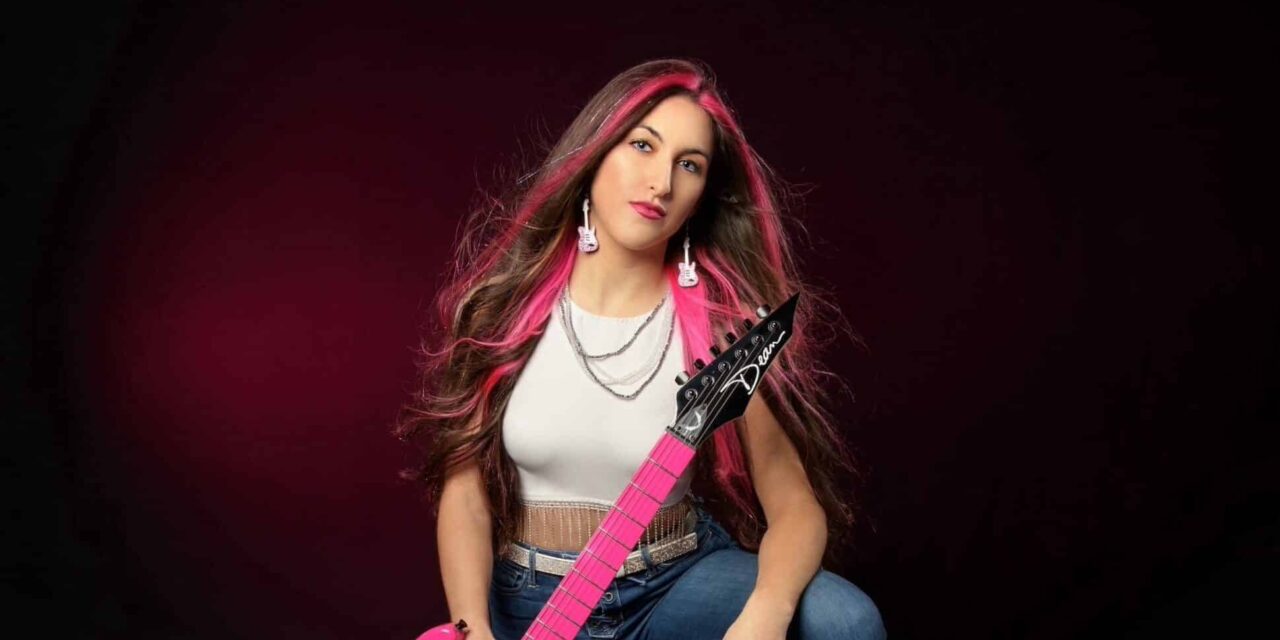
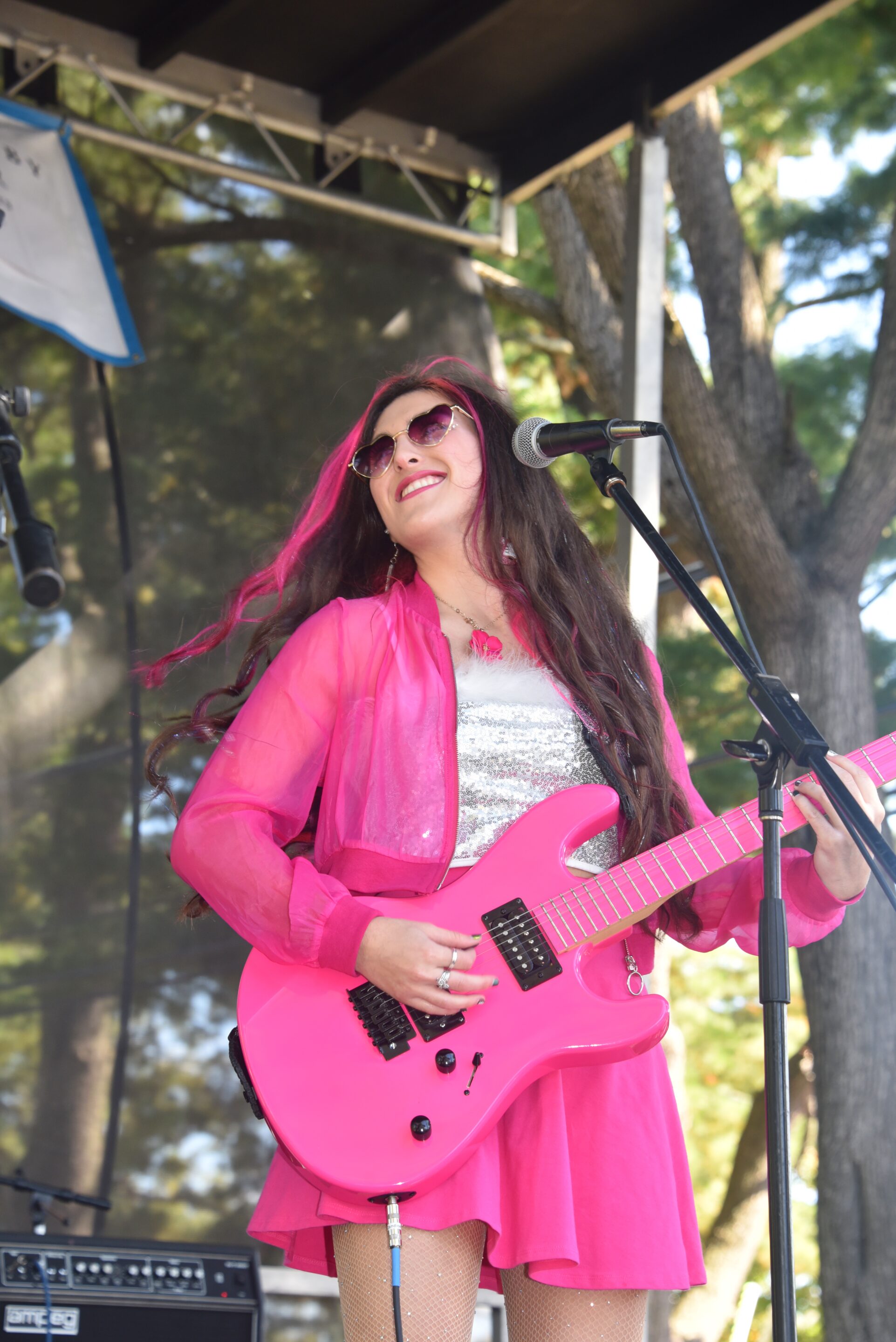
That balance runs through Candice Lee’s artistry as a whole. Based in New Jersey, she has built a distinct identity that feels both highly stylized and deeply sincere: pink hair, a hot pink guitar, a loyal fan community called the “Candies,” and music that blends pop-rock drive, country edge, heartfelt storytelling, and ethereal harp. It is a combination that could easily feel over-designed in someone else’s hands. With Candice, it feels natural—because it is.
Classically trained on guitar since the age of six and singing since she could speak, Candice is not simply fronting the songs—she is building them. Her musicianship is central to her voice, and “Mr. E” makes that especially clear. The track doesn’t just showcase her songwriting; it foregrounds her role as a female instrumentalist and creator, someone intent on carving out space for harp inside contemporary pop-rock while also tracking and performing many of the guitar parts herself.
That commitment to musicianship matters, especially in a landscape that still too often treats women in pop-rock as image first, artist second. Candice is explicitly pushing against that. Her work centers empowerment, not as a slogan, but as a practice: know your worth, say the uncomfortable thing, make the track hit hard, and don’t dilute your identity to make it more legible.
And yet, for all the polish in her visual world, there is something refreshingly unforced about her. The pink is real. The aesthetic is inherited. The authenticity comes before the branding.
That sincerity is part of what has helped her build momentum already. She has opened for artists like Drake Bell and Jonah Marais, performed the National Anthem for the New York Yankees and Jets, and gone viral after Ed Sheeran sang with her online. Those are big, validating moments—but what seems to matter most in Candice Lee’s world is the connection underneath them. She doesn’t want listeners at a distance. She wants community.
For Mundane Magazine, Candice Lee talks about how “Mr. E” was born, why the situationship era feels so culturally familiar right now, how the harp became part of her signature sound, and what she’s learned about herself by turning confusion into a song.
“Mr. E” is such a clever concept—fun on the surface but actually pretty cutting underneath. What was that moment like when you and your friends realized you were all dealing with the same type of person?
Thank you so much! Honestly it was so funny and kind of a coincidence, though not surprising, that we could all relate to one another. In a way it was a bonding experience since while we were empathetic with one another, we could also turn it into a humorous term, Mr. E, to describe these type of people.
The idea of the “mystery” person—emotionally unavailable, hot-and-cold—feels very of-the-moment. Why do you think this kind of relationship dynamic is so common right now?
It seems like there are a lot of people in today’s dating world that aren’t ready to commit to relationships and you can see that with the term “situationship” gaining a lot of popularity recently. I guess it’s a mystery why this kind of relationship dynamic is common right now!
Your music blends pop-rock with harp and a country edge, which isn’t something we see every day. When did you decide the harp wasn’t just an addition—but part of your signature sound?
Playing the harp has always been important to me. I am classically trained, but I’ve always had more fun incorporating it into pop/rock music because I think it has a special sound and is so unique. When I first added it into my songs, I realized that this wasn’t going to be a one-time thing, and that I was going to strive to include it in all of my songs going forward. I love how it has now become part of my signature sound.
You’re not just performing—you’re playing, tracking, and building the songs instrumentally. How important is it for you to be seen as a musician first, especially as a woman in pop-rock?
I love being super involved with creating my songs from writing the music and lyrics to tracking the instruments, building the track, and producing it. I’m classically trained on guitar and harp, and want to showcase not only my writing and artistry, but also my musicianship in my songs. It’s very important for me to be seen as a musician, because I spent so much of my life practicing and mastering my instruments and really honing in on my craft. I hope to inspire other women.
There’s a strong empowerment thread in your work. With “Mr. E,” are you trying to call someone out, or help listeners recognize patterns in their own lives?
Definitely a mix of both. I want people to know that if they are dealing with a similar situation, their feelings are valid and they are not alone. Sometimes feelings can be confusing to identify in the moment and it can be difficult for people, myself included, to really process and verbalize how we’re feeling. I hope that my lyrics can help people feel seen. In addition, I like having some humor and sarcasm in my lyrics, so I definitely wanted to call out Mr. E with this song.
Visually, you’ve created a very distinct identity—pink hair, the hot pink guitar, the full aesthetic world. How much of that is an extension of who you are versus something you’ve intentionally built as an artist?
All of the pink is definitely an extension of who I am. Pink is my favorite color, as it’s been passed down from my mother, grandmother, and great grandmother who all loved the color too. It’s a small way to feel connected to my family. It’s so important to me to stay authentic so I wanted to lean into this being my favorite color. Of course as an artist, I get to be even more creative and was able to embrace this and build upon it. I initially struggled with branding until I was really able to get in touch with who I am, rather than trying to force something. I know that by staying authentic, the right audience will gravitate toward me and my music because they will feel a genuine connection.
You’ve had moments that bridge internet virality and real-world stages—from performing for stadium crowds to connecting online. Which environment feels the most you?
They are such different environments but both are so special in their own ways. I love being able to connect with people via social media because I can meet and reach people all over the world. Performing for stadium crowds is a whole different level of connection and is a feeling I could have never imagined. Being surrounded by 80,000 people, for instance, like when I performed at MetLife Stadium, is an incredible feeling, and an opportunity that most people may not get to experience, which I don’t take for granted. That in-person connection is so special and probably feels more authentic, but I do genuinely value connecting online too, as it’s more far-reaching and crosses many cultures.
Opening for artists like Drake Bell and Jonah Marais, and even sharing a moment with Ed Sheeran—what have those experiences taught you about your own place in the industry?
These experiences have taught me so much about the industry. As far as my own place in the industry, everyone has their own journey and path to success, and I’m trying to enjoy my journey along the way. It was honestly so validating having been chosen to open for Drake Bell, and that Ed Sheeran chose to duet and sing with me on TikTok. This industry can be so challenging, and honestly draining sometimes, so to have moments like these, it really reminds me that this is what I’m meant to be doing and I’m on the right path. Plus, huge milestones like these encourage me to keep going.
Your fanbase—“Candies”—feels like a community rather than just listeners. What kind of space are you trying to create for them through your music?
I want to create a “sweet,” safe, positive, and inspiring space for my “Candies” and you’re exactly right—I want it to be a community. I hope that my music can uplift people and support them. Music is so powerful, and I want to be able to connect with my “Candies” through my music, and make people feel empowered. It’s always so heartwarming when people share the impact of my music on their lives with me.
If “Mr. E” is about decoding someone else, what have you learned about yourself through writing and releasing this track?
I’ve learned to stay away from the Mr. E’s in the world, lol. It has reminded me to know my worth and that guys who are worth having a relationship with will be straightforward and will show up consistently, rather than being a mystery. I’ve also learned how passionate I am about telling stories and being vulnerable with my lyrics.
What makes Candice Lee stand out is not just the concept behind “Mr. E,” though that is undeniably sharp. It’s the way she uses that concept to build something larger: a song that is funny without being shallow, pointed without being bitter, and emotionally direct without losing its shine. She understands that modern dating confusion is not just frustrating—it is disorienting. Naming it can be its own kind of power.
And that seems to be her larger project as an artist: giving language, melody, and visual form to experiences that are often left blurry. Through pop-rock hooks, harp flourishes, and a clear commitment to female musicianship, she is building a space where vulnerability is not weakness, style is not disguise, and empowerment can still be playful.
In other words, Candice Lee is not interested in being a mystery.
She’s interested in being unmistakably herself.