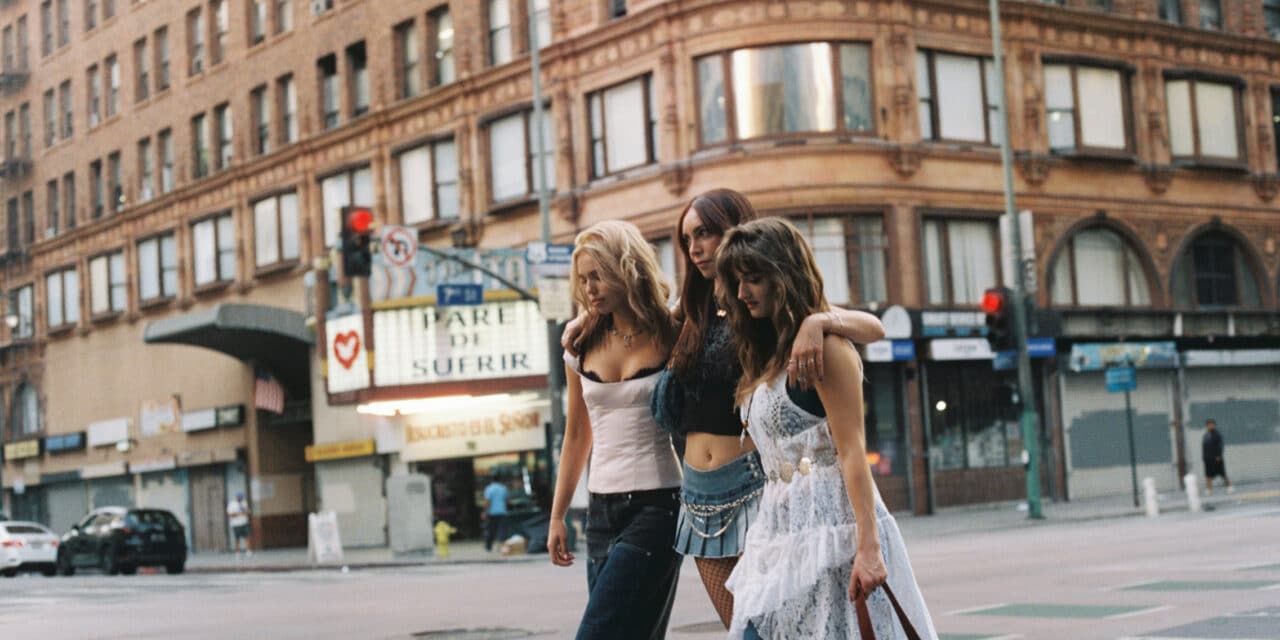
Some bands begin with auditions, carefully mapped-out aesthetics and long conversations about what they want to sound like. Carrie Okay began because three songwriters wrote a song for somebody else and collectively decided they couldn’t give it away.
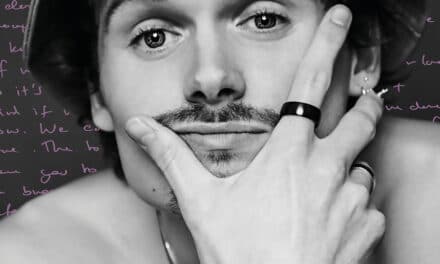
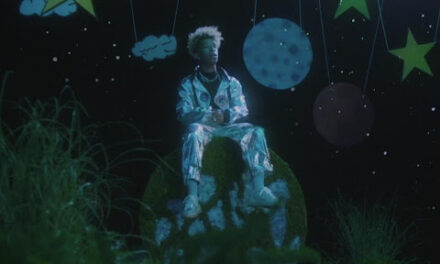
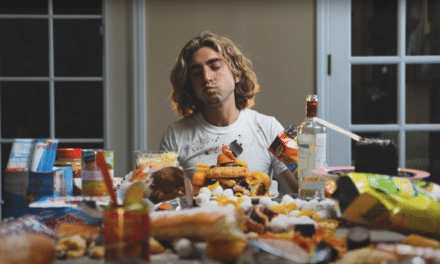
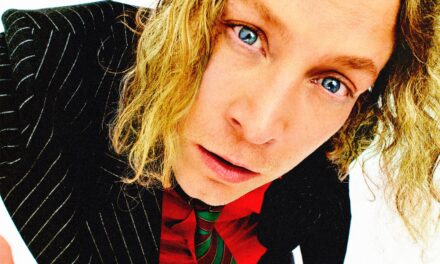
The new alternative pop-rock supergroup brings together LØLØ, salem ilese and Alna, three artists and songwriters with already established creative identities. Their debut single, “High in a Drugstore,” was never intended to launch a band. The trio originally entered the room intending to write for another artist alongside producer Andrew Goldstein, whose credits include blink-182, Tate McRae and 5 Seconds of Summer.
Instead, something clicked.
Built around acoustic guitar, intertwined vocals and a distinctly ’90s alternative sensibility, “High in a Drugstore” turns heartbreak into an absurd late-night existential crisis. Its central joke is deceptively simple: you find yourself high in a drugstore—a place filled with supposed remedies—only to discover there is nothing on the shelves capable of curing the person you miss.
That mixture of humor and emotional damage quickly became part of Carrie Okay’s emerging identity. Drawing inspiration from artists including Hole, The Cranberries and The Sundays, the trio pair the rawness of alternative rock with the precision of three highly experienced contemporary pop songwriters. But perhaps more importantly, Carrie Okay gives all three musicians permission to be a little less precious.
Ideas can be strange. Lyrics can be biting. Emotions can be messy. A concept can survive simply because it makes everyone in the room laugh.
The result is something that already feels surprisingly distinct from their individual work. What started with a single song has developed into its own creative language—and Carrie Okay are only beginning to understand exactly what they accidentally created.
“High in a Drugstore” was originally supposed to be pitched to another artist, but instead it essentially created the band. What did you hear in that song that made all three of you collectively decide, “No, this belongs to us”?
LØLØ: It’s hard to put into words, because it was just a particular feeling we all got while we were writing it. Almost from the first few words and initial guitar chords, we could tell that it was special and that it felt like its own thing. It didn’t feel like it could belong to any other artist except us—and we weren’t even an “us” yet!
All three of you entered Carrie Okay with established creative identities and significant songwriting experience. When you write together, how do you know whether an idea belongs to LØLØ, salem, Alna—or Carrie Okay?
salem: When writing for this project, we always have the intention of creating a “Carrie Okay” song, but that’s really the only boundary we put on ourselves. The more we write for it, the more the outline of what Carrie Okay really is presents itself.
So far, we’ve been able to effortlessly color within the lines of it. There’s an obvious distinction between our solo sounds and our combined creation, to our ears at least. There’s an unspoken knowledge of what is or isn’t “Carrie.” The most important ingredient, though, is that all of us work on it together.
The concept behind “High in a Drugstore” is funny on the surface—getting high in a place associated with cures while realizing there’s nothing you can buy to cure heartbreak—but underneath it is genuine loneliness. Are you interested in Carrie Okay becoming a space where humor and emotional devastation can exist in the same sentence?
LØLØ: 100 percent. I don’t think any of us take ourselves too seriously in this band. Something we all have in common is that oftentimes we deal with sadness or confusion through humor. We like to make each other laugh.
After all, our band name is a pun… so that should say it all!
Andrew Goldstein has said that the three of you can develop concepts, lyrics, melodies and even three-part harmonies incredibly quickly. Does working with other accomplished songwriters create a kind of creative competitiveness, or does it actually make everyone less precious about their own ideas?
salem: Definitely the latter. During a Carrie session, it feels like each of us is a quarter of a full, cohesive brain. Our shared goal is to write the best song possible, so we’re all encouraged to contribute to that.
It would be impossible to go through our songs and distinguish who wrote what line due to the truly collaborative nature of our sessions. One Carrie might say something that sparks an idea that leads to the one that makes it into the song.
Also, we’re all so close at this point that nothing is taken personally. I love it when someone out-writes me!
Carrie Okay draws from the rawness of ’90s alternative rock while approaching it through contemporary pop songwriting. What specifically attracts you to that era—is it the sound itself, or the sense that alternative music once allowed women to be messy, angry, funny and imperfect without explaining themselves?
salem: The hope is that all music allows women to be imperfect without need for explanation, regardless of genre.
We didn’t have a long discussion about what we wanted to sound like specifically, but we’re very fond of honest, biting lyrics, which seem to fit best over an alt-rock landscape. Also, all of us grew up listening to artists like Hole, The Cranberries, The Sundays, etc., so it’s only natural for that to bleed into what we create.
We mostly strive to capture a raw emotion and package it in a way that doesn’t dilute it too much. Our alt-rock predecessors have done this artfully.
Alna, you’ve spoken about once believing you would remain behind the scenes as a songwriter, while LØLØ and salem have already developed very visible identities as artists. Has Carrie Okay given each of you permission to occupy a role that feels different from the one people normally associate with you?
Alna: Definitely! I’ve always loved being a songwriter and working with other artists. I’ve been a featured vocalist as Alna before, but Carrie Okay has made me more comfortable than ever seeing myself as an artist. What once felt like an intimidating label now feels exciting, especially alongside such inspiring and talented bandmates.
LØLØ and salem already have such established identities, and Carrie Okay gives them a place to step outside of those and try things they might not necessarily explore in their solo projects. Not to mention how impressive it is that they can effortlessly juggle more than one project at a time and also write songs for other people.
It’s been refreshing to show another side of ourselves and be reminded that none of us will ever fit into just one box.
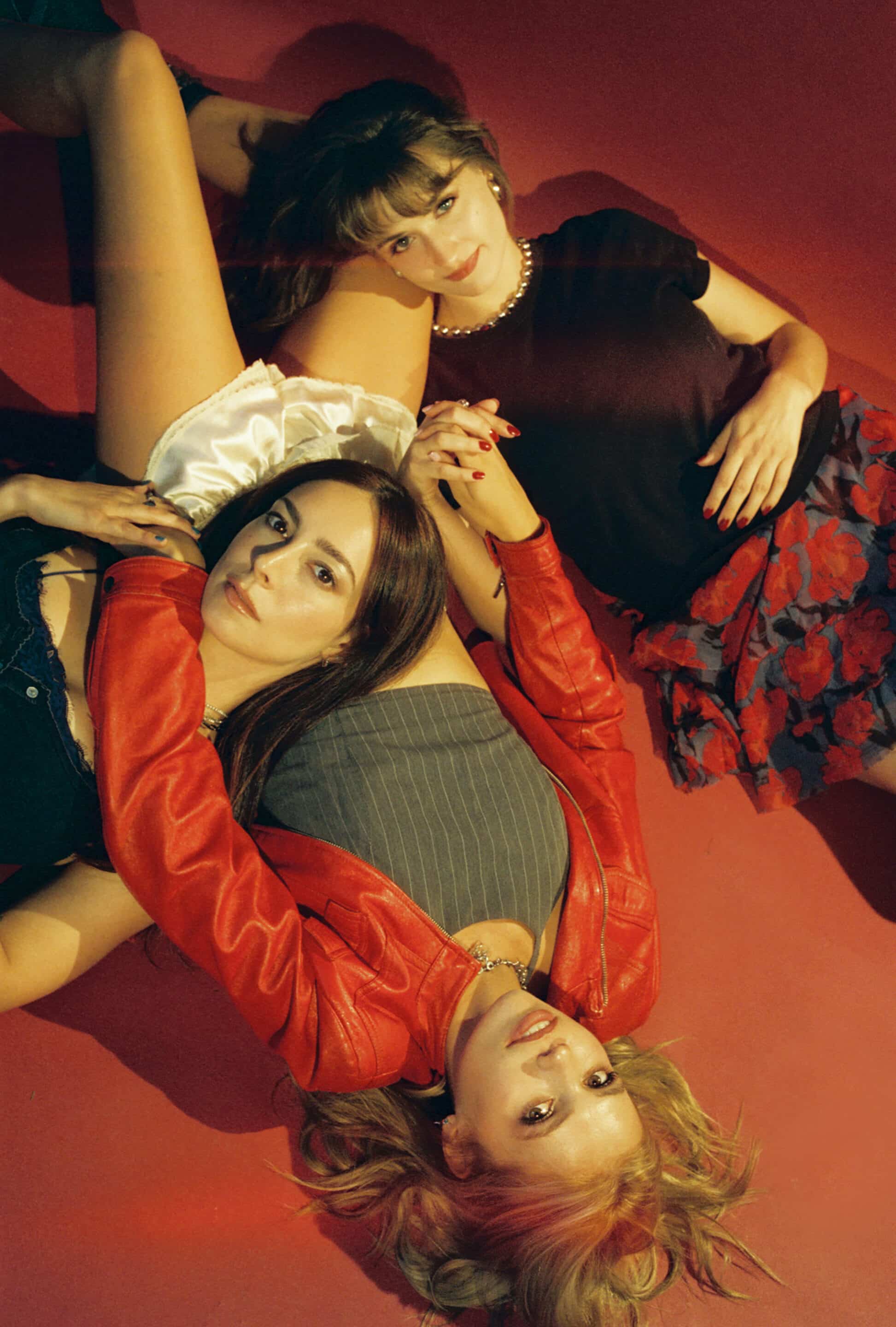
There’s an interesting freedom in creating a band when none of you necessarily needed another project. Does Carrie Okay allow you to make decisions that might feel too risky, strange or unserious within your individual careers?
Alna: Yes, emphasis on the unserious part. That’s what makes this project so fun. There’s less pressure to overanalyze every little word when we’re writing together.
I think we’re all more willing to follow an idea just because it makes us laugh and we haven’t heard a song frame an emotion quite like it. If one of us throws out something ridiculous, there are three other people there to go, “Wait… I actually love that!”
A lot of what has become Carrie Okay would probably have been overthought out of existence if we were writing on our own.
Your material is set to explore heartbreak, self-discovery, confidence and vulnerability. Those are familiar pop subjects, but the personalities involved here are all very lyrically driven. What makes an experience specific or strange enough that the three of you collectively think, “That’s a Carrie Okay song”?
salem: It’s hard to put our finger on what special sauce makes up a “Carrie concept.”
First of all, it has to be mutually relatable—which most things are, because we’re girls in our twenties. Then, it has to have a level of grit. This grit can vary from the line “my mind is a drunk whore” to a softer film of dirt, but it exists nonetheless.
Extra points if it makes us laugh, or makes Andrew immediately pick up his guitar and start strumming chords that sound like the start of a ’90s coming-of-age film.
From then on, the song pretty much writes itself.
Supergroups often arrive with expectations because listeners already know the individual members, but Carrie Okay emerged almost accidentally from friendship and songwriting chemistry. How do you protect that spontaneity now that the project has officially become something people will have expectations for?
LØLØ: I think the biggest thing is not overthinking it. Carrie Okay happened so naturally. We never sat down and discussed what the band should be or what it should sound like…it just simply was!
So we just make sure to sit down without any expectations from ourselves and create something fun that we love and that we believe in. We don’t think about the outside world while we’re creating; we just make something that excites us.
I think the whole reason it works is because it just feels like three best friends who are making music they genuinely love. We never want to lose that.
“High in a Drugstore” began with three songwriters creating something for somebody else and accidentally discovering a new identity together. As you continue writing original music, what are you beginning to understand about Carrie Okay that none of you could have predicted when you started that first session?
Alna: I don’t think we were expecting Carrie Okay to develop such a distinct personality.
There were no rules for what the song needed to sound like in our first session, so we were writing purely on instinct. We’ve held onto that approach as we’ve continued writing, and certain tendencies naturally keep showing up.
I don’t think we even realized that was happening until we listened back to everything and heard how much of a world the songs had created on their own.