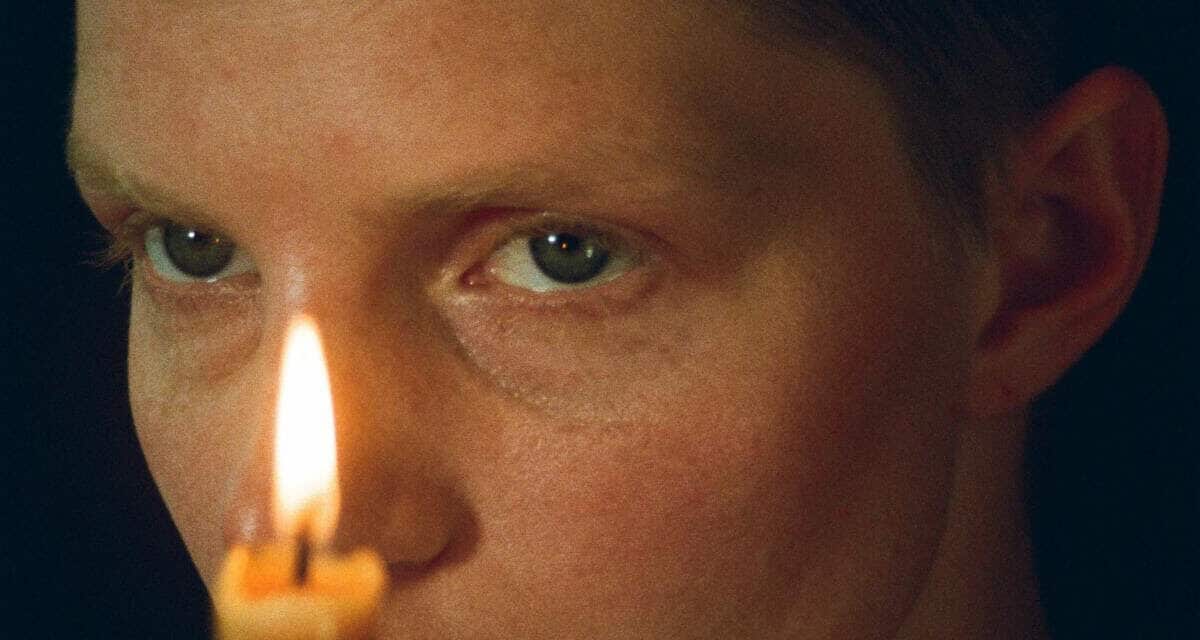
On her third studio album Big Mike, Nashville artist Elke strips away the maximalism of her earlier work to confront grief, identity, desire, and the uncomfortable clarity that follows personal loss. Inspired by her late father, teenage longing, and the haunting romanticism of The Virgin Suicides, the record finds Kayla Graninger discovering that vulnerability can be more powerful than reinvention.
There is a particular kind of honesty that only emerges when you stop trying to become someone.
For Elke, the Nashville-based artist born Kayla Graninger, that realization came through a period of creative uncertainty, personal loss, and the uncomfortable process of recognizing that the person she thought she was no longer entirely existed.
Her third studio album, Big Mike, arriving October 30 via Congrats Records, represents a significant departure from the maximalist production of 2024’s Divine Urge.
But describing the album as simply stripped-back would overlook the emotional complexity behind that decision.
For Elke, the process wasn’t about deliberately simplifying her sound. It was about reaching a point where the familiar ways of expressing herself no longer worked.
“Making a song I think is genius that none of my close circle understands, losing identity, getting ghosted when I text a song idea, not feeling worthy,” she tells MUNDANE, recalling the experiences that shaped the record.
The turning point arrived unexpectedly.
After months of uncertainty, she wrote “Toxic Trait” in an hour.
“Whatever radio wave of thought my brain caught poured that song out,” she explains.
It was a reminder that creativity doesn’t always reward effort in predictable ways. Sometimes, the clearest expression of yourself emerges only after everything else stops making sense.
The Weight of a Name
The title Big Mike carries a deeply personal significance.
Inspired by the larger-than-life figures of Elke’s childhood in the 1990s, including Michael Jordan, it ultimately pays tribute to her father, whom she recently lost.
But while grief informs the album, Elke resists the idea that making music necessarily provides emotional resolution.
“It barely even scratched the surface of processing my father’s death,” she admits.
For her, grief isn’t something that can be neatly organized into stages or explained through a collection of songs.
Instead, it has become a complicated form of connection.
“I’m ok with the grief, it somehow makes me feel close to him because there is so much love there.”
That distinction is central to understanding Big Mike.
Rather than presenting loss as something to overcome, the record allows sadness, memory, affection, and uncertainty to exist together.
Across nine tracks, Elke returns to the emotional landscape of youth, exploring the growing pains that don’t necessarily disappear with adulthood.
The result is an album that feels less concerned with resolving the past than with understanding how it continues to shape the present.
Rewriting the Ending of The Virgin Suicides
One of the record’s most evocative moments arrives with “Breathless,” a song inspired by Sofia Coppola’s The Virgin Suicides.
The film’s haunting portrayal of teenage longing and repression became a starting point for Elke to imagine an alternative ending.
“What if The Virgin Suicides had a happy ending?” she asks.
More specifically, what if Trip never abandoned Lux in the football field?
For Elke, the fantasy reflects a longing for something she couldn’t find in her own life.
“Lux, a repressed teenager exploring her curiosity of desire felt so kindred to me,” she explains.
“I resonated with Lux and reimagined her fate for the sake of being seen for wanting something I was personally so far from.”
The song’s stacked Mellotrons draw inspiration from Air’s atmospheric score for the film, while Elke’s unusually high vocal register introduces another dimension to her performance.
The result is a romantic fantasy made more heartbreaking by the knowledge that it cannot change the original story.
“Knowing deep down that it will never be the truth makes this song a heartbreaking fantasy.”
It’s an idea that extends beyond the film itself.
Sometimes music allows us to imagine the tenderness, recognition, or resolution that reality never provided.
And sometimes that imagined alternative becomes its own form of emotional expression.
Finding Clarity Without Performing It
Throughout Big Mike, Elke moves away from elaborate sonic textures toward a more exposed approach to songwriting.
Her lyrics are direct, her vocals unadorned, and the album artwork deliberately untouched.
“I sound like myself,” she says.
But that simplicity shouldn’t be mistaken for ease.
Elke describes herself as intensely sensitive to words, melodies, and physical environments. Even a single lyric that feels wrong can disrupt her relationship with a song.
On this record, she became particularly focused on the physical sensation of singing.
“The sensation of singing the song needed to feel how reliving the memories felt.”
It’s a revealing description of her creative process.
Rather than attempting to explain every emotion intellectually, Elke allows the performance itself to carry meanings that may be difficult to articulate.
The same instinct shapes her relationship with live audiences.
Having performed these songs at open-mic nights for strangers, she remains cautious about interpreting other people’s reactions.
“In the end we only own what we, ourselves feel.”
It’s an unusually self-contained perspective in a musical culture where audience response, streaming numbers, and external validation can easily become measures of artistic worth.
For Elke, the goal isn’t necessarily to control how her work is received.
It’s to know that what she’s expressing feels true.
The Freedom of Being Unadorned
Perhaps the most compelling aspect of Big Mike is its refusal to present vulnerability as a polished aesthetic.
Elke isn’t suggesting that stripping away production automatically reveals some permanent, authentic self.
Instead, the record captures the difficult process of recognizing when an old creative identity no longer fits.
“The record is a byproduct of the pain I’ve endured and the clarity that followed,” she explains.
“I don’t believe clarity can come without a rude awakening of mistakes made, or truths ignored.”
It’s a philosophy that makes Big Mike feel like a turning point rather than a definitive arrival.
The artist behind the album is still changing, still questioning, and still learning how to express experiences that may never become entirely understandable.
But she’s no longer interested in disguising that uncertainty.
“As long as I’m in line with myself, I’m comfortable.”
And perhaps that’s the real significance of Big Mike.
It’s not an album about becoming someone new.
It’s about reaching a point where being yourself, without embellishment or explanation, finally feels like enough.

In Conversation With Elke
MUNDANE: Big Mike is your third studio album and follows your 2024 release Divine Urge. How did the process of creating this record, and moving away from maximalist textures, help you get closer to the core of your sound?
Elke: Getting to the core of my sound happens naturally by putting myself out there. However it lands sonically feels less relevant to me than the journey of getting there. What helped the most was getting incredibly shot down. Making a song I think is genius that none of my close circle understands, losing identity, getting ghosted when I text a song idea, not feeling worthy, doing a Nashville songwriting session and feeling more empty after, having pages of song lyrics taped to my wall that I’ve stared at for months to learn that I’m not the person I think I am anymore.
“Moving away” is more like trying to wring out a dry rag longer than one should, then out of nowhere writing “Toxic Trait.” Whatever radio wave of thought my brain caught poured that song out in an hour. I’ve always hated the title singer-songwriter (why can’t it just be one pretty word), but I wanted to embody that because it finally felt aligned.
MUNDANE: You mentioned that “Breathless” was inspired by the film The Virgin Suicides. What was it about that specific story, and the idea of a happy ending for those characters, that resonated with you while writing this song?
Elke: A tragically ending story was what stuck with me because I was not writing from a place of bliss. Lux, a repressed teenager exploring her curiosity of desire, felt so kindred to me. I resonated with Lux and reimagined her fate for the sake of being seen for wanting something I was personally so far from.
There is a glimmer of hope for her. I kept imagining the football field scene where she wakes up and Trip is there with her in the morning, tucking her hair behind her ear. Knowing deep down that it will never be the truth makes this song a heartbreaking fantasy.
MUNDANE: The album title is a tribute to your father, whom you recently lost. In what ways did this record become a space for you to process that loss while also reconnecting with the growing pains of youth you reference in the bio?
Elke: It barely even scratched the surface of processing my father’s death. I can speak logistics of our dynamic or tell funny stories about him for days, but for me, processing his death sounds like a fairy tale, or literally identifying the body.
I’m ok with the grief. It somehow makes me feel close to him because there is so much love there.
My good friend Nada Alic wrote that bio. Everything she points out about the record were things I wasn’t trying to do but did in fact do, as a talented writer can point out. I resonate with her interpretation because of the way it feels to sing these songs. It’s like how our bodies know our emotions before our mind explains them. Singing these songs explains it more than I could logically break it down.
MUNDANE: You’ve described your lyrics on this album as being close to the bone and simple and exact. How did you decide what to keep and what to cut when you were trying to find that clarity in your voice?
Elke: It’s just a feeling. I’m super sensitive to physical space and sound, and I’m like that with songwriting as well. A word feeling wrong makes me uncomfortable.
I honed in more on this record melodically, I’d say. In the past I’ve relied on my lower register and demeanor. When that became too comfortable, I changed the mold. Turning on that same application of words with melodies, the sensation of singing the song needed to feel how reliving the memories felt.
MUNDANE: Big Mike sounds like a very personal, stripped-back project. After performing these songs at open-mics for strangers, how has the live reaction to this material shaped your understanding of the songs themselves?
Elke: To be honest I don’t know how to measure other people’s reactions very well. After I play I try and put it out of my mind. I can talk myself too deeply into or completely out of anyone’s response, which can be maddening, and also kind of pointless. In the end we only own what we, ourselves feel.
MUNDANE: The album cover is untouched and you’ve said, “I sound like myself.” Looking back at the different versions of yourself you’ve lived through, how does this record represent the version of you that you’re most comfortable presenting to the world right now?
Elke: The record is a byproduct of the pain I’ve endured and the clarity that followed. I don’t believe clarity can come without a rude awakening of mistakes made, or truths ignored. As long as I’m in line with myself, I’m comfortable.
Big Mike — Tracklist
- Pusher
- Breathless
- Failed Attempt
- We Can’t Stop
- Toxic Trait
- Moon Marquee
- Rotisserie
- Angel
- The Stranger
Big Mike arrives October 30, 2026, via Congrats Records.
Photography: Maria Torres.