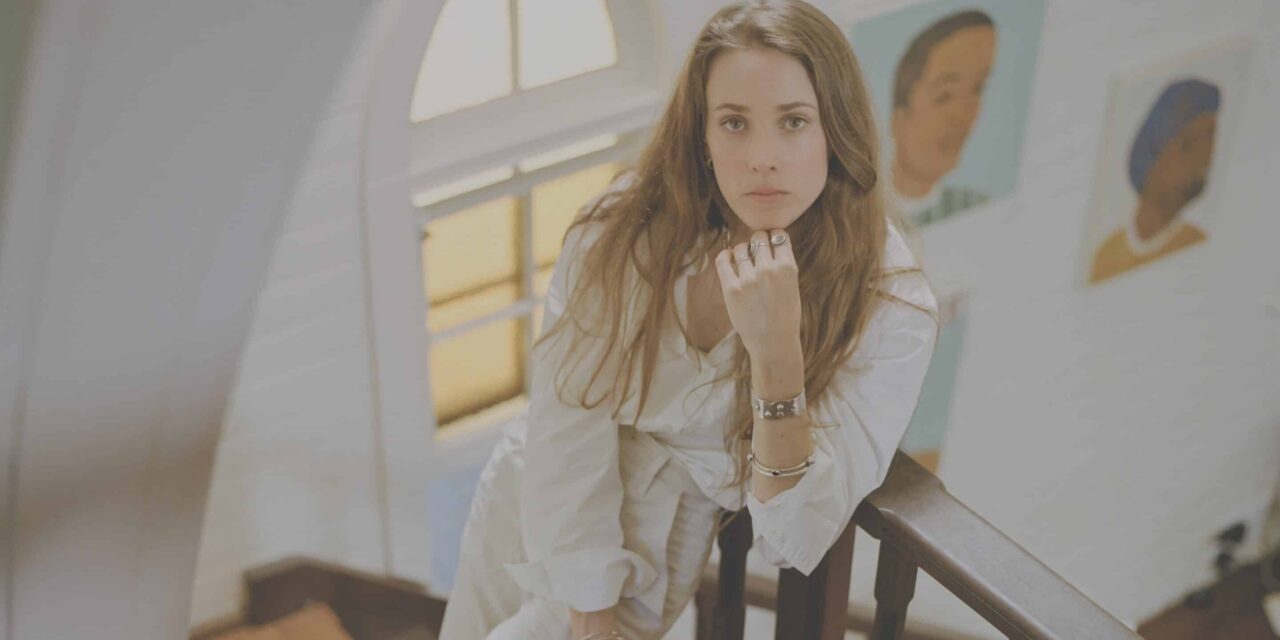
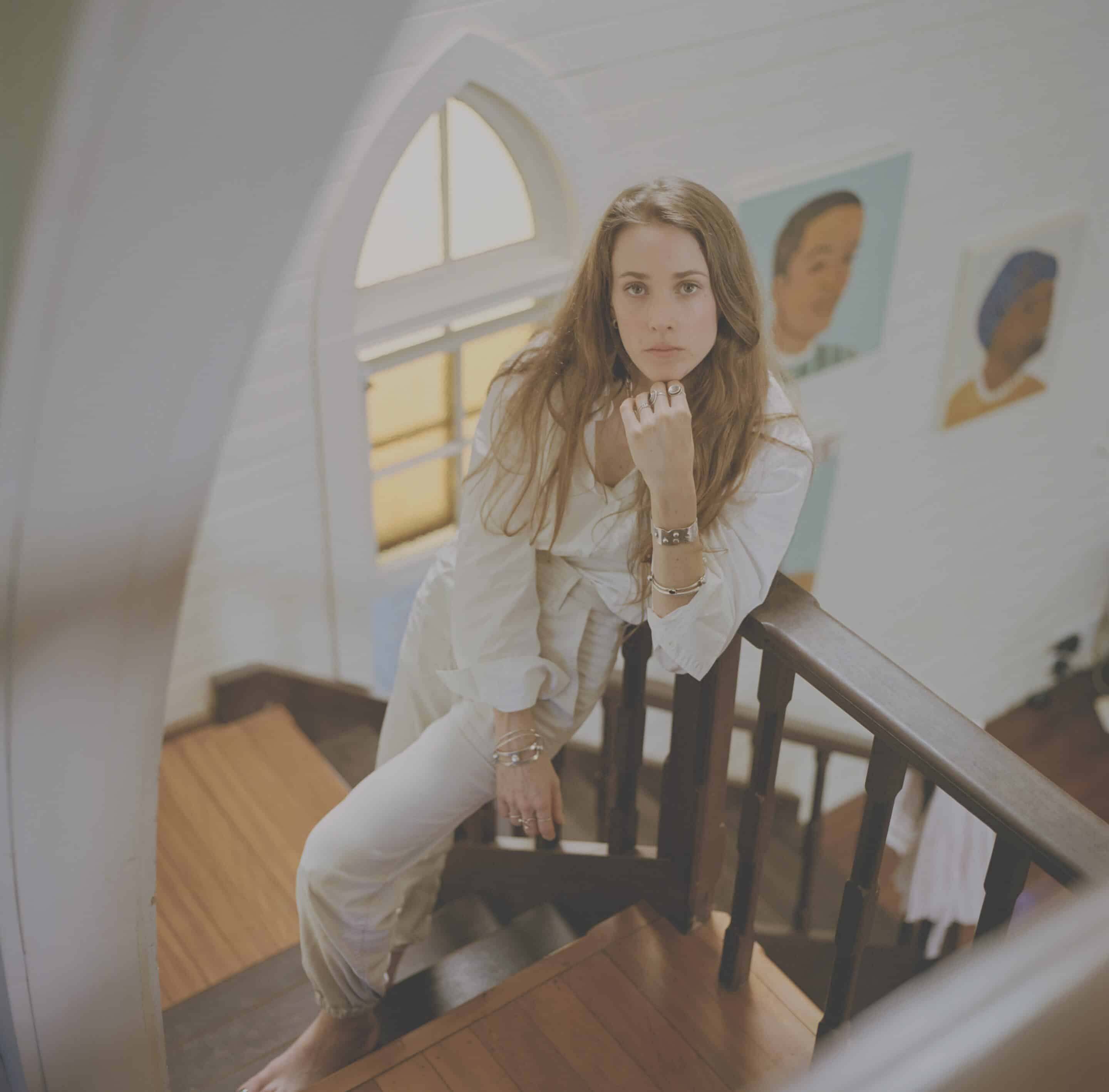
Emma Louise’s forthcoming fourth album, Sunshine for Happiness, arrives May 1 via Future Classic as a luminous document of breakdown, rebirth, and spiritual reconstruction.
Written after a period of deep personal collapse, the album began during a hospital stay in Los Angeles, where Emma found herself drawn to a piano and writing without expectation. What emerged was not a polished attempt at reinvention, but something far more powerful: a body of work born from surrender.
Her new single “God Between Us” offers a first look into that world. Set against rich piano and glowing instrumentation, the track explores love as the force beneath both creation and destruction.
“‘God Between Us’ is about how love is underneath everything, no matter if it’s good or bad,” Emma says. “It’s in both the creation of, and the destruction of everything.”
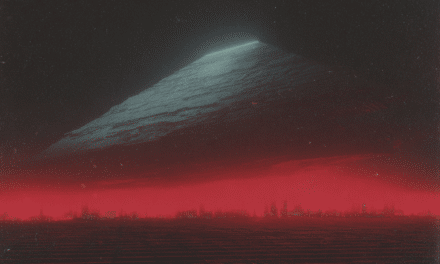
The video, shot by Sam Kristofski on 16mm film in front of Hawaii’s active Kīlauea volcano, in Los Angeles, and on Emma’s property in Australia, mirrors the album’s emotional contrasts: elemental, intimate, fragile, and vast.
Across Sunshine for Happiness, Emma moves through longing, toxicity, grief, mortality, gratitude, and renewal. Songs like “Beggar,” “Medicine,” “Nothing Could Tear Us Apart,” and “Through Love We See The World” trace the arc of someone learning that healing is not about escaping pain, but allowing it to burn away what no longer belongs.
Following her collaborative album Dumb with Flume, and years after the release of Lilac Everything, Emma Louise returns not as the same artist, but as someone who has lived through collapse, motherhood, divorce, silence, and reconnection. Sunshine for Happiness is the sound of stepping back into the light.
Sunshine for Happiness is described as a project born from a personal collapse that becomes a breakthrough. At what point did that shift from survival to creation actually happen for you?
They happened kind of simultaneously, actually. I was suffering a lot because I was striving so hard to be creative. I was trying to be creative to alleviate my feelings of worthlessness and not being good enough, which means I was trying to create from a place of fear. That meant my creativity was dead, and because my creativity was dead, that’s why I suffered.
When I had my breakdown-slash-breakthrough, the suffering kind of burned away the parts of myself that were reaching for things to make myself feel better. I just gave up on everything except surviving. Through giving up on trying to access creativity or trying to make an outcome that would make me feel better, my creativity just exploded.
I no longer cared about the outcome. I just wanted to express this new openness that I felt and the new, beautiful way that I saw the world. Then I was creating as you’re meant to create. I was living this life and soaking in this life, and because creation is natural to all human beings, I was just creating. That creation caused joy.
I think it’s different now because now I know not to attach too hard to the outcome, or what the outcome does, or how the feedback on that outcome makes me feel.
You’ve spoken about writing these songs during a deeply vulnerable period in a hospital in Los Angeles. How did removing expectations change the way you approached songwriting?
Removing the importance of the outcome removed the judgment attached to making it. It removed the need to shape the outcome in whatever way your ego needs or wants it to be shaped.
So whatever was coming through me just was. It wasn’t judged. Whatever was coming through me was how it was meant to be, and it expressed what I was going through in the best way.
“God Between Us” suggests that love exists in both creation and destruction. How has your understanding of love evolved through the process of making this album?
My understanding of love is constantly growing and changing, and I think it always will.
I used to think love was just the feeling of lust, that magnetism that draws you closer to somebody. And it is that, but it’s also the essence of what I believe is our truest self, or who or what we are, and what we come from, and where we go when we die.
Love is the place within us all that is the source of all creation. It’s the God within us. It’s also the place that we feel attracted to in another person when we fall in love, or the place that we miss when we lose that person or separate from someone.
It’s been six years since I made the album, and since then I’ve gotten married, had a baby, been divorced, been in other relationships and friendships, and I’m learning more and more. I know that love never disappears, for me anyway.
When I fall in love with somebody, even if I’m separated from them, even if there’s been conflict and suffering, underneath the anger or grief, underneath all the spikiness of those feelings, there is still love. I think it never goes away.
And after having a baby, that love is the most whole and complete love I could ever feel. It’s truly unconditional love, and it’s incredible.
There’s a strong spiritual undercurrent throughout this project. Would you say this album is more about healing, or learning how to sit with pain?
Half of the album was written before I had this breakdown-slash-breakthrough, and half was written after. So half of it is about attachment and suffering and needing something or someone outside of myself in order to feel okay, loved, and worthy of love.
Then there was this big split or shift in my life, and the songs definitely came out differently. A lot of the songs are about my relationship with God, or love, or music, or creation, or whatever it is. I guess it is spiritual, but I never really thought of it as spiritual for some reason.
The album moves through longing, toxicity, mortality, and renewal. Did you approach the tracklist as a narrative arc, almost like chapters of a transformation?
No, I don’t think I did. I’ve never written an album with the whole album in mind from an aerial view. But I’m glad that it expresses that, because that means it’s a true expression of what actually happened. So that’s an accidental yay.
Songs like “Medicine” and “Nothing Could Tear Us Apart” explore the illusions we hold onto in relationships. What did you have to unlearn about love while making this record?
I definitely had to learn a lot, not so much in the process of making this album but just in general, and I’m still learning so much now about love.
While all of this was being written and recorded, I had to go through the process of not needing love outside of myself to pacify me. I always needed people and things outside of myself to soothe me. I’ve had to learn that I have everything I need inside myself to soothe me, and everything inside myself brings me all the joy I could ever feel.
Visually, the project spans from the raw power of a volcano to intimate personal spaces. How important was it for the visuals to mirror the contrasts of the album?
For me, it just all has to ring true. It has to be coherent with what the album is saying.
I always know if an idea feels good or doesn’t feel good, and working with Sam Kristofski, I just knew his ideas were going to work. And they did, so I’m super stoked about that.
You collaborated with Tobias Jesso Jr. and Shawn Everett. How did they help shape such a deeply personal body of work without diluting its intimacy?
It was such an honor to work with both of those guys. Toby was my husband, so that’s pretty intimate, and he knows me very well. He witnessed me writing all the songs. He has great taste and I trusted him.
I also trusted and have deep admiration for what Shawn Everett does. He’s a wizard, a master of sound, and his ideas are like a kaleidoscope of magic. I never knew what he was going to come up with every day.
The band was maybe eight or nine people, and it wasn’t like a few people were working while the rest were drinking or lying in the sun. All of us were so excited and invested in it and having so much fun.
It didn’t ruin the intimacy, because if the songs are true in the writing, I don’t think you can really lose the intimacy if you don’t change the feeling too much.
After stepping away from music and then returning to it in such an honest way, how has your relationship with being an artist changed?
It’s absolutely insane to be stepping back into playing songs and music again after seven years. Being a mum, getting divorced, living overseas, coming back—so much has changed. My identity shifted away from music, not in a sad way.
I recorded the album, came back to Australia, and Toby and I fell pregnant straight away. So seven years later, I’m stepping back into all of those feelings and the magic. The fucking magic and the afterglow of recording the album. It really was a sunny time of happiness.
Stepping into that has brought up a lot of grief. I’m grieving my marriage and my relationship with music as well.
Slowly, I’ve relearned the songs and I’m rehearsing for these shows I have coming up. I find that when I’m walking around, I feel a little bit more full, like there are parts of myself that I’m holding again.
Now I just want to dye my hair blonde for some reason. I mean, I know why—because I had blonde hair back then. I’m like, fuck it, I want to dye my hair blonde. So that’s interesting.
The album closes on a note of connection and clarity with “Through Love We See The World.” After everything this record holds, what does happiness actually mean to you?
Happiness to me means this openness in my chest. I can feel happiness when certain things in life are aligned and solidified enough that I have structure to do the things I love. That gives me the capacity to have resilience for the stresses that come up.
Doing the things I love, which is creating—the ability to be constantly creating—that’s heaven and happiness to me.
But most importantly, it’s being around the people I love. Being in connection with people I love, and with nature, and being able to watch things grow. Literally, being able to plant flowers and pick flowers and have them in my house.
For things to be not so slow that I’m bored, but not so fast that I can’t process everything in real time. Not so fast that I’m choking on the world.
It’s this feeling of gratitude in my chest. My heart opening up with gratitude. It’s not that I’m not grateful all the time for my life, but when all of those elements are happening and the machine is running, I have more time to sit and marinate in all the things I’m grateful for. That makes life very good for me.
When I have the time to be like, “Ah, I’m lucky,” because I am lucky, I feel very good and lucky about my life.
And yeah, I could’ve just said happiness is my son. My son is enough.