Photo Credit: Abbie Huynh
Ten years after Homeworlding, Tom Christie resurfaces with a record about depression, self-recognition, hard-won happiness, and refusing to rush either music or life
Ten years is enough time to become a stranger to yourself.
For Tom Christie, the songwriter behind Fraternal Twin, the decade separating 2016’s Homeworlding from the forthcoming Halo Fell Forever was not simply an extended gap between albums. It was a period of disorientation, depression, relocation, changing relationships, and eventually the deliberate work of reclaiming a life that felt recognizable again.
Which makes Christie’s clearest statement about the new record surprisingly uncomplicated.
He is happy.
“I think I can say now that I am just really happy after a very long and confusing period of my life,” he says. “I’m also much less willing to compromise my values, music and my lifestyle for anything or anyone. I just choose to live my life the way I want to now.”
It sounds simple until you hear everything surrounding it.
Halo Fell Forever, due September 4, is a record filled with murky guitars, existential unease, clinical depression, anxiety, metamorphosis and the traces of former selves. Roughly half of its songs were written the better part of a decade ago, while others emerged much later, after Christie had lived through the experiences that would ultimately give the older material new context.
Instead of disguising those different eras, the album lets them coexist.
Songs were slowed down. Arrangements were simplified. Distortion was allowed to swallow the edges. Producer Dan Howard helped shape a record that moves with the patience Fraternal Twin have always valued, favoring emotional accumulation over immediate payoff.
Christie has an uncomplicated explanation for that too.
“I just love slowcore.”
He points to Red House Painters, Low and Codeine, bands where tension develops through restraint and where a hook is something that can arrive whenever it is emotionally necessary rather than whenever conventional songwriting architecture demands it.
“The world moves so fast but I’m just going to operate as authentically as I can,” Christie says.
That philosophy runs directly against the frictionless logic of contemporary music consumption. Halo Fell Forever does not appear particularly concerned with arriving at its chorus before somebody scrolls away. The songs ask for time. They mutate as they move. Guitars shimmer quietly before collapsing into distortion. Low frequencies groan beneath lyrics that often use remarkably few words.
Then something opens.
Nowhere is that journey clearer than “Medicine,” the album’s latest single and Christie’s favorite song on the record.
Written around anxiety, rumination, clinical depression, and his decision to take antidepressants, “Medicine” is ultimately about something harder to articulate: trying to reconnect with the person you remember being before a prolonged period of depression altered your sense of self.
“I’ll know it when I see him / My spirit guide from the photographs,” Christie sings.
The image is devastating because of how ordinary it is. The proof of this previous person exists in photographs, yet finding him again requires more than looking backward.
For Christie, the song became part of the process itself.
“It felt like I cracked a code for myself,” he says.
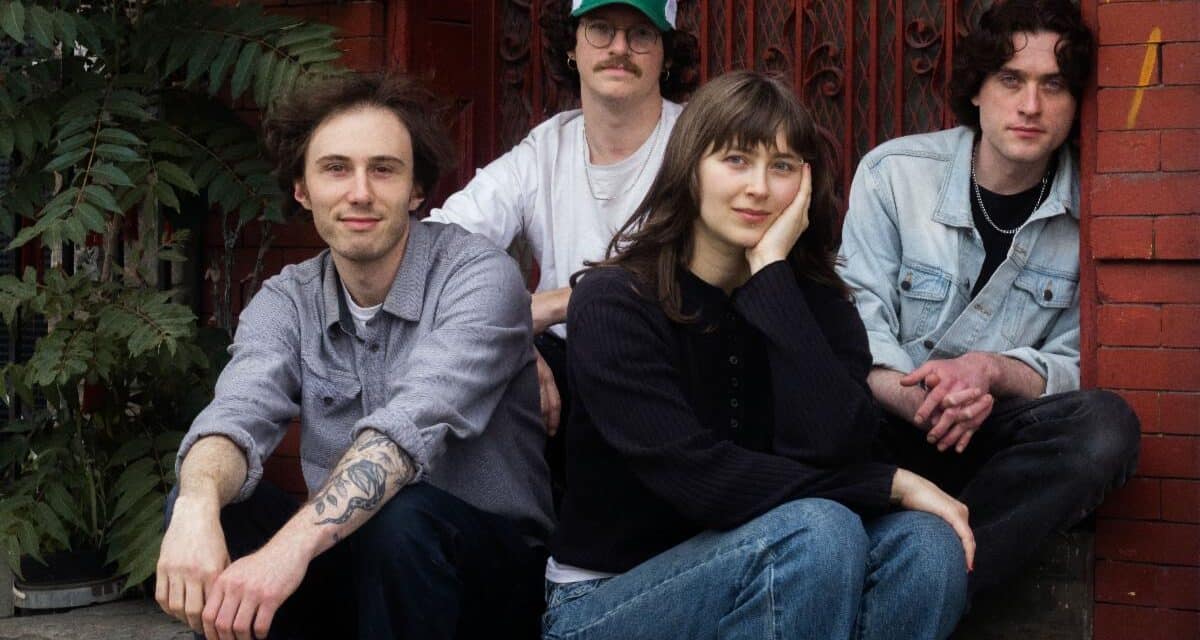
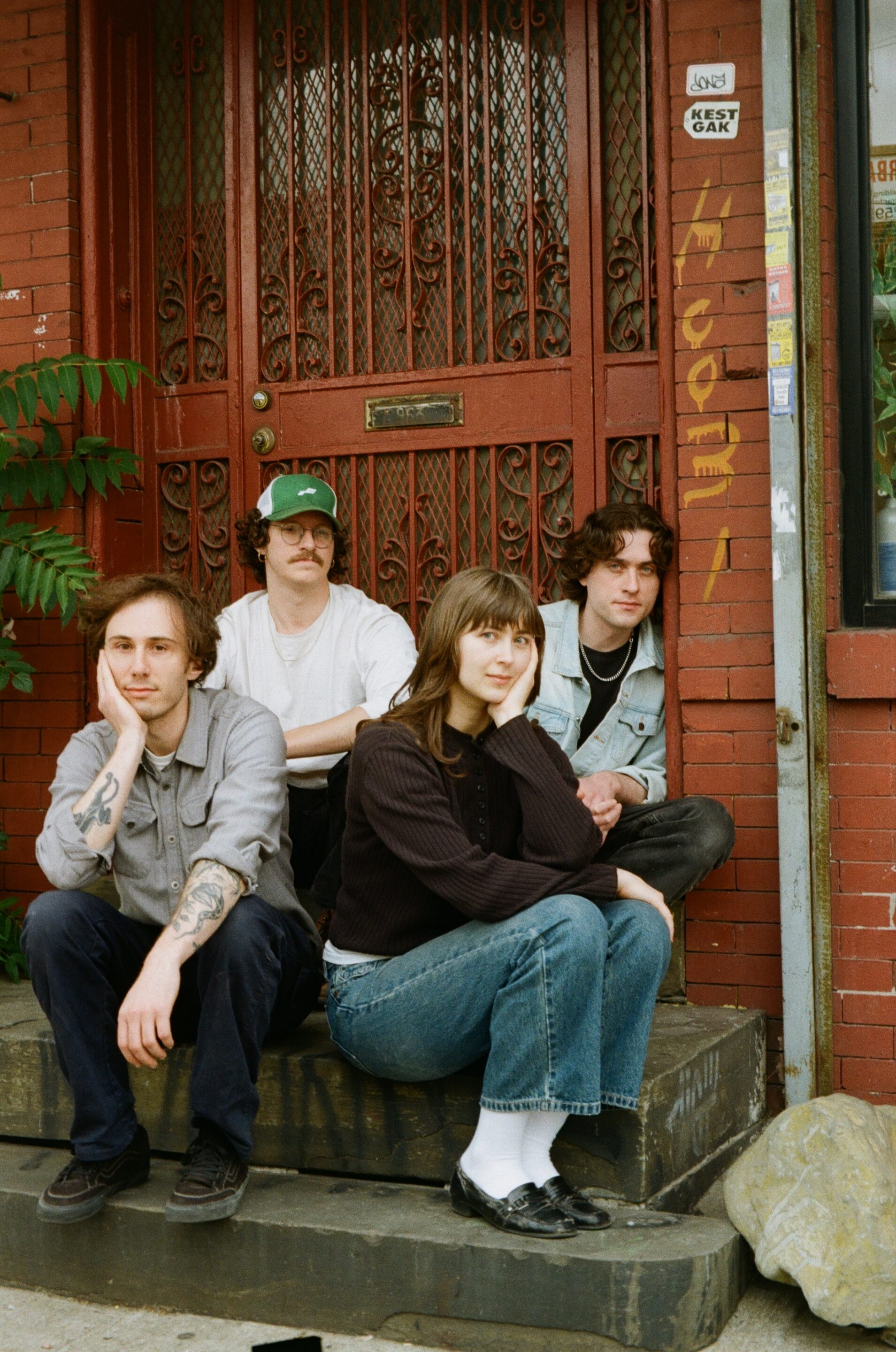
The record contains darkness, but its destination is not despair. Christie speaks about gratitude almost as readily as depression, and about responsibility alongside confusion. Moving to New York City in 2023 became part of that shift, reconnecting him with community after the pandemic and eventually bringing him together with Fraternal Twin’s current lineup of Marco Spodek, Mariah Houston, and Forrest Philpot.
“Sometimes it really feels like this was all supposed to happen,” he says.
Maybe Halo Fell Forever is not a comeback record, then.
Maybe it is evidence of what happens when someone stays with the process long enough for disorientation to become clarity.
Mundane spoke with Christie about the decade behind Halo Fell Forever, “Medicine,” antidepressants, slowcore, learning to stop compromising, moving to New York, abandoning algorithms, and why this strangely feels less like Fraternal Twin’s return than its beginning.
FIRST NEW ALBUM IN A DECADE,
HALO FELL FOREVER,
ARRIVES SEPTEMBER 4, 2026 – PRE-ORDER
It’s been a decade since the last album. What can you say now that you couldn’t have said ten years ago?
I think I can say now that I am just really happy after a very long and confusing period of my life.
I’m also much less willing to compromise my values, music and my lifestyle for anything or anyone. I just choose to live my life the way I want to now.
Again, I’m just really happy. And I won’t let anyone take that away from me.
It sounds a little intense but it’s true.
“Medicine” digs into anxiety and depression pretty directly. When did you realize putting that on record might help other people, not just you?
Honestly, that song was crucial to me feeling like myself again and making music that I really identified with again after years of feeling pretty lost.
I don’t know how it happened but it really helped me through a hard time and validated a lot of things for me. It felt like I cracked a code for myself.
Honestly, I haven’t thought too much until now about how that specific song could help other people, even though one of my favorite things about releasing music is when somebody reaches out and tells you how it helped them through a tough time in their life.
It’s happened a handful of times in the past and I’m glad that I can help in some way. Our first couple of records seemed to really resonate with some people on a personal level all those years ago and I hope this one does too.
There’s something haunting about the idea of searching for your old self through photographs. Did healing ultimately feel like finding that person again, or accepting that you had become somebody different?
“Medicine” has a lot to do with anxiety, rumination, and deciding to get on antidepressants, hence the title.
It’s about me wanting to reconnect with the person I remembered being years ago and lost somewhere along the way during a long bout with clinical depression.
I’m happy to say I’ve found him again:
“I’ll know it when I see him / My spirit guide from the photographs.”
I am forever thankful for this song.
Your songs take their time instead of rushing to a hook. Does that feel like a deliberate choice against how fast everything else moves now?
Yeah, so to be real, I just love slowcore haha. I always have.
It’s a very intentional form of music and some of my favorite bands exist in that sphere—Red House Painters, Low, Codeine… those are the big ones obviously. I’ve been listening to those bands for a very, very long time.
And some of these songs just felt better to me after slowing them down a bit. I also love tempo changes.
Hooks happen when they happen but I’m never really trying to “write a hook,” to be completely honest.
The world moves so fast but I’m just going to operate as authentically as I can.
Stress is a motivator until it is a defeater. It’s a sensitive balance.
There’s a lot of darkness on this record, but it doesn’t stay there. Was it important to you that it not end in despair?
Definitely.
I’m glad if anybody can hear the positive emotions underneath the murky moodiness that lies on the surface of the songs.
I am always trying to keep my head up—there’s actually a lot to be grateful for. I think this record reflects that.
Also, I’m a pretty silly guy really.
The album moves from really quiet moments into huge walls of distortion. When you’re writing, does the emotion come first, or does the sound tell you what the song’s about?
It usually starts with some sort of riff and I think I just feed off of the emotion the riff is making me feel—but usually I won’t know what the song is about until the time that it’s finished.
Something usually just clicks and I recognize it’s time to move on if it feels right.
But a song is always evolving every time you play it and that’s so exciting.
Some of these songs are years old and only just found a home on this record. What was it like revisiting them from where you are now?
The older songs happened to coexist really well with the newer material that ended up on this record.
Some of them might’ve initially been written with a slightly higher tempo or some other elements, but in the end simplifying the arrangements and slowing things down a touch really felt right.
A little distortion doesn’t hurt too.
The title Halo Fell Forever evokes a kind of loss of innocence. Do you see this record as being about recovering from that fall, or learning how to live after it?
It takes me back to this sort of fall from innocence I experienced years ago.
It shattered the way I saw the world for a while.
But the record is also about learning from mistakes and pressing onward in your convictions with the confidence that comes from really working through your problems.
There’s a lot of tension in it, but there are also these moments of transformation and clarity.
You’ve talked about the lead-up to this album as a period of uprooting your life and learning things the hard way. Do you think you chose to grow, or did it just happen to you?
I definitely went through a period where I was confused why things went the way they did and it’s a long story—but I eventually chose to take responsibility for my life and find my way back to being happy and feeling like myself again.
In 2023 I moved to New York City like I had always wanted and found so much community again after the pandemic.
I’ve met so many amazing people, including my bandmates especially.
Sometimes it really feels like this was all supposed to happen and I appreciate everything I experience all the more now.
How has the current lineup—Marco Spodek, Mariah Houston and Forrest Philpot—changed the way these songs feel now that you’re playing them live?
There’s something that happens when these songs become physical in a room with other people.
The recordings already have that heaviness inside them, but playing with this lineup has allowed us to explore it further.
I think the band has become a really important part of where Fraternal Twin is going next. Finding that community again has been a huge part of this period of my life.
Your lyrics tend to leave room instead of spelling things out. Is that intentional—letting people fill in the blanks themselves?
I like to use as few words as possible in my lyrics but I’ve been told I seem to focus pretty heavily on imagism—I’m cool with that honestly.
The songs just often end up feeling really personal to me and my experience and I guess they come off a little oblique maybe, but I guess that lends itself to some sort of multiplicity in a way that I didn’t realize—and I like that.
Fraternal Twin has built a following without chasing trends. What do you think people still want from music that algorithms can’t give them?
Just like with the lyrics, I think trying to attach meaning to the personal puzzles of whatever’s going on in your life is what I appreciate most about songwriting.
It feels a bit like sculpture—hacking away at the song until it feels right and then something clicks on a certain level.
And if it helps me feel good and like I discovered something about myself in the process, then hopefully it can do something for the listener.
About half of this new record is songs I wrote the better part of a decade ago, so I’m not thinking about what’s trending and how to break into the algorithm.
After such a long gap, do you feel pressure to make up for lost time now?
I don’t plan on disappearing again anytime soon.
There were a lot of detours getting here, but now this version of the project feels really active and exciting to me.
Expect a lot more music from this band in the coming years.
This record feels like it’s closing one chapter and opening another. What do you want people to be thinking about after it’s over?
I hope that they just enjoy it enough to spend more time with it.
We have put a lot of time into these songs both recorded and live and I hope that they connect with people in a way that isn’t just an addition to a playlist that gets forgotten after a month or whenever things rotate.
We’re going to make another record as soon as we have the money to do it.
Even though this project has existed for over a decade, for me this kind of just feels like the beginning.
The idea of returning appears everywhere on Halo Fell Forever, but Christie no longer seems particularly interested in going backward.
He can recognize the person in the photograph without needing to live inside the picture.
He can play a song written nearly a decade ago and let the person he is today finish it.
He can acknowledge that antidepressants helped him find his way through depression without converting “Medicine” into a tidy recovery anthem. He can make music filled with distortion, isolation and existential weight while insisting—convincingly—that underneath it all, he is happy.
That may be the most significant transformation on the album.
Not that the halo fell.
Not even that Christie survived whatever followed.
It is that he now seems unwilling to surrender the life he built afterward.
There is a line between protecting happiness and becoming afraid of losing it. Halo Fell Forever seems determined to live on the first side of that divide: grateful, imperfect, slow-moving, occasionally very loud.
And after spending ten years making his way toward this record, Christie is in no rush to chase whatever happens next.
He just knows there will be a next.
Halo Fell Forever arrives September 4, 2026. “Medicine” is out now. Fraternal Twin are touring throughout August, followed by album release shows in Kingston, Brooklyn and Philadelphia in September.