After viral songs, sold-out tours and festival stages came burnout, illness and a necessary hiatus. On Hound, Tyler Mabry and Harlow Phillips turn childhood trauma, friendship, exhaustion and survival into their most complete statement yet.
There is a version of hey, nothing‘s story that reads almost impossibly well.
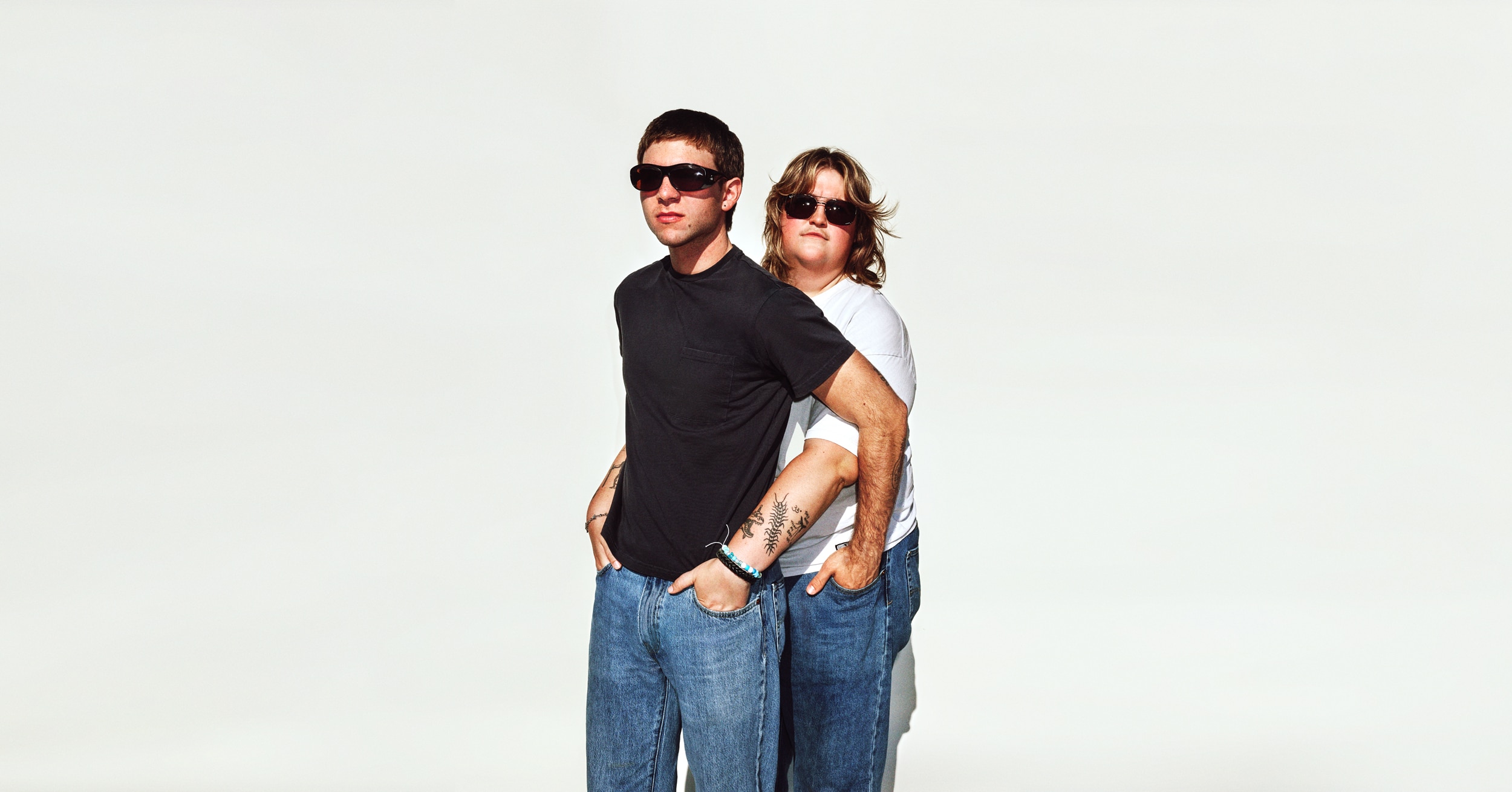
Tyler Mabry and Harlow Phillips met as middle school classmates, discovered music together, found an audience, went viral, sold out shows and eventually graduated onto stages at Lollapalooza, Bonnaroo and Austin City Limits. Their music earned attention from outlets including NPR Music and Pigeons & Planes, while the friendship that began when they were kids became the foundation of an increasingly serious career.
But there is another version of that story—the one that makes their debut album Hound feel considerably more significant.
For six years, Mabry and Phillips spent almost every day together. School turned into touring. Touring turned into living together between stretches on the road. The band that had once provided stability through traumatic childhoods and the complicated process of understanding their own identities gradually became an all-consuming environment with almost no space left to process what was happening.
Eventually, something had to give.
“We got super duper sick while touring in Europe last year,” they recall. “As soon as we got home, we both expressed to each other the feeling that we might actually die.”
What followed wasn’t a breakup. It was something arguably more difficult: admitting that continuing required stopping.
The duo took a hiatus and began rebuilding the relationship underneath the band.
Hound exists because they did.
Friendship before the band
Before hey, nothing was a career, it was an anchor.
Mabry and Phillips grew up alongside one another, navigating difficult home lives while developing a musical language that became increasingly inseparable from their friendship. Years of writing, performing and simply existing together eventually produced what they jokingly call a “HIVEMIND.”
“There’s always been an unspoken—spoken, now—trust, love, and admiration for each other,” they explain.
But knowing someone for years doesn’t make communication automatic. If anything, familiarity can create its own dangerous assumptions: that the other person already knows what you’re thinking, that certain feelings don’t need to be verbalized, that a relationship sturdy enough to survive adolescence can withstand almost anything without maintenance.
The band’s near-breaking point forced them to reconsider that.
“What we needed to learn was that we always need to be communicating every feeling,” they say, “despite sometimes thinking those kinds of things can remain unspoken.”
That realization runs throughout Hound. The album is not simply a collection of songs about surviving difficult experiences. It documents two people learning how to remain friends while becoming adults inside an industry that turned their friendship into a profession.
And it does so without pretending any of this has made them particularly solemn.
“If you can’t laugh, you MUST CRY,” they say.
That might be the album’s unofficial thesis.
Crying while dancing
Hound moves between childhood trauma, burnout, insecurity and perseverance without surrendering to misery. Mabry and Phillips instead rely heavily on sarcasm, absurdity and humor—the same mechanisms that characterize their relationship outside the songs.
“We are not very serious people,” they explain. “Much of our relationship with each other is based in humor and pain.”
Rather than treating humor as an escape from emotional honesty, hey, nothing sees the two as fundamentally intertwined.
“Perhaps they are THE SAME DAMN THING.”
That tension gives Hound much of its personality. Pain isn’t presented from a safe distance after every wound has healed. Neither is resilience transformed into an inspirational slogan. The record instead occupies the uncomfortable space where someone can be wounded, grateful, exhausted, hopeful and ridiculous almost simultaneously.
The duo describes the record as both confronting the past and reclaiming the future.
“We’ve gone through a lot, yea, but we are also incredibly privileged,” they say. “We have the privilege to GRASP LIFE BY THE NUTS and we are going to TAKE IT.”
For all the trauma underneath it, Hound wants movement.
It wants audiences to dance.
Or, ideally, “CRY WHILE DANCING.”
The hound learns confidence
The title itself emerged from a transformation that happened during the album’s creation.
Mabry and Phillips entered the process feeling uncertain—not only about the band, but about themselves as friends, writers and people. As the songs developed, they began actively searching for the confidence that burnout had eroded.
By the time they wrote the song “Hound,” the difference between where they had started and where they had arrived was significant enough to become funny.
They could see themselves changing in real time.
“Hound is about leading life confidently with love,” they explain.
The word carries plenty of associations—instinct, persistence, loyalty, survival—but within hey, nothing’s world, it ultimately becomes less about enduring whatever happens and more about choosing how to move through it.
After years in which circumstances seemed to accelerate around them, the album finds Mabry and Phillips attempting to regain some agency over the pace and direction of their lives.
The band survived.
Now they want to decide what surviving is actually for.
In Conversation with hey, nothing
“We have the privilege to GRASP LIFE BY THE NUTS and we are going to TAKE IT.”
MUNDANE: Hound almost never happened because you reached a point where you had to step away and rebuild your friendship before continuing as a band. What was the moment that made you realize your relationship had to come first?
hey, nothing: We got super duper sick while touring in Europe last year. As soon as we got home, we both expressed to each other the feeling that we might actually die. I think it gets hard, especially on tour, to have the most regulated and honest conversations about how you’re feeling towards yourself and each other. Getting home and having those conversations was absolutely crucial. The result of those conversations was the decision to take a brief hiatus.
MUNDANE: You’ve known each other since middle school, and your personal histories are deeply woven into your music. How has growing up together changed the way you communicate creatively, especially after everything you’ve experienced?
hey, nothing: It has created a HIVEMIND! Since we’ve known each other, there’s always been an unspoken (spoken, now) trust, love, and admiration for each other. The more we explore that relationship, the easier the creative experience becomes. It is much easier to be creative with one another after so long, having experienced life in parallel. What we needed to learn was that we always need to be communicating every feeling, despite sometimes thinking those kinds of things can remain unspoken.
MUNDANE: Your rise happened incredibly fast—from viral success to sold-out tours and major festival appearances. What parts of that whirlwind felt rewarding, and what aspects proved far more difficult than people might imagine?
hey, nothing: Every part of this career has been rewarding but it can be incredibly emotionally and physically taxing. Especially as the number of people involved expands. The more you do something, the less novel it feels. Having done so much in so little time, we are working on really rekindling that novelty.
Specifically though, the most rewarding aspects have been the shows! The gratification of live music is like nothing else. The more difficult aspects definitely include getting so sick all of the time, being away from friends and family, and never really getting to establish a proper routine. That being said, we wouldn’t change a thing. The reward outweighs the drawbacks TENFOLD.
MUNDANE: Hound balances humor, sarcasm, and emotional vulnerability in a way that feels both disarming and deeply honest. Why was it important to approach heavy subjects with that sense of wit rather than pure melancholy?
hey, nothing: We are not very serious people. If you can’t laugh, you MUST CRY. Much of our relationship with each other is based in humor and pain. Hound is the most accurate and up to date depiction of our relationship with one another. We also believe that you can’t have one without the other, and perhaps they are THE SAME DAMN THING.
MUNDANE: Childhood trauma and burnout are recurring themes throughout the record, but so is resilience. Did making this album ultimately feel more like confronting the past or reclaiming your future?
hey, nothing: Definitely a combination of both confronting the past and reclaiming the future. It is important to pay homage to what we’ve gone through but also be hopeful for the future. We’ve gone through a lot, yea, but we are also incredibly privileged. We have the privilege to GRASP LIFE BY THE NUTS and we are going to TAKE IT. And that’s really what the album, as a whole, is about.
MUNDANE: Signing with a major label for your debut full-length is a significant milestone. How have you managed to preserve the intimacy and DIY spirit that first connected you with listeners while entering a much larger stage?
hey, nothing: We’re very lucky to have a team that completely understands our roots and are willing to push us to be authentic to them. Pretty much everyone on our day-to-day team has roots in DIY music. They all have a really solid grasp on what it means to be DIY and will do whatever it takes to make sure that feeling isn’t lost.
MUNDANE: Your music has resonated with a generation that’s increasingly open about mental health, identity, and emotional honesty. Do you feel a responsibility to represent those conversations, or do you simply write from personal experience and let listeners find themselves in it?
hey, nothing: We don’t feel responsible for those conversations. We don’t really feel responsible at all. That being said, we are extremely grateful and proud that those conversations are being had surrounding our music. Those topics are embedded in us as people, so it’s very nice to know that it is having that effect.
MUNDANE: After performing everywhere from Lollapalooza and Bonnaroo to Austin City Limits, how has the live experience shaped the songs on Hound? Did seeing audiences connect with your music influence the way you approached this album?
hey, nothing: We have a strong affinity for playing ROCK MUSIC! But we also like how a room feels when we’re playing more emotional music. Writing and making Hound was shaped specifically by those two things. We want to make music that will inspire people to DANCE or CRY WHILE DANCING.
MUNDANE: The title Hound evokes ideas of instinct, loyalty, survival, and perseverance. What made that the perfect metaphor for where hey, nothing finds itself today?
hey, nothing: We both started this album from a sort of insecure and unsure headspace. Through the course of writing it, we realized something had to be done about that. We began to really stretch and search for our confidence as friends, writers, and people.
Writing the song “Hound” and ultimately naming the record Hound came from us nearly laughing at how much we’d grown from the beginning of the process to the end. Hound is about leading life confidently with love.
MUNDANE: Looking back at the kids who first started making music together as classmates, what do you think they would make of the band you’ve become—and what do you hope the next chapter of hey, nothing looks like?
hey, nothing: They’d be pretty stinkin proud. If we weren’t the ones making the music, they’d surely listen to it A LOT. The future of hey, nothing looks like MORE MUSIC, MORE TOUR, and MORE KISSSINNNNNNN.
Choosing each other again
For a record born out of burnout, Hound doesn’t sound like hey, nothing retreating from their ambitions.
It sounds like them reconsidering what those ambitions are supposed to serve.
The sold-out rooms and festival stages still matter. Mabry and Phillips describe performing as the most rewarding part of what they do, and their enthusiasm for making loud, physical rock music remains intact. But success also introduced them to the strange phenomenon of extraordinary experiences becoming routine.
“The more you do something, the less novel it feels,” they admit.
Now they’re trying to recover that novelty.
Their team, many of whom come from DIY backgrounds themselves, has helped them retain the intimacy that originally made the project resonate. And despite their songs becoming part of larger conversations around identity, trauma and mental health, Mabry and Phillips resist positioning themselves as representatives responsible for explaining those subjects.
They write because those things are already embedded in who they are.
Listeners decide what happens next.
That distinction matters on Hound, because the album’s strength comes from how little it pretends to have solved. It isn’t a tidy record about overcoming trauma and emerging triumphantly on the other side. It’s about learning how to carry history without allowing it to dictate every step forward.
And, crucially, it’s about friendship.
Before festivals, viral songs, touring schedules, labels and expectations, there were two middle school classmates who found something stabilizing in making music together.
After nearly losing sight of that foundation, Mabry and Phillips chose to protect it.
The irony is that temporarily stepping away from hey, nothing may have been exactly what allowed them to finally understand what hey, nothing could become.
Their younger selves, they think, would be “pretty stinkin proud.”
As for what comes next, they’re considerably less philosophical.
“MORE MUSIC, MORE TOUR,” they promise.
And naturally:
“MORE KISSSINNNNNNN.”