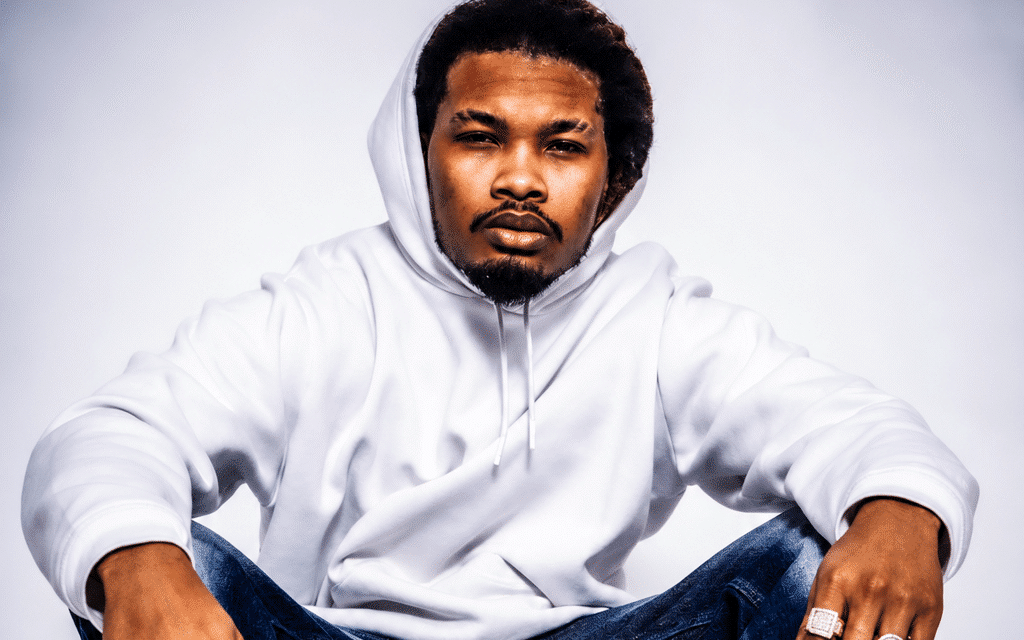
With his deeply personal single “Elexis,” San Diego artist and entrepreneur Indigo Kirk3 confronts the mistakes of his younger self while embracing a new chapter defined by emotional maturity, independence, and purpose. Following incarceration, he is rebuilding more than a music career: through his book The Legacy PlayBook, an expanding creative brand, and a renewed commitment to ownership, he is transforming personal experience into a blueprint for the future. In an exclusive conversation with MUNDANE, he reflects on the meaning of accountability, the importance of his hometown, and why building something lasting requires learning to see beyond the music.
There is a particular kind of regret that comes not from losing someone, but from realizing that the person you have become might have been capable of loving them differently.
It is the uncomfortable distance between who we were and who we are now. The recognition that maturity often arrives after the moments when we needed it most. And the understanding that personal growth, however meaningful, cannot necessarily undo the consequences of our earlier decisions.
For Indigo Kirk3, that realization became the emotional foundation of his single “Elexis.”
The song is an attempt to communicate something he believes he was not mature enough to express when it mattered: an acknowledgment of mistakes, an understanding of the pain they caused, and a recognition of the person he has become since.
But “Elexis” represents something larger than a reflection on a past relationship.
It belongs to a period of profound personal and professional reinvention for the San Diego artist, who is approaching his career with a different understanding of responsibility, creativity, and independence.
Following incarceration, Kirk3 has been rebuilding his life while developing an increasingly ambitious vision for his music and the business surrounding it.
That vision extends into publishing, merchandise, visual identity, financial education, and community empowerment.
It also informs his book, The Legacy PlayBook, which draws from his experiences of incarceration and self-education to offer practical guidance on personal development, financial literacy, ownership, and reentry.
Across these endeavors, a common philosophy emerges.
Growth is not simply about becoming a different person.
It is about accepting responsibility for the person you were, recognizing the opportunities available to you now, and creating something that can continue to matter long after the immediate moment has passed.
For Kirk3, that process begins with accountability.
“Elexis” and the Courage to Acknowledge Who You Used to Be
Regret is often portrayed as a passive emotion.
Something people carry.
Something they revisit.
Something that lingers in the background of relationships that have already ended.
But for Indigo Kirk3, regret became a catalyst for action.
The inspiration behind “Elexis” emerged as he began reconsidering his earlier experiences through the perspective of the person he had become.
He recognized that his younger self lacked the emotional maturity to navigate certain situations.
He also understood that his intentions did not necessarily erase the consequences of his behavior.
“The turning point was realizing that accountability doesn’t make you weak… it actually gives you your power back.”
That distinction is central to the song.
Accountability is not presented as an act of self-punishment.
Instead, it becomes an opportunity to recognize the past without allowing it to define the future.
Kirk3 explains that he wanted the person who inspired the record to understand that he had grown, that he recognized his mistakes, and that he would approach those experiences differently today.
“I found myself wishing she could have met the person I am today back then.”
It is a particularly revealing sentiment.
The desire is not simply to recover a relationship.
It is to communicate that the person responsible for certain mistakes is no longer entirely the same person.
But the song also acknowledges an uncomfortable limitation.
Personal transformation does not guarantee reconciliation.
An apology does not create an obligation for forgiveness.
And becoming more emotionally mature does not mean the past can be rewritten.
Kirk3 appears conscious of that distinction.
He has actively promoted “Elexis” through radio, playlists, and media outlets, partly because he hopes its intended recipient might eventually hear it.
Yet he emphasizes that he does not expect anything in return.
The objective is communication rather than negotiation.
The song becomes a means of saying what he could not say before.
In that sense, “Elexis” is not necessarily about winning someone back.
It is about accepting the responsibility of telling the truth.
The Difference Between Reinvention and Reinventing Your Image
Reinvention has become a familiar concept in contemporary music.
Artists regularly announce new eras, develop alternative visual identities, experiment with different sounds, and present themselves through carefully constructed narratives of transformation.
But there is a difference between changing an image and changing the structure of a life.
For Indigo Kirk3, reinvention involves both personal development and a fundamental reconsideration of how his career operates.
One of the most significant changes has been his decision to stop viewing himself exclusively as a recording artist.
Instead, he has begun approaching his creative work as an independent business.
“The biggest change is that I stopped looking at myself as just an artist and started looking at myself as a business.”
That shift has required him to develop skills extending far beyond songwriting and performance.
He now involves himself in branding, marketing, publishing, merchandise, distribution, outreach, website development, and strategic partnerships.
The responsibilities can be demanding.
But they have also changed his understanding of what independence means.
For Kirk3, independence is not simply the absence of a record label.
It is the ability to understand and influence the decisions that determine the future of his work.
He questions the conventional assumption that securing a label deal should be the ultimate objective for an emerging artist.
If an independent musician must already build an audience, develop momentum, demonstrate commercial potential, and establish a recognizable brand before attracting major industry attention, Kirk3 believes it is reasonable to question what a label would contribute in exchange for the rights or control it might request.
That does not mean he rejects outside investment or collaboration.
Quite the opposite.
He is interested in strategic partnerships that can expand what he has already created.
But he wants those conversations to begin from a position of ownership.
“I’m building the leverage first.”
The statement captures a philosophy increasingly relevant to independent creators.
Rather than waiting for institutional approval, Kirk3 wants to establish a business that can attract opportunities on its own terms.
He no longer sees publicity, marketing, or visual production exclusively as promotional expenses.
He considers them investments in the long-term value of his brand.
And that perspective changes the role music plays within his larger ambitions.
The songs remain essential.
But they are no longer the entire business.
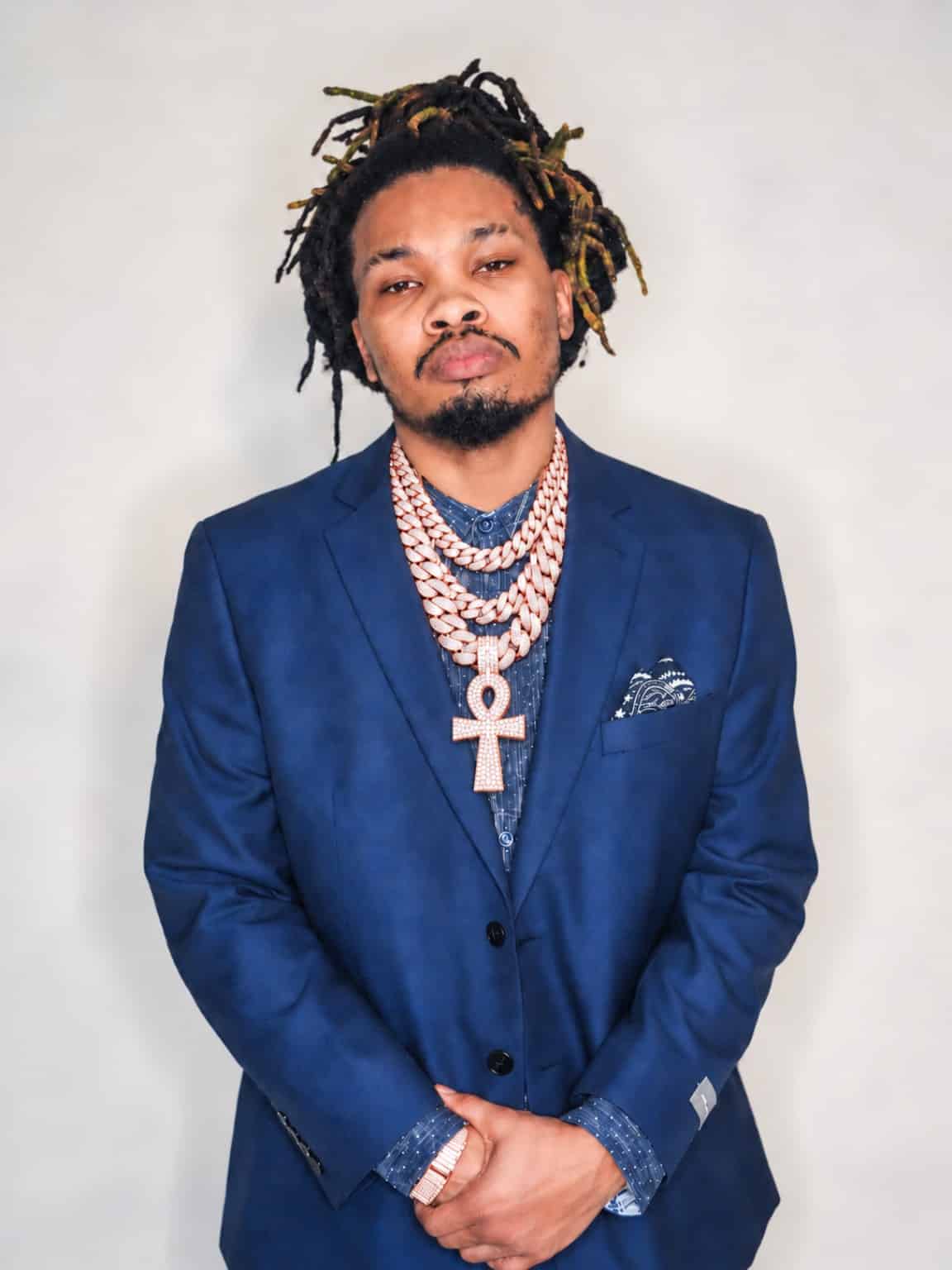
San Diego: The Foundation of an Independent Identity
Before Indigo Kirk3 began thinking about building a company around his music, he was a young artist in San Diego observing the musicians who were already creating something within his own community.
His earliest influences were not necessarily the most commercially visible names in hip-hop.
They were artists he knew personally.
People who lived in the same city.
People who demonstrated that recording music, building an audience, and developing an artistic identity were possibilities that existed beyond television screens and distant entertainment capitals.
Among the figures he remembers are Cee Wee 3, Googie Monsta, Ecay Uno, Treali One, Treali Duce, Mr Lowc, and LC Janet.
As he grew older, his understanding of the city’s hip-hop landscape expanded to include artists such as Mooch Massive, Cricet, Mitchy Slick, Don Diego, B Stone, Damu, and Tiny Doo.
For Kirk3, these names represent an important part of San Diego’s musical history.
But their influence was also deeply personal.
He recalls being approximately fourteen years old when Cee Wee 3 introduced him to Ecay Uno and brought him to the artist’s home.
Ecay gave him a CD and a signed poster.
The interaction stayed with him.
It demonstrated that the possibility of becoming an artist did not belong exclusively to people who had already achieved national recognition.
It could begin within his own neighborhood.
“That wasn’t somebody on television or somebody from another state… that was somebody right there in my own city.”
The experience helped shape his understanding of what representation means.
For Kirk3, carrying a San Diego identity does not require reproducing a single recognizable musical style.
He embraces his West Coast foundation while remaining open to R&B, trap, Atlanta influences, and other sounds that reflect his broader musical interests.
The objective is not to remain confined to a regional formula.
It is to contribute something original to the musical history that influenced him.
“The city gave me the foundation. The artists I grew up around showed me that it was possible. Now my responsibility is to add my own chapter to that history.”
That sense of responsibility connects his artistic identity to his larger philosophy of legacy.
He wants to recognize the people who helped create opportunities for him while developing opportunities that might eventually influence others.
Finding Purpose Beyond Incarceration
Incarceration can fundamentally disrupt a person’s relationship with time, identity, and opportunity.
For Indigo Kirk3, the experience became an important part of his personal history, but he refuses to allow it to function as the final definition of who he is.
During his incarceration, music remained a central part of his life.
He continued writing songs.
But his creative activity expanded into something more systematic.
He began documenting business ideas, studying resources, developing plans, and considering how he wanted to approach life after his release.
“Music kept the fire lit inside me, and eventually that little flame turned into a raging wildfire.”
The metaphor reflects the role creativity played during a period when many of his external opportunities were restricted.
Rather than abandoning his ambitions, he used the time to reconsider how they might become sustainable.
He also studied the experiences of other artists who had encountered incarceration, finding encouragement in the possibility of continuing a creative career despite significant personal and professional obstacles.
But his reflections extend beyond the music industry.
Kirk3 describes developing a growing sense of responsibility toward his own abilities.
He began to see talent not simply as something to possess, but as something that demands action.
“At some point you have to decide whether you’re really going to do something with what you’ve been given.”
That realization helped transform his understanding of music.
It was no longer only an emotional outlet.
It became a possible foundation for relationships, business ventures, community engagement, and personal purpose.
He also developed a spiritual interpretation of his experiences, describing his life as connected to a larger path.
Whether expressed through music, business, or education, he believes his work should contribute to something beyond immediate personal success.
“What I went through is part of my story, but I don’t believe it is the purpose of my story.”
The distinction matters.
It allows him to acknowledge the significance of incarceration without reducing his entire identity to that experience.
He does not present the past as something that can simply be erased.
Instead, he considers how the knowledge gained through difficult circumstances might inform the decisions he makes moving forward.

The Legacy PlayBook: Turning Personal Development Into a Resource
One of the most tangible expressions of Indigo Kirk3’s evolving philosophy is his book, The Legacy PlayBook.
Developed with incarcerated people and those navigating reentry in mind, the project brings together ideas about financial literacy, credit, business, ownership, relationships, mindset, and personal growth.
Its foundation emerged during his incarceration, when Kirk3 dedicated substantial time to reading, studying, and examining the practical challenges people encounter when rebuilding their lives.
He explored financial education and self-development.
He studied reentry resources.
He listened to the experiences of other incarcerated men.
And he began organizing what he learned into a framework that could eventually benefit others.
The central lesson is straightforward.
“Self-development has to become a lifestyle.”
For Kirk3, the importance of education lies partly in the ability to prepare for opportunities before they become available.
Circumstances may limit what a person can do immediately.
But they do not necessarily eliminate the possibility of learning, planning, and developing useful skills.
“I knew I couldn’t control where I was, but I could control what I was becoming while I was there.”
That philosophy became central to the book.
Rather than promising that personal development can eliminate structural barriers, The Legacy PlayBook emphasizes the value of preparing for the decisions and opportunities that may arise.
Its focus on ownership also reflects Kirk3’s broader ambitions.
He wants readers to think beyond short-term survival.
To understand how financial knowledge can affect long-term independence.
To consider how businesses and other assets might contribute to stability.
And to recognize the importance of building something that can benefit future generations.
He describes holding himself to the standard of a king, not as a claim of superiority, but as a personal commitment to responsibility.
For him, the idea carries an obligation to think beyond individual achievement.
“If I’m going to call myself a king, then I have to think beyond myself.”
That perspective helps explain why he sees music and publishing as interconnected rather than separate pursuits.
Both are vehicles for communicating lessons drawn from personal experience.
And both reflect his belief that meaningful success should create opportunities beyond the individual.
Building the Company Around the Music
The contemporary music industry frequently encourages artists to remain in a constant cycle of production.
Release a single.
Promote it.
Create content.
Maintain visibility.
And begin preparing the next release before the current one has fully reached its potential audience.
For independent artists, that pressure can become particularly demanding.
Without a large team, the same person may be responsible for writing music, coordinating releases, managing social media, contacting publications, developing visuals, and handling business decisions.
Indigo Kirk3 has responded by reconsidering the relationship between creativity and productivity.
Rather than continuing to record music simply to maintain a constant release schedule, he has built a substantial catalog and shifted more attention toward the infrastructure necessary to support it.
He estimates that he has enough recorded material for at least three projects, with additional songs beyond that.
The immediate priority is no longer accumulating more recordings.
It is ensuring that the existing work has the resources and opportunities to reach listeners.
“I already spent a lot of time building the product. Now I’m focused on building the company around the product.”
That distinction represents an important stage in his development.
Kirk3 is currently concentrating on funding, marketing, partnerships, publishing, merchandise, and brand expansion.
He also hopes to build a team capable of supporting those activities.
But before delegating responsibilities, he wants to understand how each part of the business functions.
The objective is not to remain responsible for every task indefinitely.
It is to develop the knowledge necessary to make informed decisions about the people and organizations he eventually works with.
That approach reflects the same philosophy behind The Legacy PlayBook.
Learn before the opportunity arrives.
Understand what you own.
And build the foundation before attempting to expand.
Indigo, Baby Kirk, and the Many Versions of an Artist
Identity is rarely as consistent as the branding surrounding a musical project might suggest.
People change.
Their priorities evolve.
Their relationships with the past become more complicated.
And the creative identities they develop can begin to represent different stages of that transformation.
For Indigo Kirk3, this tension is becoming an explicit part of his artistic vision.
He describes Indigo as the more spiritually aware, reflective, and evolved side of himself.
Baby Kirk, by contrast, represents a connection to his earlier experiences and street-oriented foundations.
Rather than treating these identities as mutually exclusive, he intends to explore how they can coexist.
His future release plans include a mixtape rooted in San Diego and his upbringing, two EPs exploring different dimensions of his identity, and an official album.
One EP will introduce the Indigo perspective more directly.
The other will explore the meeting point between Indigo and Baby Kirk.
That fusion is particularly interesting because it resists the idea that reinvention requires completely rejecting the past.
Instead, Kirk3 appears interested in integrating different versions of himself.
The experiences that shaped him remain part of his identity.
But they no longer have to determine its limits.
The same philosophy informs his visual presentation.
He uses indigo blue and purple as recognizable elements of his branding, connecting those colors to ideas of spiritual awareness, personal transformation, and a deeper understanding of the world.
The eye motif within his imagery represents the third eye, which he associates with awakening and the ability to perceive meaning beyond immediate appearances.
For Kirk3, these symbols are not merely decorative.
They are attempts to communicate the ideas behind his creative identity.
“To me, the visuals are another form of storytelling.”
He also imagines extending those elements into merchandise, jewelry, and other products.
The long-term goal is to create a connected visual and commercial world in which the music, artwork, and physical products reinforce the same underlying identity.
The Importance of Building Before Becoming Visible
There is an interesting contradiction in Indigo Kirk3’s approach to contemporary artist development.
He recognizes that direct audience engagement is increasingly important.
He understands that listeners often want access to the person behind the music.
They want to hear artists speak, understand their personalities, and feel connected to their everyday experiences.
Yet he is reluctant to prioritize constant visibility before establishing the foundations of his business.
He openly acknowledges that direct-to-fan engagement remains an area he wants to improve.
For now, much of his audience relationship has developed through the music, book, and brand content he releases.
But he sees the current period as a stage of preparation.
He is concentrating on funding, partnerships, business organization, and developing the infrastructure that will support future growth.
“I don’t want to force that connection before I’m ready just because social media says an artist has to constantly be visible.”
It is a notable position in an industry where artists are frequently encouraged to transform every part of their lives into content.
Kirk3’s approach suggests that visibility and progress are not always the same thing.
An artist can appear constantly active online without developing a sustainable business.
Conversely, important work can happen privately, through planning, education, relationship-building, and financial preparation.
For Kirk3, the challenge is determining when those foundations are sufficiently developed to support a more public-facing chapter.
He ultimately wants to become more visible, meet people in person, and establish genuine relationships with his audience.
But he wants those connections to develop around something he believes is substantial.
The goal is not simply to accumulate followers.
It is to build a community that understands and participates in the larger vision.
In Conversation With Indigo Kirk3
MUNDANE: “Elexis” focuses deeply on themes of accountability, relationships, and personal growth. What was the specific turning point or mindset shift that inspired you to write this track?
Indigo Kirk3: The turning point was realizing that accountability doesn’t make you weak… it actually gives you your power back. “Elexis” came from a place where I really had no other way of telling her how I felt. I wanted her to know that I was young, I was immature, I was going through things, and I didn’t always know how to handle myself or a relationship the right way. I never meant her any harm. I just didn’t know better at the time.
As I got older and grew as a man, I started looking back at things differently. I found myself wishing she could have met the person I am today back then, because I know I would have handled a lot of situations differently. That realization stayed with me.
So instead of keeping all of that in my head, I put it into the song. “Elexis” became my way of saying what I never really got the chance to say directly — that I understand my mistakes, I understand the hurt, and I’ve grown from it.
Part of why I’ve pushed the record so hard through radio, playlists, and different outlets is because there’s a part of me that hopes she hears it one day. Not because I expect anything from her, but because I want her to know that the message is real. The song is my way of giving her the apology, the accountability, and the truth that I wasn’t mature enough to give her back then.
MUNDANE: You’ve described your current era as one focused on reinvention and ownership. How has your approach to the music business changed since taking full control as an independent artist?
Indigo Kirk3: The biggest change is that I stopped looking at myself as just an artist and started looking at myself as a business. As an independent artist, I have to wear a lot of hats. I’m involved in the music, the branding, the outreach, the marketing, the publishing, the merchandise, the website, the strategy.. all of it. That forced me to learn the business instead of depending on somebody else to understand it for me.
I also realized that I don’t necessarily need a record label. What I need more than anything are strong connections, strategic partnerships, and the right people around me who can help expand what I’m already building. My mentality is that I don’t want to work for somebody else. I want to build something that I own.
A lot of labels are most interested once an artist already has momentum, a fan base, numbers, and proof that the business can work. So my thinking became: if I have to build all of that myself just to get their attention, then by the time I get there, I need to seriously ask what I would be giving up and what they could actually add that I couldn’t accomplish through the right partnerships.
The other major difference is how I invest. I’m not sitting around hoping somebody discovers me anymore. I make strategic investments to expand my brand awareness… whether that means radio, press, marketing, visual content, distribution, or other opportunities that put the brand in front of new audiences. I look at those moves as investments in the company, not just expenses for a song.
I’ve learned that if an opportunity doesn’t exist, I have to create one. If I want radio, I reach out to radio. If I want press, I pitch publications. If I want products, I build them. If I want people to understand the brand, I create the platform to tell the story myself.
Reinvention and ownership, for me, means not waiting for permission anymore. I’m building the leverage first. Then, if a label, investor, distributor, or major partner comes along, the conversation is different because I’m not approaching them as somebody asking to be saved. I’m approaching them as somebody who already built something valuable and is looking for the right partnership to take it further.
MUNDANE: San Diego has a distinct culture and music scene. How have your roots in San Diego shaped your sound, identity, and perspective as an artist?
Indigo Kirk3: San Diego shaped me first through the people I actually knew. Before I ever looked at rappers from somewhere else and thought about the music industry, some of my first examples of artists were the big homies from my own neighborhood. People like Cee Wee 3, Googie Monsta, Ecay Uno, Treali One (rest in power), Treali Duce, Mr Lowc, and LC Janet were some of the first people I personally knew who were making music from my city.
Then as I got older, my understanding of San Diego music expanded through different neighborhoods, friends, family members, and different sections of the city. I started listening to artists like Mooch Massive, Cricet, Mitchy Slick, Don Diego, B Stone, Damu, Tiny Doo, and many more. To me, those artists are part of the group of trailblazers who helped create a foundation for San Diego hip-hop.
One memory that always stayed with me happened when I was about 14. Cee Wee 3 introduced me to Ecay Uno and actually took me over to his house. Ecay gave me a CD and a signed poster. At that age, seeing somebody from my city who was really producing, rapping, making records, and building something made the possibility feel real to me. That wasn’t somebody on television or somebody from another state… that was somebody right there in my own city.
I still keep in contact with Ecay today. He’s retired from music now, but I’m still trying to get some beats out of him. Laughs. And rest in power to Cee Wee 3, because moments like that are part of why his influence stays with me.
Those experiences shaped my sound, but they also shaped my mentality. San Diego has always had talent, originality, different styles, and different pockets of the city contributing their own identity. Growing up around that taught me to respect where I come from while still developing my own voice.
I definitely carry a West Coast foundation, but I don’t believe representing San Diego means I have to sound one particular way. I can pull from West Coast music, R&B, trap, Atlanta influences, or anything else that speaks to me and still be authentic to where I came from. The city gave me the foundation. The artists I grew up around showed me that it was possible. Now my responsibility is to add my own chapter to that history.
MUNDANE: Rebuilding your career and life after incarceration requires immense resilience. How did music play a role in your process of healing and moving forward during that time?
Indigo Kirk3: Music kept the fire lit inside me, and eventually that little flame turned into a raging wildfire. I knew I had a gift, and I refused to let it go to waste. As I’ve gotten older, I’ve realized that talent comes with a responsibility. At some point you have to decide whether you’re really going to do something with what you’ve been given.
While I was incarcerated, I wrote constantly. I wrote tons of songs, but I was also writing ideas, plans, resources, business concepts… anything that could help me prepare for what I wanted my life to look like when I got out. I wasn’t just thinking about making another song. I was thinking about how to rebuild, how to create opportunities, and how to turn music into something bigger.
I also paid attention to artists who had been incarcerated and still found ways to come back to music. I read about people like Tee Grizzley, Fetty Wap and Tory Lanez. I remember being on the bus headed to prison and hearing on the radio that Tory Lanez had just been sentenced and would be heading into the system only a few days after me. That moment stayed with me because it reminded me that incarceration doesn’t automatically erase your creativity, your talent, or your ability to have a future.
I never allowed anybody or any circumstance to kill my dream. What I went through is part of my story, but I don’t believe it is the purpose of my story. I believe there is something greater that I’m supposed to do with my life. I genuinely feel like I’m on a divine path, and music is one of the tools I’ve been given to walk that path.
So for me, music became more than an escape or a way to process pain. It became a doorway. I believe music can open doors to relationships, business, opportunities, impact, and ultimately the larger purpose I’m trying to fulfill. Coming home, I wasn’t starting from nothing. I came home with songs, ideas, plans, knowledge and a fire that had only gotten stronger.
MUNDANE: You authored The Legacy PlayBook specifically with incarcerated and reentry communities in mind. What core lesson from the book do you hope readers take away most?
Indigo Kirk3: The core lesson I want readers to take from The Legacy PlayBook is that self-development has to become a lifestyle. I’ve always had the mentality that I should constantly be finding ways to better myself, increase my knowledge, and prepare myself for whatever comes next.
While I was incarcerated, I read a lot… financial literacy, self-help, spirituality, personal development. I took courses on the tablet, studied reentry resources, learned about the challenges people face when they come home, and listened to the stories of other men around me. While some people were wasting their time, I was trying to use as much of mine as possible. I knew I couldn’t control where I was, but I could control what I was becoming while I was there.
Eventually, I realized I had taken in so much information from different places that I could organize it into something of my own. That became part of the foundation for The Legacy PlayBook. I wanted to take what I was learning about money, credit, ownership, business, mindset, relationships, reentry, and personal growth and put it into one resource that somebody else could actually use.
I’ve also always told myself that I’m a king. To me, that doesn’t mean thinking I’m better than anybody else. It means holding myself to a higher standard. If I’m going to call myself a king, then I have to think beyond myself. I have to build something, leave something behind, and create a legacy that can benefit my family and my people.
As I learned more, I matured more. My perspective on money changed. My perspective on relationships changed. My perspective on time changed. I started filtering out distractions and unnecessary things and replacing them with priorities, knowledge, discipline, and purpose.
That’s really what I want the reader to understand: you may not be able to change everything about your circumstances immediately, but you can start changing the person who is going to walk out of those circumstances. Learn. Prepare. Build. Use your time. And when an opportunity comes, be ready for it.
The Legacy PlayBook is ultimately about helping people move from surviving to thriving… and then building something that can outlive them.
MUNDANE: How do you manage the balance between being a creative artist making music and running the business side of your brand, publishing, and merchandise?
Indigo Kirk3: I’ve learned that balance doesn’t always mean doing everything at the same time. Sometimes balance means knowing what deserves your attention in a particular season.
I told myself early on that I wanted to create enough music to sustain me for a while. I didn’t want to constantly feel pressured to make a new song every week just to stay active. So I built up a pretty deep catalog. At this point, I know I have enough material for at least three projects and more beyond that.
Because of that, I’ve been able to take a step back from constantly creating new music and put more of my energy into the business side. Right now, I’m dialed in on building the infrastructure around what I already created… funding, marketing, partnerships, publishing, merchandise, brand expansion, and creating more opportunities for the catalog to actually reach people.
My biggest focus right now is funding, because I know that with the right resources I can expand the brand much faster and give the music I already have a stronger platform. I don’t need to keep stacking songs if I haven’t fully maximized the ones already sitting in the vault.
That doesn’t mean I’ve stopped being creative. I’m still open to collaborations, especially when the right artist or opportunity comes along. But I’m being more selective now. I don’t feel like I have to make music just for the sake of making music.
I look at it like this: I already spent a lot of time building the product. Now I’m focused on building the company around the product.
Eventually, I want a strong team around me so I’m not wearing every hat myself, but learning all these different sides of the business has been valuable. When I do bring people in, I’ll understand what they’re doing, what value they’re bringing, and how it fits into the bigger vision.
Right now, the goal is simple: maximize the catalog, secure funding, expand the brand, and create the infrastructure that allows the music to go further.
MUNDANE: Visual identity is a major part of your overall creative presentation. How do you approach translating the themes in your music into your visual art and media?
Indigo Kirk3: My visuals are symbolic now. A lot of what I create is meant to represent more than what you see on the surface. For example, the eye in my branding is a representation of the third eye… or really, our third eye. It symbolizes seeing beyond the natural and into the supernatural. It represents awakening, elevation, spiritual growth, mental growth, and being able to see things on a deeper level.
Even the word Indigo is symbolic to me. It carries meaning. It represents knowing that I have a greater purpose, questioning things instead of blindly accepting everything, being highly sensitive, feeling things beyond the surface, and recognizing that I have special gifts that are meant to be used in a bigger way.
So when I think about visual identity, I’m not just thinking about what looks good. I’m thinking about what resonates, what reflects my mindset, and what communicates the deeper message behind the brand. I want the visuals to show that there is more going on than just music. There’s spirituality, awareness, purpose, elevation, and transformation behind it.
My colors are a part of that too. The indigo blue and indigo purple are important because they help create a recognizable identity, but they also carry a certain energy. They resonate with the overall message of the brand and give the presentation a distinct feel. Over time, I want people to see those colors and immediately connect them with the Indigo Kirk3 world.
I also look at visuals as something bigger than album covers or posts. They’re part of the overall ecosystem I’m building. Whether it’s artwork, merchandise, the website, media, or future products, I want the presentation to feel intentional and connected.
I’m already thinking ahead about how that visual identity can expand into other areas. Jewelry is one of the ideas I have in mind, and I’d love to use those same colors and symbols to create special pieces that people can connect with in a real way.
To me, the visuals are another form of storytelling. The music tells people what I’m saying, but the visuals help show them what I see, what I feel, and what the brand represents on a deeper level.
MUNDANE: Direct-to-fan engagement is crucial for independent creators today. How have you built and maintained such an authentic connection with your audience?
Indigo Kirk3: I’ll be honest.. direct fan engagement is actually one of the areas I know I still need to improve. Right now, most of my engagement has been through putting out content and letting people connect with the music, the book, and the brand from there.
I know fans want to see more of the person behind the work. They want to see your face, hear you talk, understand your personality, and feel like they actually know who you are. I understand that, and I know that’s going to become a bigger part of what I do.
But right now, I’m still in the rebuilding stage. A lot of my work is happening behind the scenes. I’m focused on getting the business organized, expanding the brand, securing funding, building partnerships, and putting the right foundation in place before I step fully into the spotlight.
The way I look at it, the grind isn’t always pretty. Sometimes you have to get dirty for a little while before it’s time to shine. Right now, I’m in that part of the process. I’m working.
Once everything is set up the way I want it, then it becomes time to show out. That’s when I want to engage more, be visible, meet people in person, mingle, shake hands, rub elbows, build relationships, and really let people experience who Indigo Kirk3 is beyond the music.
I don’t want to force that connection before I’m ready just because social media says an artist has to constantly be visible. I’d rather build the foundation first and then step forward with something real to show people.
So I would say I’m still developing that part of the journey. The goal isn’t just to gain followers. The goal is to eventually build genuine relationships with people who understand the vision and want to grow with it.
MUNDANE: Looking back at your journey so far, what is a piece of advice you wish you could give to your younger self when you were first starting out?
Indigo Kirk3: If I could give my younger self one piece of advice, it would be: learn everything you can before you need it.
Learn business. Learn the music business. Learn how publishing works, how contracts work, how money flows, and how ownership works. Learn how to build a team and how to recognize the difference between somebody who adds value and somebody who just wants to be around.
I would tell myself to learn about banking, credit, investing, and how to manage money properly. I’d tell myself to learn a trade too, because having a real skill gives you another level of independence and security.
I’d tell myself to surround myself with the right people.. advisors, mentors, financial advisors, business-minded people, and people who have already been where I’m trying to go. Build partnerships instead of trying to do everything alone.
I’d also tell myself to stay focused, work hard, plan, prepare, and ask questions. Don’t be afraid to say you don’t know something. Sometimes the smartest thing you can do is ask the right person the right question before you make a decision.
And I’d tell myself not to be in such a hurry. Build the foundation first. Learn before you leap. Prepare before the opportunity comes. Because when the opportunity does come, you want to be ready for it instead of learning everything after the fact.
If I had understood all of that earlier, I would have moved differently. But now that I understand it, that’s the mindset I carry forward.
MUNDANE: With “Elexis” out now and your book active in the community, what can fans expect next from you in terms of upcoming projects or new music?
Indigo Kirk3: Fans can expect four different projects, and each one is going to show a different side of who I am as an artist.
Later on down the road, I have a mixtape coming that’s centered around my city, my roots, and where I come from. That project is going to be the real nitty-gritty side of Kirk3… raw, street, unfiltered, and connected to the environment and experiences that shaped me.
I also have two EPs planned. The first EP is going to serve as an introduction to Indigo… the more evolved, spiritual, reflective, and elevated side of me. The second EP is where Indigo and Baby Kirk start blending together. That project is going to represent the fusion of the old and the new.. the street foundation mixed with the growth, the maturity, and the new sound. That fusion is really what makes Indigo Kirk3.
Beyond that, I already have several songs selected for an official album, so that gives people four projects they can expect from me over time.
The crazy part is, some of the music from all four of those projects is already out there on my website for people to hear. I have songs from each direction on my website right now, so people can actually hear the different sides of the vision before the full projects arrive.
I’m not in a rush to dump everything at once. I want each project to have its own identity, its own moment, and the right support behind it. Right now I’m focused on building the business, expanding the brand, and creating the infrastructure so that when these projects come out, they have a real platform behind them.
So the next chapter is going to be about showing people the full range of Indigo Kirk3… where I came from, who I’ve become, and where I’m going next.
A Legacy Is Something You Build Before Anyone Recognizes It
There is a revealing connection between the emotional message of “Elexis” and the larger ambitions Indigo Kirk3 is developing.
At first glance, a song about relationship regret and a book about financial literacy and personal development might appear to belong to entirely different creative worlds.
One is intimate.
The other is practical.
One concerns emotional accountability.
The other explores preparation, ownership, and long-term independence.
But both emerge from the same fundamental realization.
The future depends, at least in part, on what we are willing to learn from the past.
In “Elexis,” Kirk3 confronts the limitations of his younger self.
Through The Legacy PlayBook, he attempts to transform lessons from difficult experiences into knowledge that other people can use.
And through his independent music business, he is applying those principles to his own creative ambitions.
The process is ongoing.
He is still developing his audience relationships.
Still seeking funding.
Still building partnerships.
And still determining how the different dimensions of his artistic identity will come together.
But perhaps that unfinished quality is precisely what makes his story interesting.
Kirk3 is not presenting reinvention as a transformation that has already been completed.
He is describing the work required to make it possible.
That work includes acknowledging mistakes without allowing them to become permanent definitions.
It includes recognizing that talent alone cannot guarantee opportunity.
And it includes understanding that personal growth becomes more meaningful when it informs the decisions we make for ourselves and the people around us.
His advice to his younger self is to learn everything possible before it becomes necessary.
It is also the principle guiding his current chapter.
Prepare before the opportunity arrives.
Understand the value of what you create.
And build something capable of lasting beyond the immediate recognition it receives.
For Indigo Kirk3, the objective is no longer simply to release music and hope the right person notices.
It is to create a foundation strong enough to support the artist he is becoming.
And perhaps that is the most important lesson behind “Elexis”: we cannot return to the past as the people we are today, but we can decide what kind of future our growth will make possible.
Artist: Indigo Kirk3
Featured single: “Elexis”
Book: The Legacy PlayBook
Hometown: San Diego, California
Upcoming projects: A San Diego-centered mixtape, two EPs exploring the Indigo and Baby Kirk identities, and a full-length album.
Through music, publishing, and independent entrepreneurship, Indigo Kirk3 is developing a creative identity centered on accountability, personal transformation, ownership, and the ambition to build a lasting legacy.